


Secondary sourceBook1443
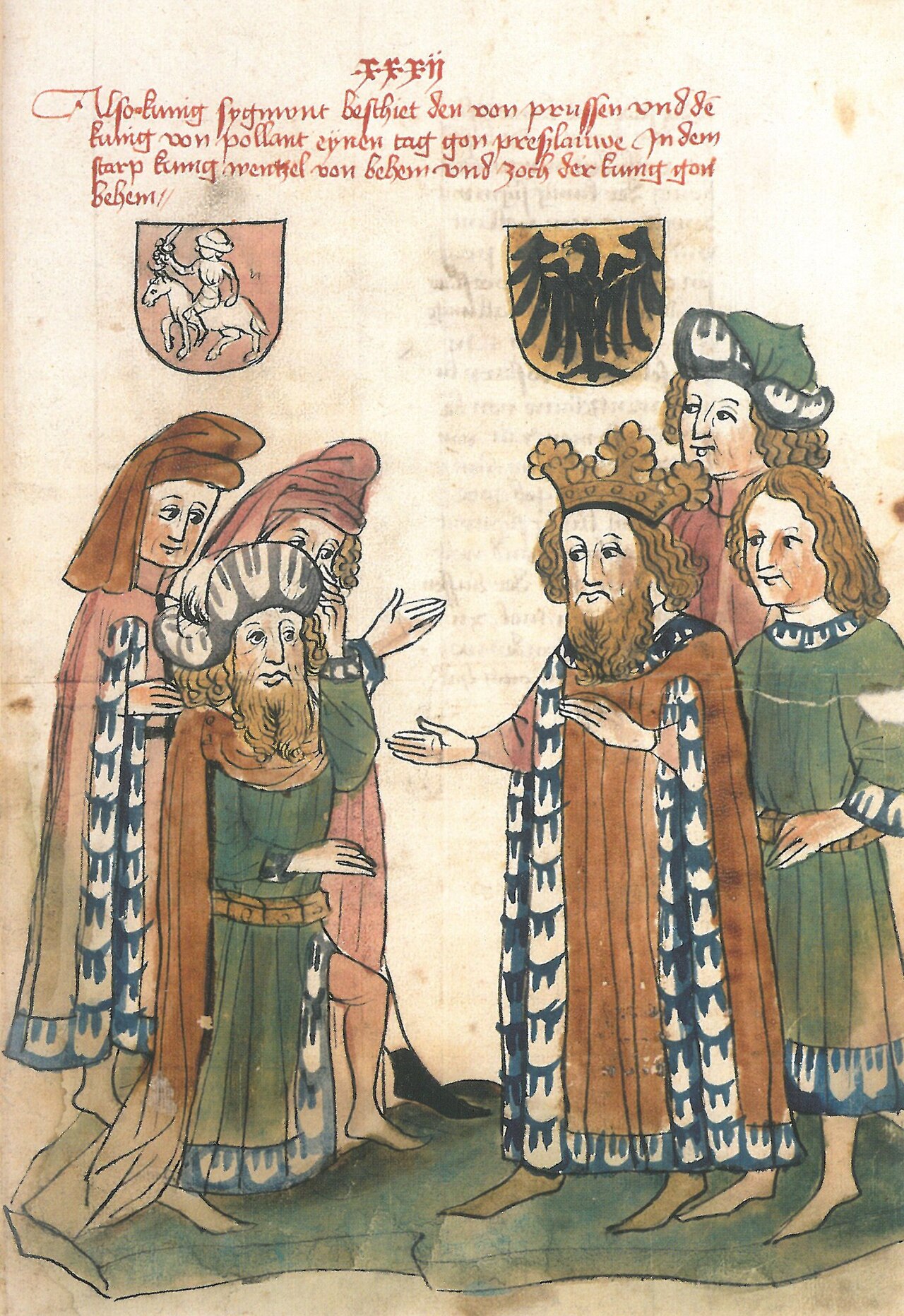
Sigismund mediating between the Teutonic Order and Jagiello
1443
A 1443 illustrated chronicle page with the Pahonia coat of arms, showing Sigismund mediating between the Teutonic Order and Jagiello. It was made years after his death.
Shows Sigismund in a later chronicle as a mediator between rival powers, which is why it is in his archive.
About this source
What it is
This is a painted manuscript page from a chronicle of Sigismund, made in 1443. The page has red handwritten text at the top and two heraldic shields: one shows a rider on a horse, the other a black eagle. Five standing figures in robes appear, and a crowned, bearded man in the centre gestures toward a bearded man in a green robe and white turban-like hat. The illustration is captioned as showing Sigismund mediating between the Teutonic Order and the Polish king Jagiello. The maker is unknown. The image is a scan from the Wikimedia Commons file page, and the holding institution is not named in the facts.
Why it matters
Sigismund was Holy Roman Emperor and King of Hungary and Bohemia, and he tried to keep peace between powerful rivals in Central and Eastern Europe. The Teutonic Order and Jagiello, king of Poland, were major rivals in that region. This picture was made in 1443, six years after Sigismund died, so it shows how later writers and artists remembered him. The Pahonia arms, a rider on a horse, point to the coat of arms linked to the Grand Duchy of Lithuania, which helps readers see how the chronicle connected Sigismund to the lands and rulers around him.
Look closer
- Who is shown as the central figure, and how does his gesture suggest his role?
- Why might a chronicle written after Sigismund's death include heraldic shields and a scene like this?
- What does the picture leave out about the conflict it describes?
This book is part of the curated material that grounds the AI version of Sigismund, Holy Roman Emperor on Humy.ai — when students ask about related events, the AI can quote it and cite it.
More Sigismund, Holy Roman Emperor sources
Browse all 95 →Primary source
Safe Conduct to John Huss
Sigismund
 Painting
Primary source
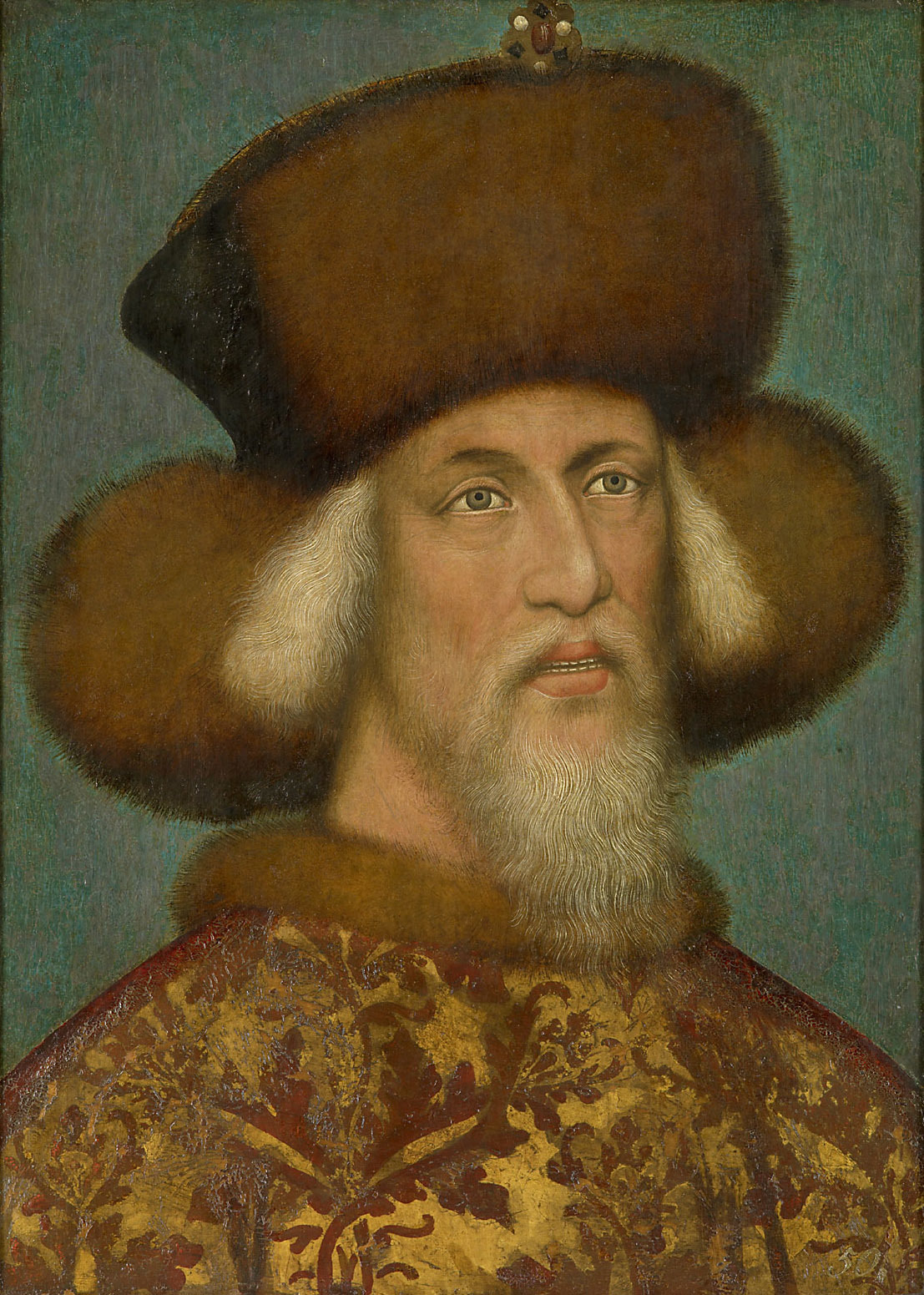
Portrait of Sigismund of Luxemburg
Pisanello (attributed) · c. 1430
 Painting
Primary source
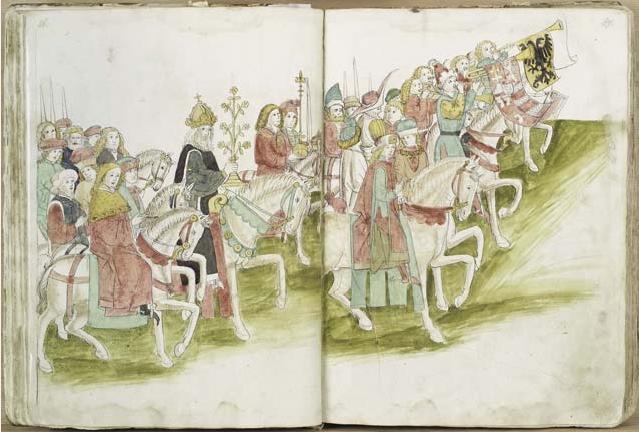
Sigismund's Entry into the Council of Constance
Ulrich Richental
 Document
Secondary source
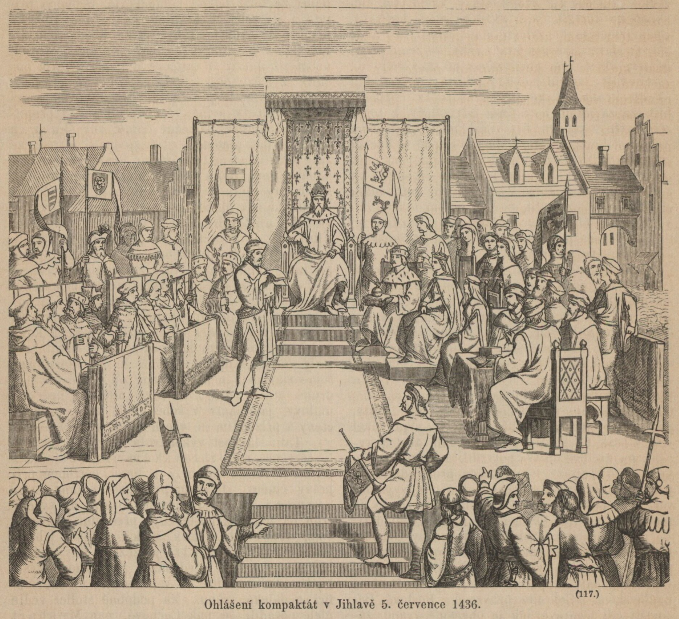
Compacts of Basel
1436
Free account
Read every Sigismund, Holy Roman Emperor source
Sign up free →
Ready when you are
Start chatting with Sigismund, Holy Roman Emperor now.
20 messages free · No credit card · Available in 50+ languages.