


Primary sourceDocument988
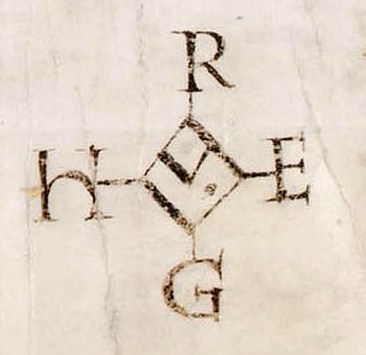
Signature Monogram of Hugh Capet
Hugh Capet · 988
A close-up of the royal monogram on Hugh Capet's 988 charter, used to authenticate his acts as king.
This monogram is understood to be Hugh Capet's own authenticating mark on his royal charter.
About this source
What it is
This is a detail of the monogram found on the 988 charter in which Hugh Capet granted land to the abbey of Saint-Maur-des-Fossés. The mark is made of letters arranged around a central diamond shape, drawn in brown ink on parchment. It is held by the Archives Nationales in France.
Why it matters
This monogram is the closest thing we have to Hugh Capet's own mark. Kings of this period often used such symbolic signs, following styles inherited from Carolingian rulers, to show that a document was genuinely issued by them.
Look closer
- Why might a king use a symbolic mark instead of writing his name out in full?
- What does this monogram tell you about how royal authority was proven in the Middle Ages?
- How is this different from how people sign documents today?
This document is part of the curated material that grounds the AI version of Hugh Capet on Humy.ai — when students ask about related events, the AI can quote it and cite it.
More Hugh Capet sources
Browse all 43 →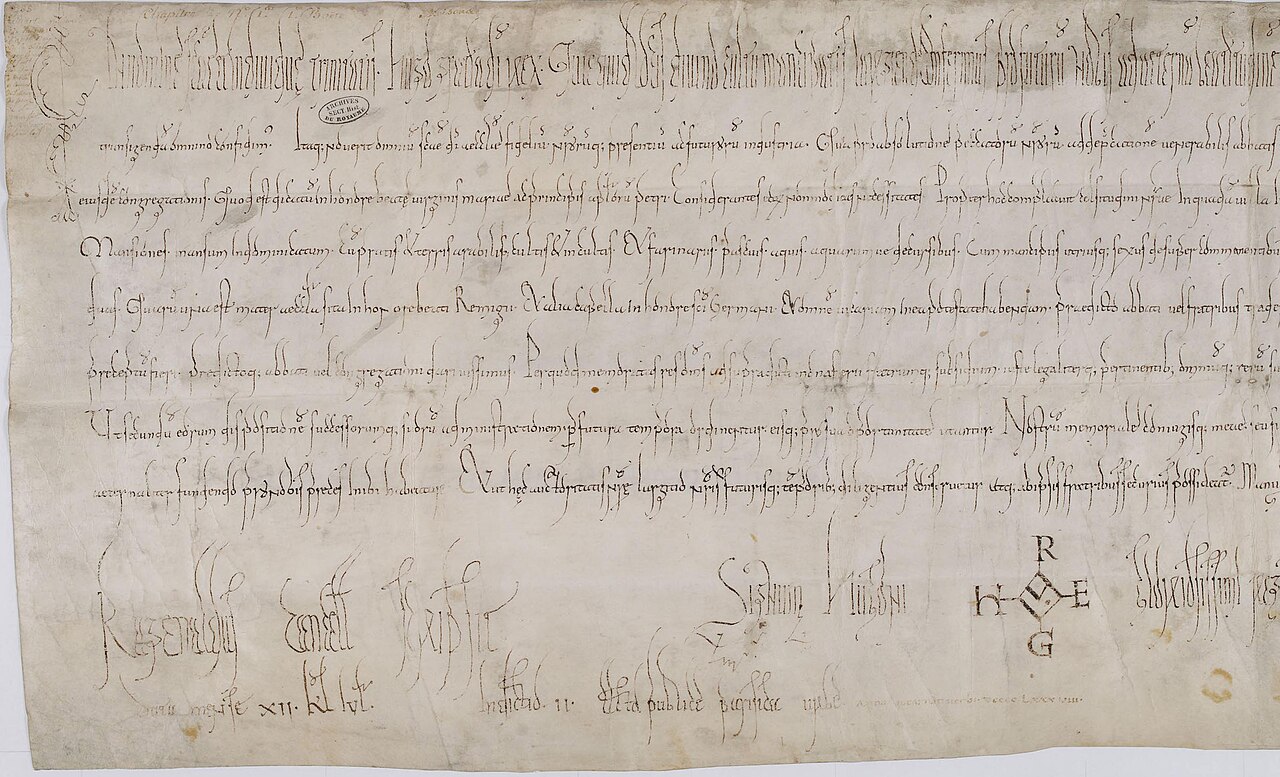 Document
Primary source
Donation by Hugh Capet to Saint-Maur-des-Fossés
Hugh Capet · 988
 Artifact
Primary source
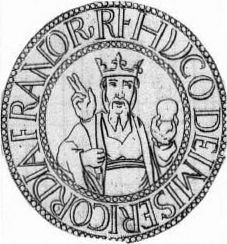
Seal of Hugh Capet
 Artifact
Primary source
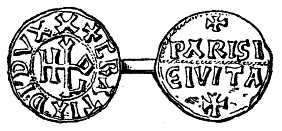
Silver Denier of Hugh Capet
 Book
Primary source
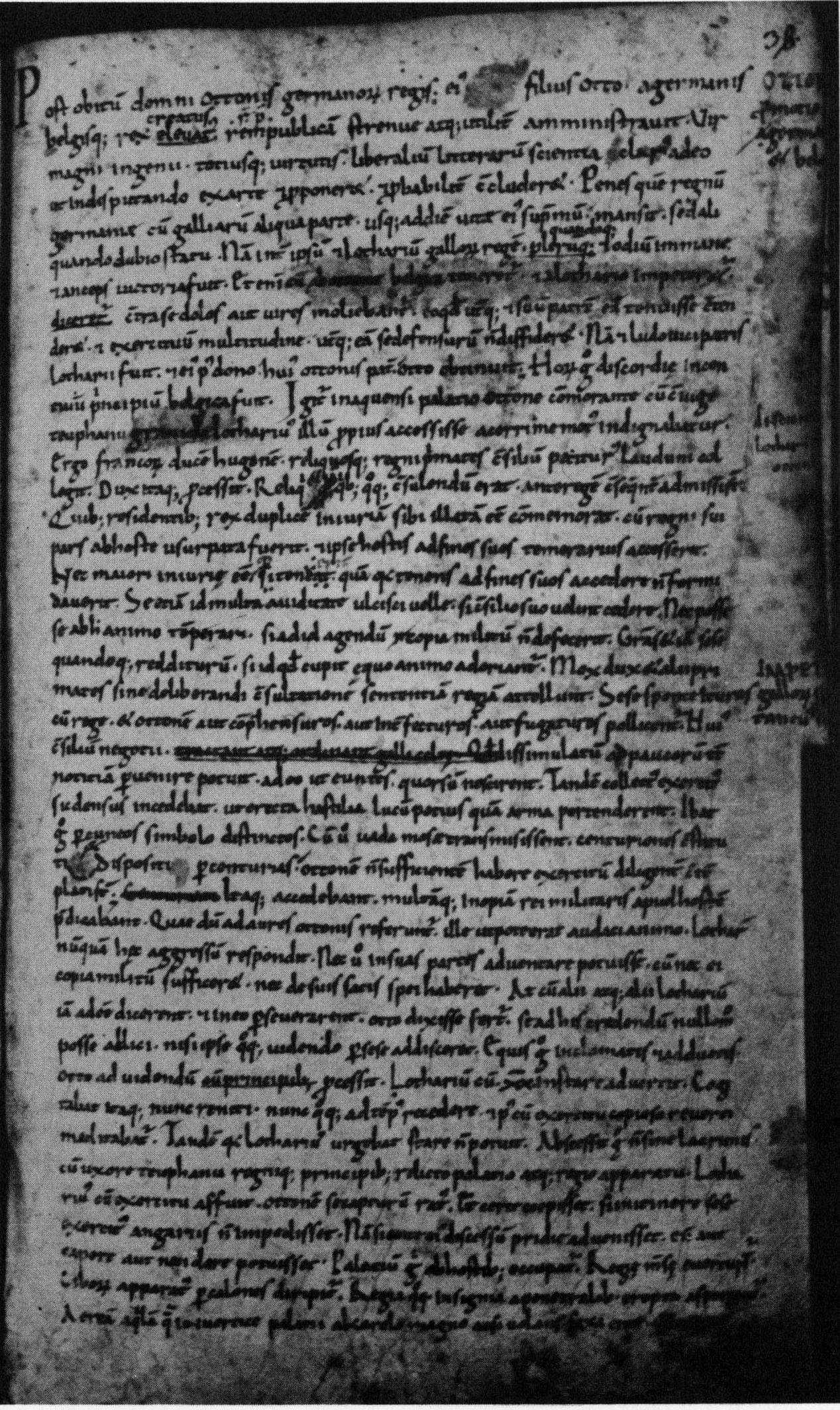
Historiae of Richer of Reims
Richer of Reims · c. 991–998
Free account
Read every Hugh Capet source
Sign up free →
Ready when you are
Start chatting with Hugh Capet now.
20 messages free · No credit card · Available in 50+ languages.