


Primary sourceDocument940 (reproduced 1897)
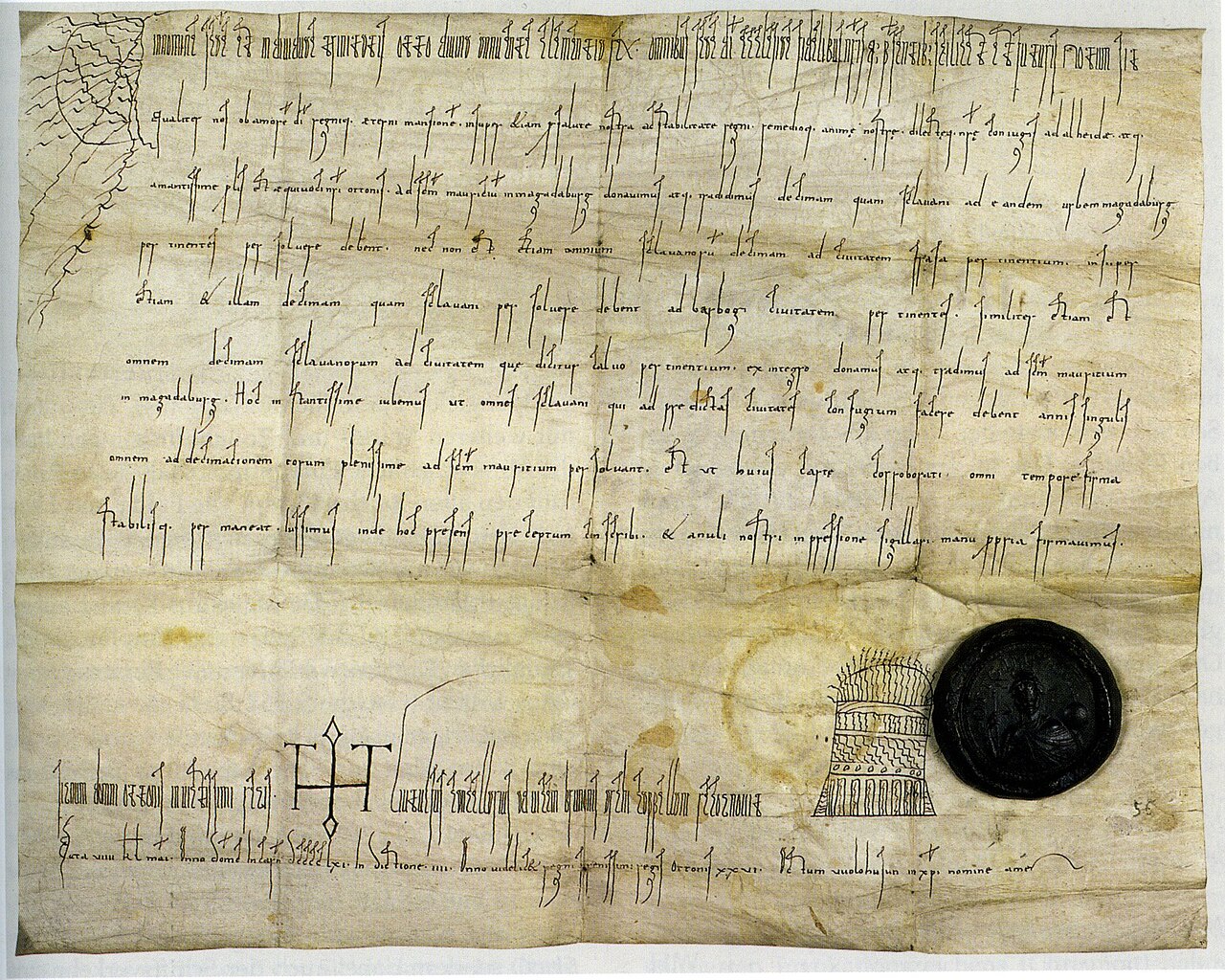
Signum Manus of Otto I on a Charter of 940
940 (reproduced 1897)
A reproduction of Otto I's own royal signature mark, made on a charter from 940.
Otto I's own royal mark, used to authenticate a charter he issued in 940.

About this source
What it is
This image shows a stylized monogram, Otto I's signum manus, or royal hand-sign, as it appeared on a charter dated 940. The version shown here is a reproduction printed in an 1897 collection of historical records (Regesta Hist. Westf.), not the original document itself.
Why it matters
A signum manus was used by medieval rulers instead of a written signature, marking a document as genuinely issued under their authority. This mark connects directly to Otto I's own documented acts as king.
Look closer
- Why might rulers use a symbolic mark rather than writing their name?
- What might the shapes in the monogram have symbolized?
- Since this is a later printed reproduction, what might differ from the original 940 charter?
This document is part of the curated material that grounds the AI version of Otto I the Great on Humy.ai — when students ask about related events, the AI can quote it and cite it.
More Otto I the Great sources
Browse all 95 →Primary source
Res gestae saxonicae sive annalium libri tres
Widukind of Corvey · c. 960-973
 Artifact
Primary source
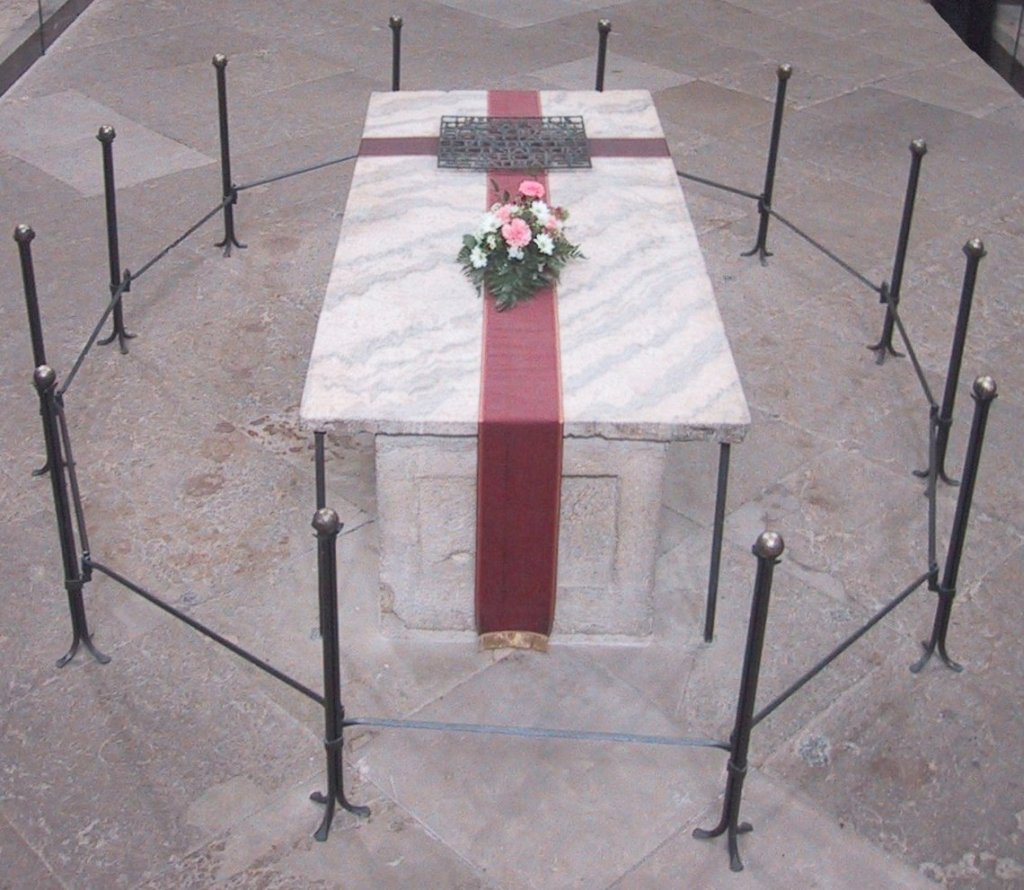
Tomb of Otto I, Holy Roman Emperor
973
 Letter
Primary source
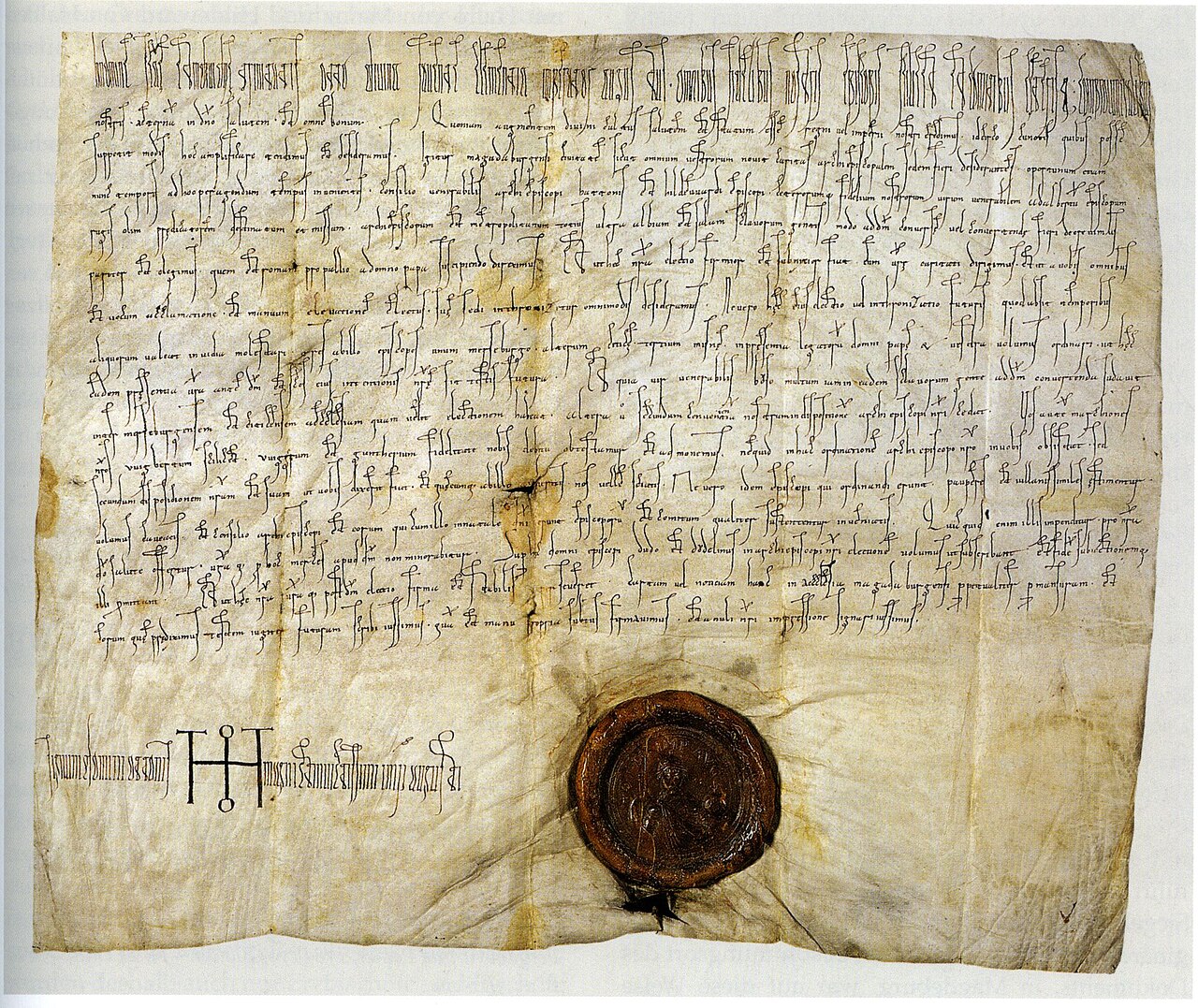
Letter announcing the Archbishopric of Magdeburg
Otto I the Great · 968
Primary source
Carmen de gestis Ottonis I. imperatoris
Hrotsvitha · c. 950


Free account
Read every Otto I the Great source
Sign up free →
Ready when you are
Start chatting with Otto I the Great now.
20 messages free · No credit card · Available in 50+ languages.