


Primary sourceArtifact
Siliqua of Julian
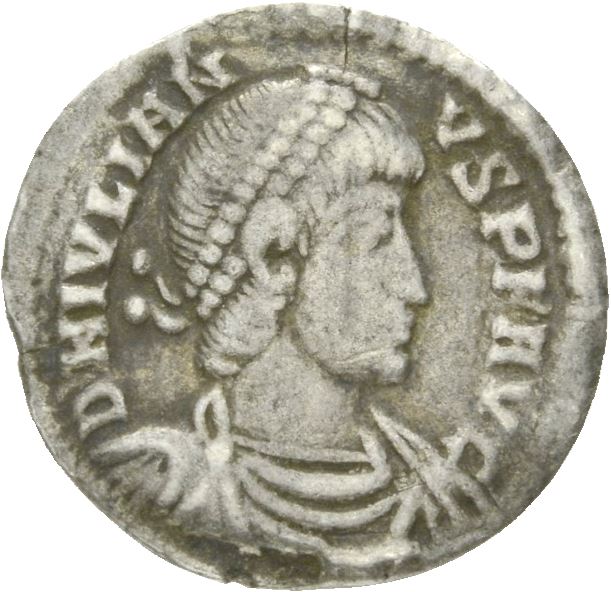
A silver Roman siliqua from the late Roman period, held by the Baden State Museum in Karlsruhe, named for Julian. The record gives little description.
Shows a silver coin catalogued under Julian's name, a sign of the currency of his period.
About this source
What it is
This is a silver-grey Roman siliqua coin. It shows a bust of a man facing right, wearing a diadem and a draped garment, with legend lettering around the portrait that is partly worn. The coin is held by the Badisches Landesmuseum Karlsruhe in Germany and is catalogued under the name of Julian. The record gives little more detail, so its exact date and mint are not stated here.
Why it matters
Siliquae were silver coins used in the late Roman Empire. Coins that carry an emperor's name and portrait show how rulers were presented to the people who used the money. This coin belongs to Julian's period and can help students compare the money of his reign with that of other rulers.
Look closer
- Which details of the portrait, such as the hair and diadem, can you see, and what might they suggest about how the emperor wanted to look?
- How much of the legend can you read, and what might the missing letters hide?
- What does the museum record not tell us, and what would you need to check before saying who this coin honours?
This artifact is part of the curated material that grounds the AI version of Julian on Humy.ai — when students ask about related events, the AI can quote it and cite it.
More Julian sources
Browse all 89 →
Ready when you are
Start chatting with Julian now.
20 messages free · No credit card · Available in 50+ languages.