


Primary sourceArtifactbetween 1661 and 1703
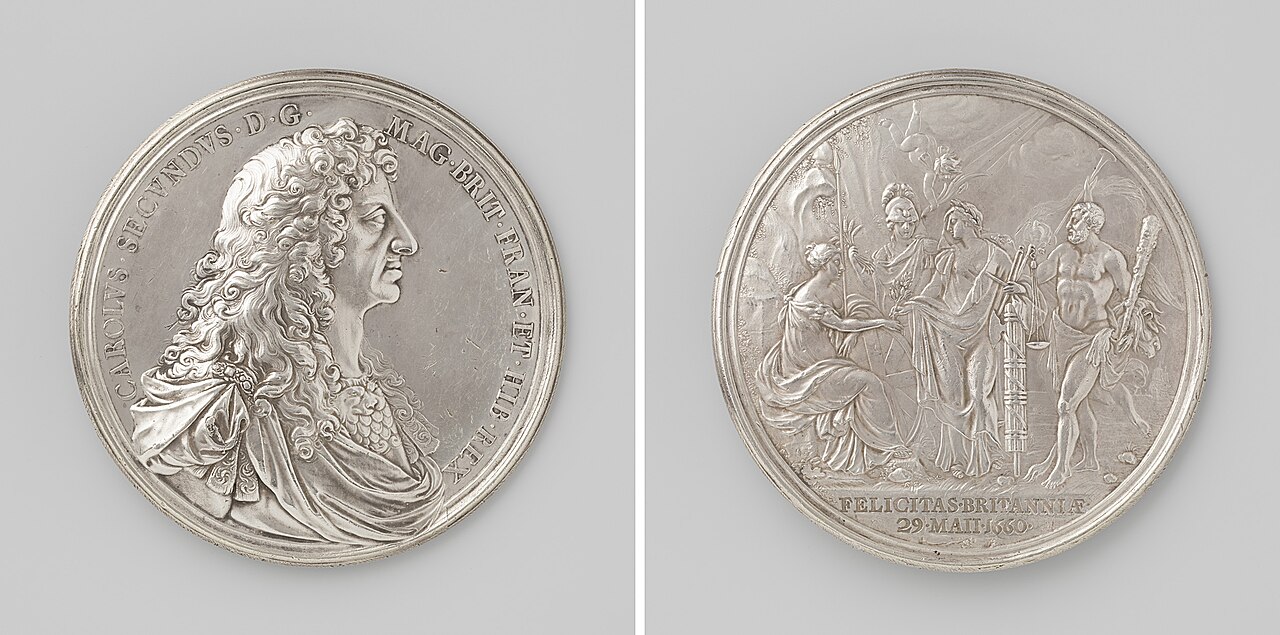
Silver Medal: Charles II's Return and Entry into London
Jean Roëttiers · between 1661 and 1703
A silver medal struck to commemorate King Charles II's triumphant return to London in 1660, showing his portrait and an allegory of restored happiness for Britain.
This medal depicts Charles II and celebrates his restoration and triumphant return to London in 1660.
About this source
What it is
This is a silver medal made in London by the engraver Jean Roëttiers, struck sometime between 1661 and 1703. One side shows a profile bust of King Charles II with long curled hair, surrounded by his Latin titles. The other side shows an allegorical scene: a seated figure representing Britannia receiving an olive branch, with figures representing Justice and other virtues, and the king shown among them in the guise of the hero Hercules. It is now held in the Rijksmuseum.
Why it matters
The medal celebrates the restoration of Charles II to the English throne after years of civil war and republican rule. Medals like this were a way for rulers and their supporters to spread an official image of triumph and legitimacy. It shows how Charles II wanted to be seen: as a hero bringing peace, justice and happiness back to Britain.
Look closer
- Why might the king be shown as a mythological hero rather than simply as himself?
- What does the choice of allegorical figures like Britannia and Justice tell you about the message the medal was meant to send?
- Who do you think would have owned or seen a medal like this, and why was that important?
This artifact is part of the curated material that grounds the AI version of Charles II on Humy.ai — when students ask about related events, the AI can quote it and cite it.
More Charles II sources
Browse all 95 →Primary source
Declaration of Breda
Charles II · 4 April 1660
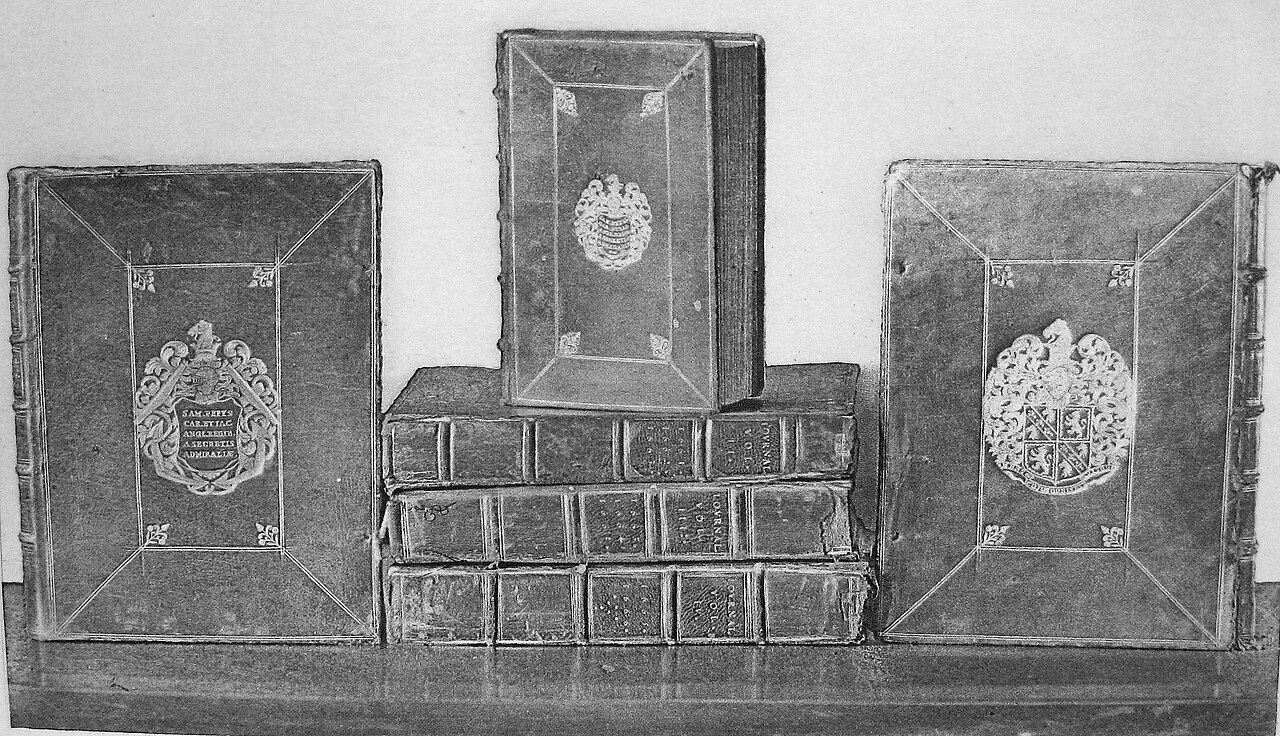 Diary entry
Primary source
Diary of Samuel Pepys
Samuel Pepys
 Painting
Primary source
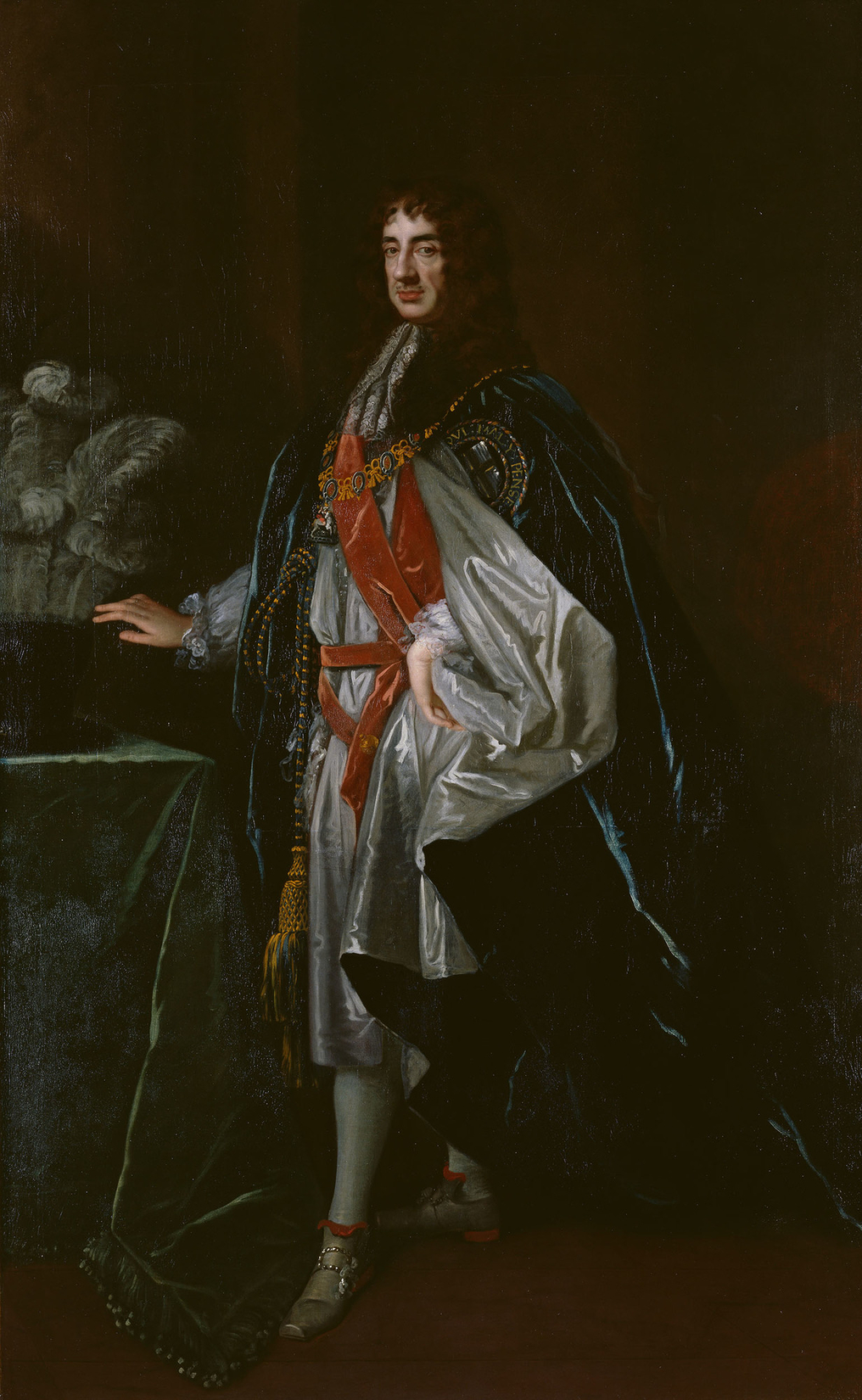
Portrait of Charles II of England
Peter Lely
 Painting
Primary source
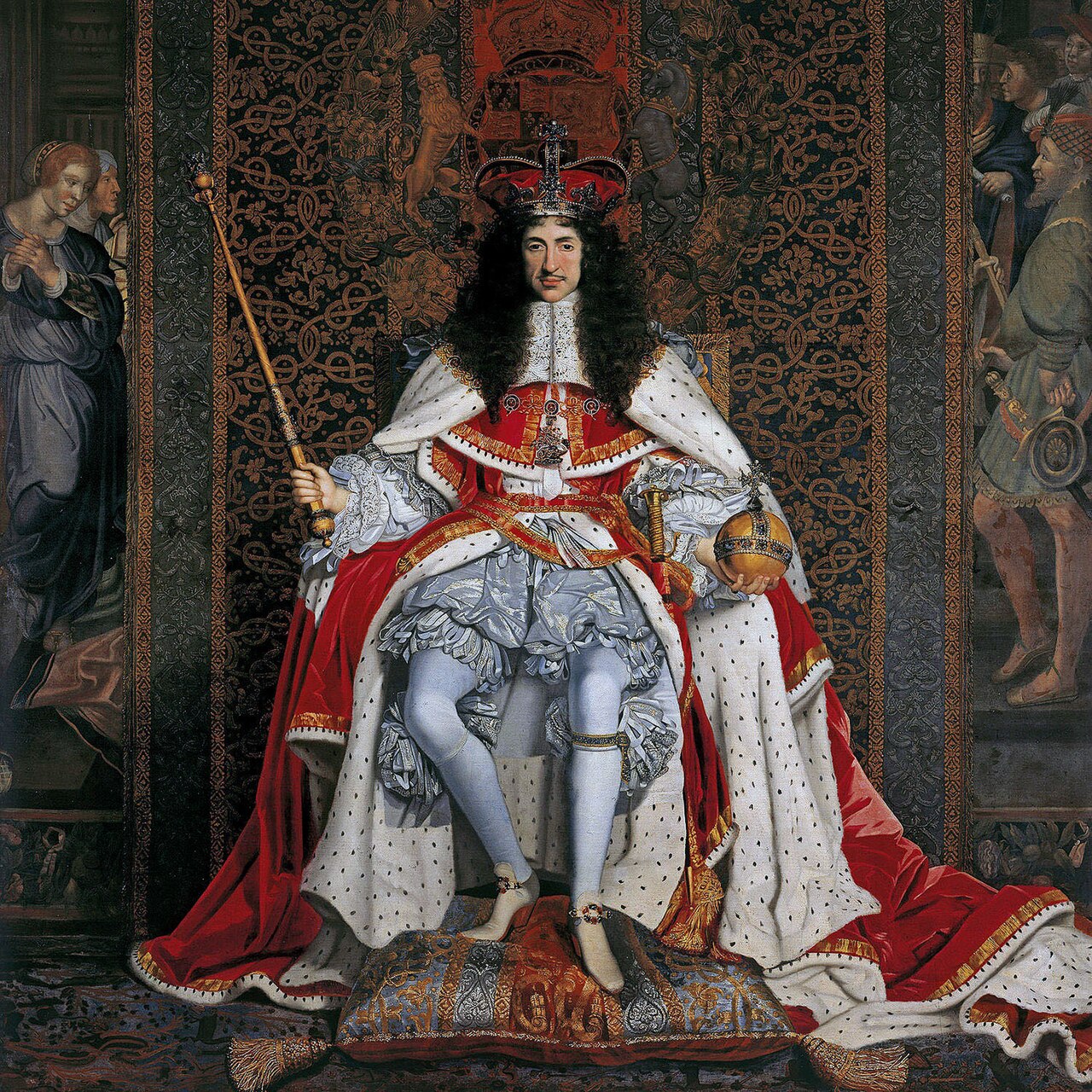
Charles II (1630-1685)
John Michael Wright · 1670
Free account
Read every Charles II source
Sign up free →
Ready when you are
Start chatting with Charles II now.
20 messages free · No credit card · Available in 50+ languages.