


Secondary sourcePainting
Sir Thomas Cromwell
Wenceslaus Hollar
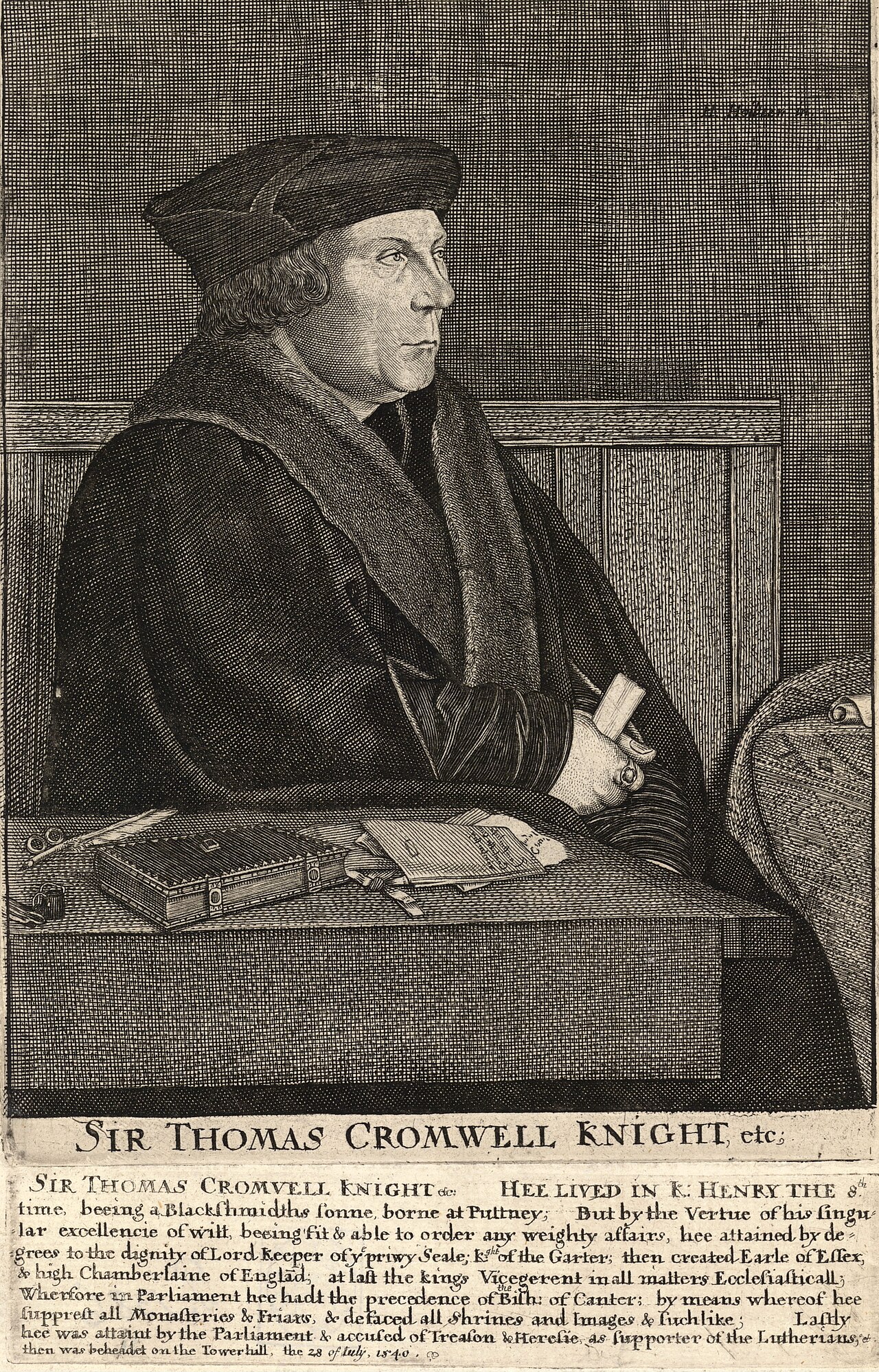
A 17th-century engraving by Wenceslaus Hollar spreading the Holbein image of Thomas Cromwell in print form.
This later engraving, based on Holbein's image, shows how Cromwell's likeness and story were still being reproduced after his death.
About this source
What it is
This is an engraved portrait of Thomas Cromwell made by the printmaker Wenceslaus Hollar in the 17th century, based on the Holbein likeness. It shows Cromwell seated with a book, papers, and a quill, with a printed caption beneath naming him and summarising his life and execution.
Why it matters
Prints like this allowed images of famous figures to be reproduced and distributed far more widely than painted portraits. Made decades after Cromwell's death, it shows how his image and story continued to circulate long after his execution, shaping how later generations remembered him.
Look closer
- Why do you think Hollar chose to show Cromwell surrounded by papers and a quill?
- How might a printed portrait with a biographical caption change the way people understood Cromwell compared to a painting?
- What does it tell us that his image was still being reproduced generations after his death?
This painting is part of the curated material that grounds the AI version of Thomas Cromwell on Humy.ai — when students ask about related events, the AI can quote it and cite it.
More Thomas Cromwell sources
Browse all 53 →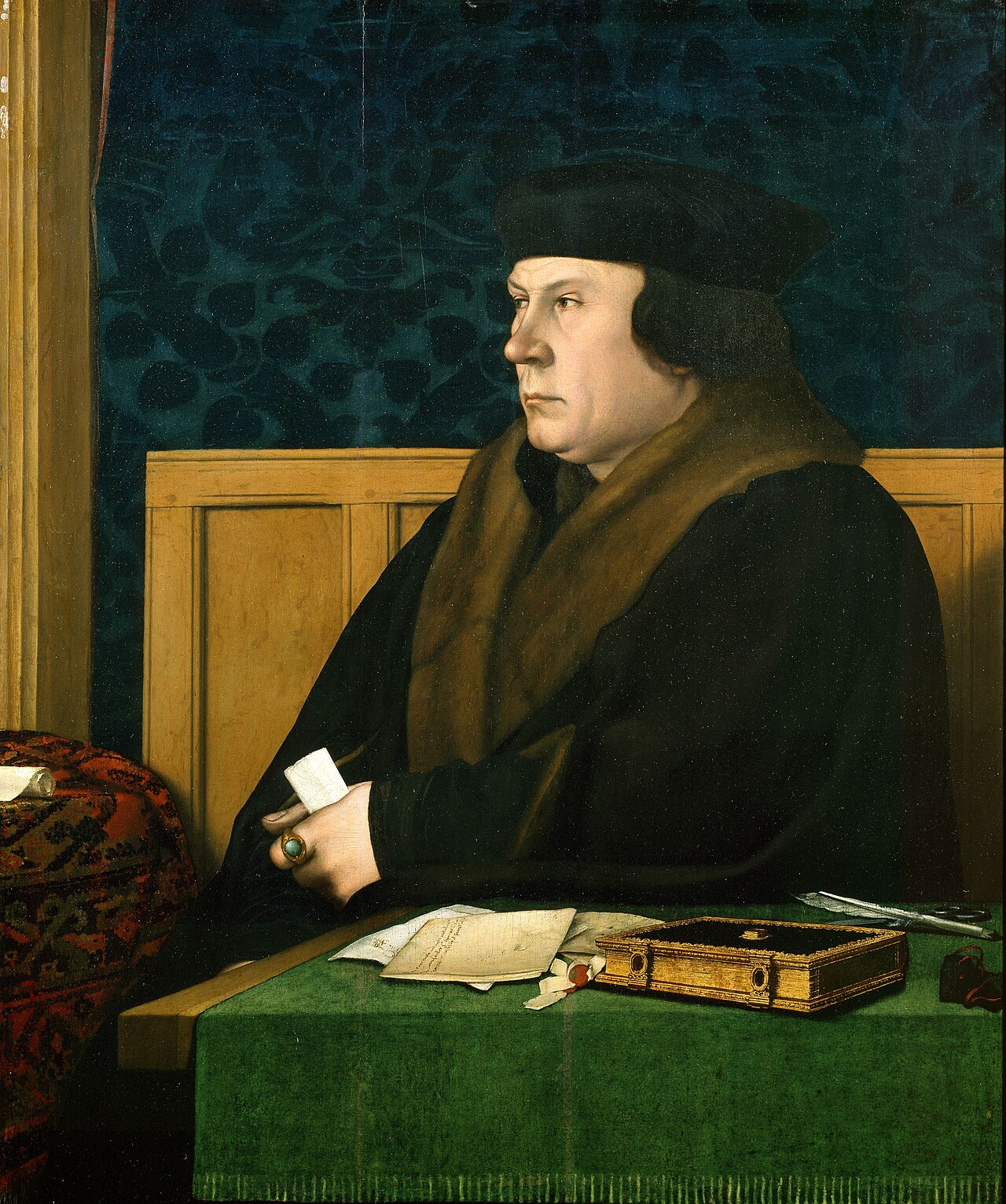 Painting
Primary source
Portrait of Thomas Cromwell
Hans Holbein the Younger · c. 1532-1534
 Painting
Primary source
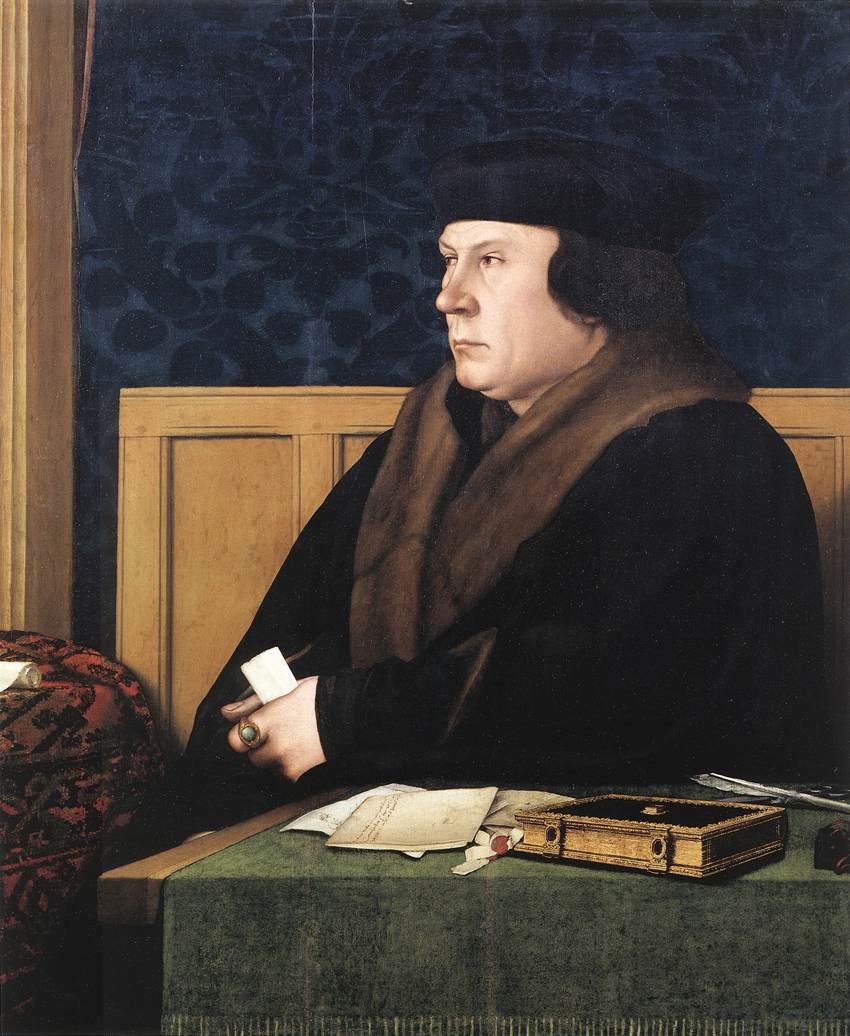
Portrait of Thomas Cromwell
Hans Holbein the Younger · c. 1532-1533
Primary source
Laws in Wales Acts 1535–1542
1536
 Painting
Primary source
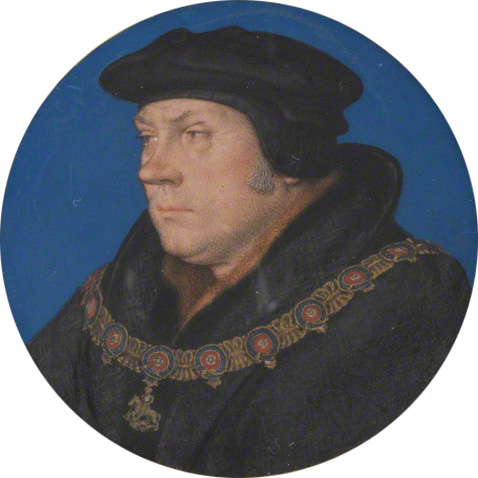
Portrait Miniature of Thomas Cromwell Wearing the Garter Collar
Studio of Hans Holbein the Younger · c. 1537
Free account
Read every Thomas Cromwell source
Sign up free →
Ready when you are
Start chatting with Thomas Cromwell now.
20 messages free · No credit card · Available in 50+ languages.