


Primary sourceBook
Sistrum
Margaret Fuller
A short poem by Margaret Fuller, written in her own voice. It uses a rattling image of a restless, ceaseless power to explore life, motion and devotion.
A poem by Fuller herself, showing her poetic voice and transcendentalist interests in verse.
About this source
What it is
This is a poem written by Margaret Fuller herself and listed on Wikisource under her poems. The available text opens with a stanza that calls a restless power a life-flow from life's natal hour, and says it has no music chords yet can keep devotion from freezing. No date of composition is given in the record.
Why it matters
Fuller was a writer and women's activist in the mid-nineteenth century, and her verse shows the transcendentalist interests she shared with writers in her circle. Reading her poems alongside her essays helps students see how she expressed ideas about nature, spirit and change in different forms.
Look closer
- What images does the poet use for power and motion, and why might she choose a rattle as a comparison?
- How does the poem move from questioning in the first stanza to a promise in the second?
- What might this poem leave out about Fuller's life or about the people who read poetry in her time?
This book is part of the curated material that grounds the AI version of Margaret Fuller on Humy.ai — when students ask about related events, the AI can quote it and cite it.
More Margaret Fuller sources
Meet the AI Margaret Fuller →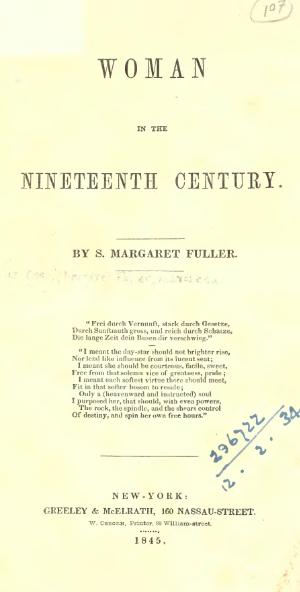 Book
Primary source
Woman in the Nineteenth Century
Margaret Fuller · 1845
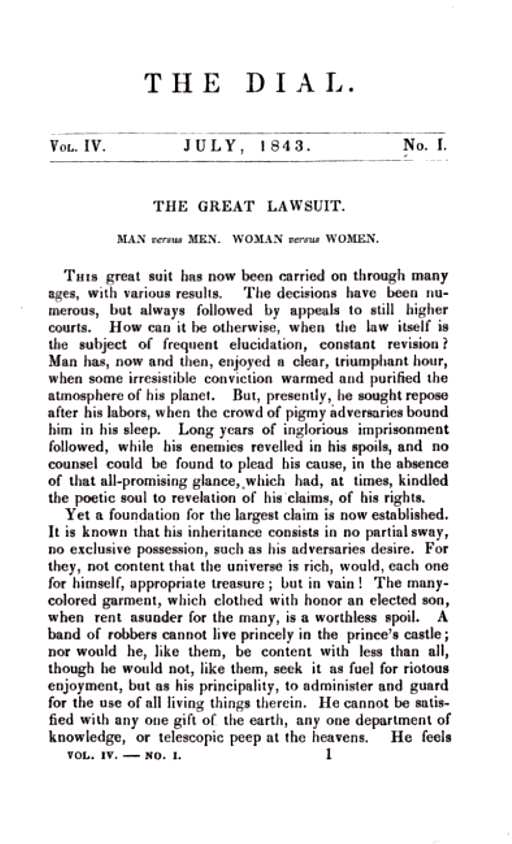 Newspaper article
Primary source
The Great Lawsuit
Margaret Fuller · July 1843
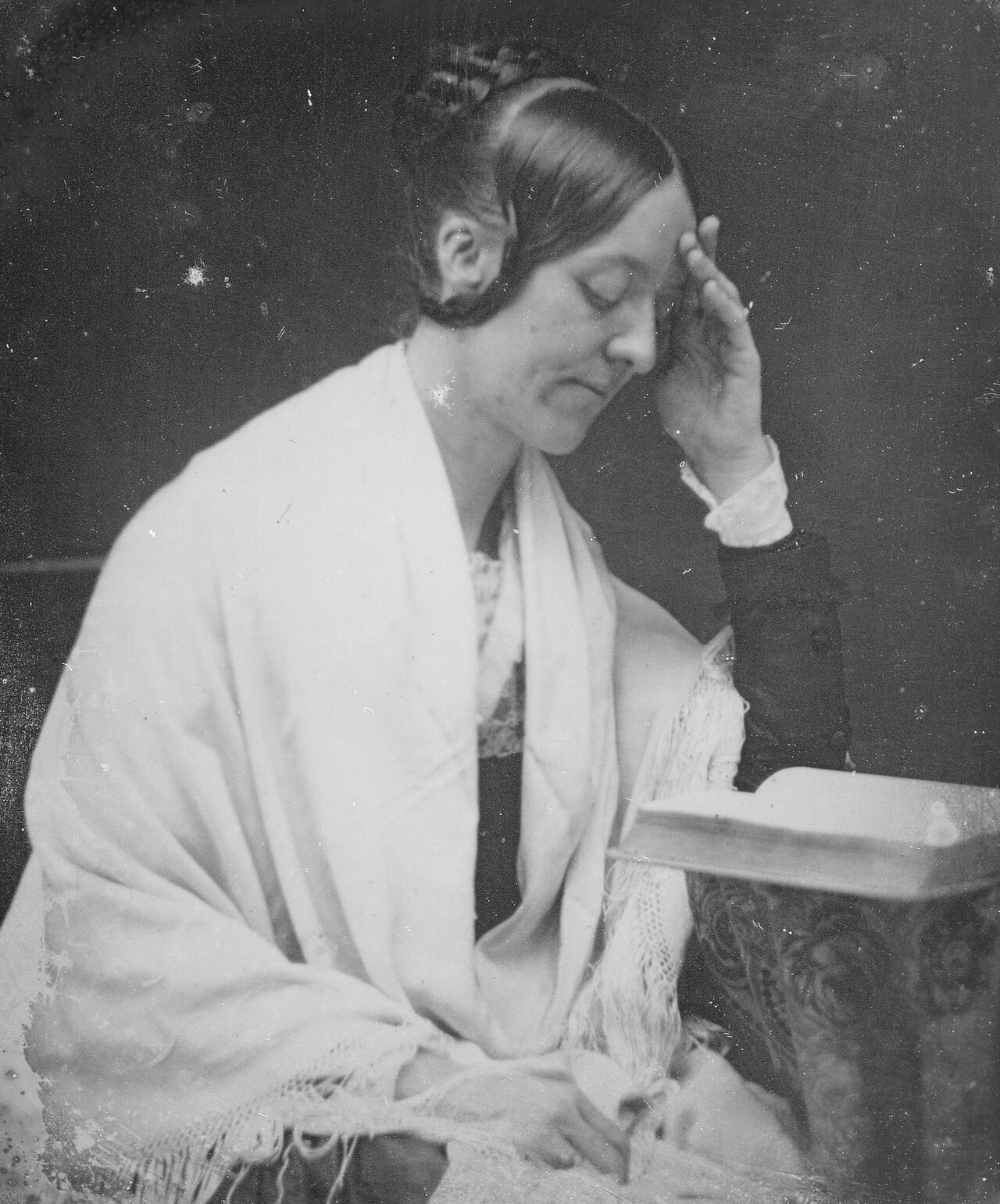 Photograph
Primary source
Margaret Fuller by John Plumbe, Jr.
John Plumbe, Jr. · 1846
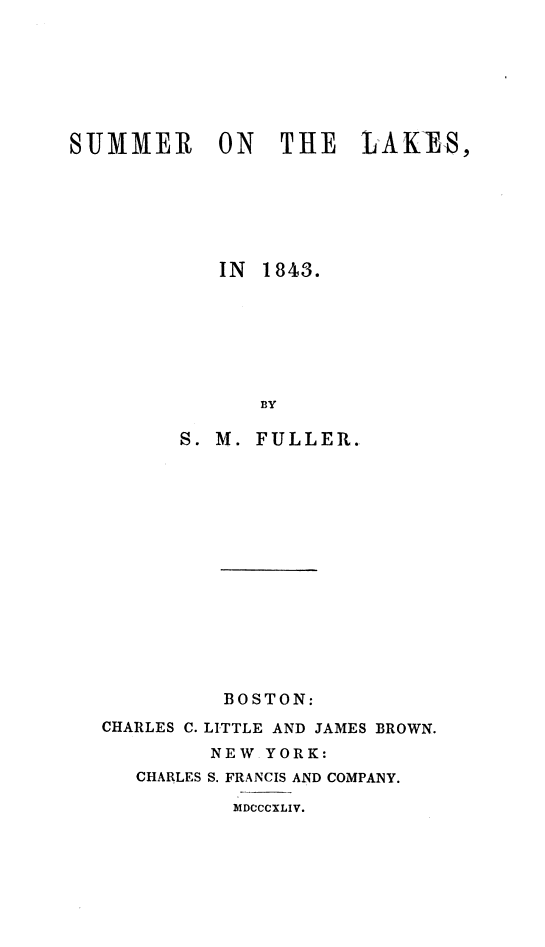 Book
Primary source
Summer on the Lakes
Margaret Fuller · 1844
Newspaper articlePrimary source
The Dial
Margaret Fuller · 1840
Ready when you are
Start chatting with Margaret Fuller now.
20 messages free · No credit card · Available in 50+ languages.