


Primary sourceArtifact
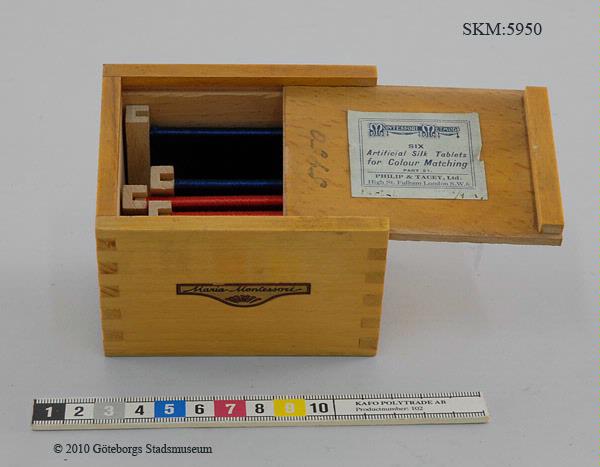
Six Artificial Silk Tablets for Colour Matching
Philip & Tacey
A boxed set of silk colour tablets made by Philip & Tacey following Montessori's method, used for teaching colour discrimination.
This colour-matching material, made to Montessori's method and bearing her name, illustrates her sensory teaching approach in practice.
About this source
What it is
This object is a wooden box containing six artificial silk tablets in blue and red, made by the company Philip & Tacey according to Maria Montessori's educational method. The box is labelled with Montessori's name and is held at the Museum of Gothenburg.
Why it matters
This material is an example of the sensory exercises Montessori designed to train children's perception, in this case matching colours by sight. The fact that a specialist company manufactured and sold these tablets shows how widely her teaching materials were adopted in classrooms beyond her own.
Look closer
- Why might matching colours by shade, not just by name, help train a child's attention?
- What does the printed label on the box tell us about who made it and for whom?
- How might using real materials like silk, rather than pictures, change how a child learns?
This artifact is part of the curated material that grounds the AI version of Maria Montessori on Humy.ai — when students ask about related events, the AI can quote it and cite it.
More Maria Montessori sources
Browse all 72 →Primary source
Gustav Czopp in gesprek met Maria Montessori
Gustav Czopp · 1938
 Photograph
Primary source
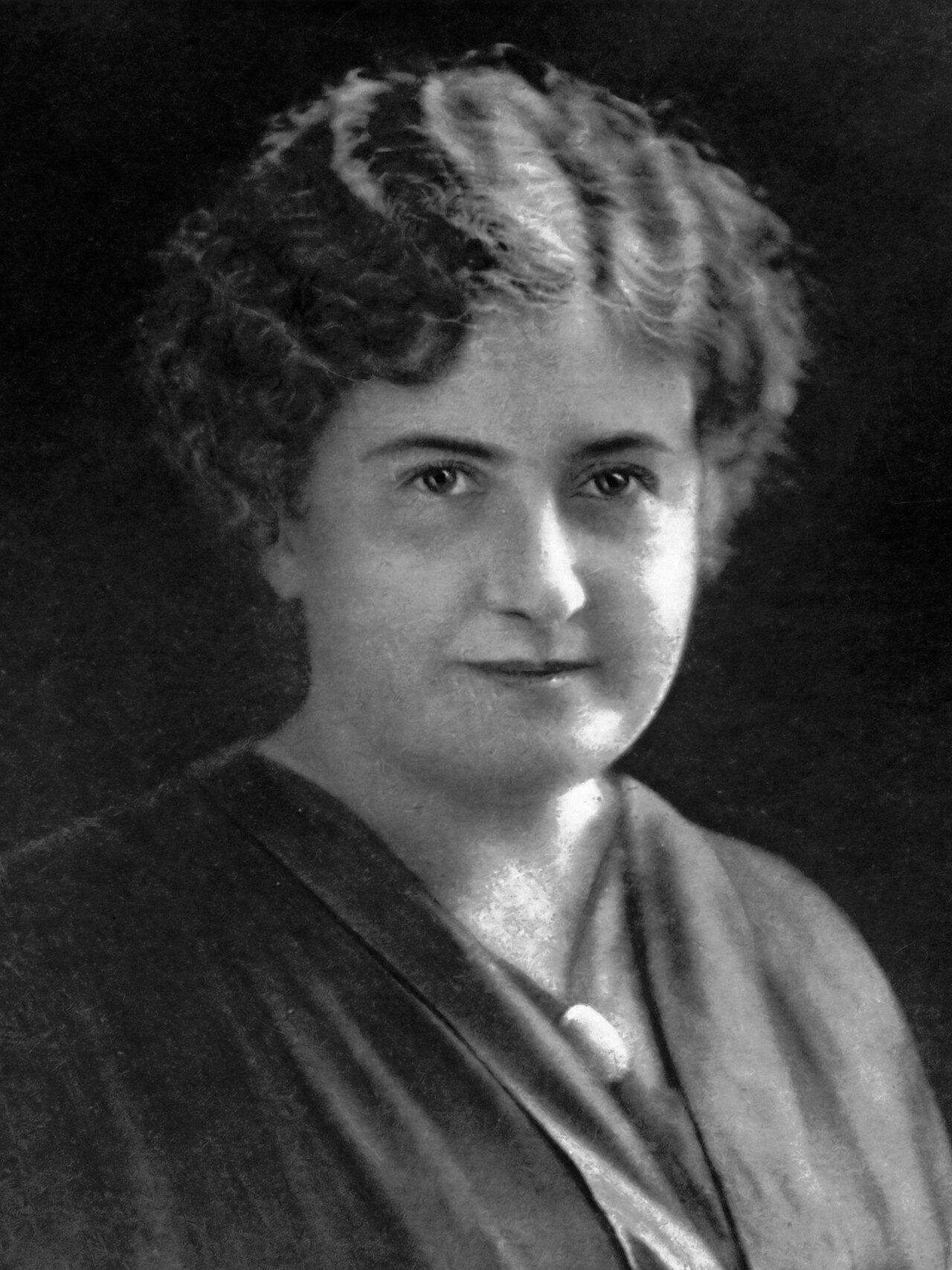
Portrait of Maria Montessori
 Photograph
Primary source
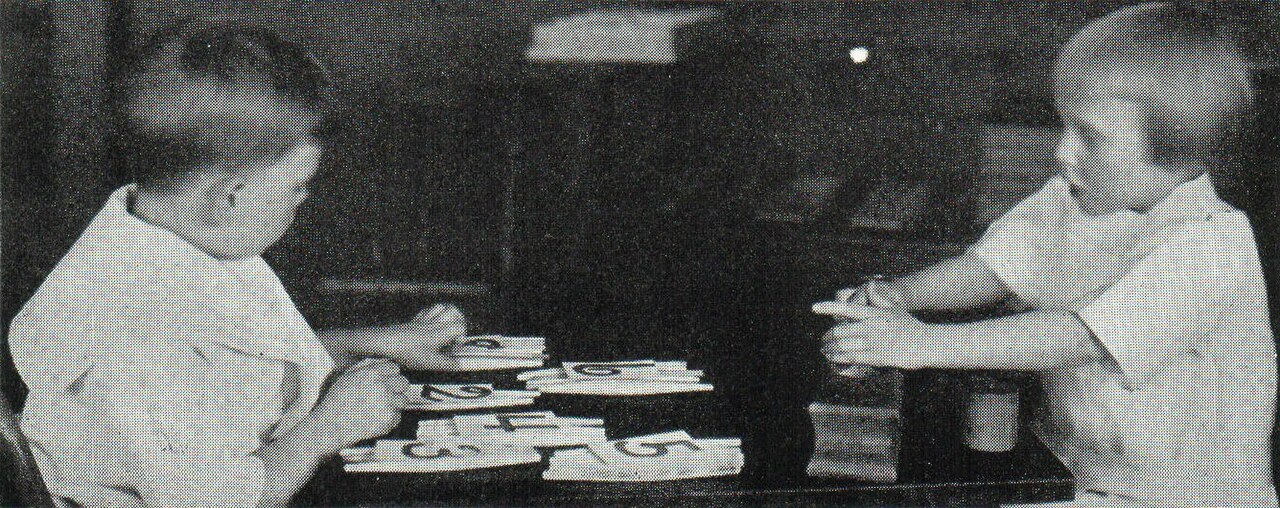
Montessori System: Children Using Counting and Geometrical Devices
House of Childhood Inc.
 Photograph
Primary source
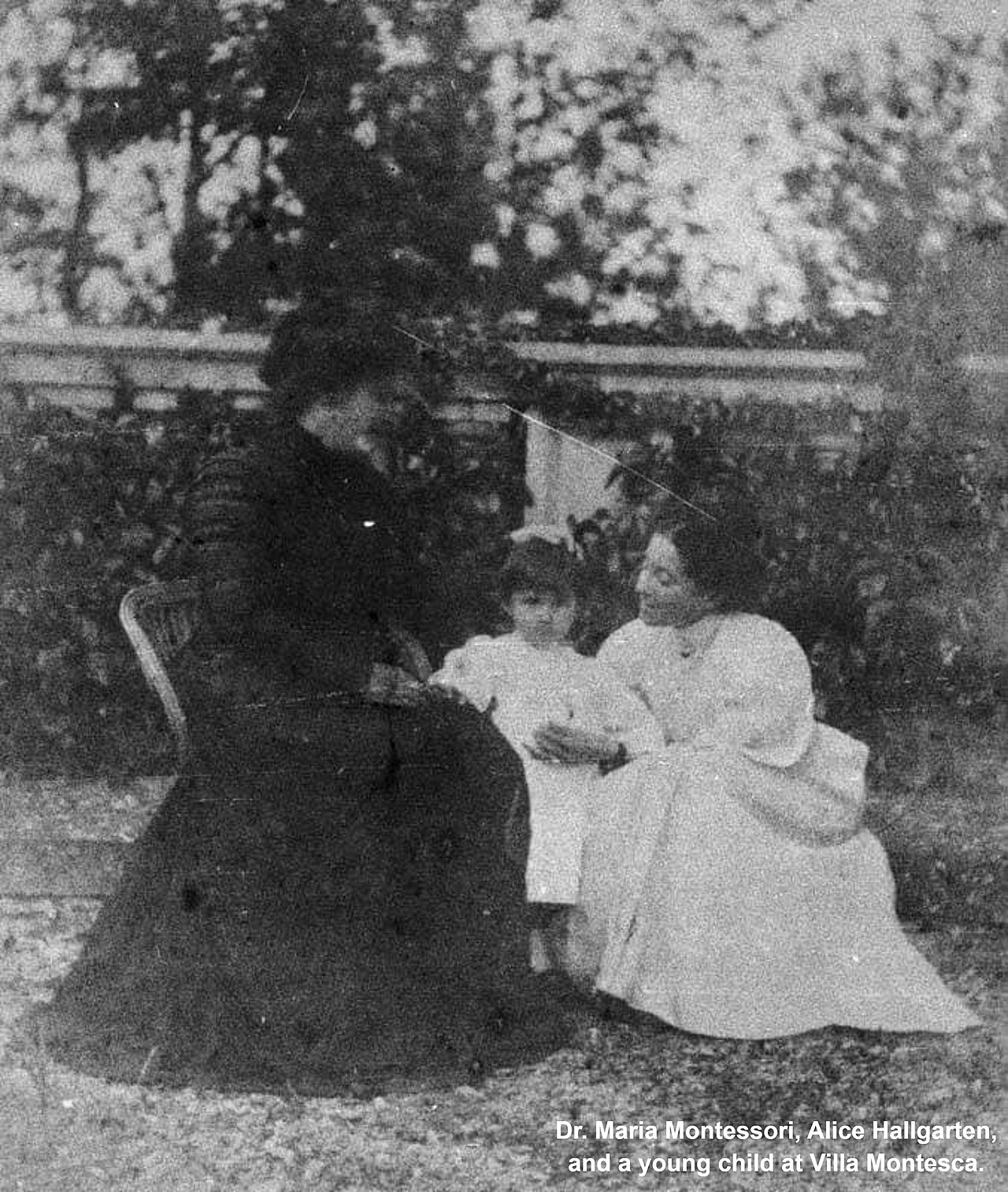
Alice Hallgarten and Dr. Maria Montessori
1913
Free account
Read every Maria Montessori source
Sign up free →
Ready when you are
Start chatting with Maria Montessori now.
20 messages free · No credit card · Available in 50+ languages.