


Primary sourcePainting1912
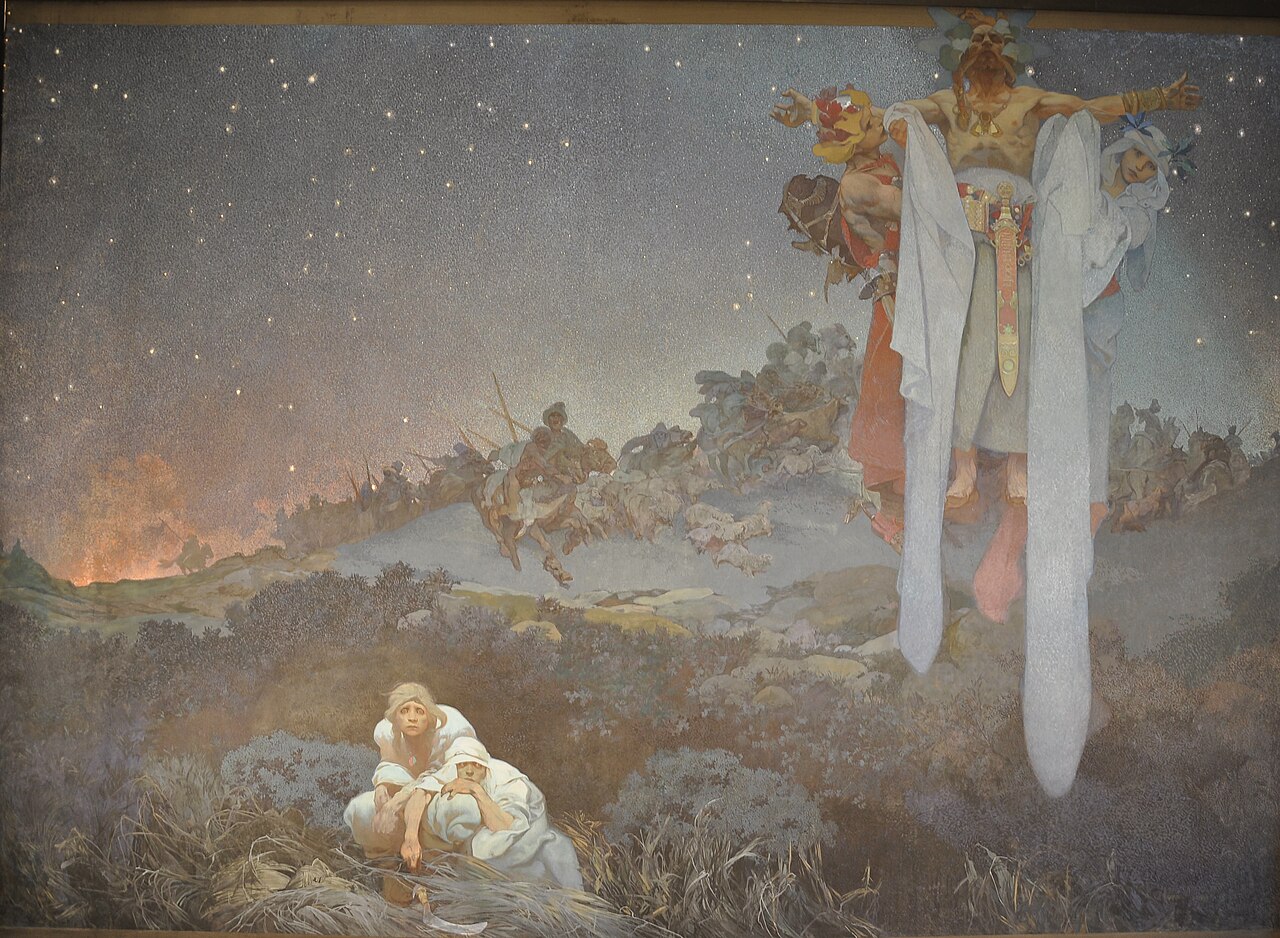
Slavs in their Original Homeland
Alphonse Mucha · 1912
The opening canvas of Mucha's Slav Epic, imagining the earliest Slavic peoples amid threat and vulnerability.
Painted by Mucha himself as the opening work of his Slav Epic cycle.
About this source
What it is
A large symbolist painting by Alphonse Mucha, dated 1912, now held by the Prague City Gallery. It opens his cycle the Slav Epic, which traces Slavic history through a series of monumental canvases.
Why it matters
The painting imagines the distant origins of the Slavic peoples, showing a night landscape with a distant raid or attack and two women hiding in the grass, watched over by a towering armed figure. It reflects Mucha's lifelong interest in Slavic identity and his wish to create a national visual mythology at a time when many Slavic peoples were still under foreign rule.
Look closer
- What mood does the burning glow and the distant riders create?
- Why might Mucha have chosen to show ordinary people hiding rather than fighting?
- What does the floating armed figure seem to represent?
This painting is part of the curated material that grounds the AI version of Alphonse Mucha on Humy.ai — when students ask about related events, the AI can quote it and cite it.
More Alphonse Mucha sources
Browse all 86 →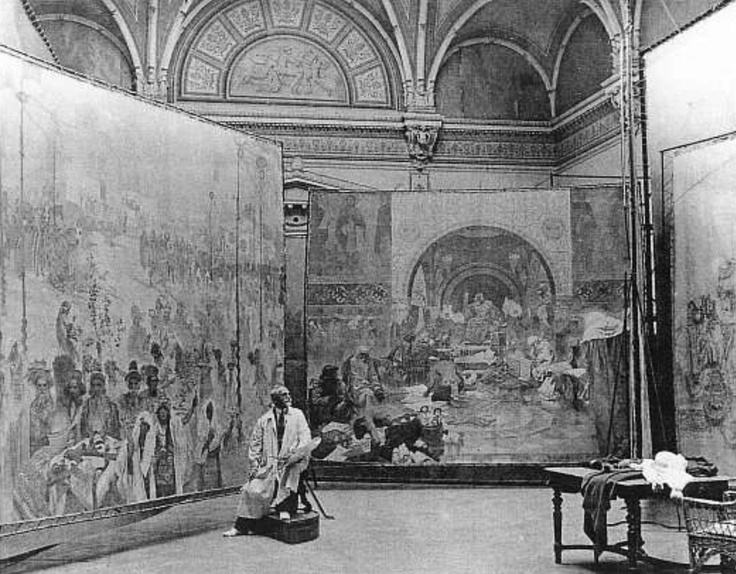 Painting
Primary source
The Slav Epic
Alphonse Mucha · 1910–1928
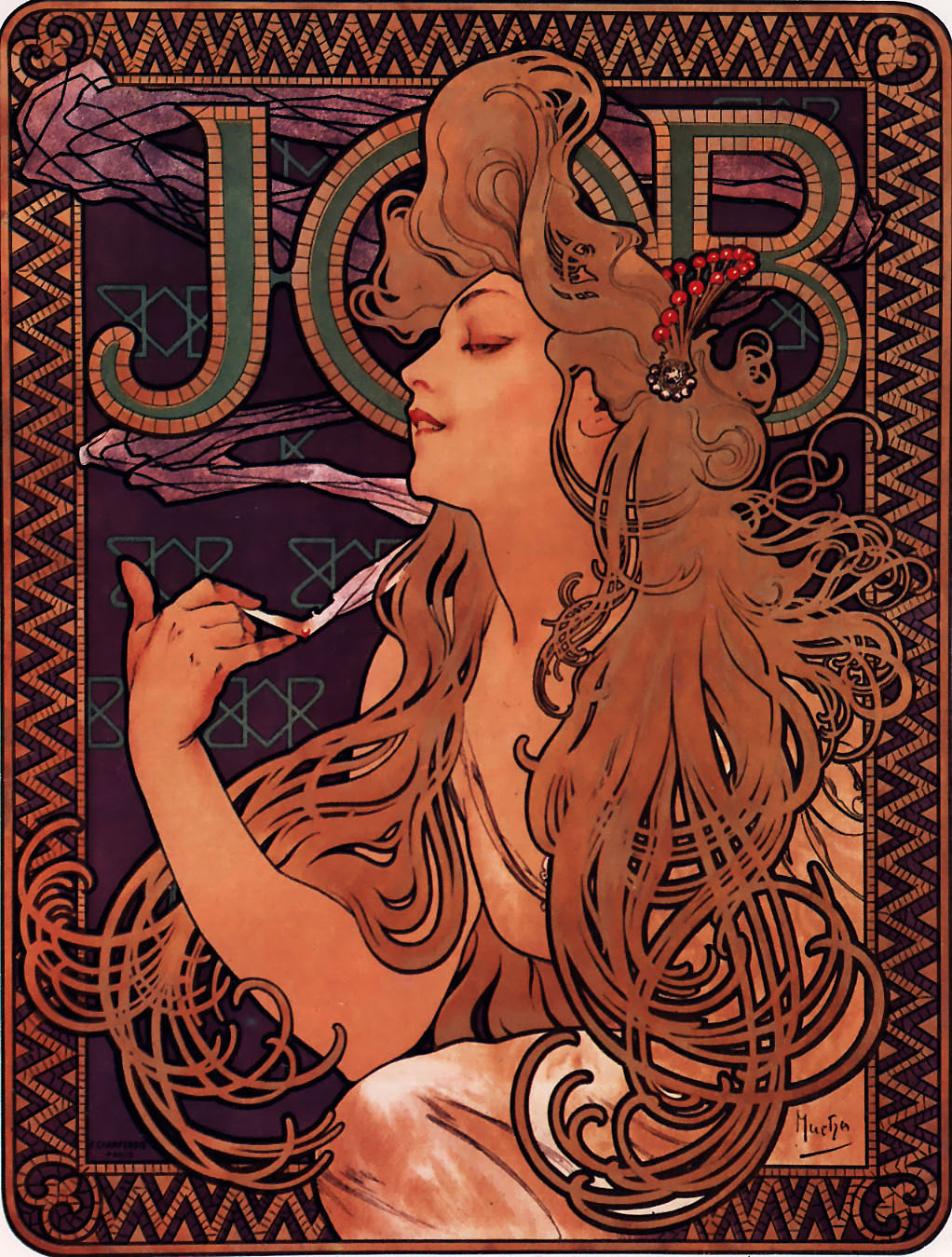 Painting
Primary source
JOB
Alphonse Mucha · 1896
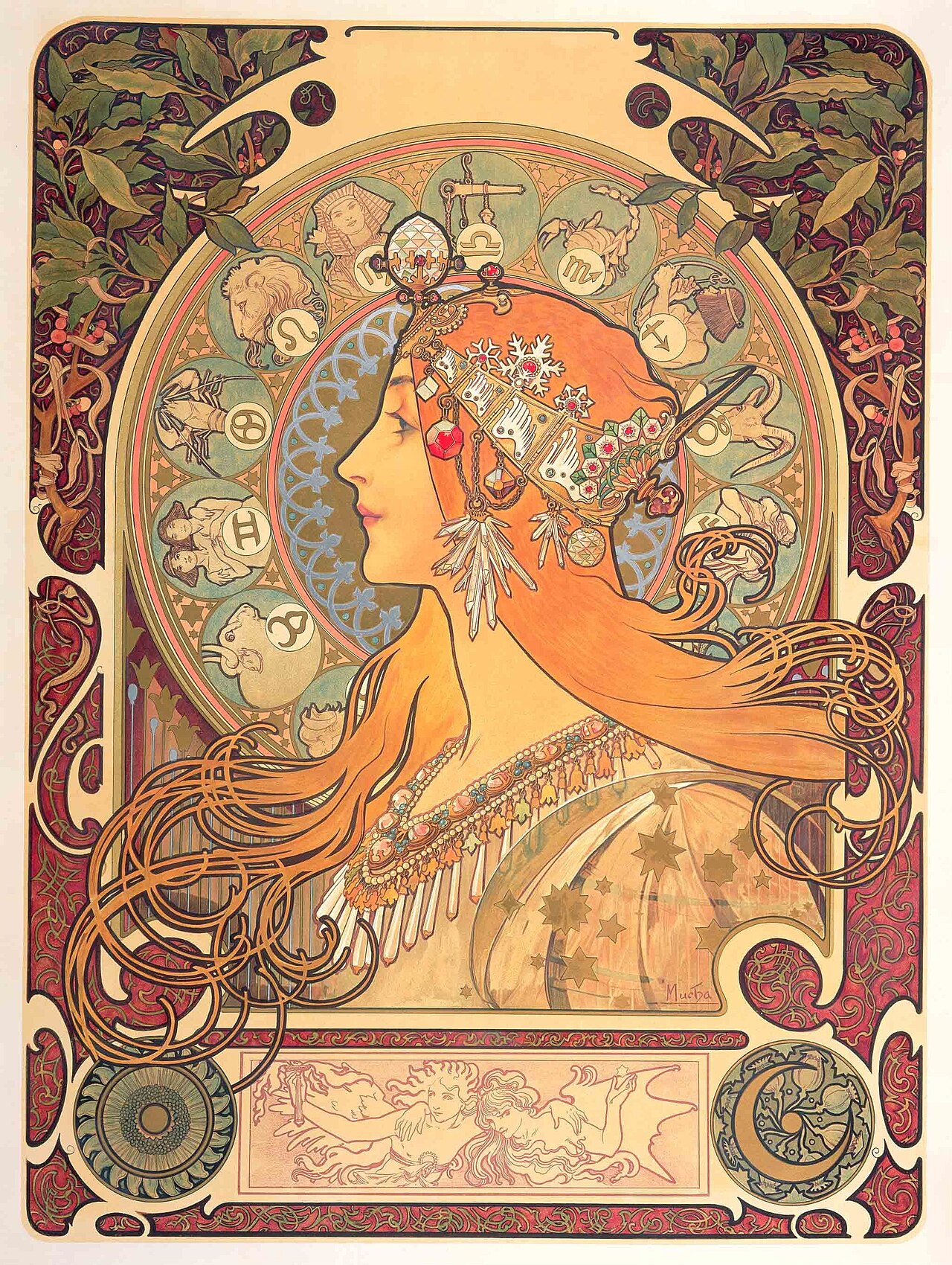 Painting
Primary source
Zodiac
Alphonse Mucha · 1896
 Photograph
Primary source
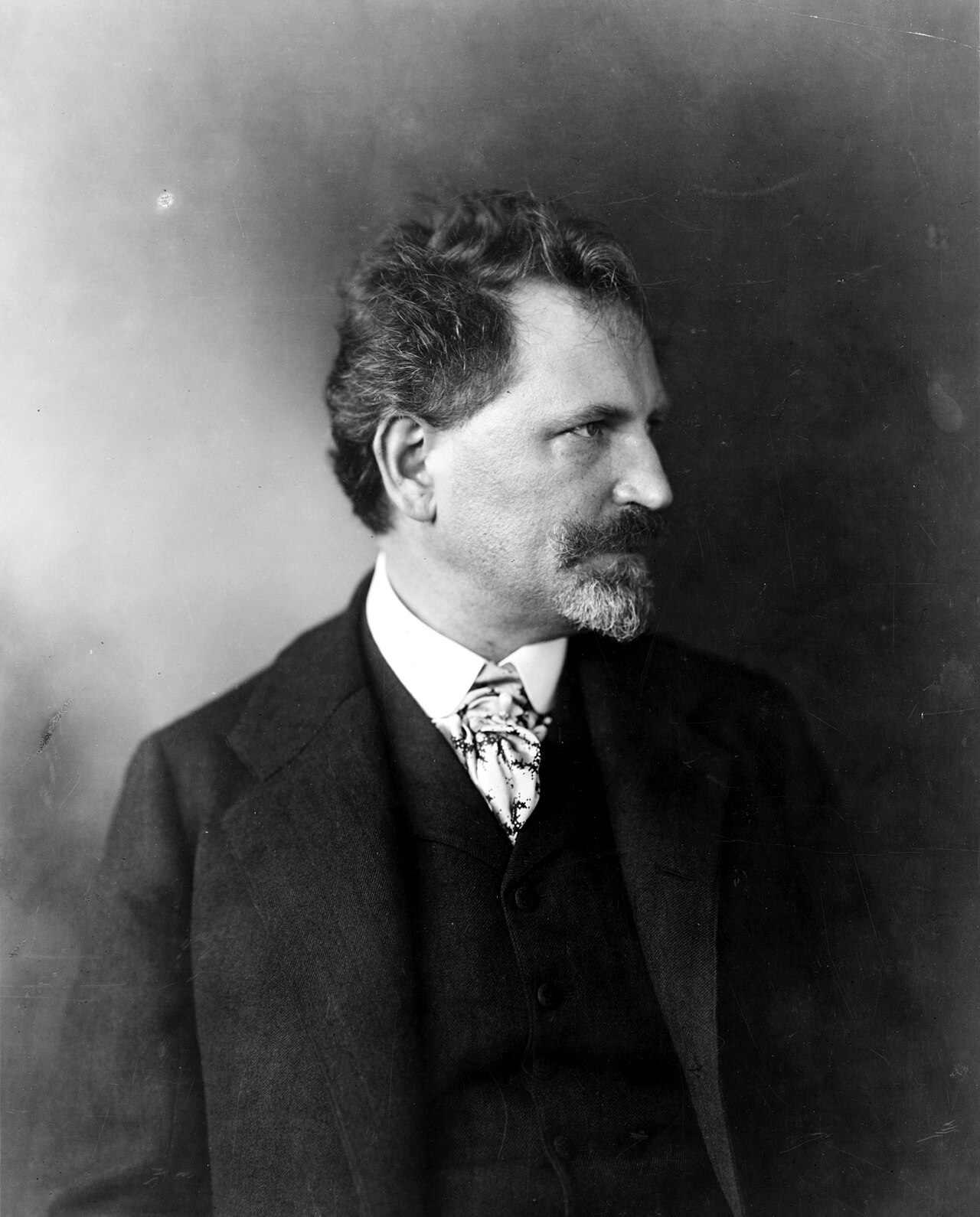
Alfons Mucha, half-length portrait, facing right
George R. Lawrence Co.
Free account
Read every Alphonse Mucha source
Sign up free →
Ready when you are
Start chatting with Alphonse Mucha now.
20 messages free · No credit card · Available in 50+ languages.