


Primary sourceDocument1836
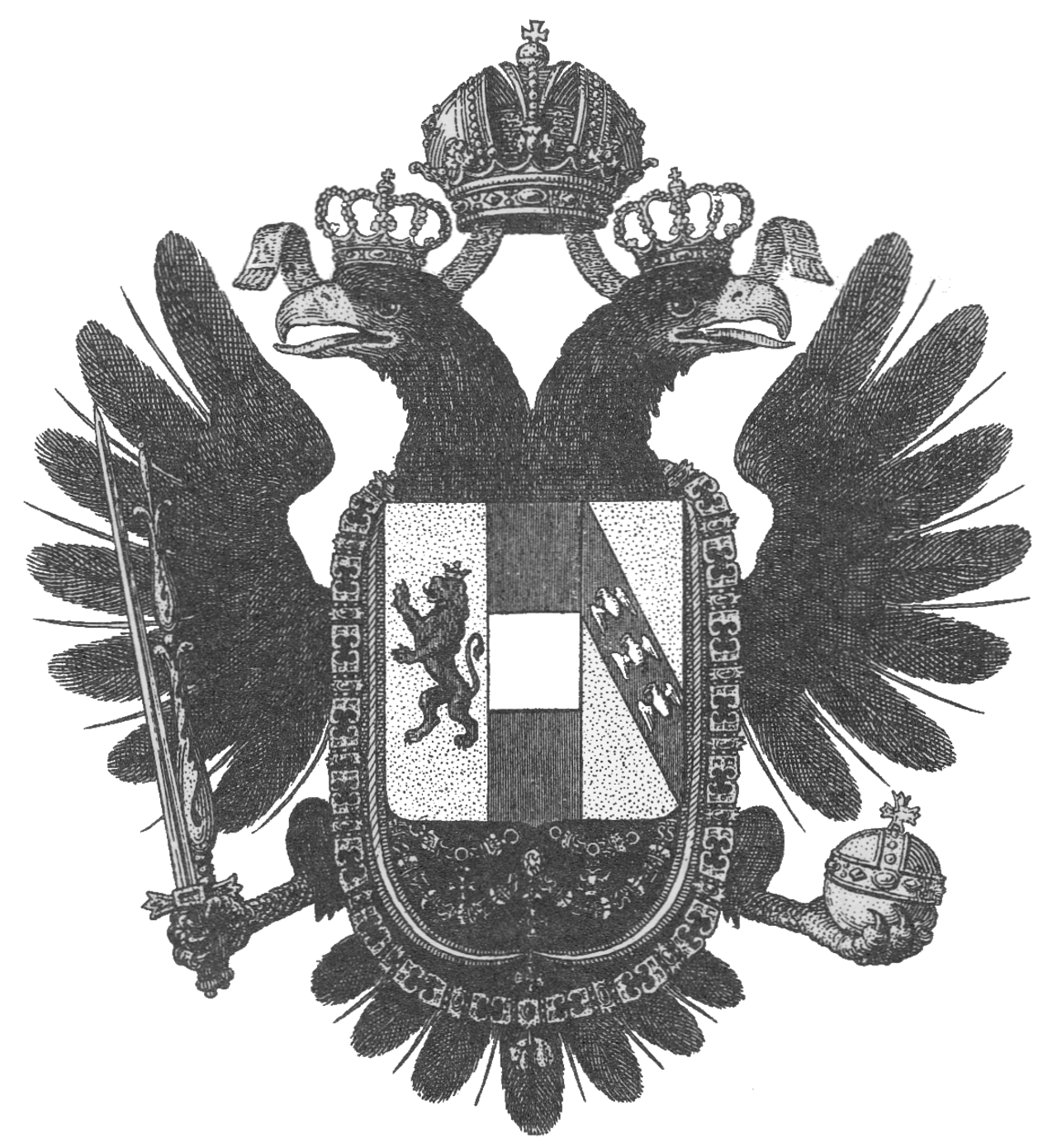
Small Coat of Arms of Emperor Ferdinand I, Chancery Version, 1836
Chancery of Emperor Ferdinand I · 1836
An official engraved coat of arms issued in 1836 by Ferdinand's chancery, showing the imperial emblem of his reign.
Shows the official emblem Ferdinand's chancery used during his reign, issued under his commission.
About this source
What it is
This is an engraved black and white coat of arms issued by the imperial chancery in 1836 under Emperor Ferdinand I. It shows a double-headed eagle wearing crowns, a central imperial crown above, and a shield with a lion and striped sections. The eagle holds a sword and an orb, and the design is surrounded by a chain collar and feathers. The title on the document names Ferdinand as king of Hungary and of other lands.
Why it matters
Coats of arms were official emblems used on government documents and state business. This version was produced by Ferdinand's own chancery, so it shows the emblem the government officially used during his reign. It helps students see how rulers used heraldry to show authority across their many lands.
Look closer
- What symbols on the arms seem to represent power, and what might each one mean?
- Why would a government issue a small version of its coat of arms?
- What does the design leave out about the people who lived under this emblem?
This document is part of the curated material that grounds the AI version of Ferdinand I of Austria on Humy.ai — when students ask about related events, the AI can quote it and cite it.
More Ferdinand I of Austria sources
Browse all 85 →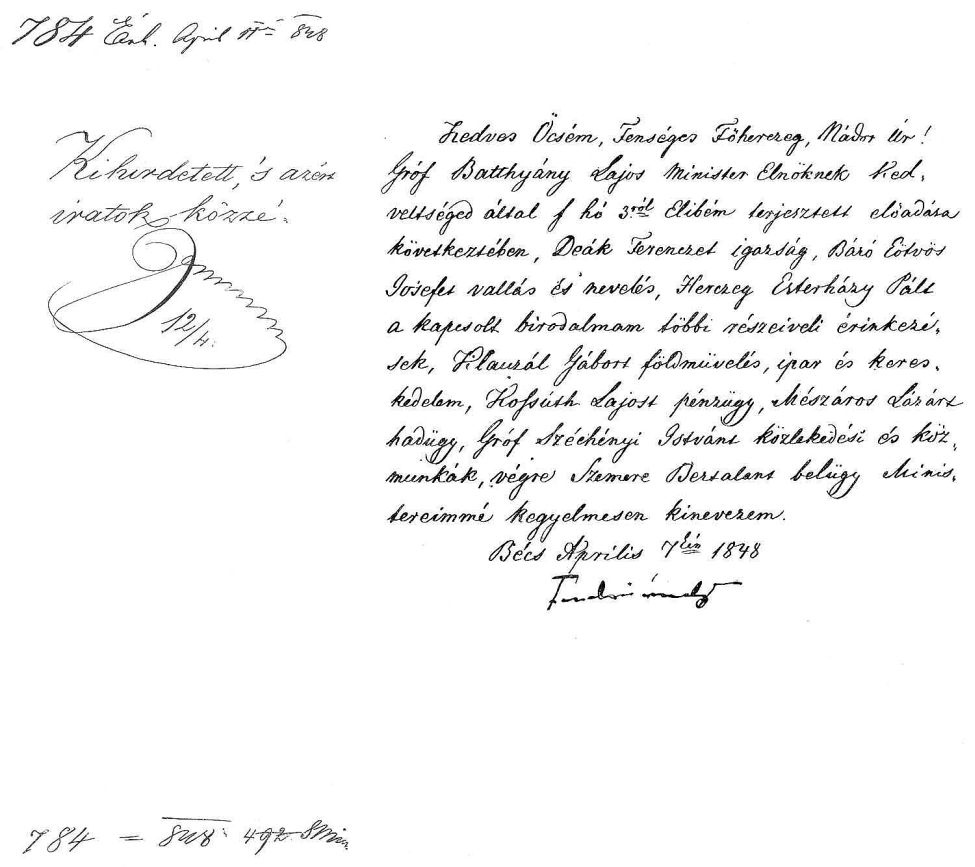 Letter
Primary source
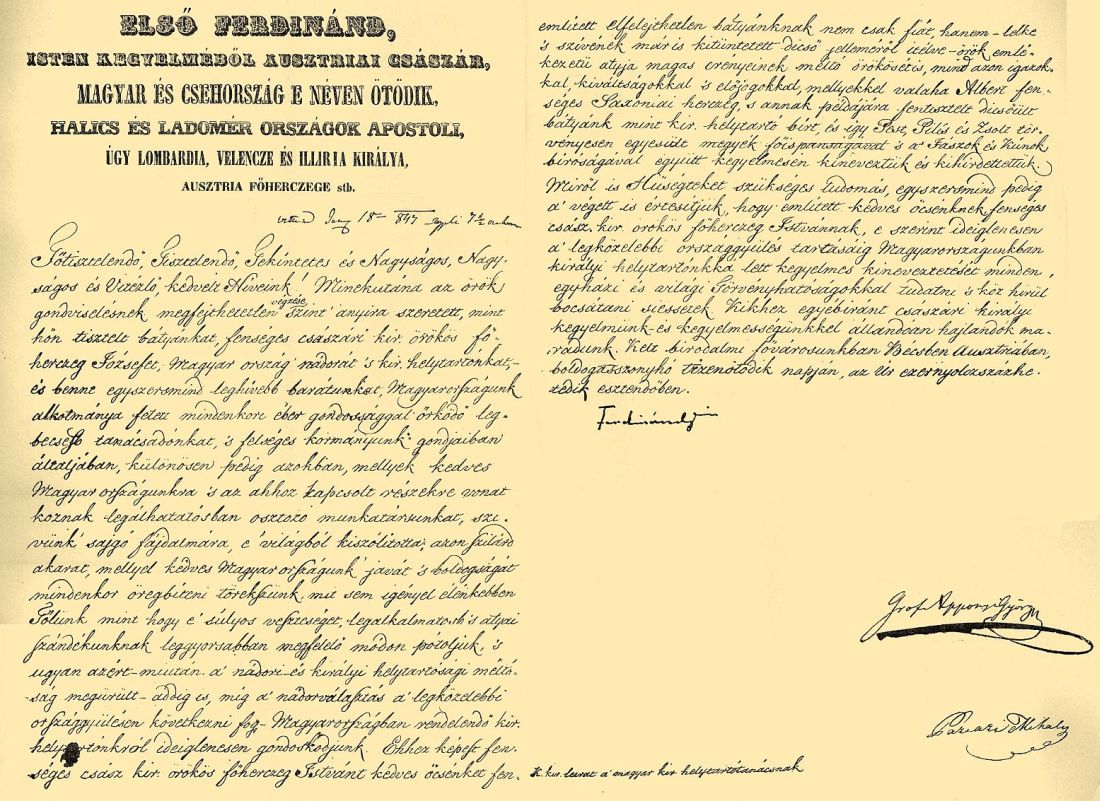
Letter Appointing the Batthyány Government
Ferdinand I of Austria · 7 April 1848
 Painting
Secondary source
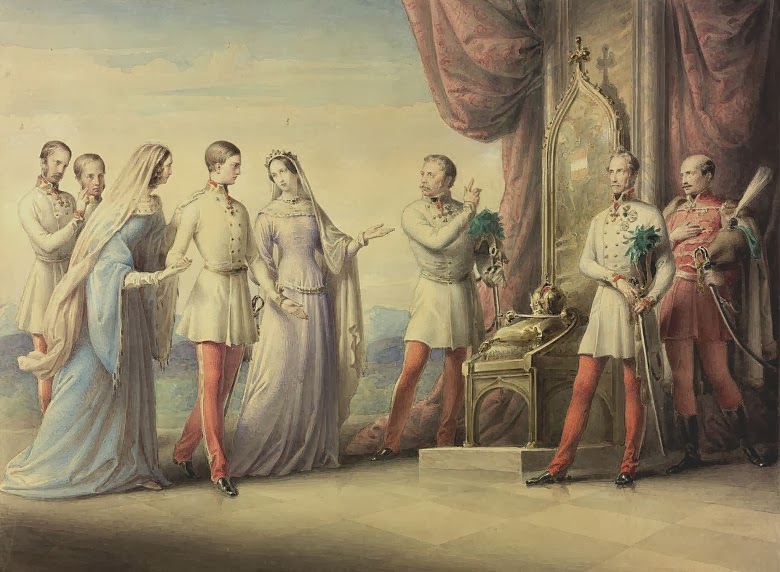
Archduchess Sophie Leading Her Son Franz Joseph to the Throne
Leopold Kupelwieser
 Painting
Secondary source
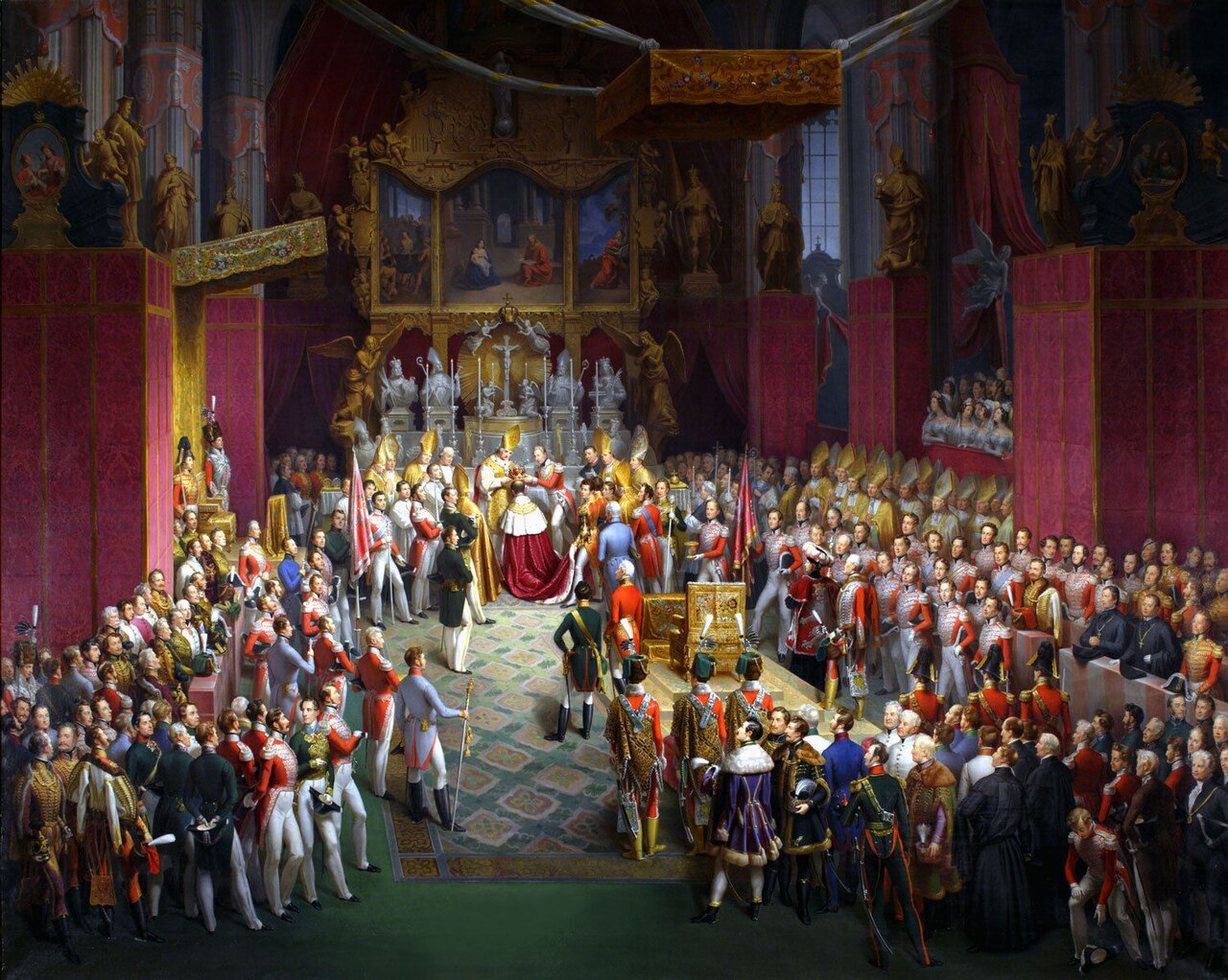
Coronation of Ferdinand I as King of Bohemia
Leopold Bucher · 1847
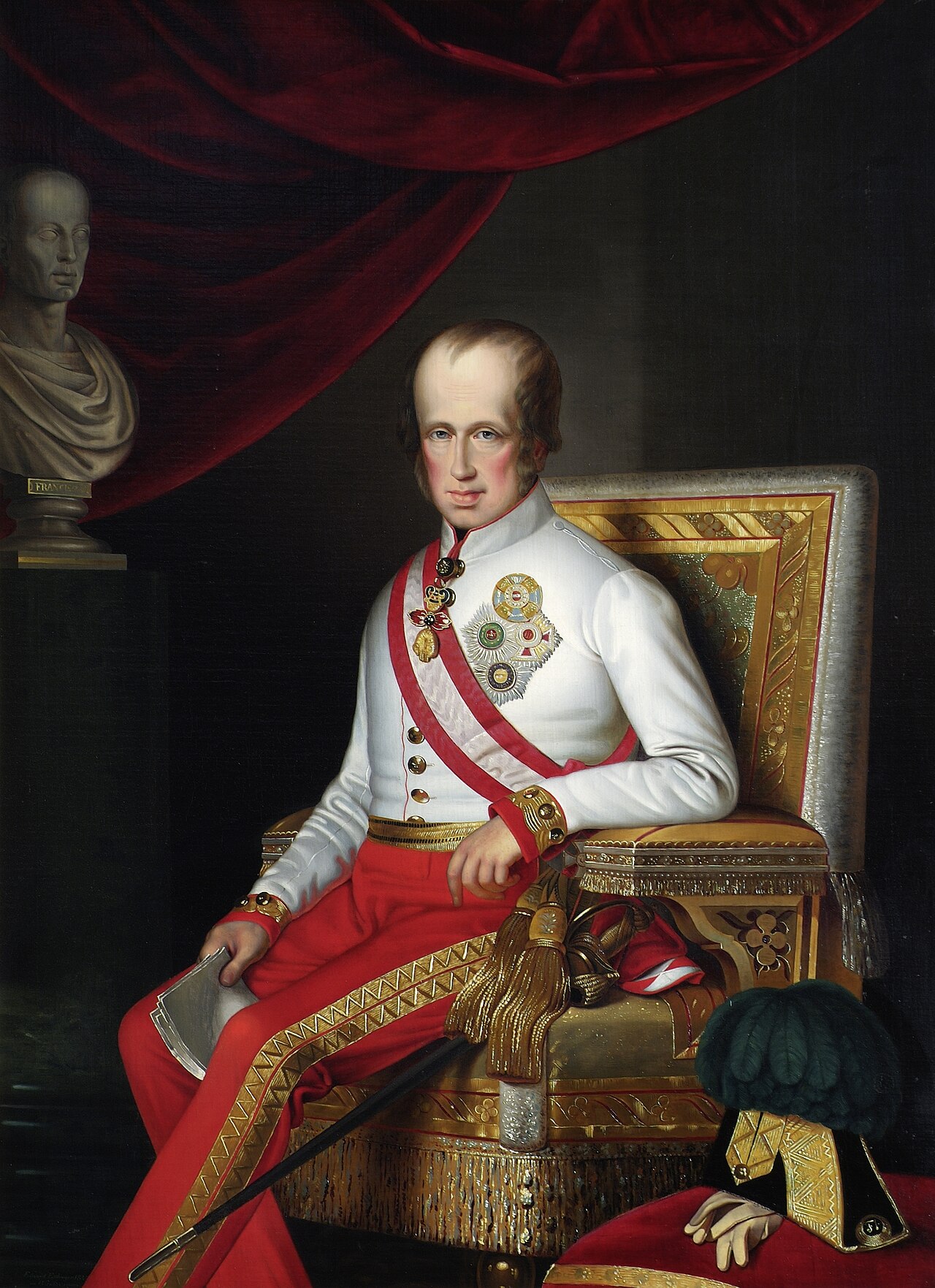 Painting
Primary source
Portrait of Emperor Ferdinand I
Eduard Edlinger · 1843

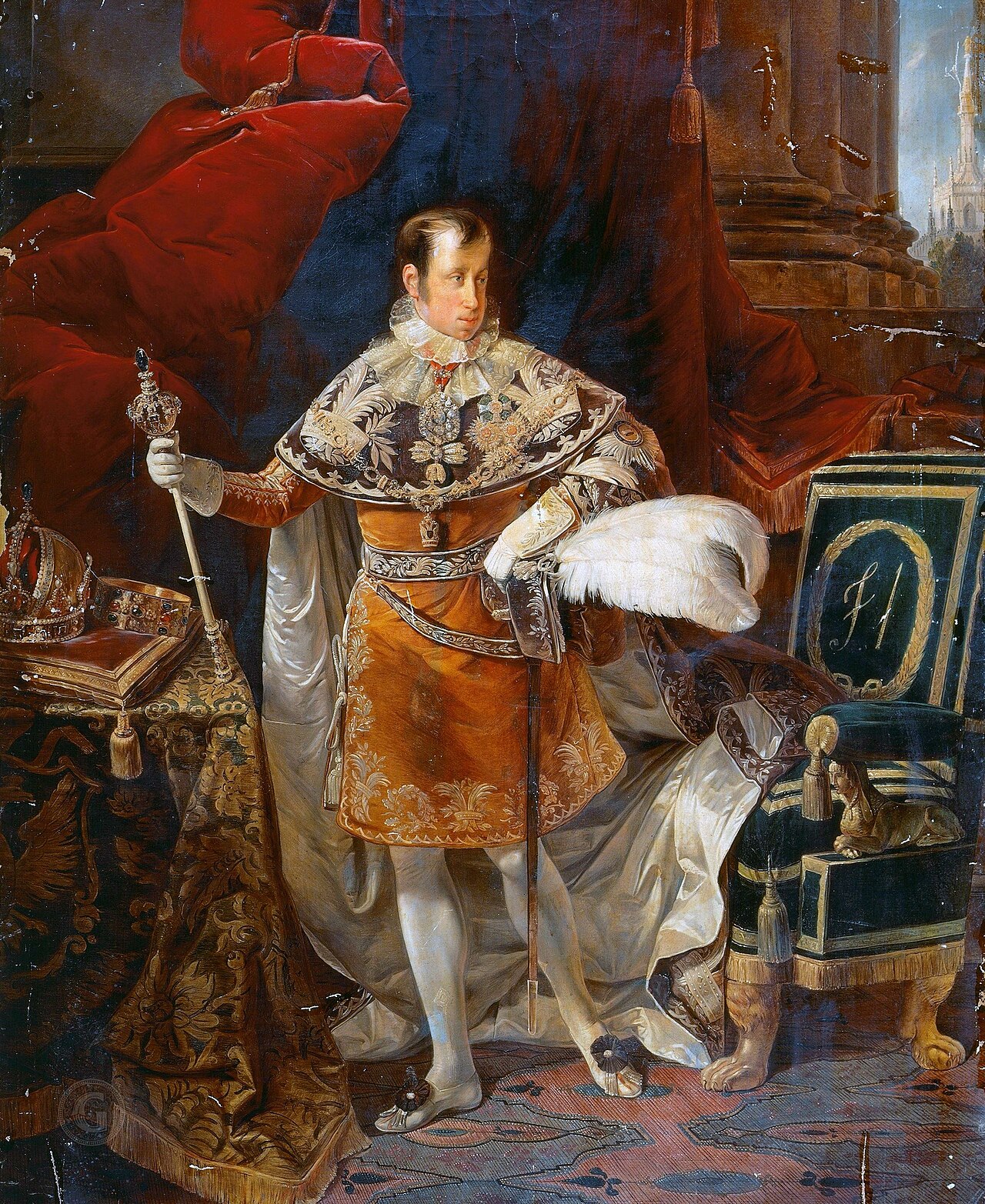
Free account
Read every Ferdinand I of Austria source
Sign up free →
Ready when you are
Start chatting with Ferdinand I of Austria now.
20 messages free · No credit card · Available in 50+ languages.