


Primary sourcePainting7 June 1894
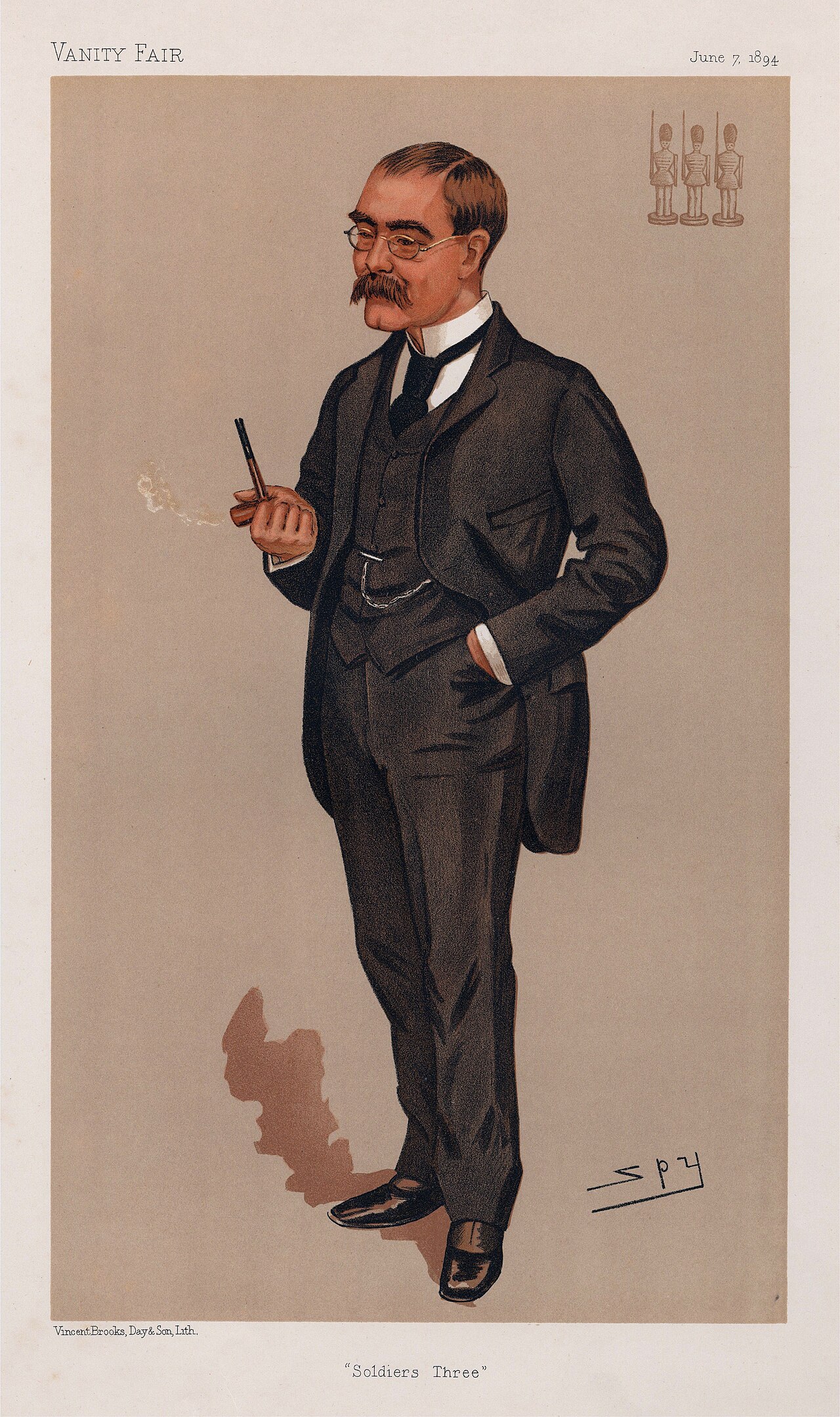
Soldiers Three
Leslie Ward · 7 June 1894
A 1894 Vanity Fair caricature of Rudyard Kipling by the artist known as 'Spy', showing him as a London literary celebrity.
This caricature depicts Kipling as a celebrated literary figure soon after his rise to fame.
About this source
What it is
This is a colour lithographic caricature published in Vanity Fair on 7 June 1894, drawn by Leslie Ward under his pen name 'Spy'. It depicts Kipling smoking a pipe, with three toy soldiers in the corner, and is titled 'Soldiers Three' after one of his story collections.
Why it matters
Caricatures like this were a popular way for Victorian magazines to depict well-known public figures. This image shows how quickly Kipling, who had returned from India, became a recognisable celebrity in London literary circles, humorously linked to his writing about soldiers.
Look closer
- Why do you think the artist included toy soldiers rather than real ones?
- What does the pipe and relaxed pose suggest about how Kipling was viewed by the public?
- How might a caricature differ from a formal portrait in what it tells us about a person?
This painting is part of the curated material that grounds the AI version of Rudyard Kipling on Humy.ai — when students ask about related events, the AI can quote it and cite it.
More Rudyard Kipling sources
Browse all 93 →
Ready when you are
Start chatting with Rudyard Kipling now.
20 messages free · No credit card · Available in 50+ languages.