


Secondary sourcePainting1655
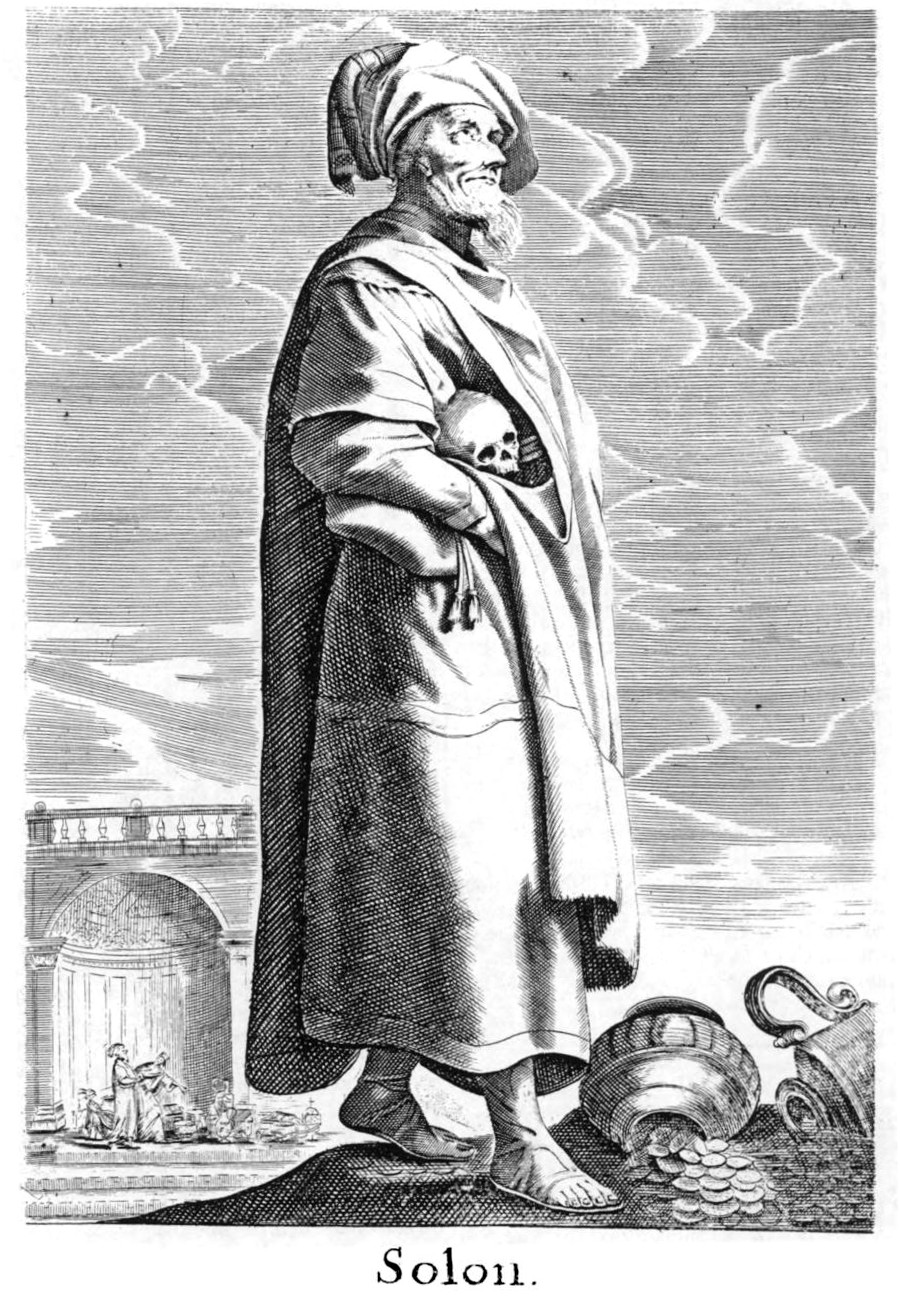
Solon in Thomas Stanley's History of Philosophy
Unknown · 1655
A 1655 engraving showing Solon as a founding philosopher, holding a skull and standing over spilled coins, from an early English history of philosophy.
This engraving imagines Solon as a wise sage, showing how later generations idealised him as a founder of philosophy.
About this source
What it is
This is an engraved plate titled 'Solon' from Thomas Stanley's 1655 book The History of Philosophy, an early English work collecting the lives and ideas of ancient philosophers. The maker of the engraving is unknown.
It shows a bearded man in a turban and long robe, holding a skull, with coins spilling from an overturned urn at his feet and a classical building behind him.
Why it matters
By the 1600s, Solon was remembered less as a historical lawmaker and more as a symbol of wisdom. The skull and spilled coins suggest ideas about mortality and the emptiness of wealth, themes often linked to Solon's famous warning that no one should be called happy until their life is over.
Look closer
- Why might the artist have given Solon a turban rather than Greek dress?
- What do the skull and coins suggest about the message the book wanted readers to take from Solon's life?
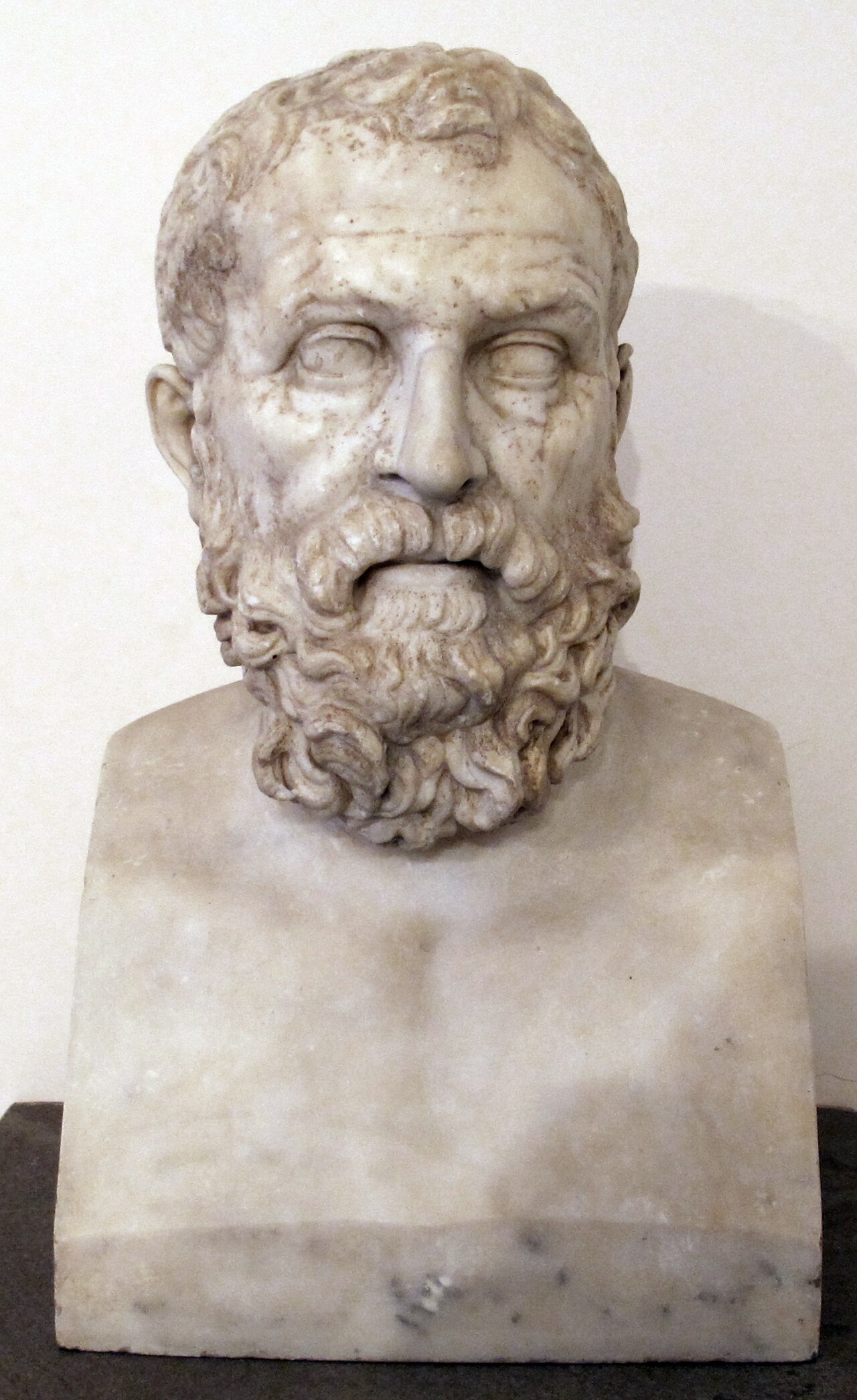
- How does this image differ from how we think Solon actually looked?
This painting is part of the curated material that grounds the AI version of Solon on Humy.ai — when students ask about related events, the AI can quote it and cite it.
More Solon sources
Browse all 83 →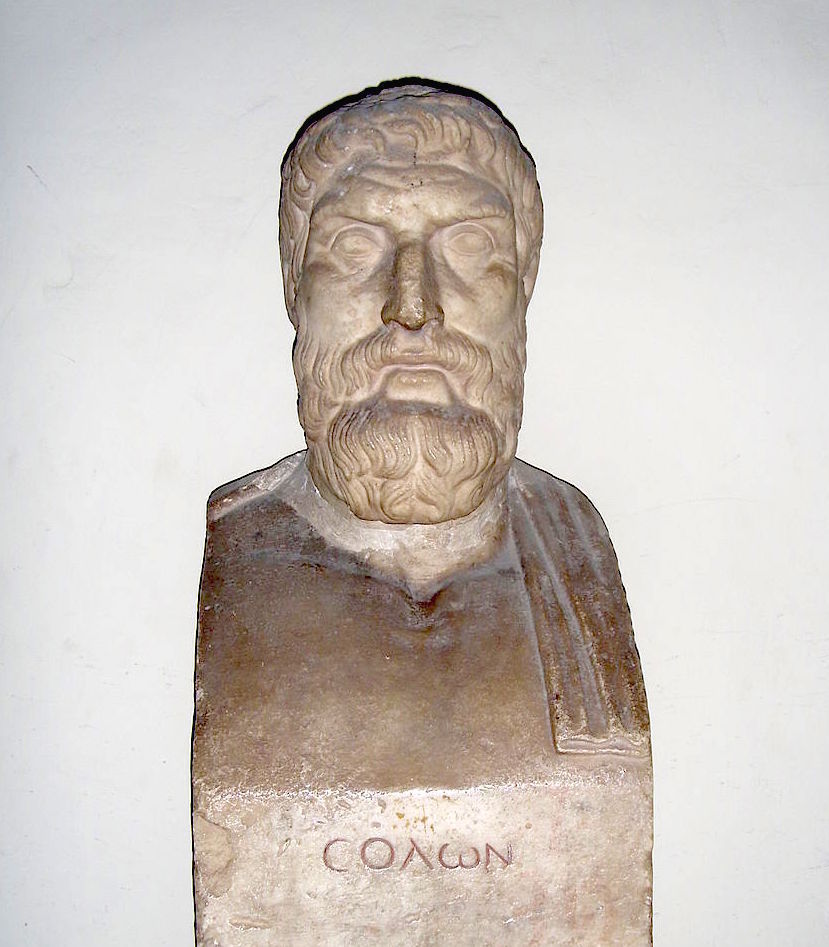

Ready when you are
Start chatting with Solon now.
20 messages free · No credit card · Available in 50+ languages.