


Secondary sourcePainting1616
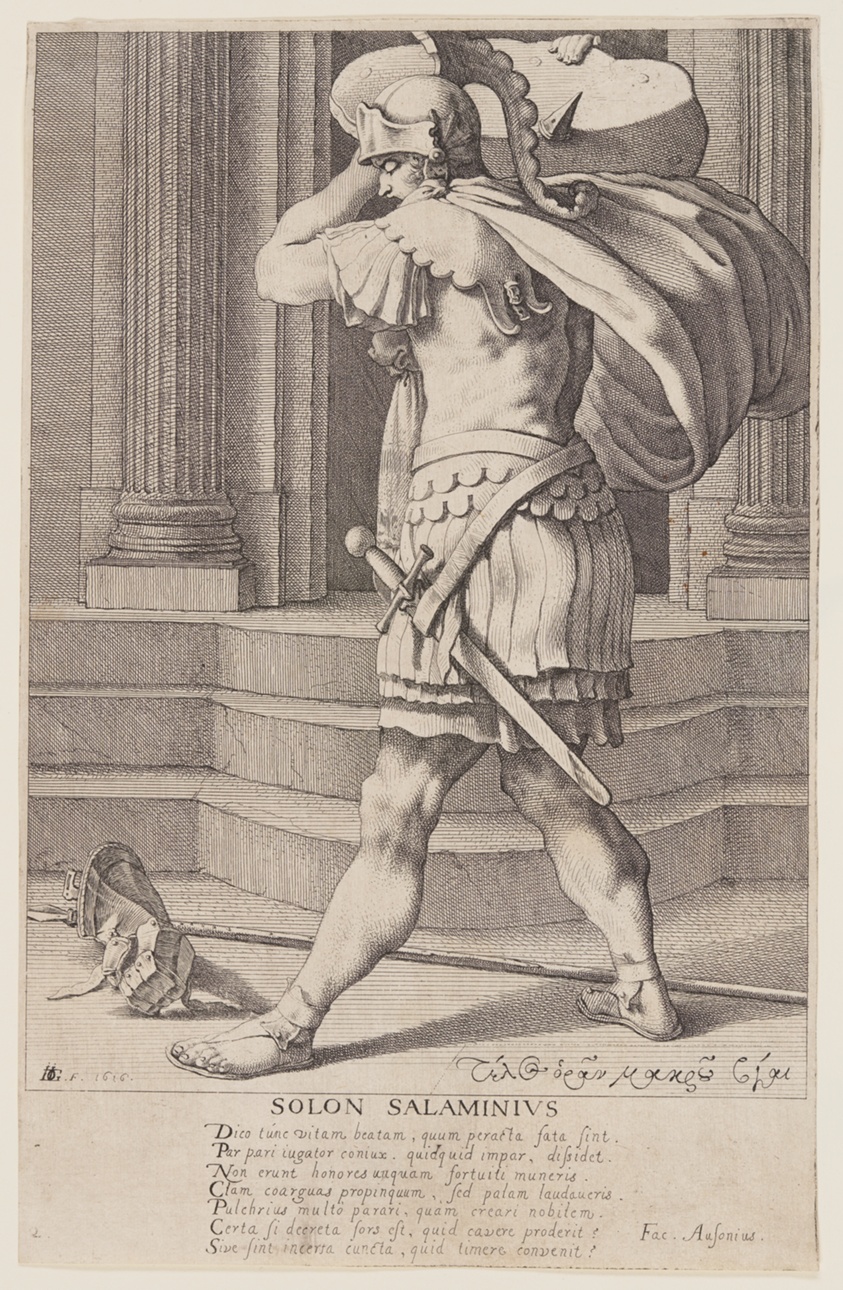
Solon Salaminius, from Seven Wise Men of Greece
Jacques de Gheyn III · 1616
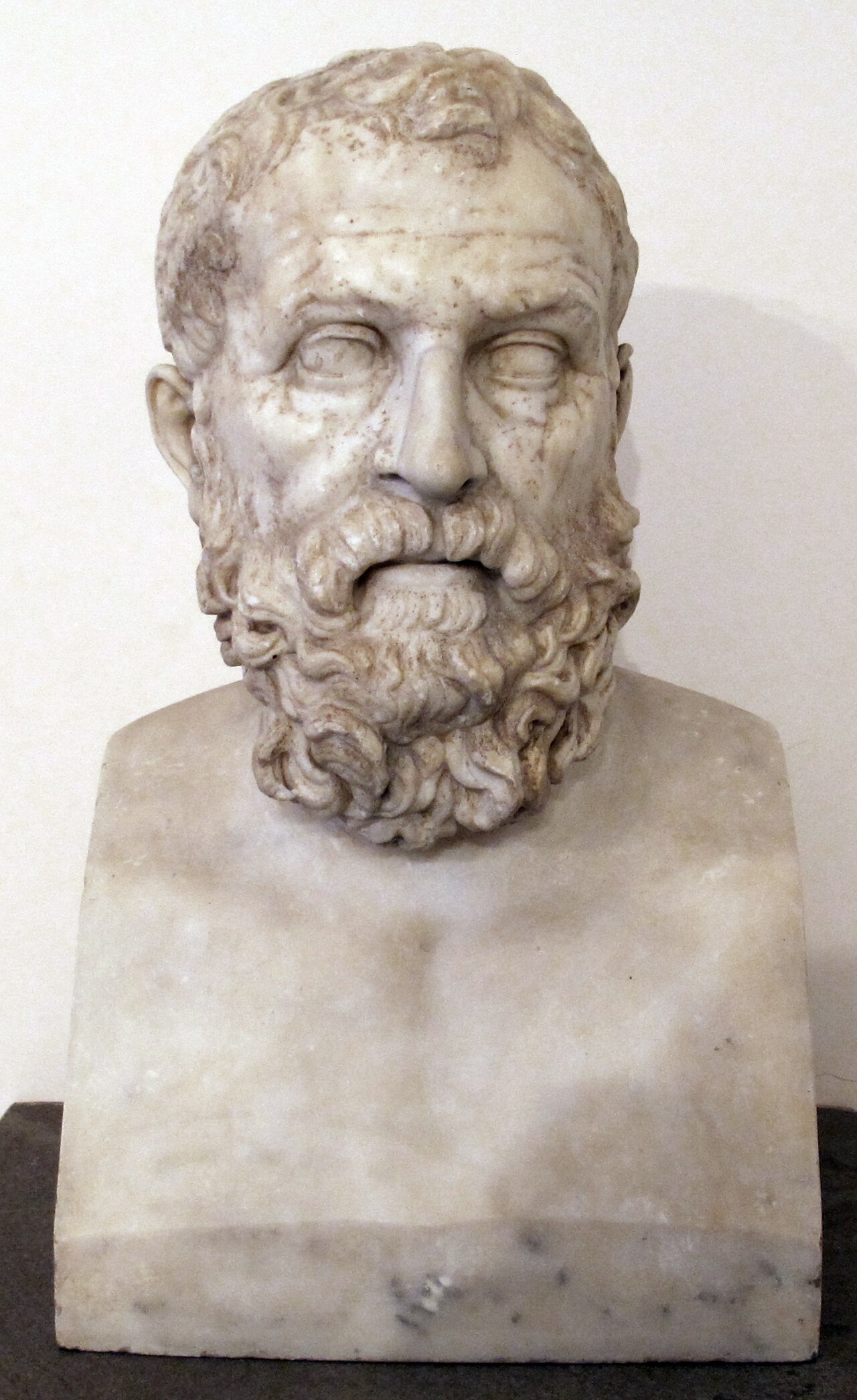
A 1616 Dutch etching depicting Solon as one of the Seven Sages of Greece, shown as a classical warrior-like figure.
Depicts Solon as one of the legendary Seven Wise Men of Greece, centuries after his lifetime.
About this source
What it is
This etching was made by the Dutch artist Jacques de Gheyn III in 1616 as part of a series on the Seven Wise Men of Greece. It shows a helmeted figure in a classical cloak walking up a stepped portico, looking back over his shoulder, with a Latin verse caption below. The print is held by the Art Institute of Chicago.
Why it matters
By the 17th century, Solon was remembered as one of the legendary 'Seven Sages' of ancient Greece, admired for his wisdom and laws. This print shows how later European artists and scholars kept his reputation alive, using imagined classical imagery rather than any real record of his appearance.
Look closer
- Why is Solon shown here as a helmeted, almost warrior-like figure?
- What might the discarded helmet on the ground symbolize?
- How does the Latin caption help explain what the image means?
This painting is part of the curated material that grounds the AI version of Solon on Humy.ai — when students ask about related events, the AI can quote it and cite it.
More Solon sources
Browse all 83 →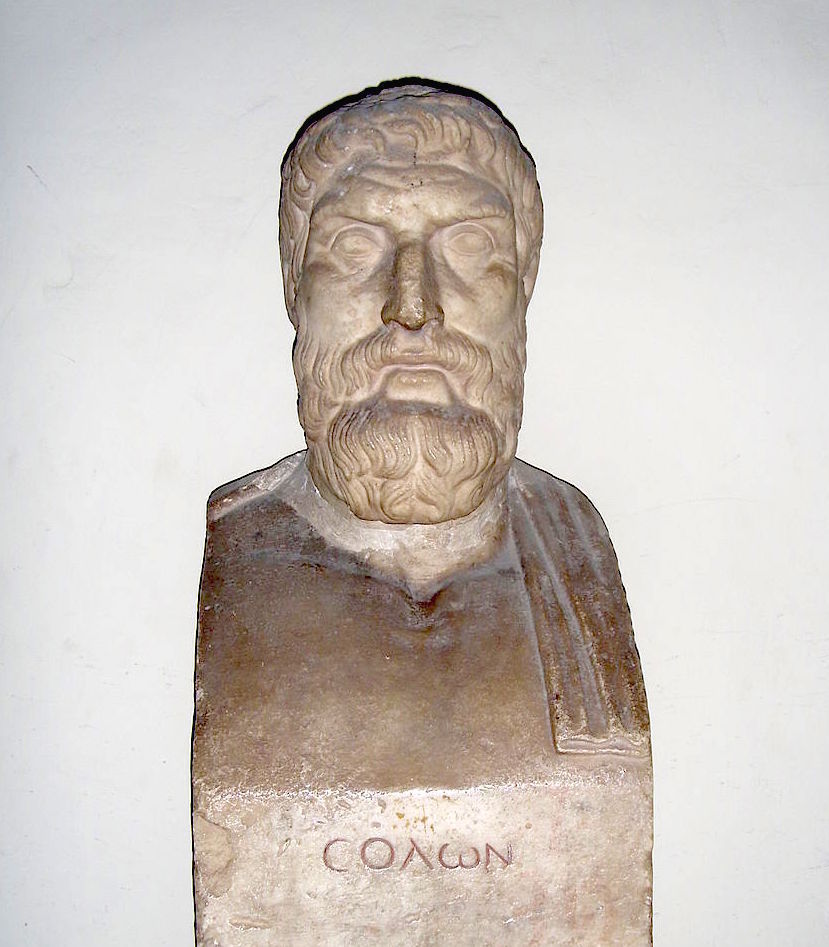

Ready when you are
Start chatting with Solon now.
20 messages free · No credit card · Available in 50+ languages.