


Primary sourcePainting1789 (printed c. 1825)
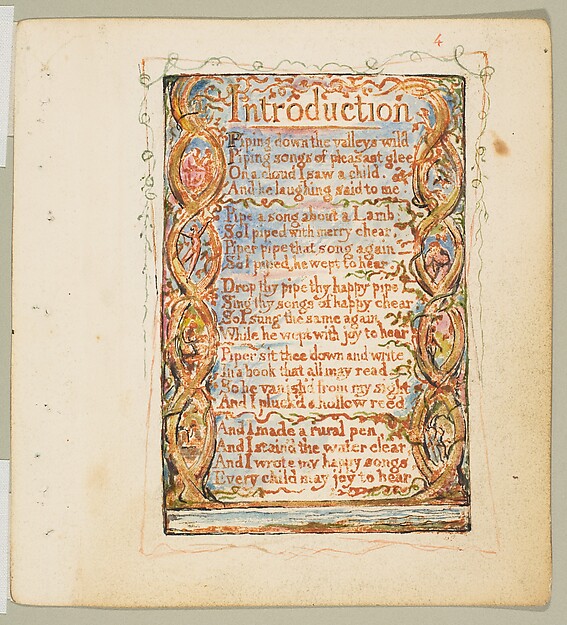
Songs of Innocence: Introduction
William Blake · 1789 (printed c. 1825)
Blake's hand-colored relief etching of the Introduction plate from Songs of Innocence, printed around 1825.
The Introduction plate Blake etched, printed, and hand-colored himself for Songs of Innocence.
About this source
What it is
This is the Introduction plate from Songs of Innocence, created by William Blake through relief etching and hand-colored with watercolor and shell gold. The design dates from 1789, though this printed copy was made around 1825. It is held by The Metropolitan Museum of Art.
Why it matters
Blake combined his poetry and art on the same printed page, surrounding his verses with decorative, vine-like borders. This plate shows his unique illuminated printing technique in action, where text and image were etched and printed together rather than added separately, reflecting his view of poetry and image as inseparable.
Look closer
- How does the decorative border change the way you read the words on the page?
- Why might Blake have chosen to hand-color each printed copy rather than mass-produce identical ones?
- What might be lost if you only read Blake's poems in plain printed text, without seeing pages like this?
This painting is part of the curated material that grounds the AI version of William Blake on Humy.ai — when students ask about related events, the AI can quote it and cite it.
More William Blake sources
Browse all 75 →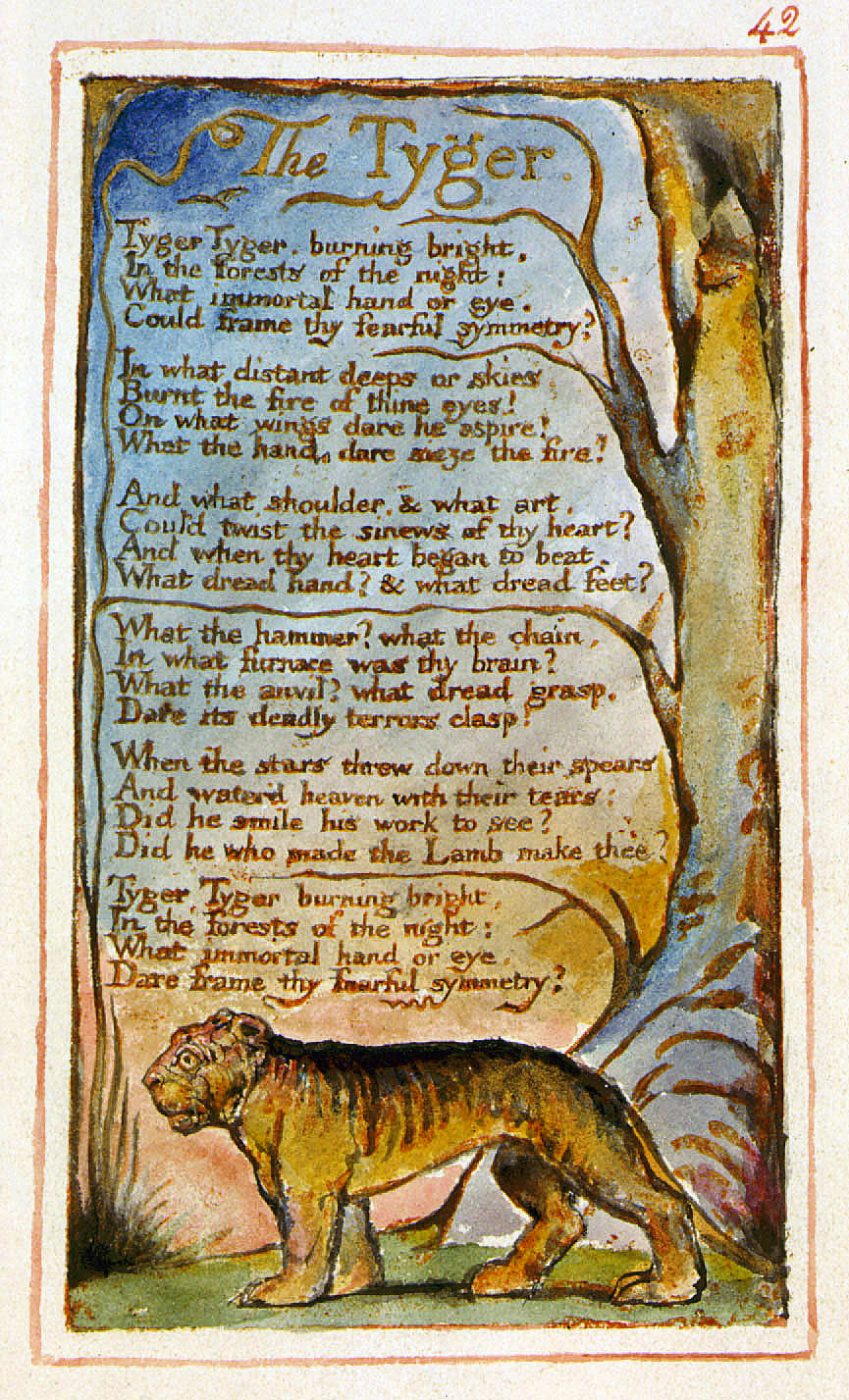 Book
Primary source
The Tyger
William Blake · 1794
 Book
Primary source
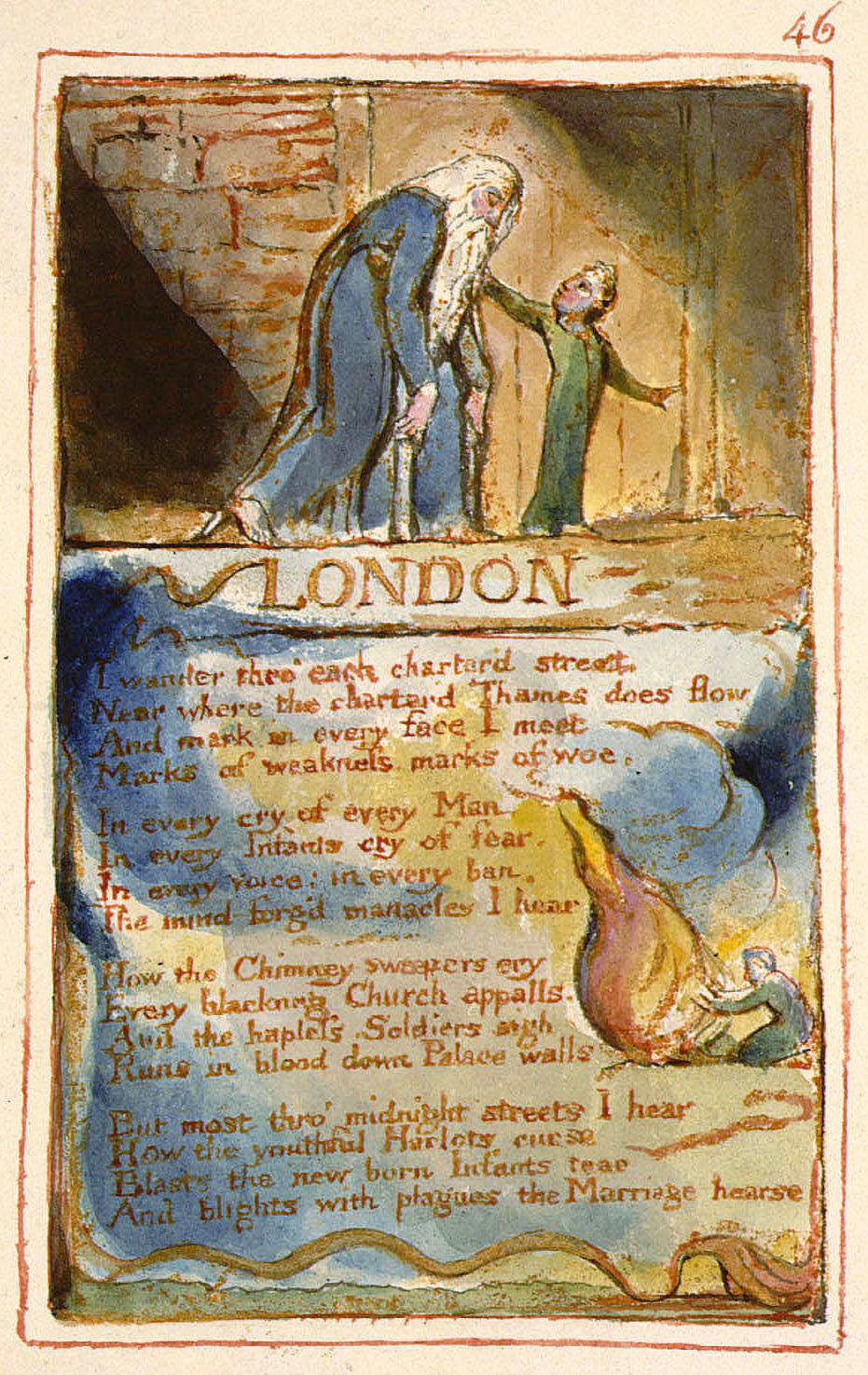
London
William Blake · 1794
 Book
Primary source
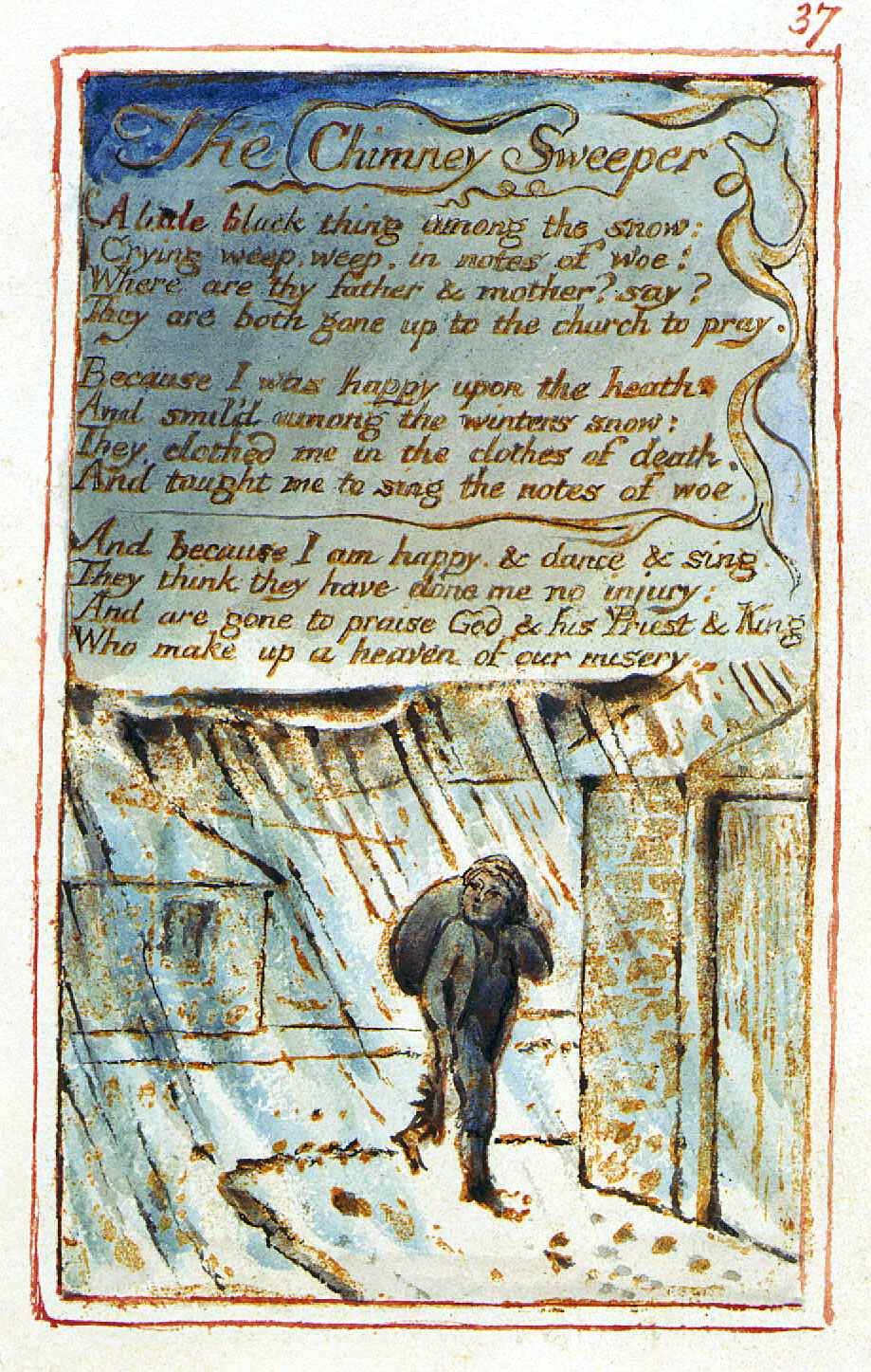
The Chimney Sweeper
William Blake · 1789 and 1794
 Book
Primary source
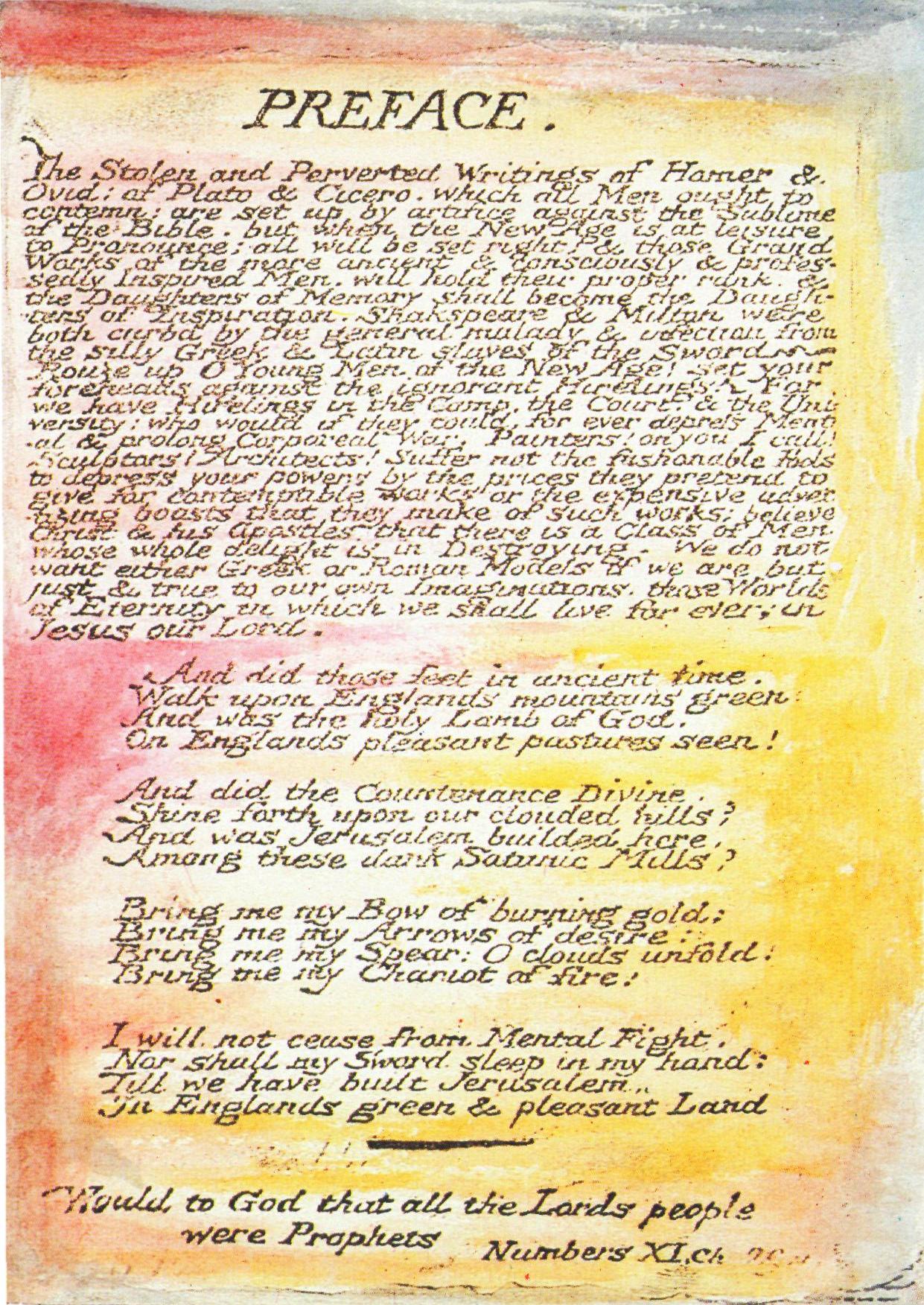
And did those feet in ancient time
William Blake · 1804 (printed c. 1808)
Free account
Read every William Blake source
Sign up free →
Ready when you are
Start chatting with William Blake now.
20 messages free · No credit card · Available in 50+ languages.