


Primary sourcePainting23 March 1867
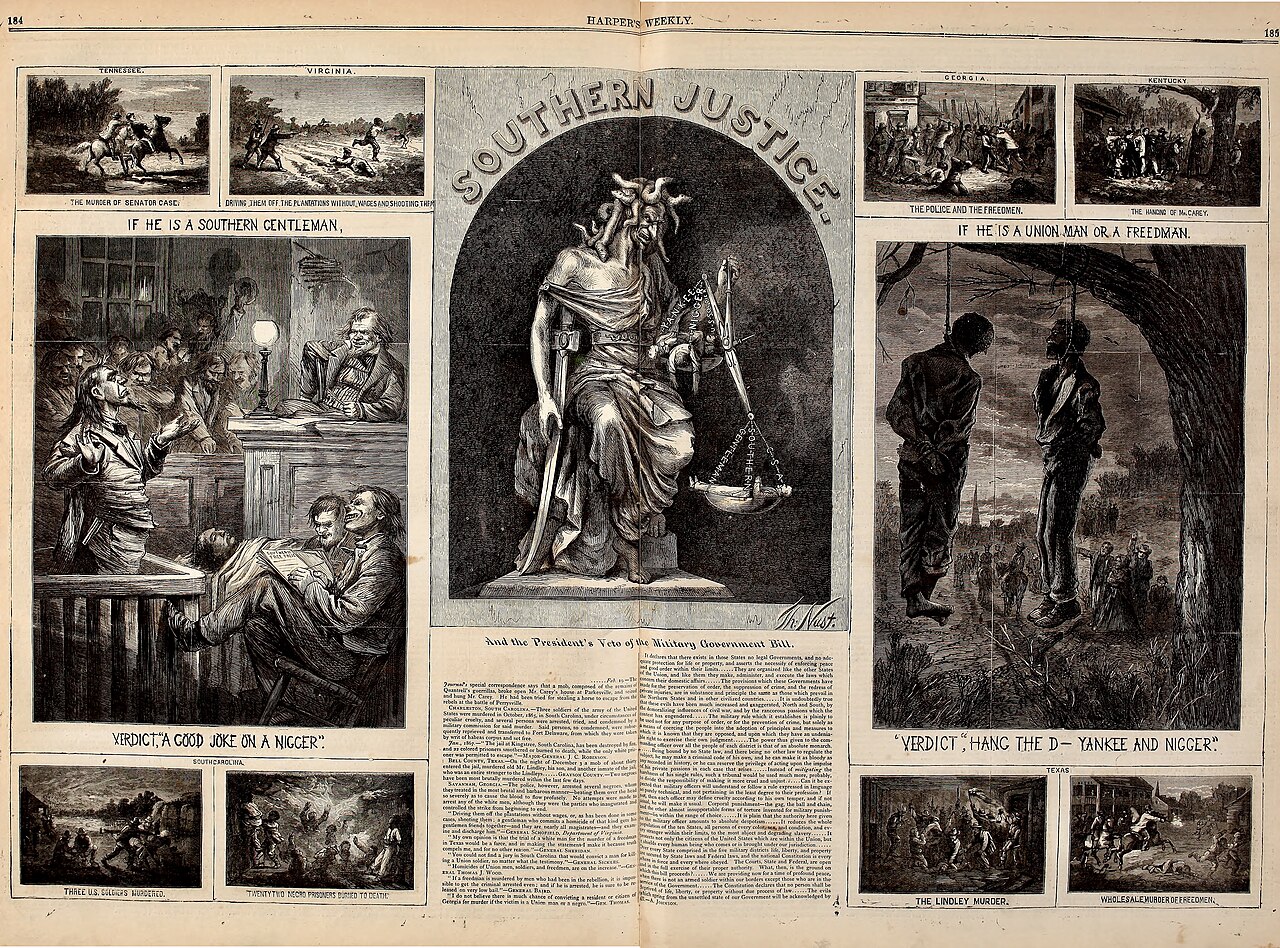
Southern Justice
Thomas Nast · 23 March 1867
A Harper's Weekly cartoon by Thomas Nast attacking the treatment of freedpeople and Unionists by white Southern courts during Reconstruction.
Nast drew this cartoon to condemn Southern courts' treatment of freedpeople, showing his political activism through art.
About this source
What it is
This two-page cartoon spread, titled Southern Justice, was drawn by Thomas Nast and published in Harper's Weekly on March 23, 1867. It shows a statue of blindfolded Justice at the center, surrounded by scenes of a courtroom verdict and violent attacks on Black Americans, including lynchings.
Why it matters
Nast made this cartoon during early Reconstruction to criticize how white Southern courts failed to protect freed Black people and Unionists from violence. It shows Nast using his art as political argument, pushing readers in the North to see Reconstruction-era injustice. The cartoon is disturbing today because it contains racist imagery and depicts real violence of the period.
Look closer
- What is the cartoon suggesting by showing Justice as blindfolded above these scenes?
- Why might an artist use shocking images to make a political point?
- What does this cartoon leave out about the people it depicts?
This painting is part of the curated material that grounds the AI version of Thomas Nast on Humy.ai — when students ask about related events, the AI can quote it and cite it.
More Thomas Nast sources
Meet the AI Thomas Nast →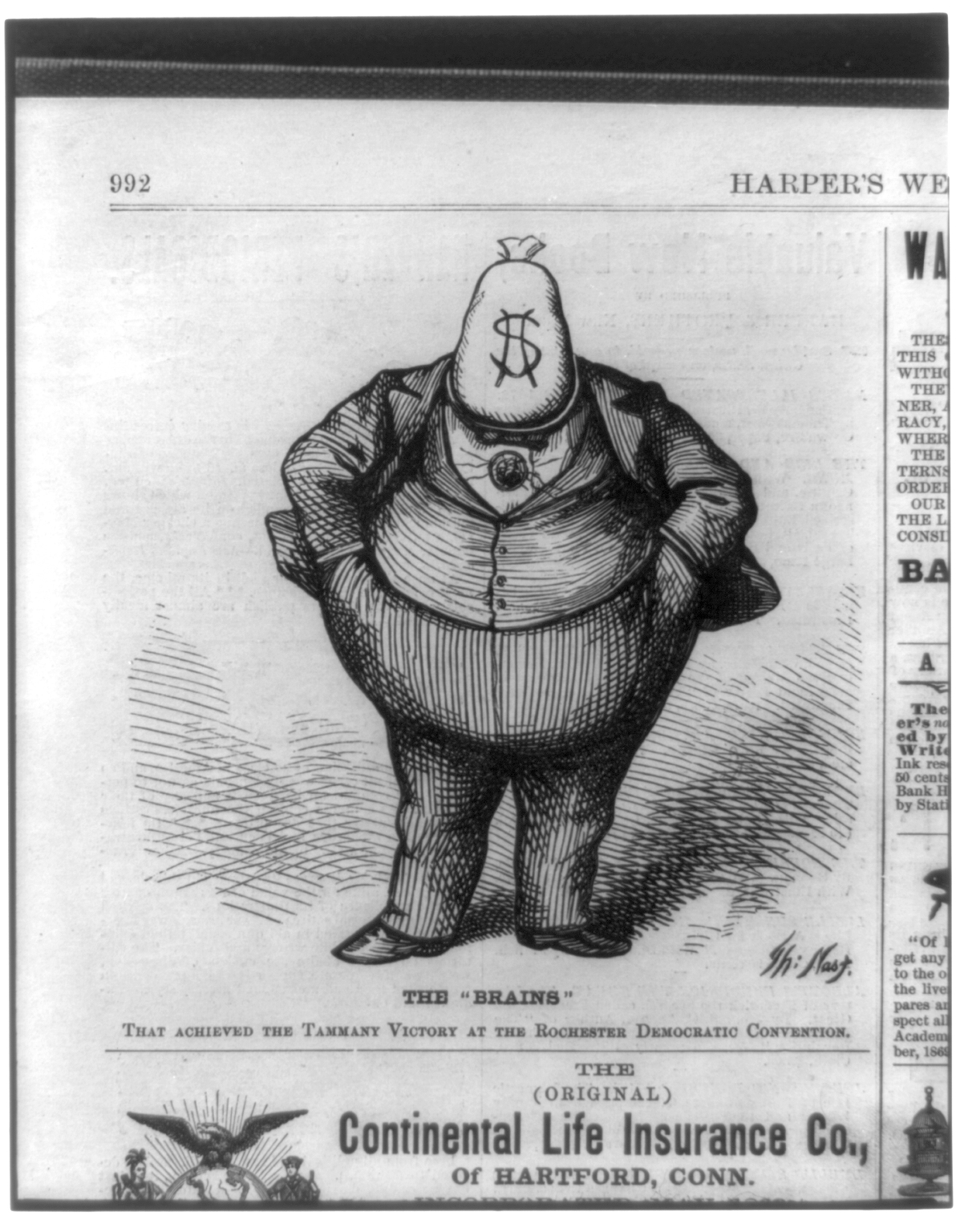 Painting
Primary source
The Brains
Thomas Nast · 21 October 1871
 Painting
Primary source
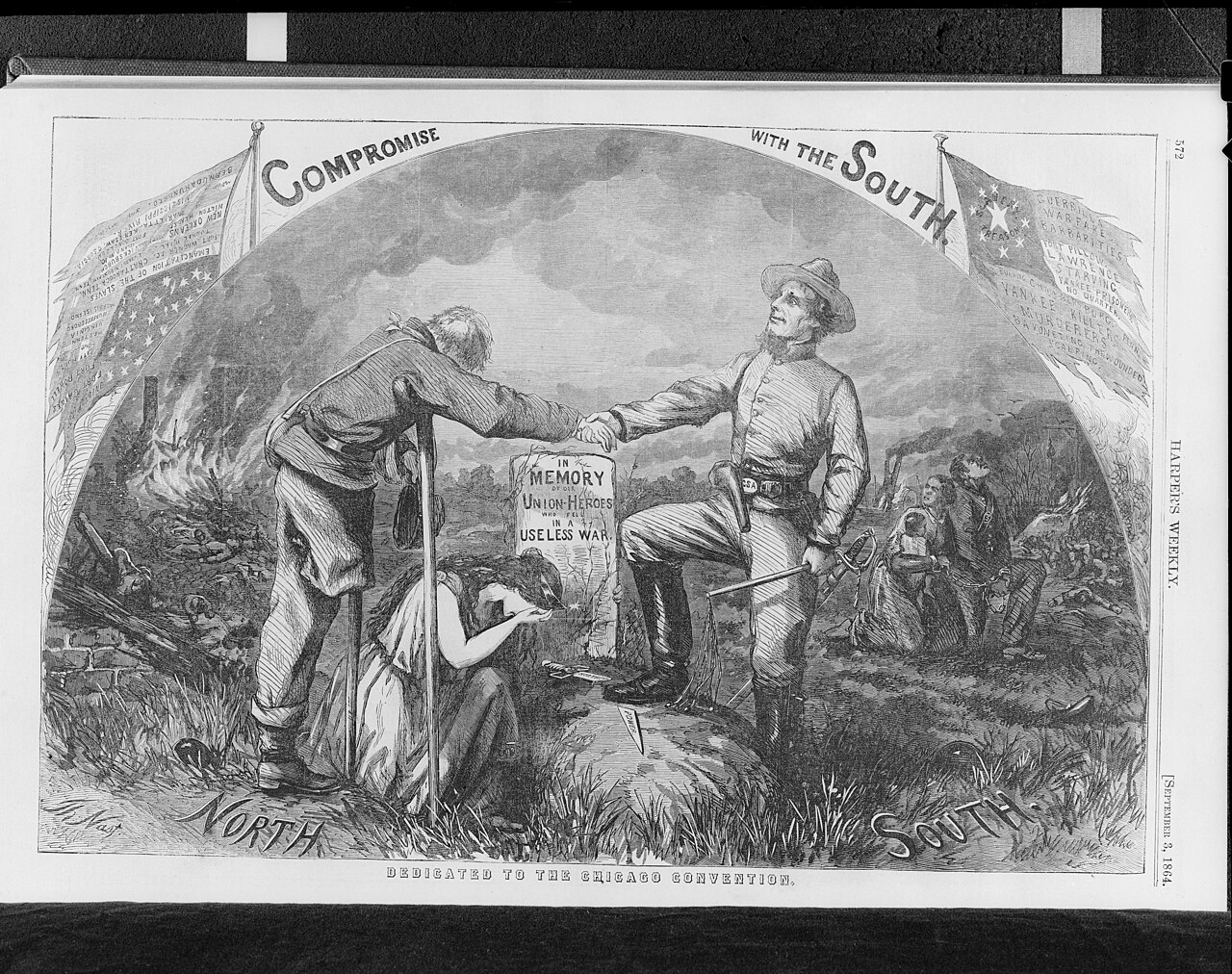
Compromise with the South—Dedicated to the Chicago Convention
Thomas Nast · 3 September 1864
 Painting
Primary source
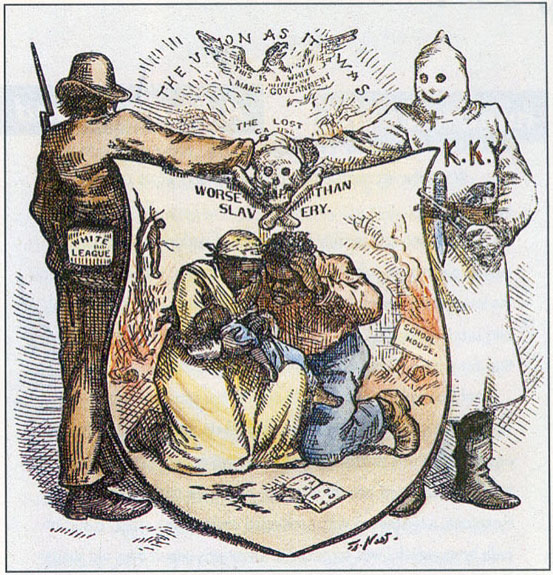
Worse than Slavery
Thomas Nast · 1874
 Painting
Primary source
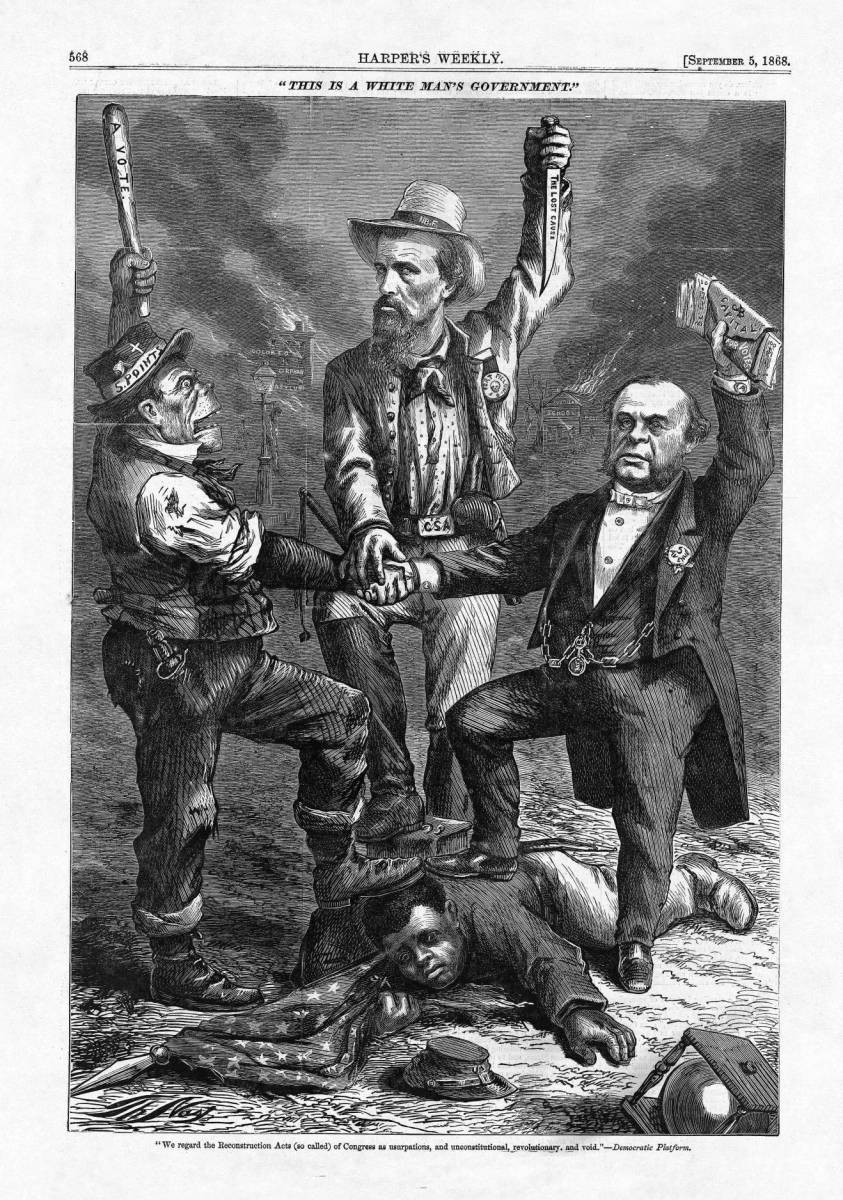
This Is a White Man's Government
Thomas Nast · 5 September 1868
 Painting
Primary source
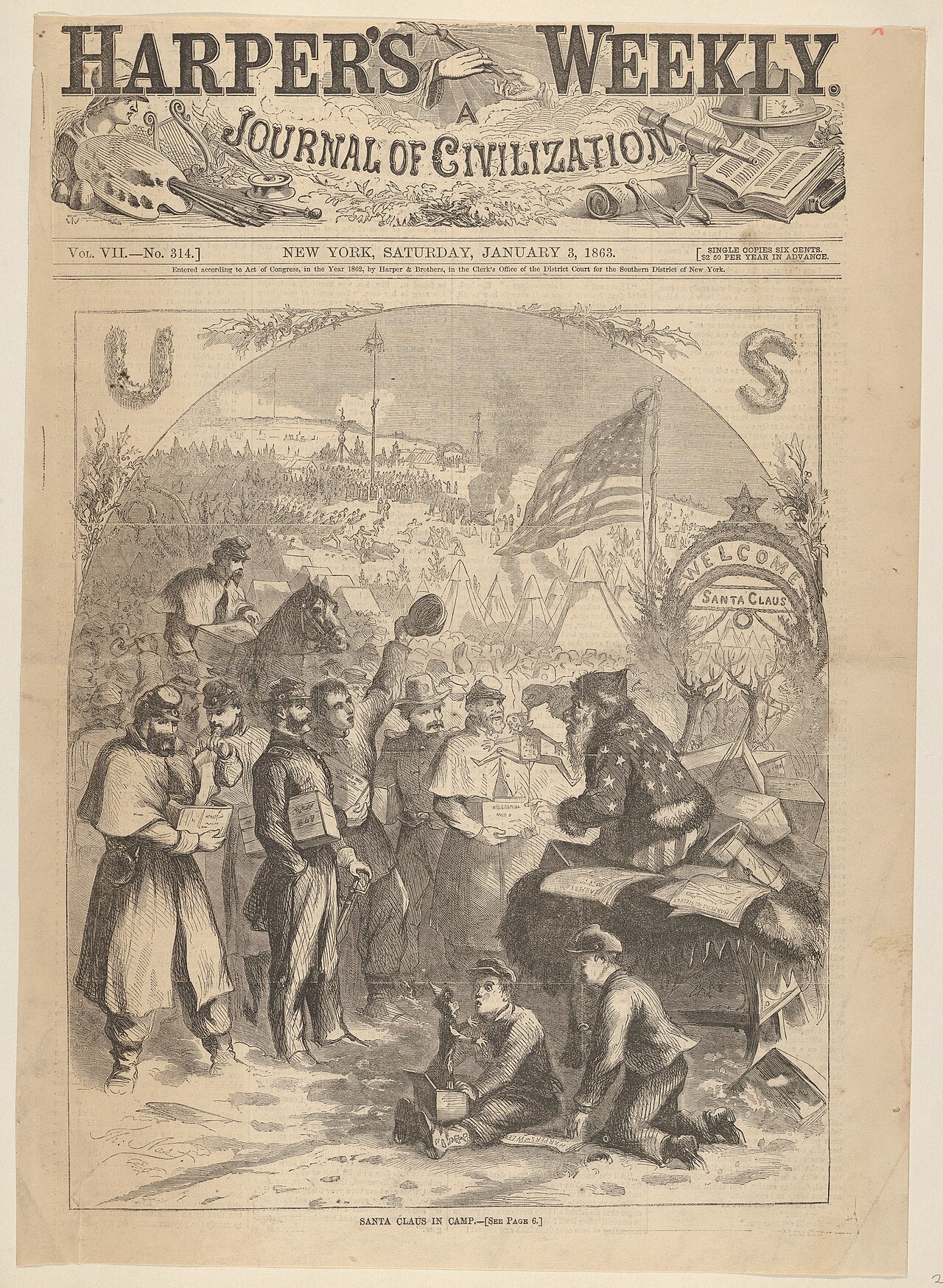
Santa Claus in Camp
Thomas Nast · 3 January 1863
Ready when you are
Start chatting with Thomas Nast now.
20 messages free · No credit card · Available in 50+ languages.