


Primary sourceArtifact1759 (reign of Charles III)
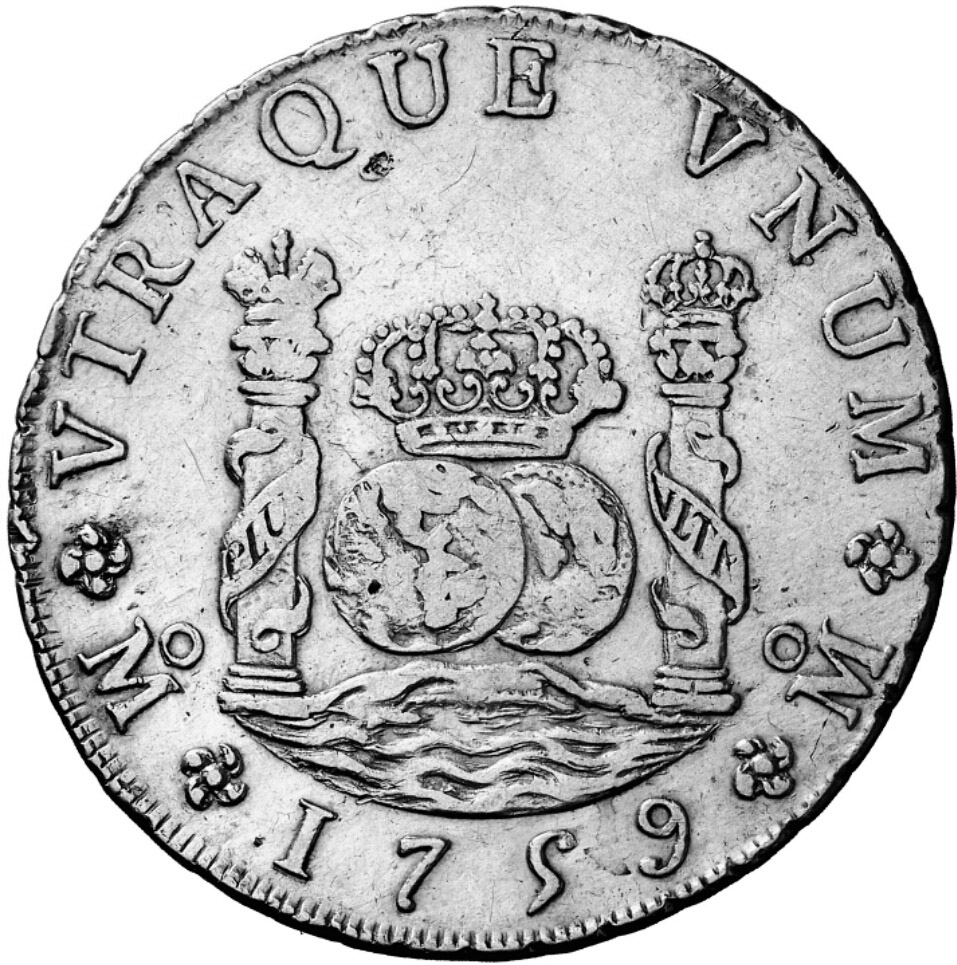
Spanish Dollar
1759 (reign of Charles III)
A silver eight-reales coin bearing Charles III's portrait, minted during his reign and used worldwide, including as legal tender in the early United States.
This coin type, minted during Charles III's reign, bore his royal portrait and spread his image across the globe.
Free Humy account · No credit card · 120,912 sources to read
About this source
What it is
The Spanish dollar, or piece of eight, was a silver coin worth eight reales, first minted following a monetary reform in 1497 and produced across the Spanish Empire, including under Charles III. This example is a reverse of an eight-reales silver pillar dollar, showing crowned pillars over hemispheres and waves with the Latin motto VTRAQVE VNUM.
Why it matters
The coin circulated across Europe, the Americas, and Asia, becoming the first truly international currency, and it remained legal tender in the United States until 1857. Its design is thought to be the origin of the dollar sign. Coins bearing Charles III's portrait show how his image reached ordinary people across a vast empire through everyday trade, far beyond Spain itself.
Look closer
- Why would a coin need to be recognised and trusted across so many different countries?
- What does it suggest about Spain's empire that its coin shaped currencies as far away as the Philippines and Mexico?
- What can a small object like a coin tell us that a treaty or portrait cannot?
This artifact is part of the curated material that grounds the AI version of Charles III of Spain on Humy.ai — when students ask about related events, the AI can quote it and cite it.
More Charles III of Spain sources
Browse all 94 →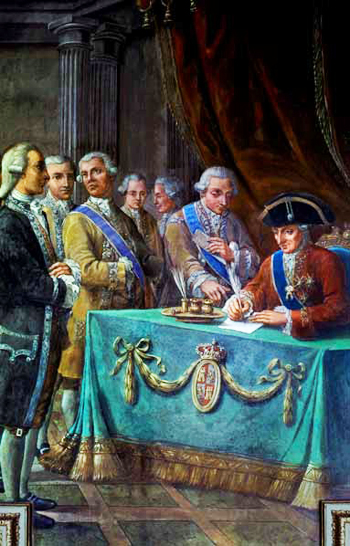 Document
Secondary source
Free Trade Regulations
Pere Pau Muntanya · 1778
 Painting
Primary source
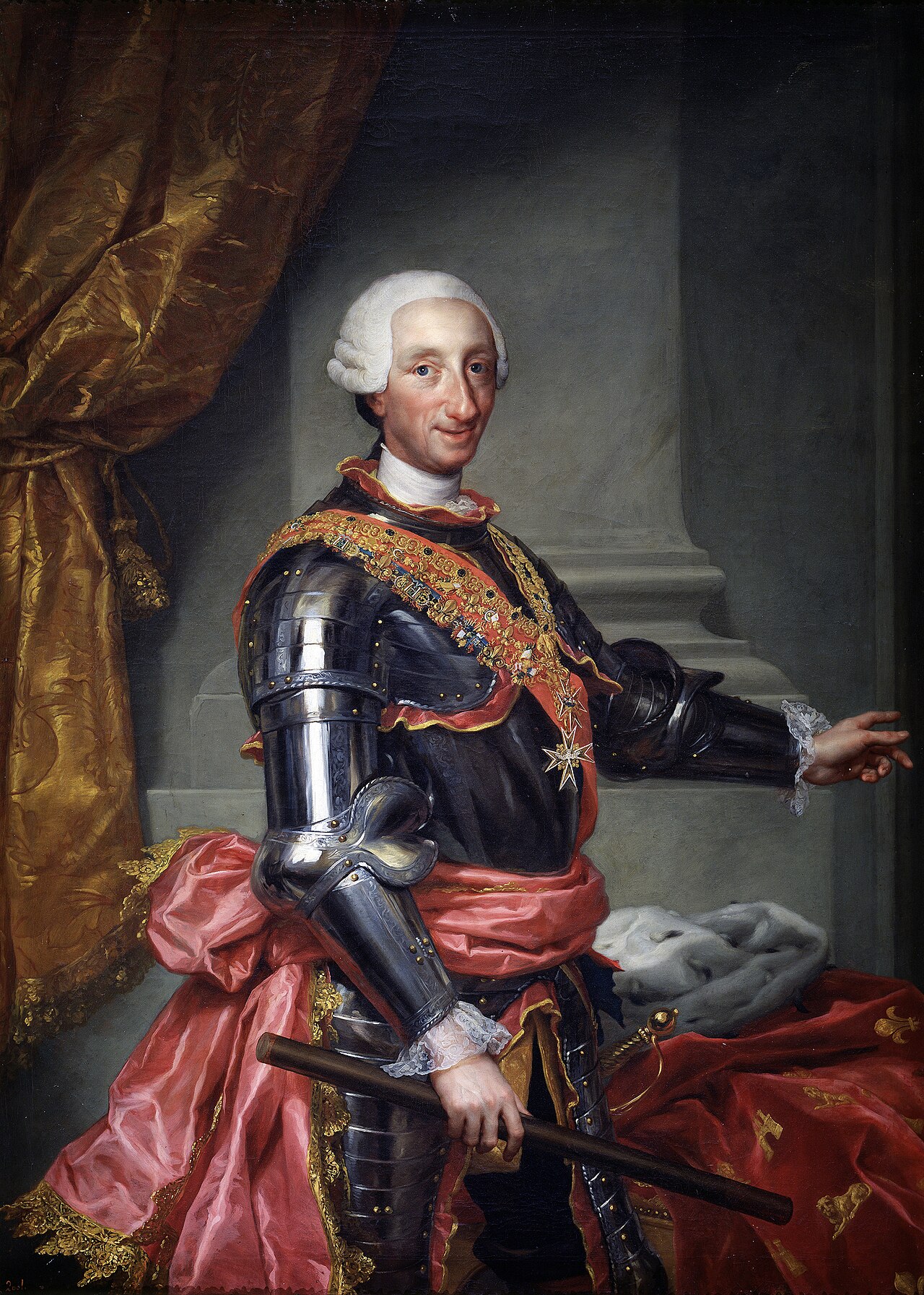
Charles III
Anton Raphael Mengs · 1767
 Painting
Primary source
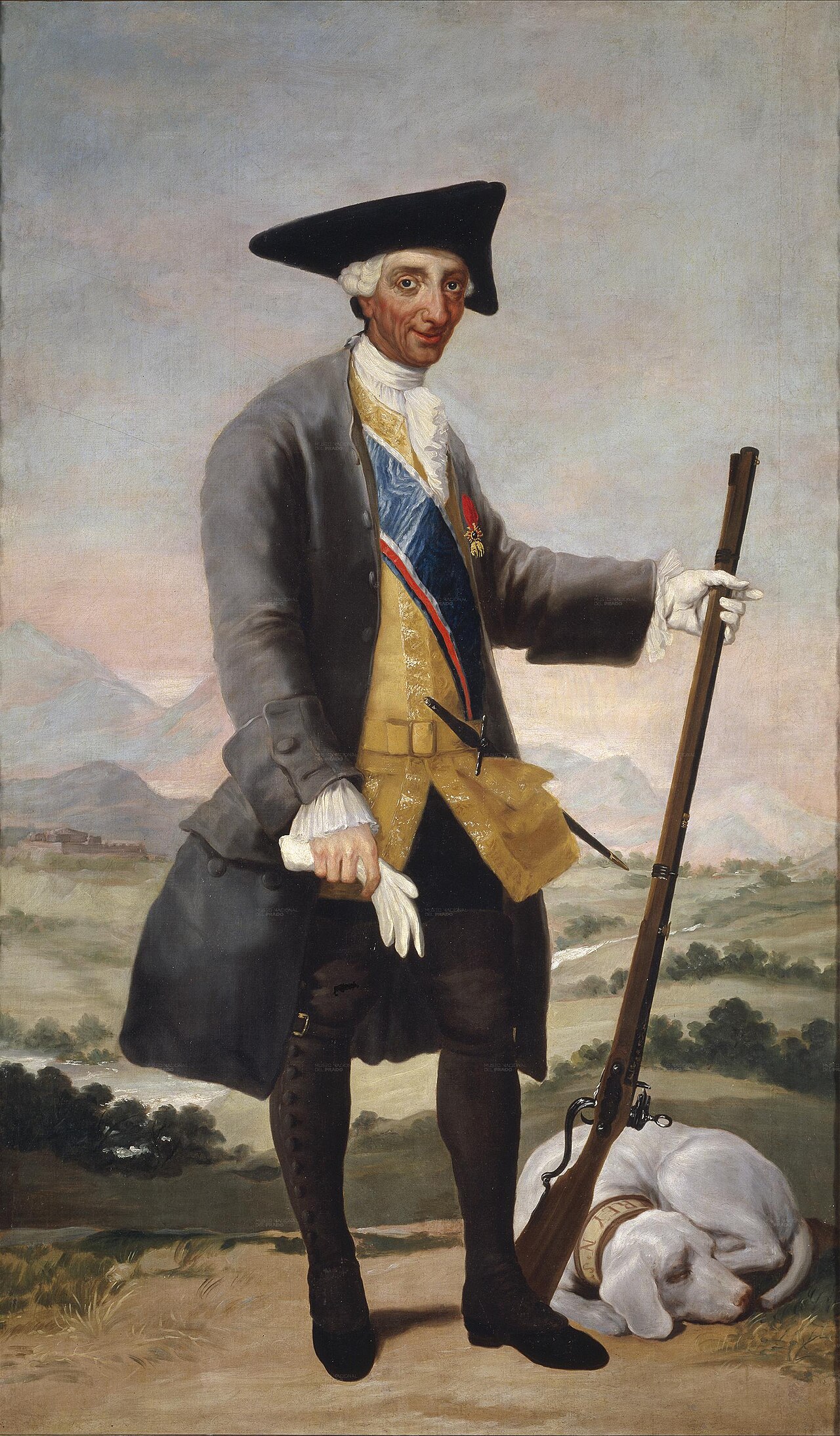
Charles III in Hunting Dress
Francisco Goya · 1786
 Painting
Primary source
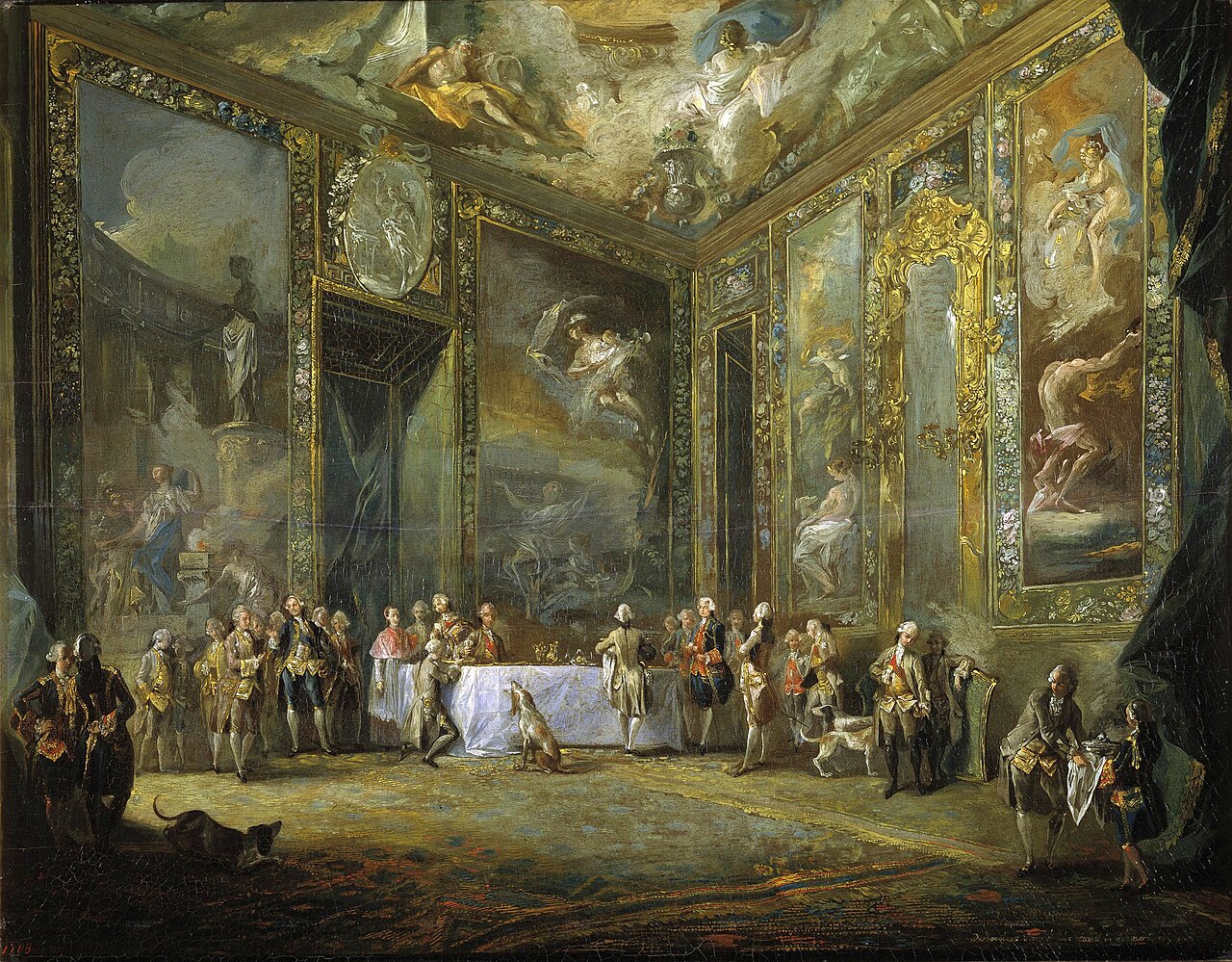
Charles III dining before the Court
Luis Paret y Alcázar · 1775


Free account
Read every Charles III of Spain source
Sign up free →
Ready when you are
Start chatting with Charles III of Spain now.
20 messages free · No credit card · Available in 50+ languages.