


Secondary sourcePainting1340
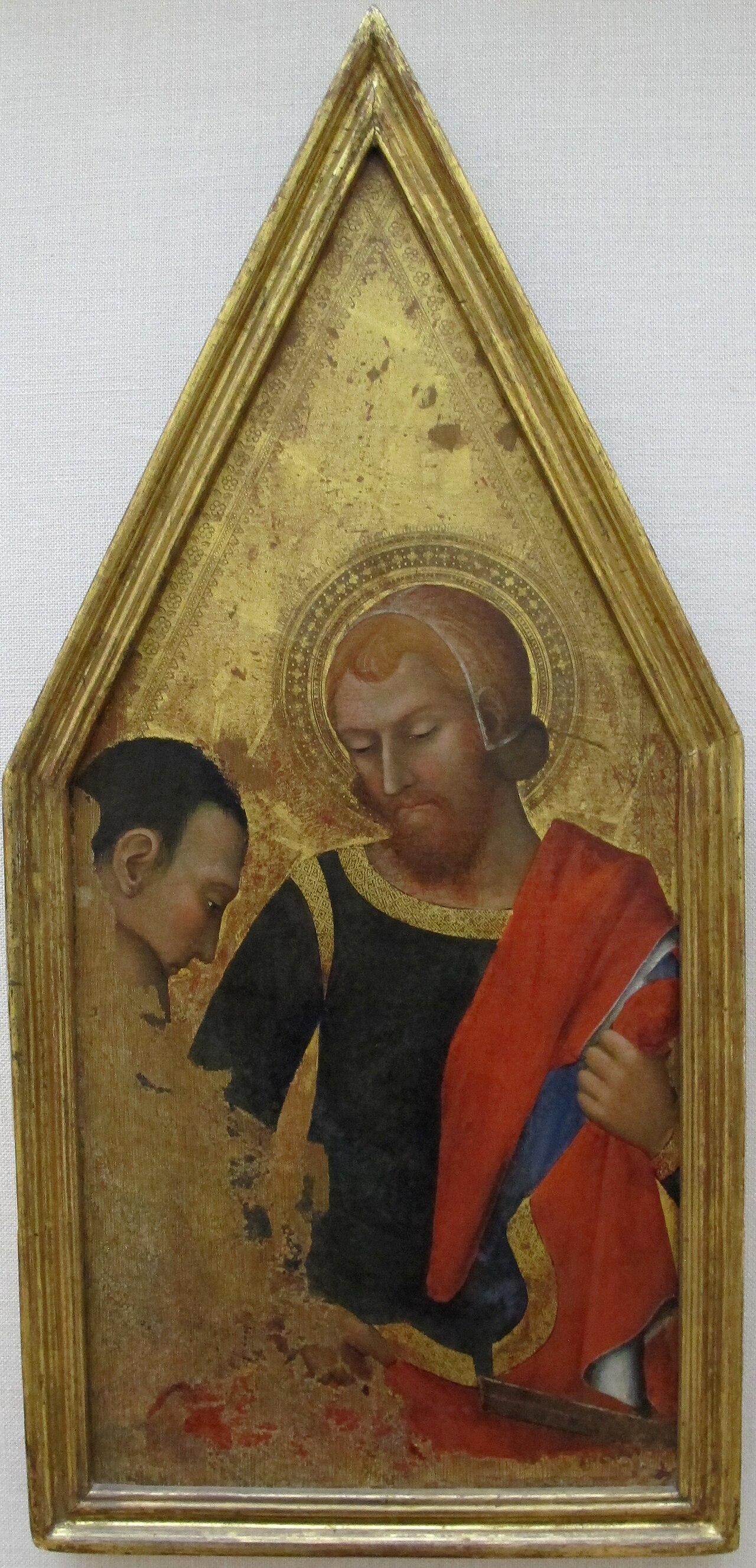
St. Martin Cutting His Cloak
Master of the Rebel Angels · 1340
A fourteenth-century gold-ground panel painting by the Master of the Rebel Angels, showing St Martin cutting his cloak to share with a poor man.
This panel depicts Martin's famous act of cutting his cloak to share with a beggar, the central story of his legend.
About this source
What it is
This small panel painting was made in 1340 by an artist known as the Master of the Rebel Angels. It is kept in the Department of Paintings of the Louvre, Paris.
The painting shows a haloed, bearded saint in a dark tunic and red cloak, cutting his cloak with a sword, while a young man bows his head beside him.
Why it matters
This image captures the most famous story about Martin of Tours: as a soldier, he cut his cloak in half to clothe a poor man. The painting reflects the elegant, courtly style of Gothic art in the fourteenth century, showing how artists of the period imagined saints as refined, noble figures.
Look closer
- What details show that this is meant to be a holy scene rather than an ordinary event?
- Why might the artist have chosen gold for the background?
- What might the painting leave out about the real story it is based on?
This painting is part of the curated material that grounds the AI version of Martin of Tours on Humy.ai — when students ask about related events, the AI can quote it and cite it.
More Martin of Tours sources
Browse all 88 →Secondary source
Vita Sancti Martini manuscript page
unknown monk
 Painting
Secondary source
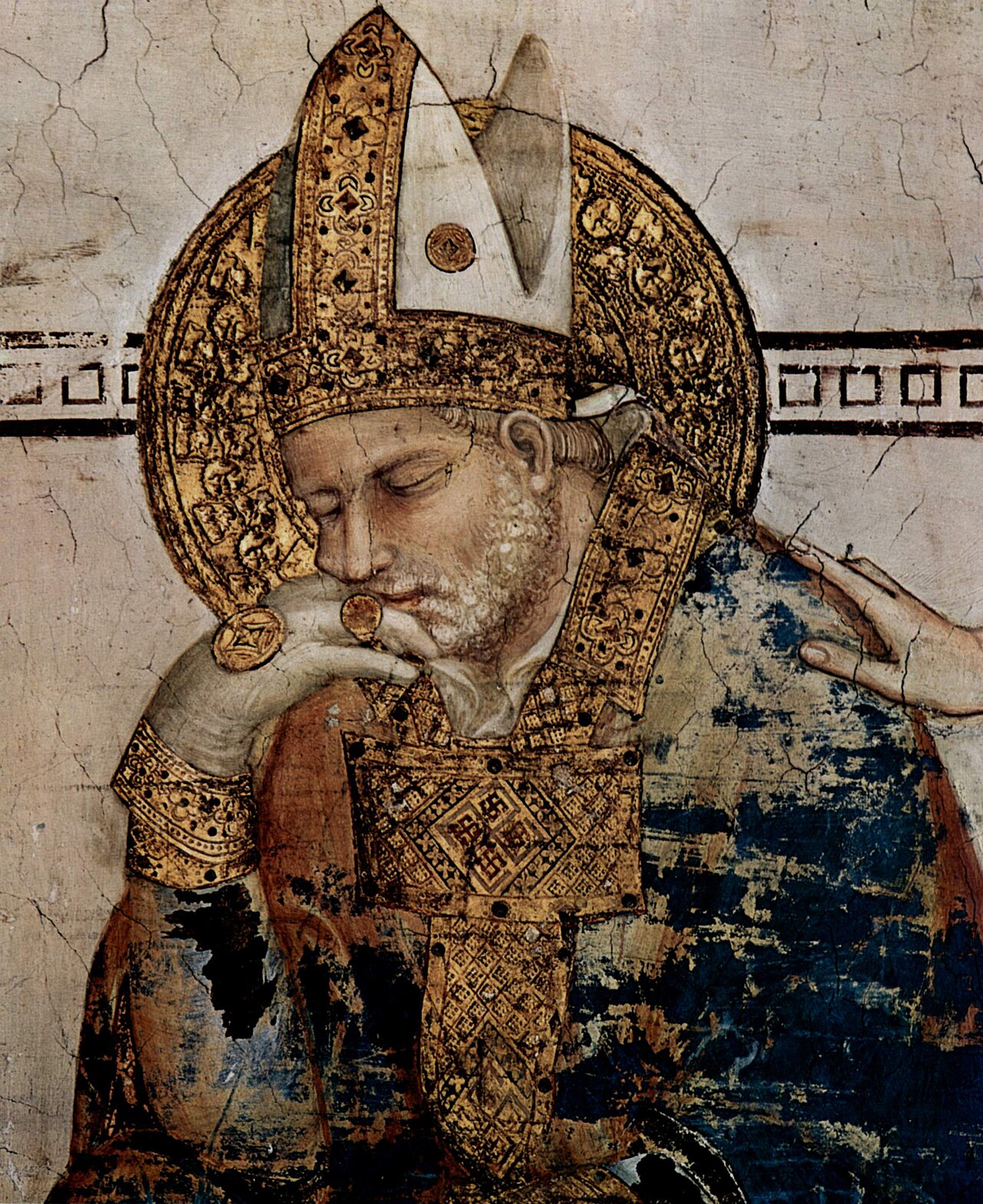
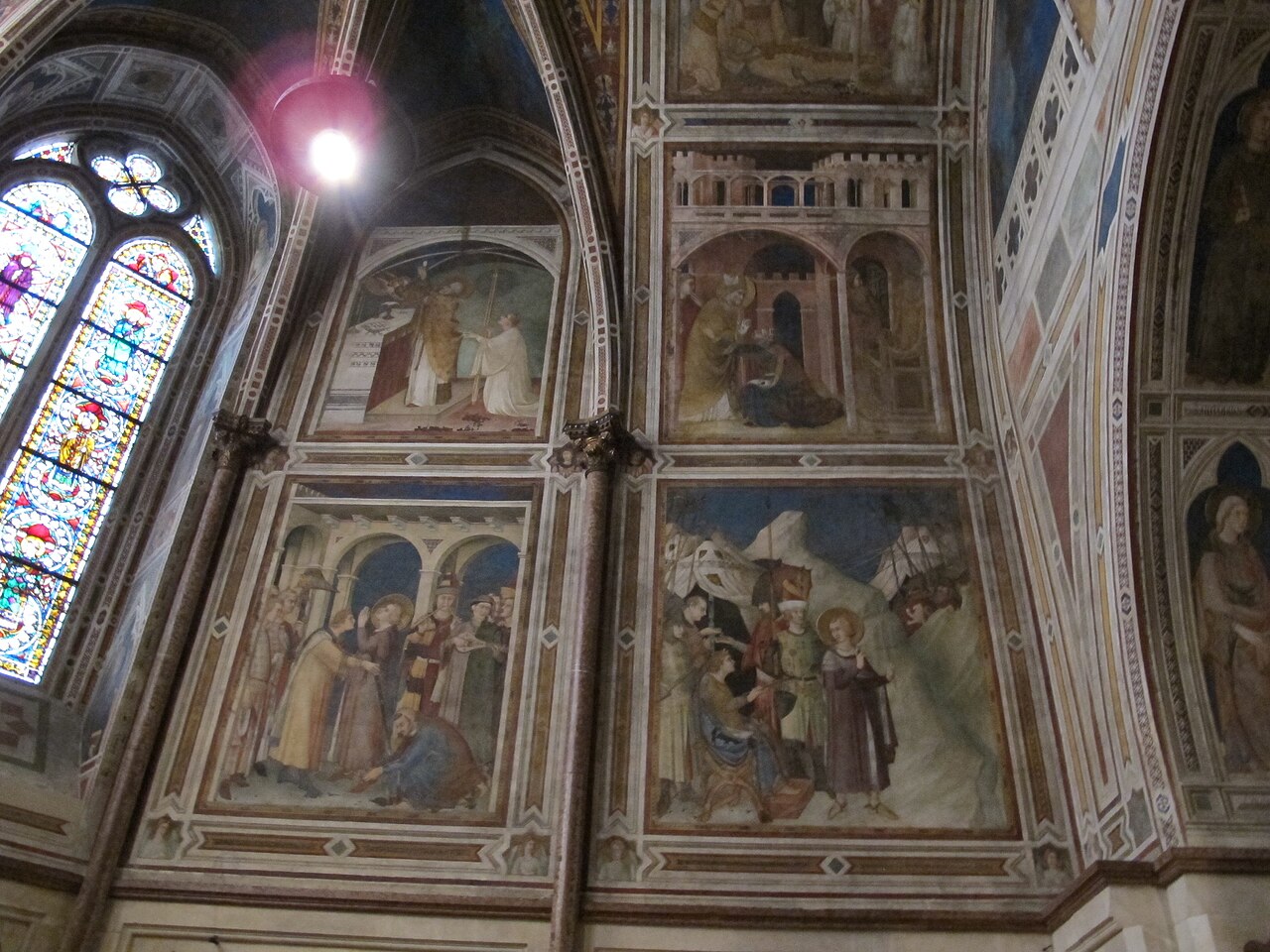
Portrait of Martin of Tours (Assisi fresco detail)
Simone Martini
 Painting
Secondary source
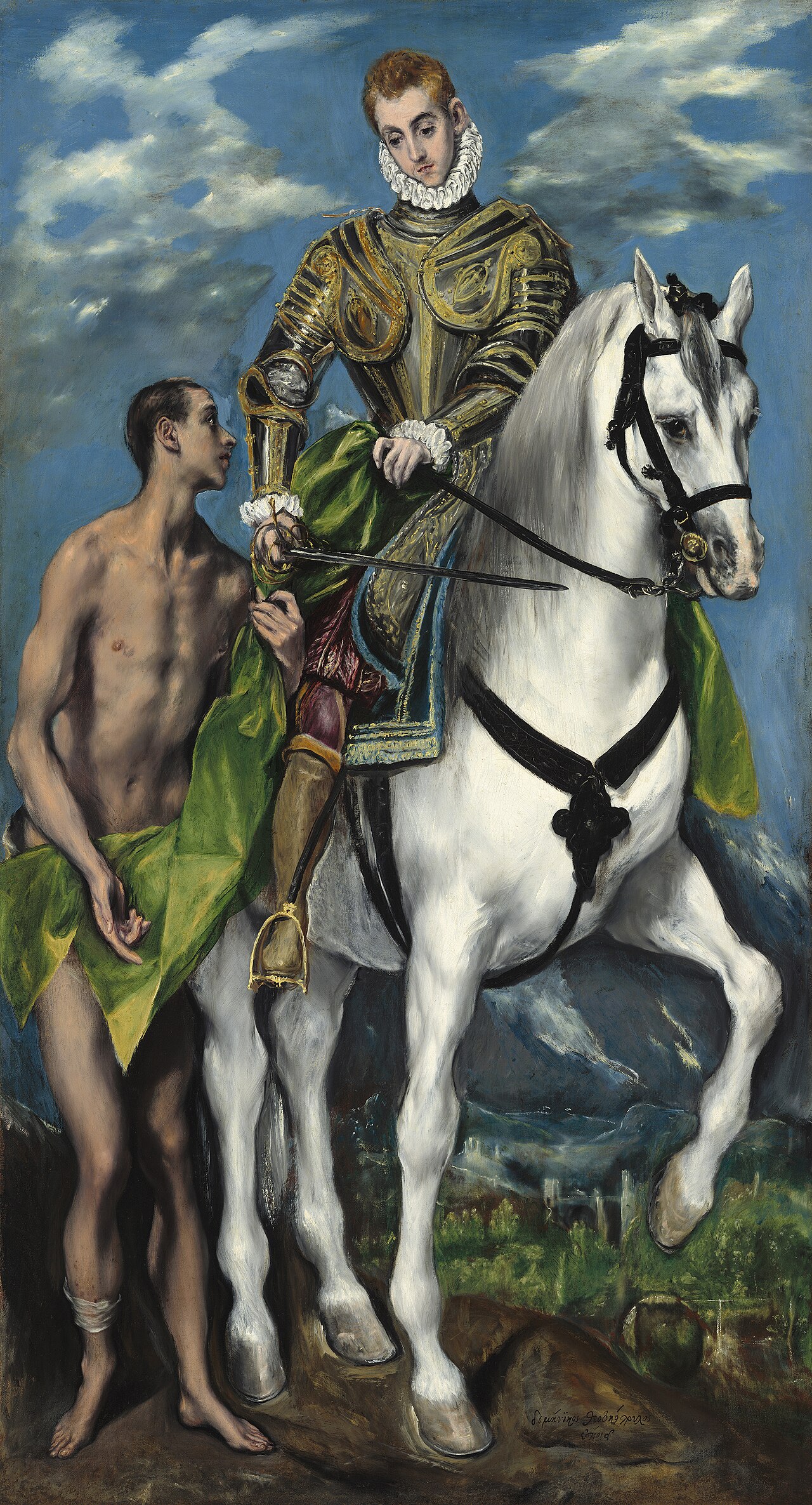
Saint Martin and the Beggar
El Greco · 1597–1599
 Sculpture
Secondary source
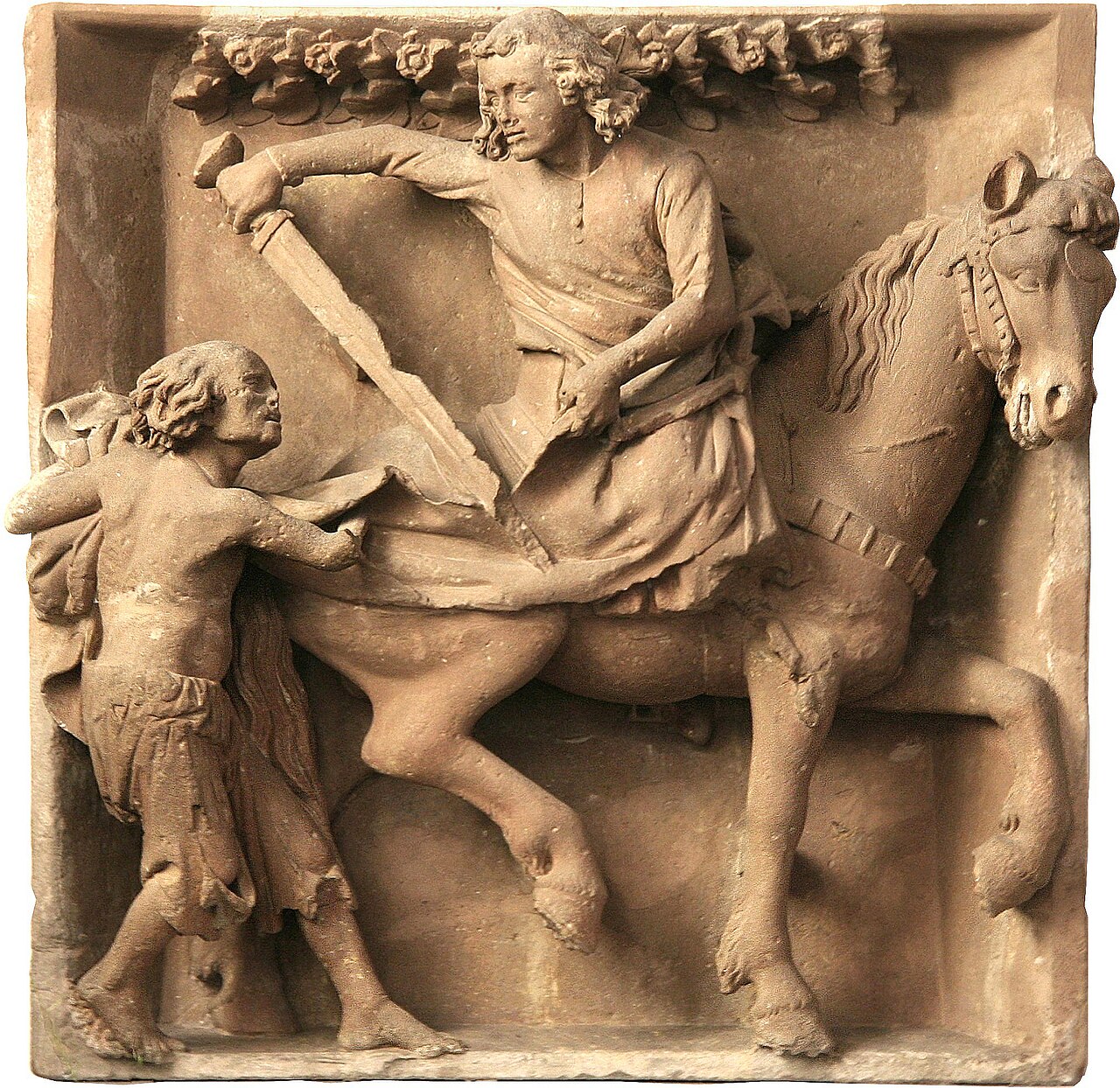
Bassenheimer Reiter
Naumburg Master · 1240
Free account
Read every Martin of Tours source
Sign up free →
Ready when you are
Start chatting with Martin of Tours now.
20 messages free · No credit card · Available in 50+ languages.