


Secondary sourceArtifact1 August 2013 (photograph)
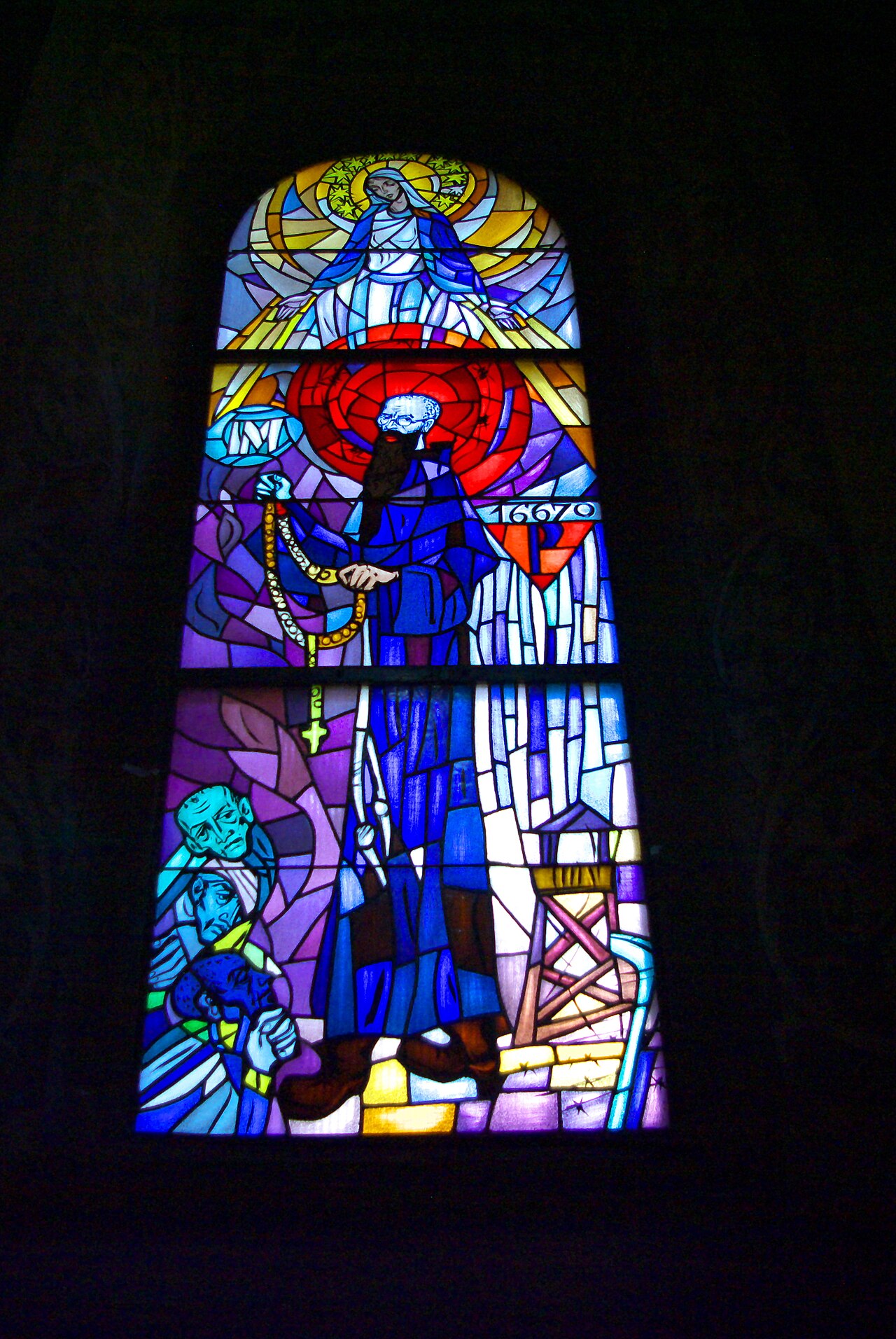
Stained Glass Window of Maksymilian Kolbe, Sanok
1 August 2013 (photograph)
A church window in Sanok, Poland, depicting Kolbe as a friar beneath the Madonna, with a scene of a concentration camp below.
This window portrays Kolbe's life and death, linking his religious identity to his martyrdom in a concentration camp.
About this source
What it is
This stained glass window is in the Church of the Transfiguration in Sanok, Poland. It shows a white-haired friar in a blue habit holding a rosary, under a haloed Madonna, with dates 1697 and 1941 marked, and a concentration camp scene with gaunt prisoners at the bottom.
Why it matters
The window connects Kolbe's religious life to his death in a Nazi concentration camp. It reflects how Polish Catholics remember him both as a devoted friar and as a martyr who died during the Second World War.
Look closer
- Why do you think the artist placed the camp scene at the bottom, beneath the religious figures?
- What feelings might this window be meant to create in someone praying nearby?
- What does the stylized, non-realistic imagery leave out about the historical events it represents?
This artifact is part of the curated material that grounds the AI version of Maximilian Kolbe on Humy.ai — when students ask about related events, the AI can quote it and cite it.
More Maximilian Kolbe sources
Browse all 59 →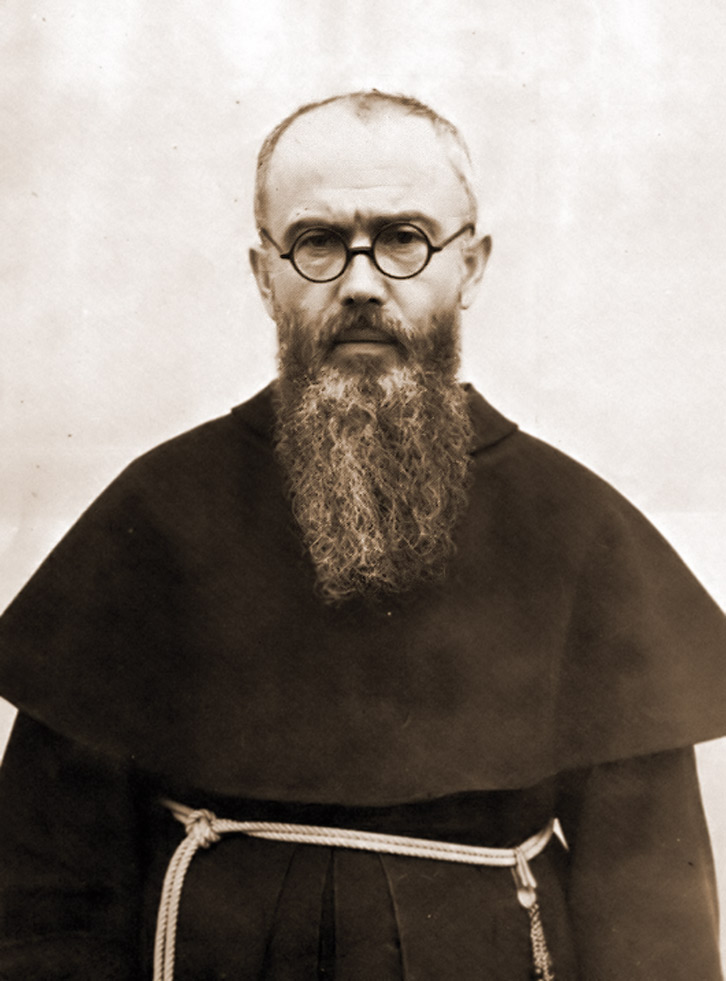 Photograph
Primary source
Portrait of Maximilian Kolbe
1936
 Artifact
Secondary source
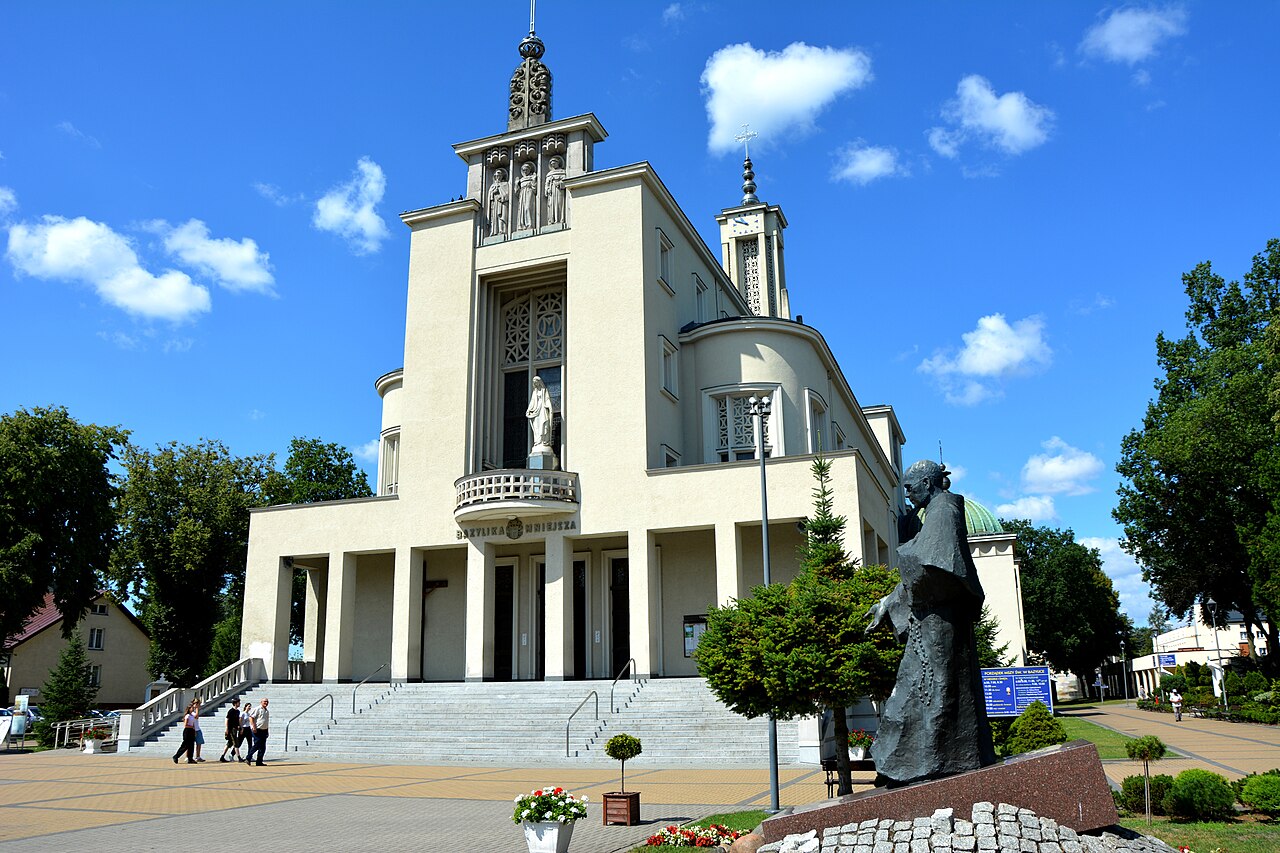
Niepokalanów
founded 1927
 Photograph
Primary source
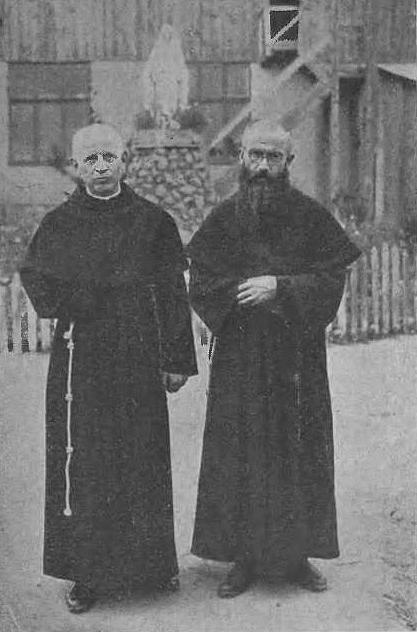
Korneli Czupryk and Maksymilian Kolbe before departure to Japan
1933
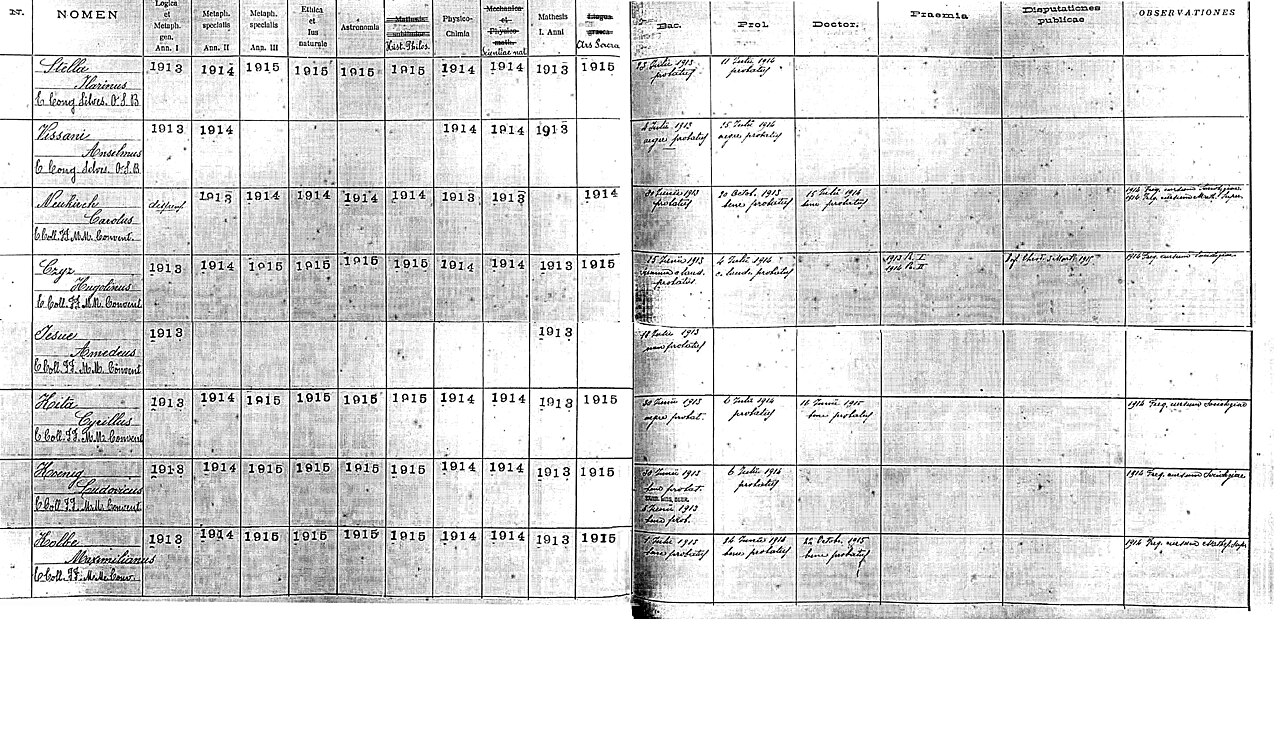 Document
Primary source
Kolbe Curriculum Studiorum
Pontificia Università Gregoriana - Segreteria generale · 1913-1919
Free account
Read every Maximilian Kolbe source
Sign up free →
Ready when you are
Start chatting with Maximilian Kolbe now.
20 messages free · No credit card · Available in 50+ languages.