


Primary sourceDocument1947
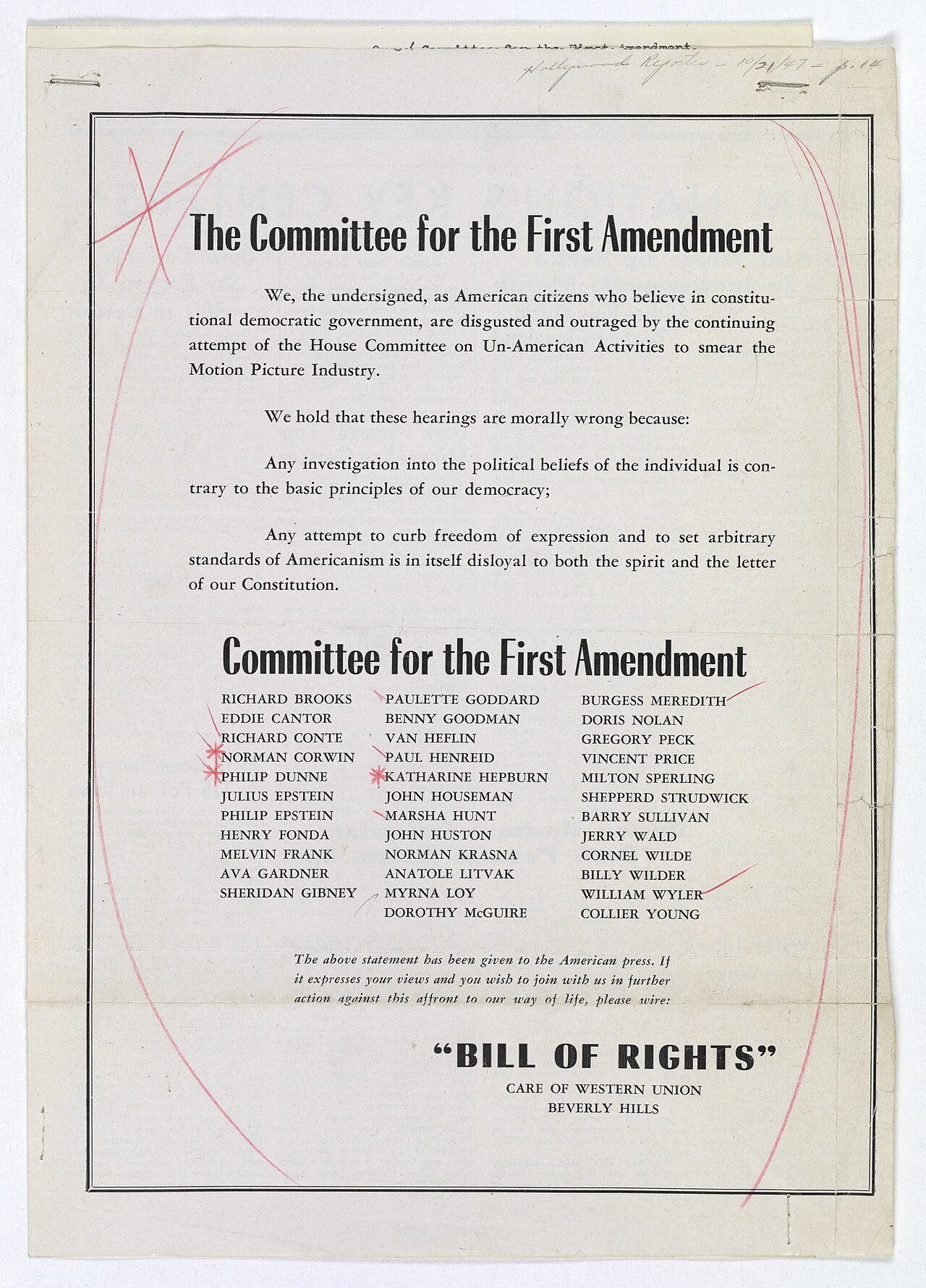
Statement of the Committee for the First Amendment, 1947
1947
A 1947 printed statement by the Committee for the First Amendment, a group of Hollywood actors and writers, responding to House committee hearings. It is a document of the film blacklist era, not McCarthy's own words.
Shows the 1947 Hollywood protest against House hearings, part of the anti-communist pressure that preceded McCarthy's campaigns; it is not his own statement.
About this source
What it is
This is a printed statement titled "The Committee for the First Amendment," dated 1947. It carries a list of Hollywood signatories in three columns and a Western Union address headed "Bill of Rights." Pink marks are drawn on the page and handwritten notes appear at the top. The collection record says the group was made up of American Hollywood actors and writers who issued the statement about the hearings of the House Committee on Un-American Activities. The record in the commons gives the creator as the U.S. House of Representatives Committee on Internal Security, 1969-1975, which is a later body, so the attribution should be read with care. The image is a scan of the document.
Why it matters
The statement shows how Hollywood artists organized public protest against the House committee's hearings on the film industry. It is part of the background to the blacklist era that followed, in which many people in the entertainment industry were targeted by anti-communist investigators. Joseph McCarthy's Senate hearings belong to the same wider period of anti-communist pressure, but this document is not his work.
Look closer
- Who signed the statement, and what does the list of names suggest about the group's size and reach?
- Why would a group address its message to a "Bill of Rights" and how does that choice frame the dispute?
- What do the pink marks and handwritten notes on the copy suggest about who used it and why?
This document is part of the curated material that grounds the AI version of Joseph McCarthy on Humy.ai — when students ask about related events, the AI can quote it and cite it.
More Joseph McCarthy sources
Meet the AI Joseph McCarthy →Primary source
Wheeling, West Virginia speech
Joseph McCarthy · 9 February 1950
 Document
Primary source
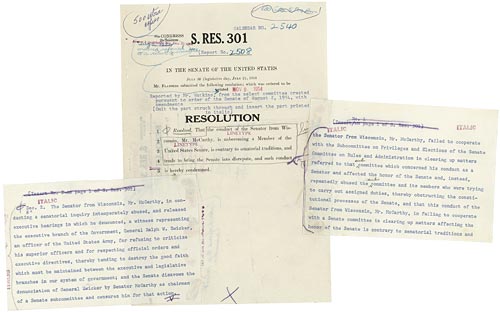
Senate Resolution 301: Censure of Senator Joseph McCarthy
2 December 1954
 Photograph
Primary source
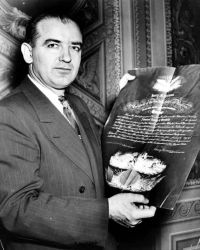
Senator McCarthy
Primary source
Declaration of Conscience
Margaret Chase Smith · 1 June 1950
 Painting
Primary source
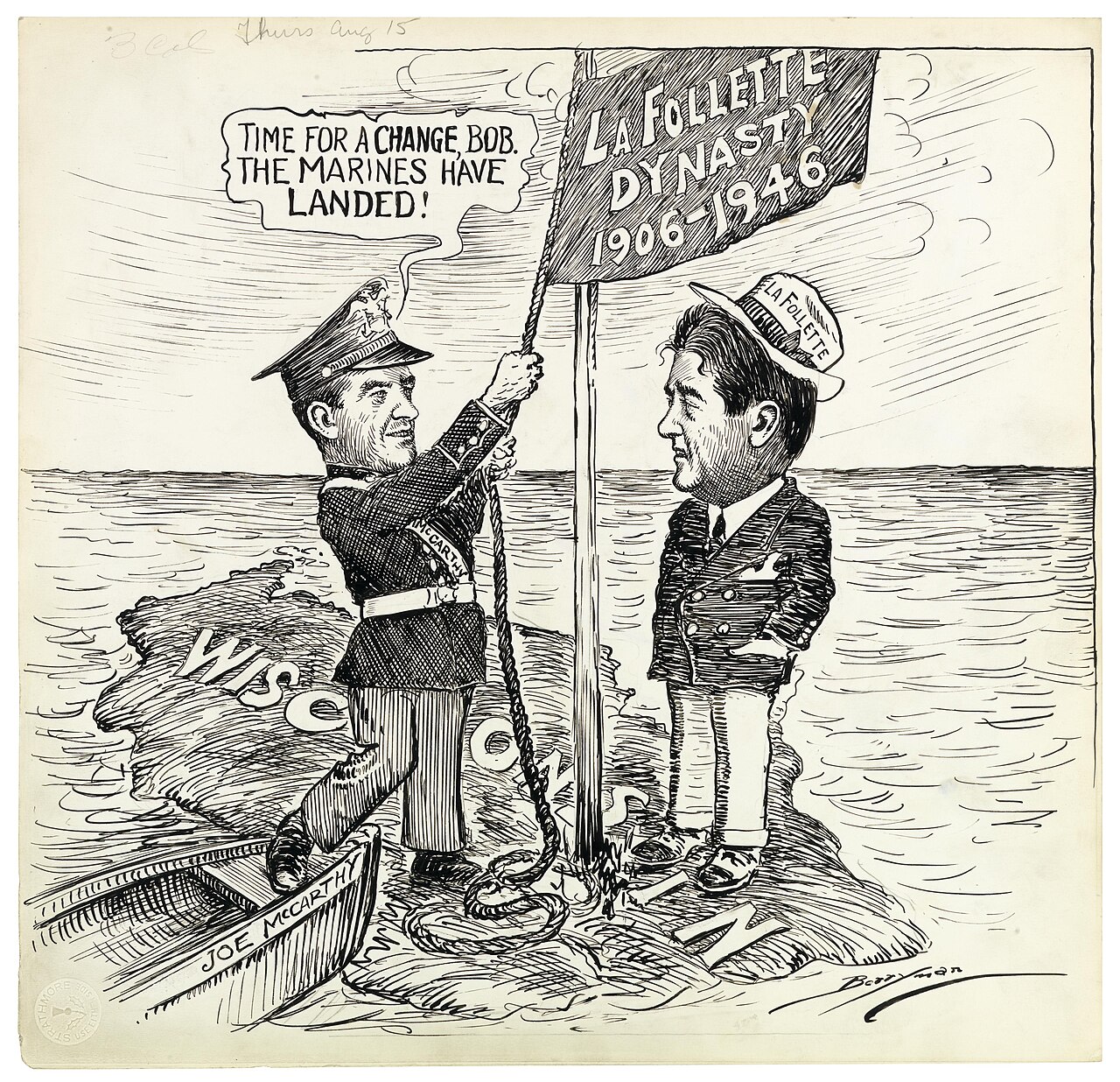
Berryman cartoon: The marines have landed
Berryman · Thurs Aug 15
Ready when you are
Start chatting with Joseph McCarthy now.
20 messages free · No credit card · Available in 50+ languages.