


Secondary sourceSculpture
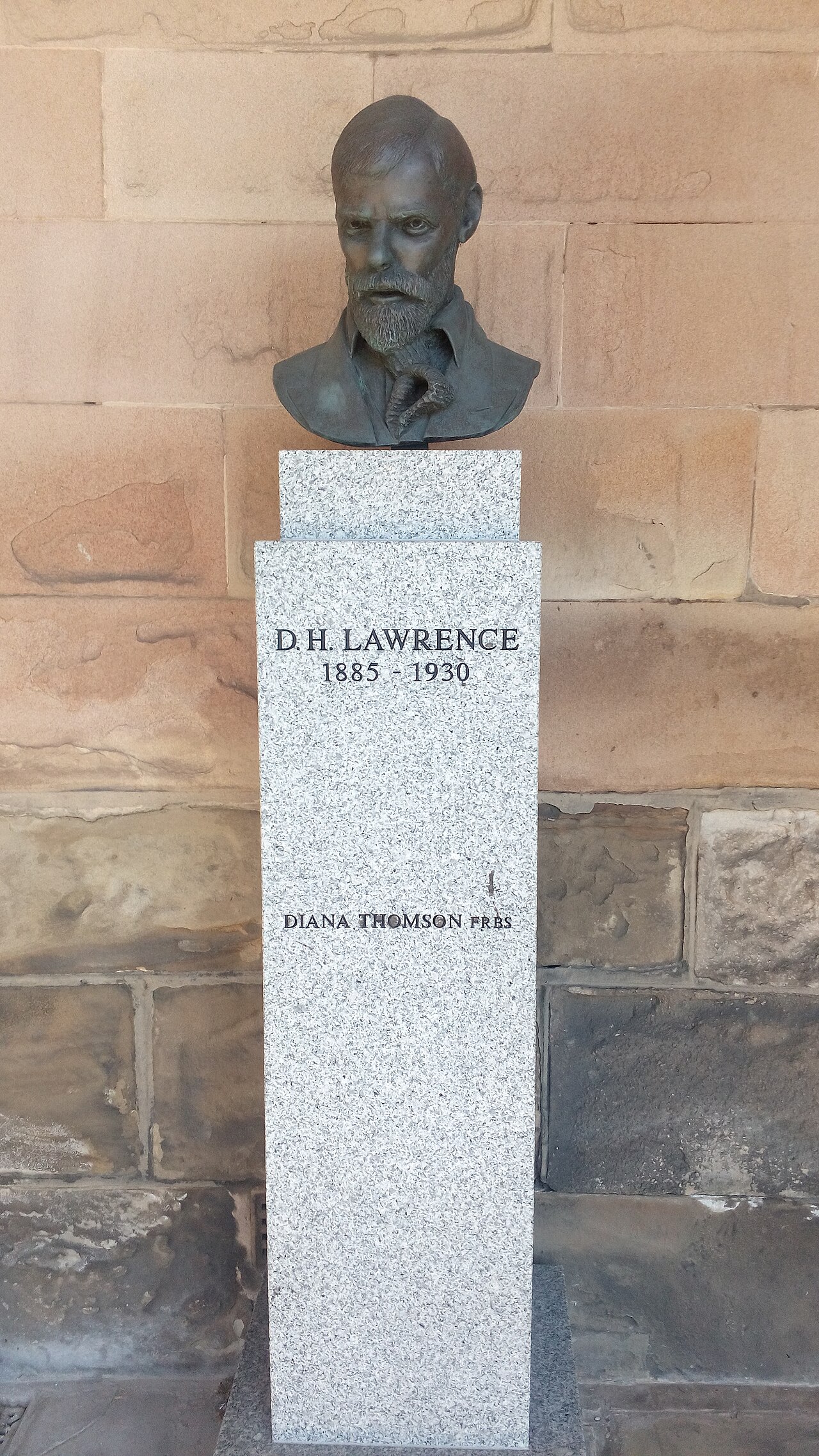
Statue of D. H. Lawrence, Nottingham Castle
Diana Thomson
A bronze bust of D. H. Lawrence on a granite plinth at Nottingham Castle, seen in a 2015 photograph. It is a later memorial by the sculptor Diana Thomson.
A later bronze memorial to Lawrence, made long after his death and showing how he is honoured in his home city.
About this source
What it is
This is a bronze bust of D. H. Lawrence mounted on a tall grey granite plinth against a sandstone wall at Nottingham Castle. The plinth reads D.H. Lawrence 1885-1930 and Diana Thomson FRBS, which names the sculptor. The photograph was taken on 7 June 2015, according to its Exif data, by the user Tshrinivasan. The bust shows Lawrence with a beard, receding hair and an open-collared jacket, with a coiled snake at the neck.
Why it matters
Later sculptors and communities have made memorials to Lawrence, and this bust is one way his face and reputation have been kept in public places. The snake at the neck is a detail that viewers often connect with Lawrence's poetry, although the facts do not explain its meaning. The bust tells us more about how Lawrence was remembered than about how he looked in life.
Look closer
- What features has the sculptor chosen to show, and what might they say about how Lawrence is remembered?
- Why might the snake be included, and what would you need to know to understand it?
- How does the setting in a castle grounds change the way you read the memorial?
This sculpture is part of the curated material that grounds the AI version of D. H. Lawrence on Humy.ai — when students ask about related events, the AI can quote it and cite it.
More D. H. Lawrence sources
Browse all 86 →

Ready when you are
Start chatting with D. H. Lawrence now.
20 messages free · No credit card · Available in 50+ languages.