


Secondary sourceSculpture1932
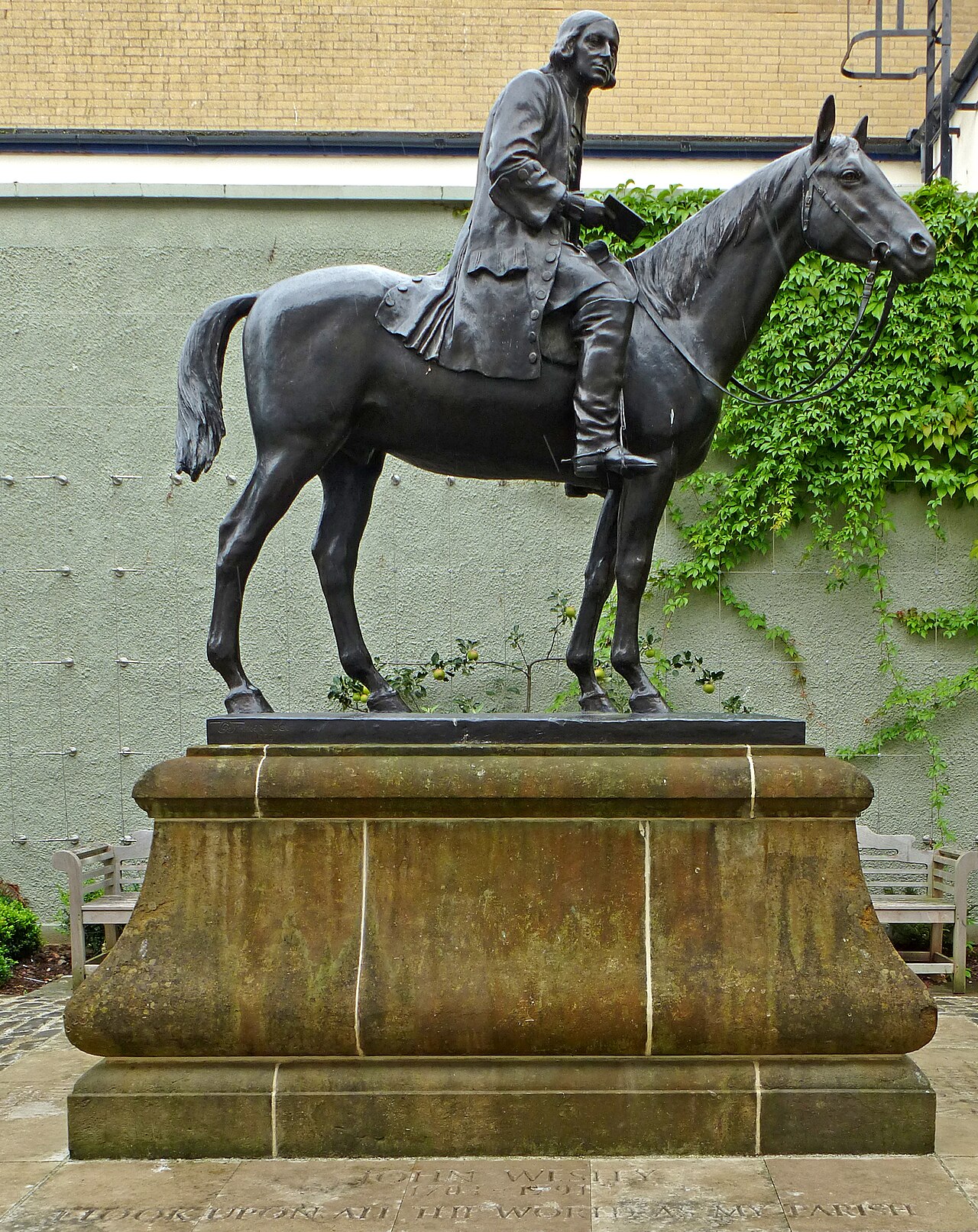
Statue of John Wesley in Courtyard in Front of the New Room
Arthur George Walker · 1932
A bronze equestrian statue of John Wesley on horseback, made in 1932 by Arthur George Walker and placed in Bristol. It honours Wesley as a travelling preacher.
A later monument that presents Wesley as a tireless travelling preacher, a central part of his public image.
About this source
What it is
This is a bronze equestrian statue showing a man in an 18th-century coat and riding boots, mounted on a horse atop a tall stone pedestal. Ivy grows on the wall behind, and a stone plaque with inscriptions lies at the base. It is in the City of Bristol, England. The sculptor was Arthur George Walker, and the statue dates from 1932.
Why it matters
The statue commemorates Wesley as a horseback itinerant, a preacher who travelled constantly across Britain. The facts describe him as riding some 250,000 miles. The statue was made long after his death in 1791, so it shows how later generations chose to picture him.
Look closer
- Why might a sculptor choose to show Wesley on horseback rather than preaching in a pulpit?
- What details of the clothing and horse tell you about the period the sculptor wanted to show?
- What does the statue leave out about the people who travelled with Wesley or who opposed his preaching?
This sculpture is part of the curated material that grounds the AI version of John Wesley on Humy.ai — when students ask about related events, the AI can quote it and cite it.
More John Wesley sources
Browse all 93 →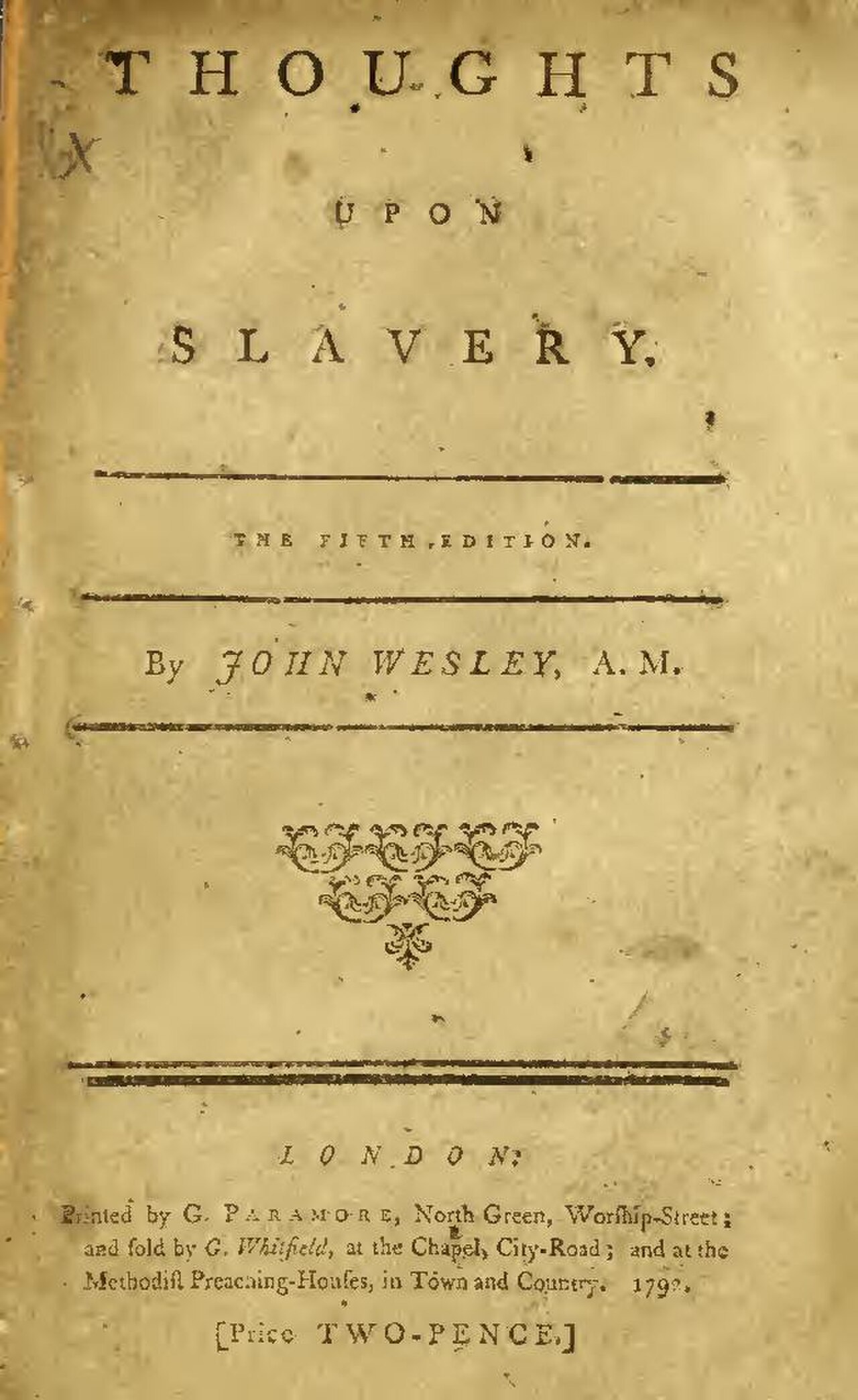 Book
Primary source
Thoughts upon Slavery
John Wesley · 1774 (shown edition 1792)
Primary source
Sermons on Several Occasions
John Wesley · 1746-1762 (four main volumes)
Primary source
A Collection of Hymns, for the Use of the People Called Methodists
John Wesley · 1780
 Painting
Primary source
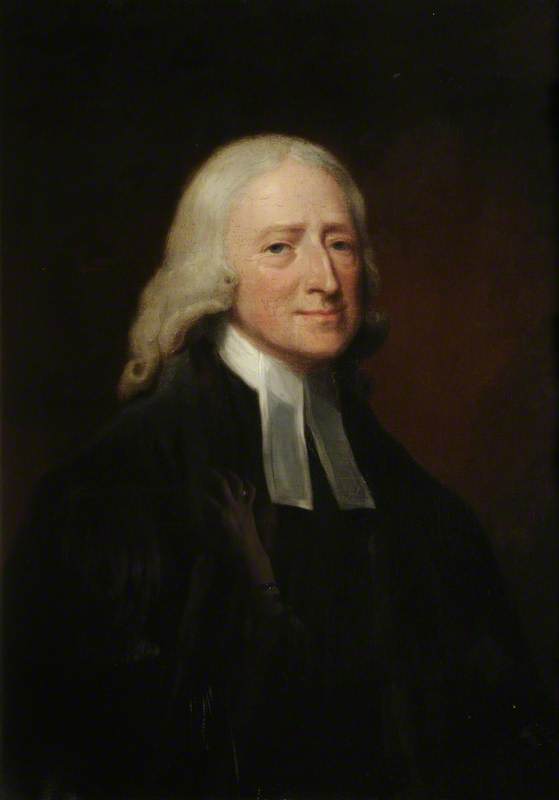
John Wesley (1703–1791)
George Romney · 1789

Free account
Read every John Wesley source
Sign up free →
Ready when you are
Start chatting with John Wesley now.
20 messages free · No credit card · Available in 50+ languages.