


Secondary sourceSculpture1973
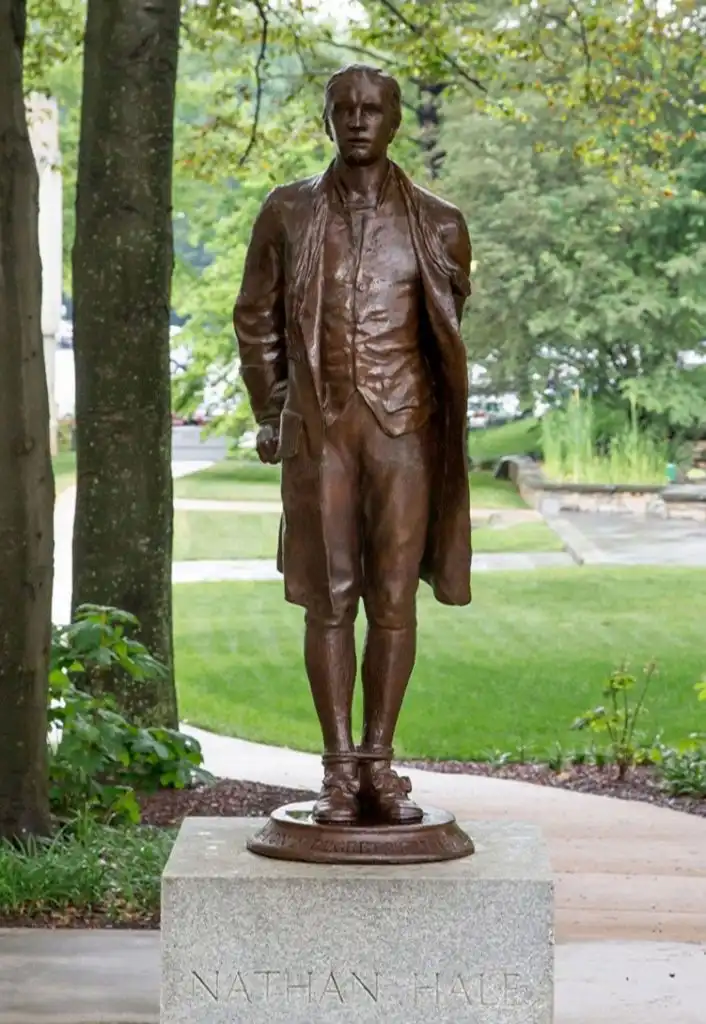
Statue of Nathan Hale at CIA Langley
Central Intelligence Agency · 1973
A bronze statue of Nathan Hale in colonial dress on a granite pedestal at CIA Langley, erected in 1973.
Shows how Hale's memory was built into the CIA grounds as a symbol of early American espionage.
About this source
What it is
This is a photograph of a bronze statue of a standing man in 18th-century colonial clothing. He wears a long coat open over a waistcoat, breeches and buckled shoes. The statue sits on a circular base atop a granite pedestal inscribed NATHAN HALE, with trees and lawn behind it. The record gives the date only loosely, and the photographer is not named. The CIA's own description says the statue was erected on its grounds in 1973.
Why it matters
The statue honours Hale, an officer of the Continental Army who was executed by the British in 1776 for spying. By placing his statue at its headquarters, the CIA presents him as an early example of American intelligence work. The statue is a later tribute, so it shows how Hale has been remembered, not what he looked like.
Look closer
- What does the pose and clothing of the statue tell you about how Hale is meant to be seen?
- Why might a government agency choose to put a statue of a spy on its grounds?
- What might the statue leave out about the reasons Hale was executed?
This sculpture is part of the curated material that grounds the AI version of Nathan Hale on Humy.ai — when students ask about related events, the AI can quote it and cite it.
More Nathan Hale sources
Meet the AI Nathan Hale →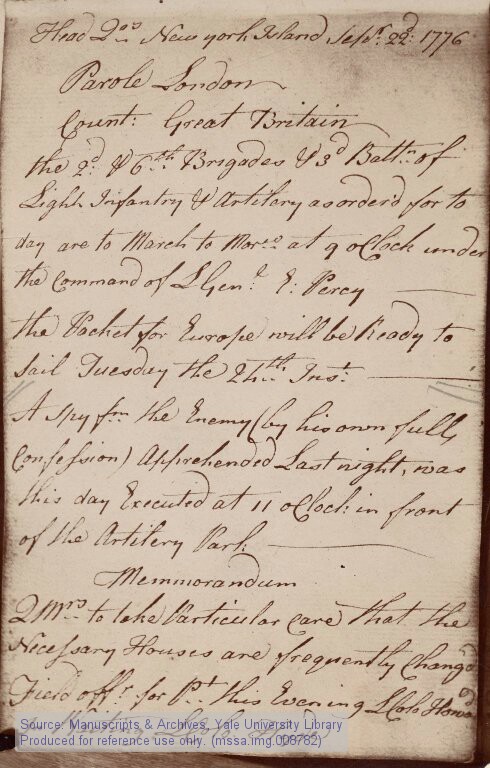 Document
Primary source
British Orderly Book Recording the Execution of Nathan Hale
Unknown British soldier · 22 September 1776
 Document
Primary source
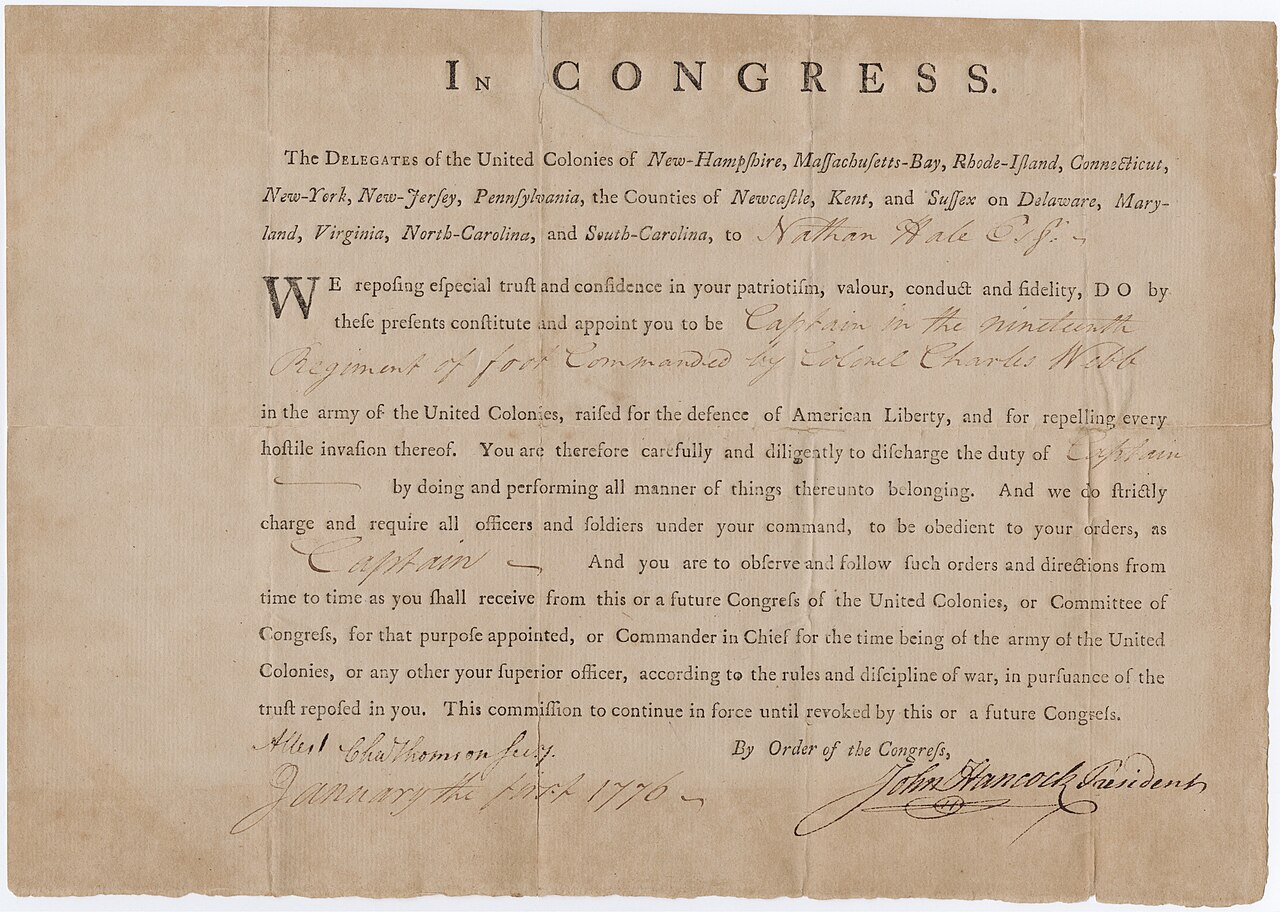
Nathan Hale Commission as Captain
John Hancock · 1 January 1776
 Letter
Primary source
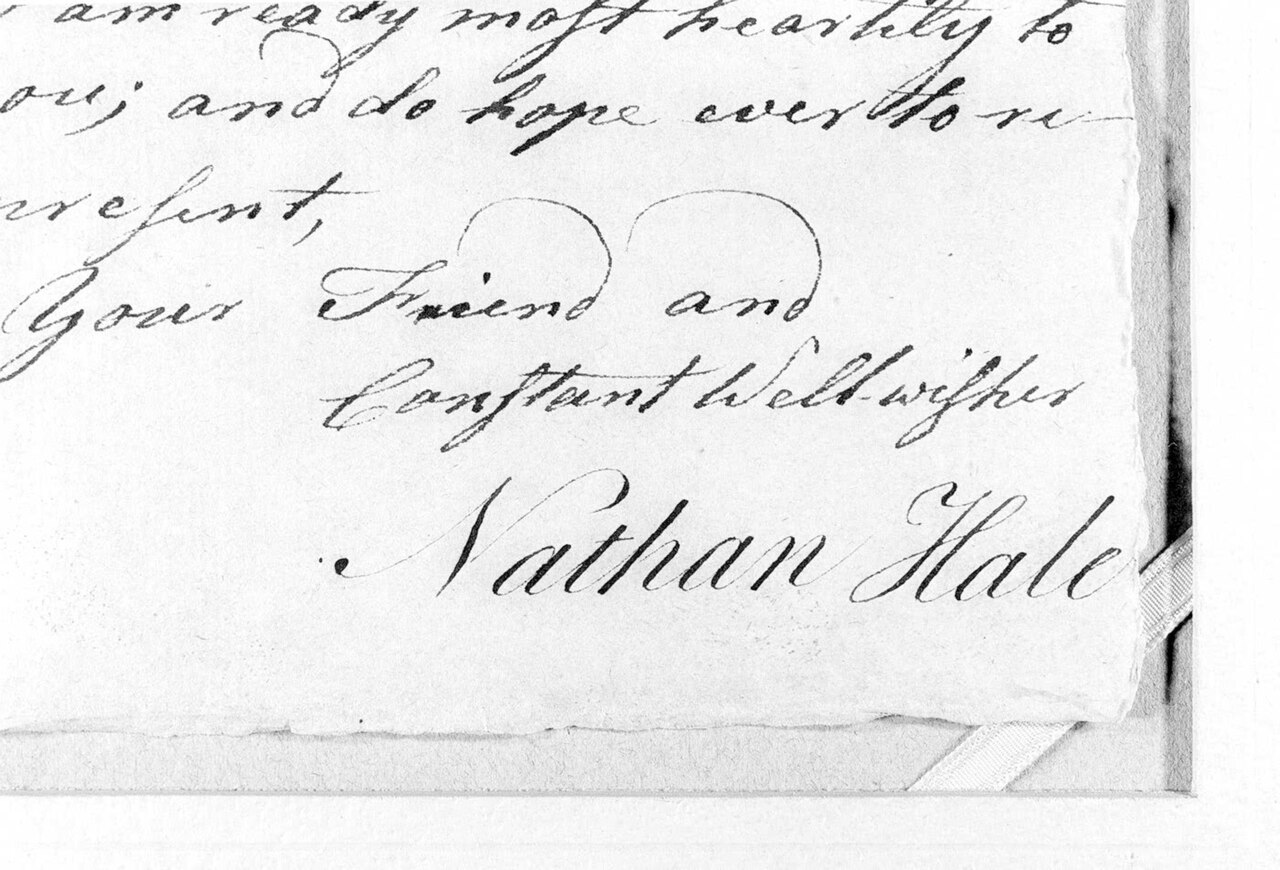
Signature of Nathan Hale
Nathan Hale
 Sculpture
Secondary source
Nathan Hale Statue by Bela Pratt
Bela Lyon Pratt · 1908–1912, cast 1912
 Document
Primary source
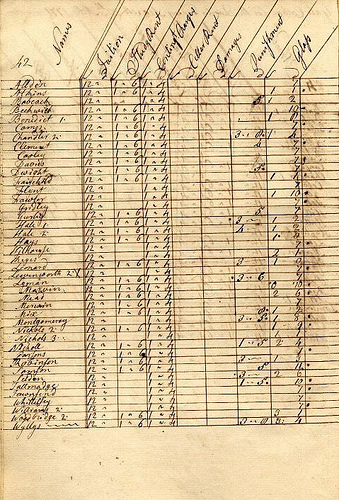
Yale College Quarter Bills Ledger Page
Yale College · 1770–1771
Ready when you are
Start chatting with Nathan Hale now.
20 messages free · No credit card · Available in 50+ languages.