


Secondary sourceSculpture
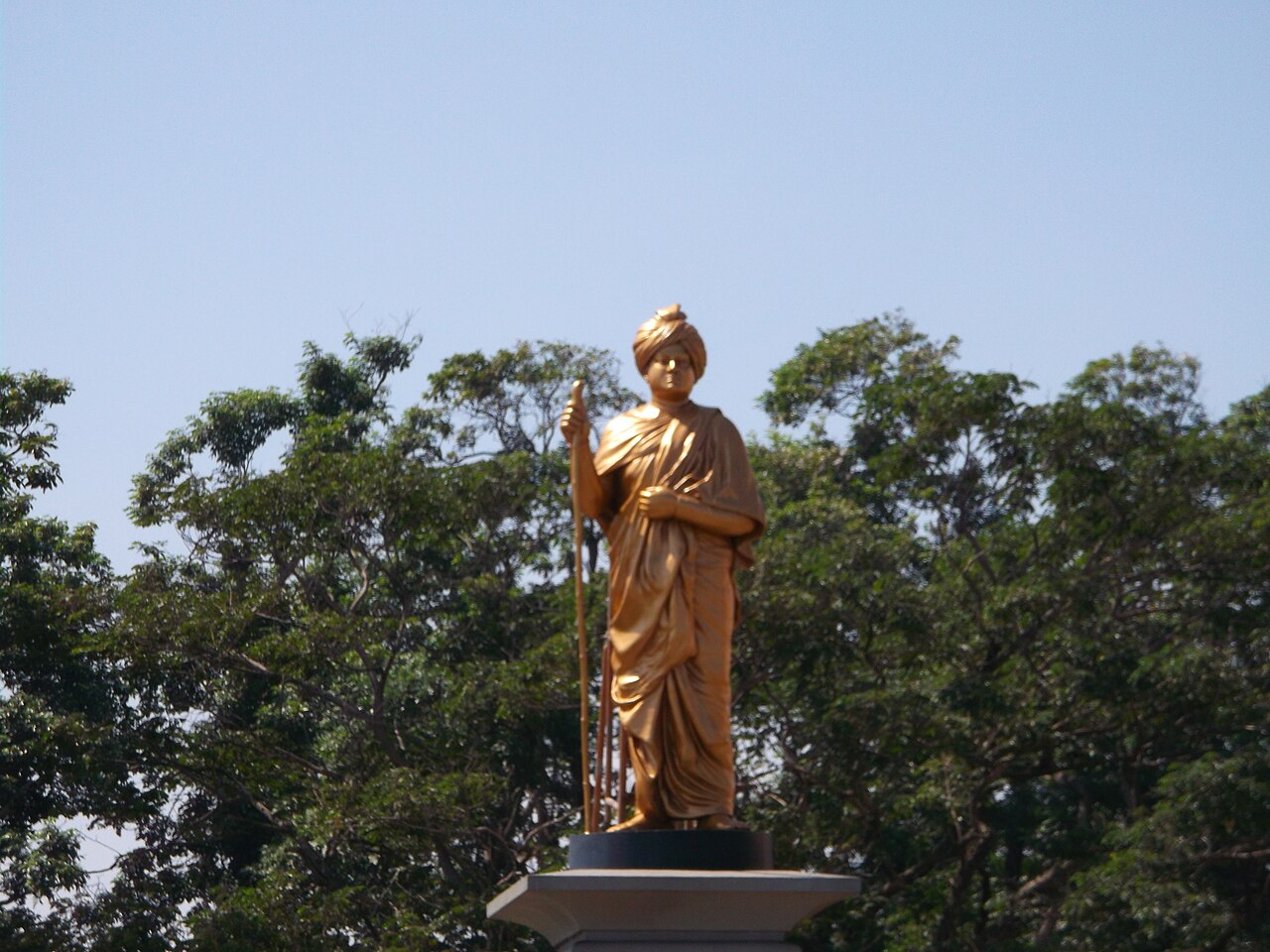
Statue of Vivekananda at Marina Beach, Chennai
A golden-bronze standing statue of Swami Vivekananda on a tall stone pedestal on Marina Beach in Chennai, photographed in 2013. It is a later public memorial.
Shows how Vivekananda is publicly commemorated in Chennai, a later monument rather than a record from his lifetime.
About this source
What it is
This is a photograph of a golden-bronze statue of a standing figure in a robe and turban. He holds a staff in his left hand and a fold of cloth across his body. The statue stands on a tall stone pedestal against green trees and a pale blue sky. The photograph is dated 2 February 2013 and was taken on Marina Beach in Chennai, India. The record does not name the sculptor.
Why it matters
This is a later public statue, made long after Vivekananda lived (1863 to 1902). It is a secondary source. It shows how he is honoured in a public place, where many people can see it. Public monuments often show the qualities a community wants to celebrate, which may differ from how the person saw himself.
Look closer
- What objects and clothing did the sculptor include, and what might they say about the man being shown?
- Why might a city place a statue of a religious figure in a public, seaside location?
- What does this statue leave out about Vivekananda's own words and daily life?
This sculpture is part of the curated material that grounds the AI version of Swami Vivekananda on Humy.ai — when students ask about related events, the AI can quote it and cite it.
More Swami Vivekananda sources
Browse all 94 →Primary source
Sisters and Brothers of America
Swami Vivekananda · 1893
 Photograph
Primary source
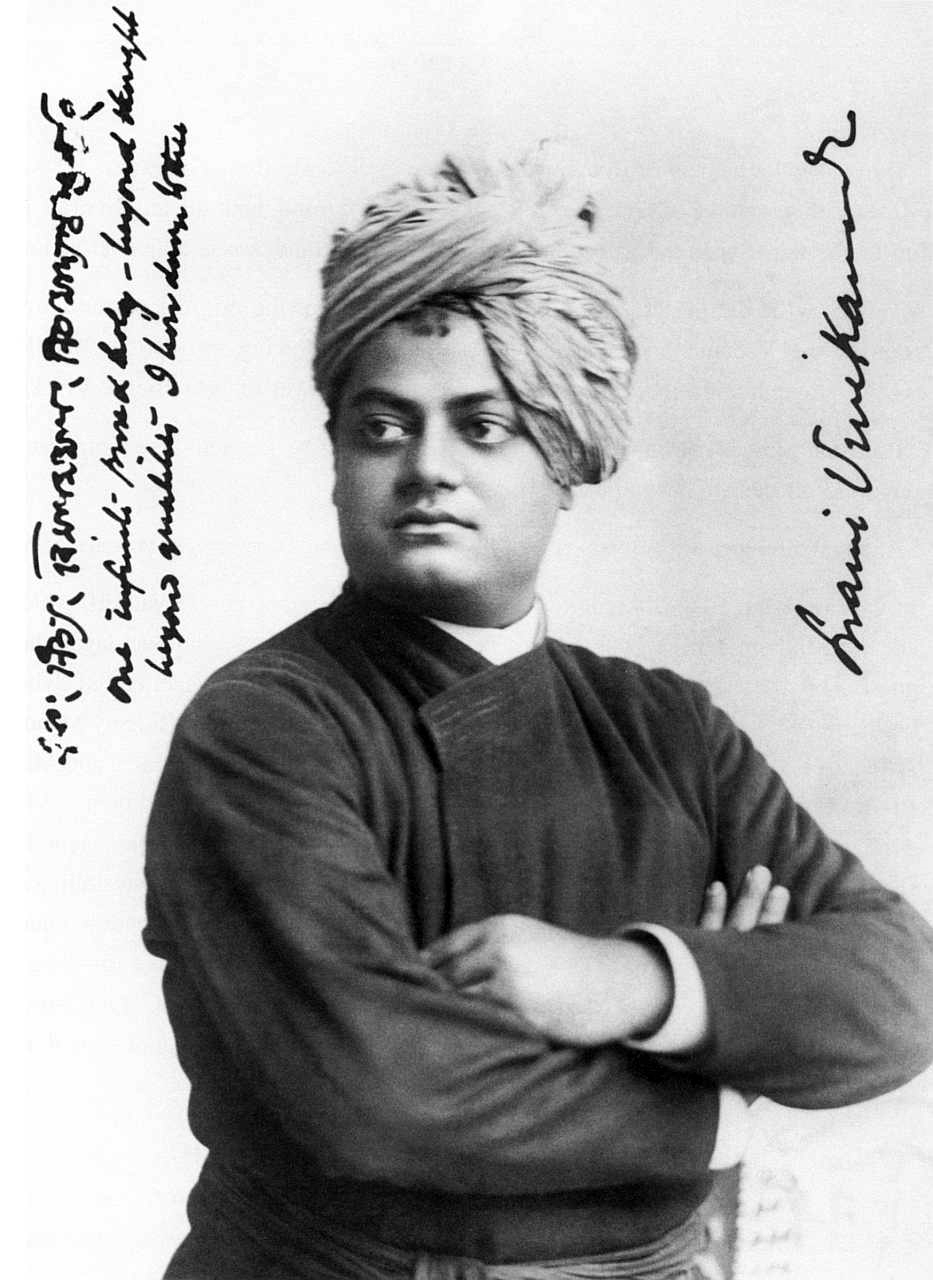
Portrait of Swami Vivekananda
September 1893
 Book
Primary source
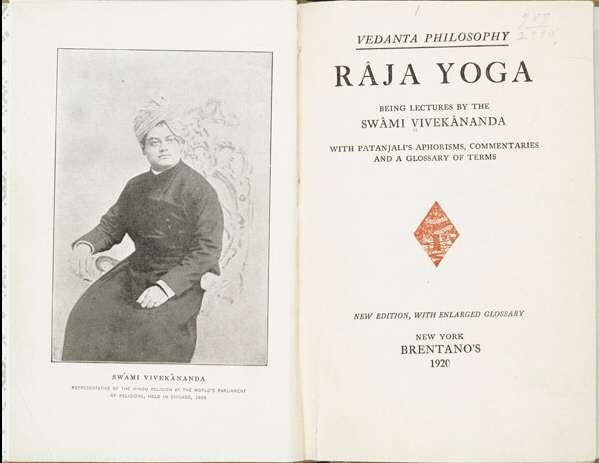
Raja Yoga
Swami Vivekananda · 1896
 Book
Primary source
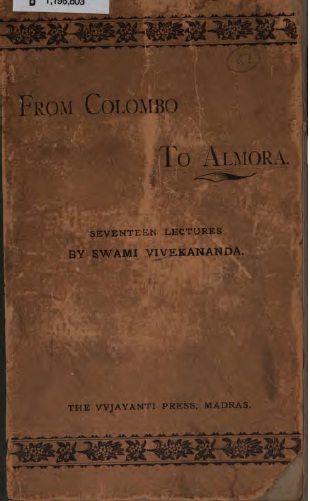
Lectures from Colombo to Almora
Swami Vivekananda · 1897
Free account
Read every Swami Vivekananda source
Sign up free →
Ready when you are
Start chatting with Swami Vivekananda now.
20 messages free · No credit card · Available in 50+ languages.