


Secondary sourceSculpture10 November 2008
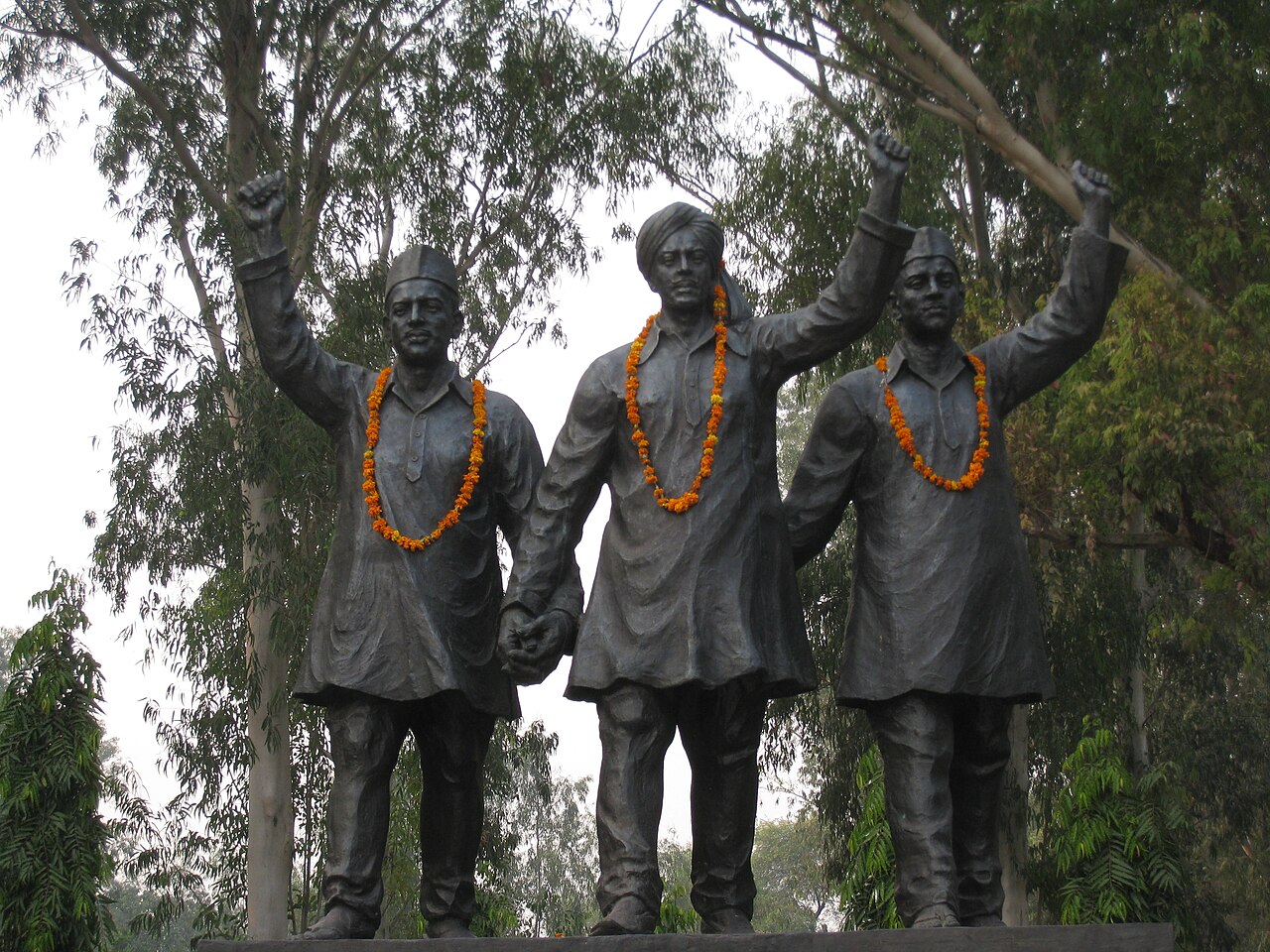
Statues of Bhagat Singh, Rajguru and Sukhdev near Amritsar
10 November 2008
Bronze statues near the India-Pakistan border depicting Bhagat Singh with fellow revolutionaries Rajguru and Sukhdev.
These statues commemorate Bhagat Singh alongside his fellow executed revolutionaries Rajguru and Sukhdev.
About this source
What it is
This photograph shows three bronze statues near the India/Pakistan border, near Amritsar, depicting standing men with raised fists, identified as Bhagat Singh, Rajguru and Sukhdev.
Why it matters
These statues commemorate the three revolutionaries who were executed together by British colonial authorities in 1931. Their shared memorial near the border highlights their enduring symbolic role in the history of Indian independence.
Look closer
- Why might the statues show the men with raised fists and clasped hands?
- What does placing this memorial near a national border suggest about its meaning?
- How does a monument like this shape later generations' understanding of these men, compared to original documents from their lifetime?
This sculpture is part of the curated material that grounds the AI version of Bhagat Singh on Humy.ai — when students ask about related events, the AI can quote it and cite it.
More Bhagat Singh sources
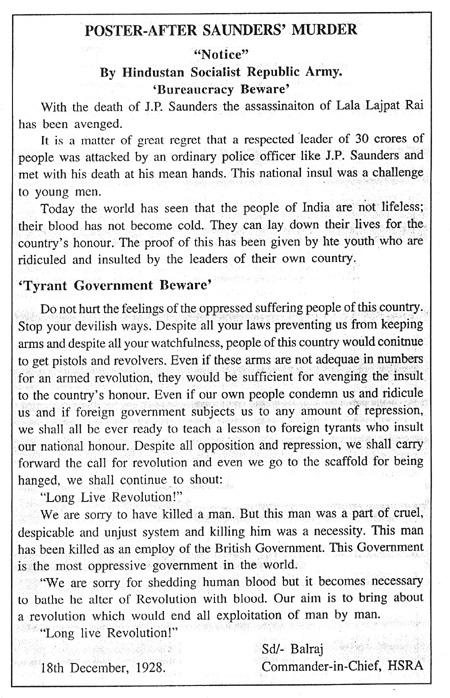
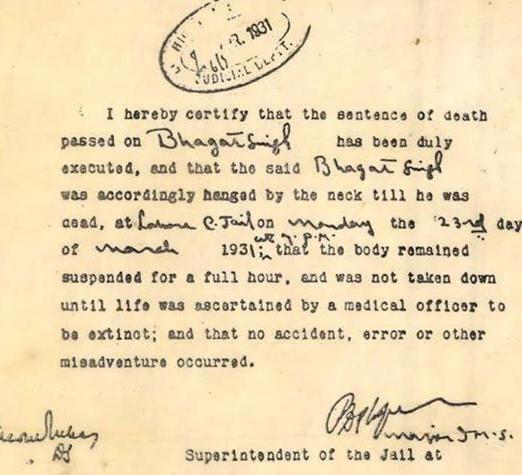
Browse all 50 →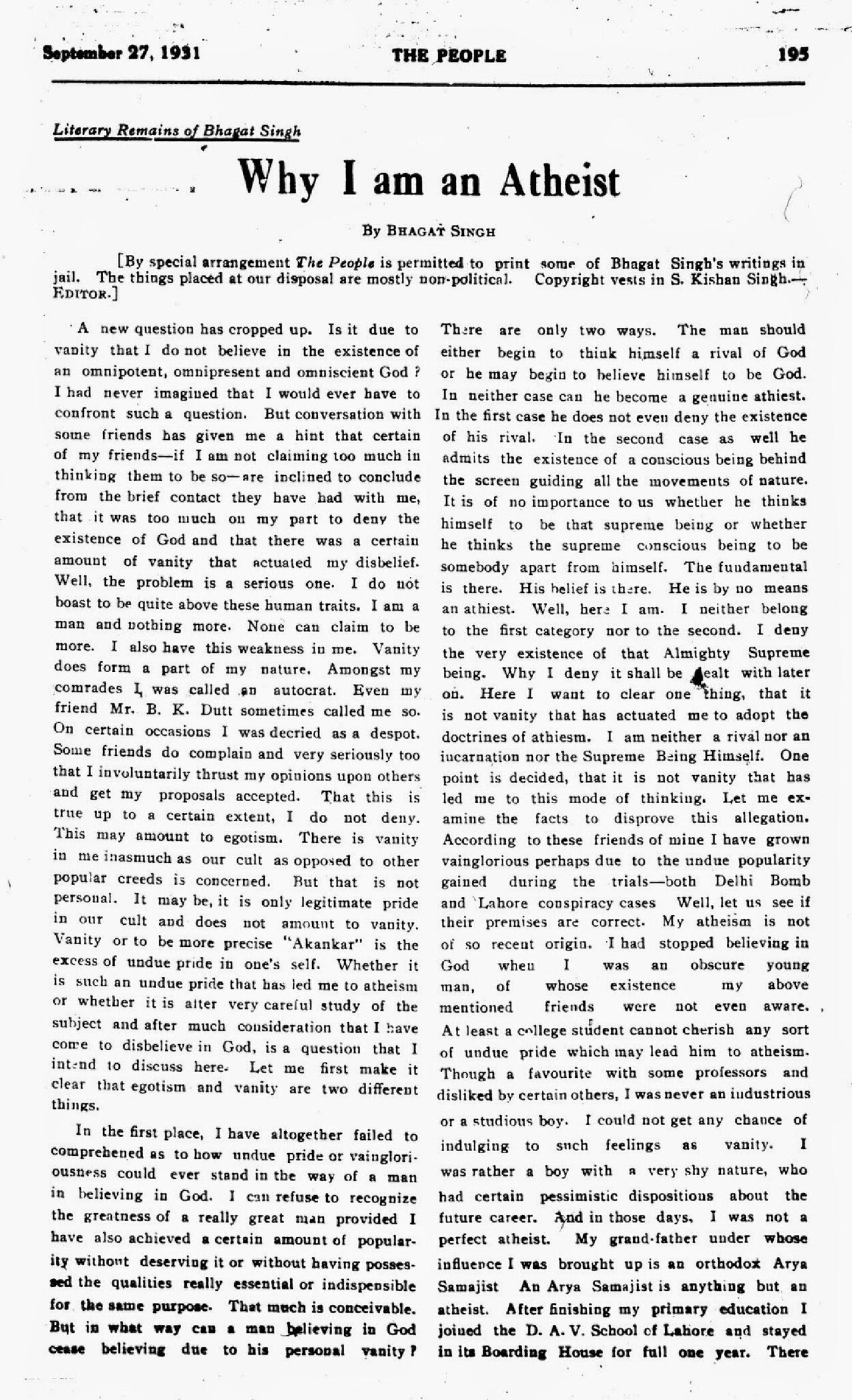 Book
Primary source
Why I am an Atheist
Bhagat Singh · 1930
Primary source
Statement of Bhagat Singh and B. K. Dutt in the Assembly Bomb Case
Bhagat Singh and Batukeshwar Dutt · 6 June 1929
Primary source
Letter to Father
Bhagat Singh · 4 October 1930
Primary source
To Young Political Workers
Bhagat Singh · 2 February 1931
Free account
Read every Bhagat Singh source
Sign up free →
Ready when you are
Start chatting with Bhagat Singh now.
20 messages free · No credit card · Available in 50+ languages.