


Secondary sourceSculpturec. 150 BCE
Statuette of Euripides
c. 150 BCE
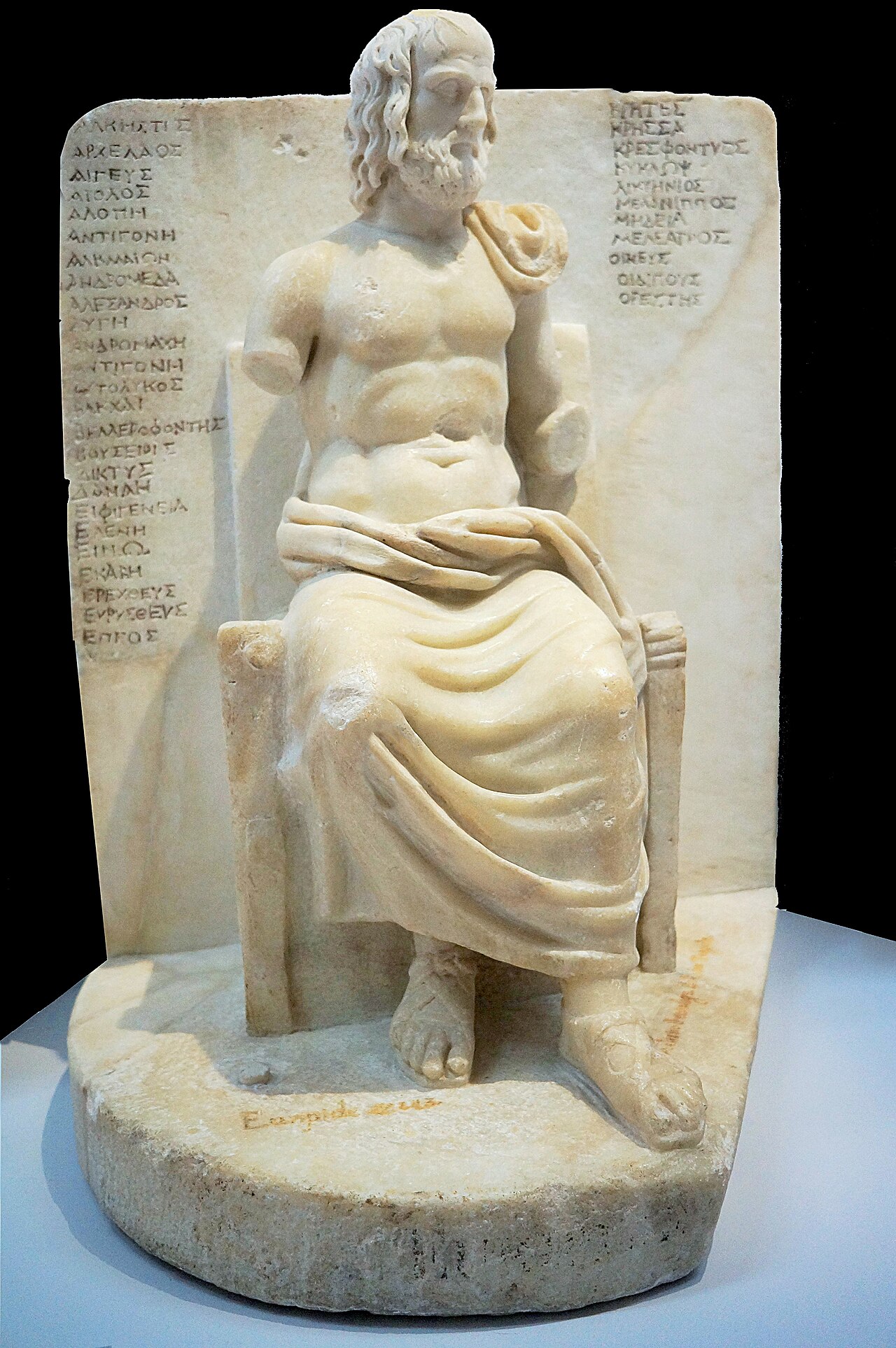
A seated marble statuette of Euripides, identified by an inscription and backed by a panel listing his plays.
This statuette presents Euripides' identity directly linked to a list of his own plays.
About this source
What it is
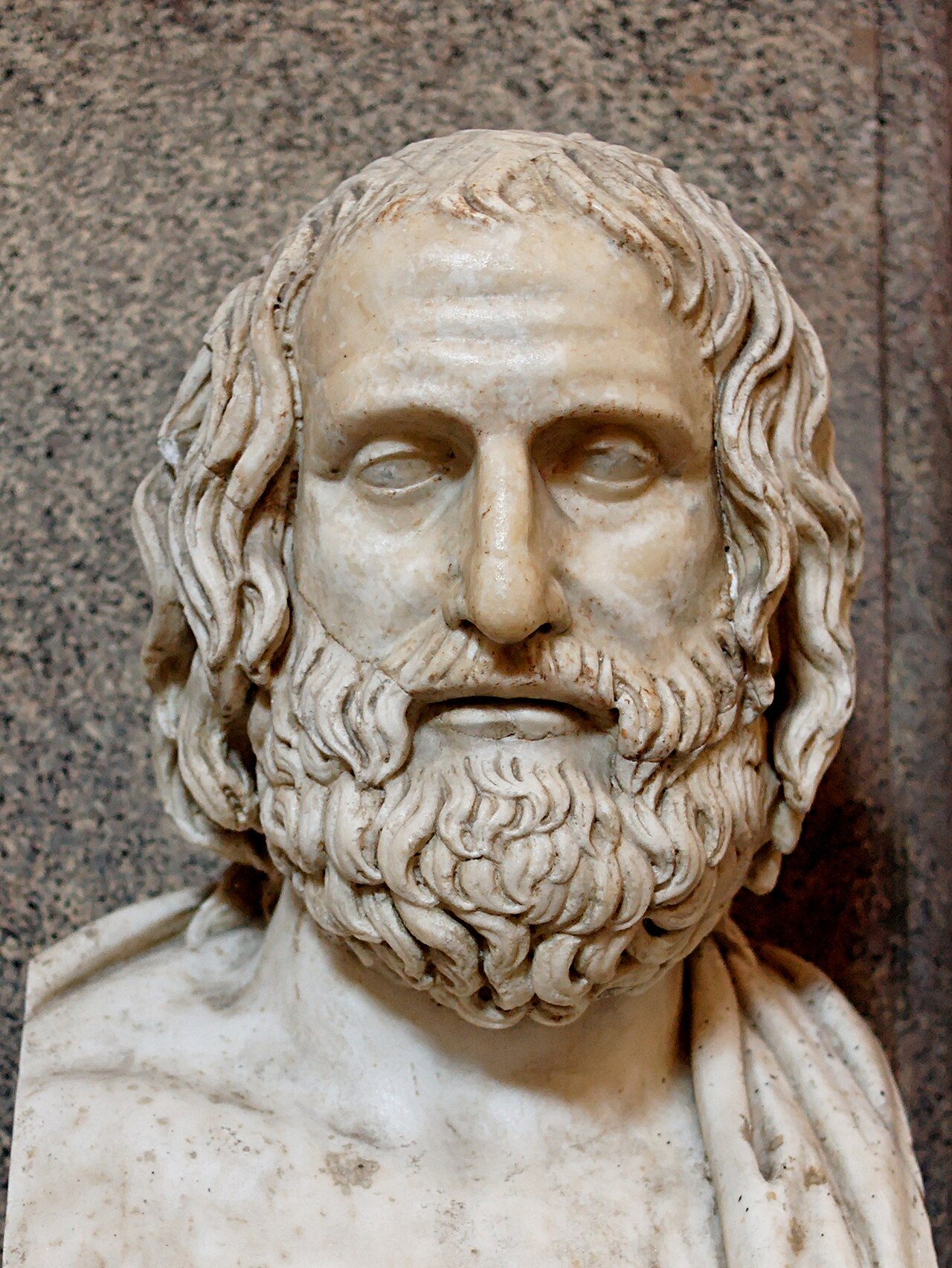
This marble statuette, dated to around 150 BCE, shows Euripides seated, bare-chested with a cloak over his lap. It was found in 1704 on the Esquiline Hill in Rome and is now kept by the Department of Greek, Etruscan, and Roman Antiquities of the Louvre. An inscription on the base names him, and the panel behind him lists titles of his works. The head was restored based on a bust in Naples.
Why it matters
This statuette links Euripides' image directly to his catalogued plays, showing how Romans collected and displayed portraits of Greek writers alongside lists of their works. It reveals how his reputation as a major dramatist was preserved and celebrated for centuries after his lifetime.
Look closer
- Why do you think the sculptor included a list of his plays on the panel?
- What does the restoration of the head tell us about how statues survive and get repaired over time?
- Why might a Roman owner want a statue of a Greek playwright in their home?
This sculpture is part of the curated material that grounds the AI version of Euripides on Humy.ai — when students ask about related events, the AI can quote it and cite it.

Ready when you are
Start chatting with Euripides now.
20 messages free · No credit card · Available in 50+ languages.