


Primary sourceDocument1285
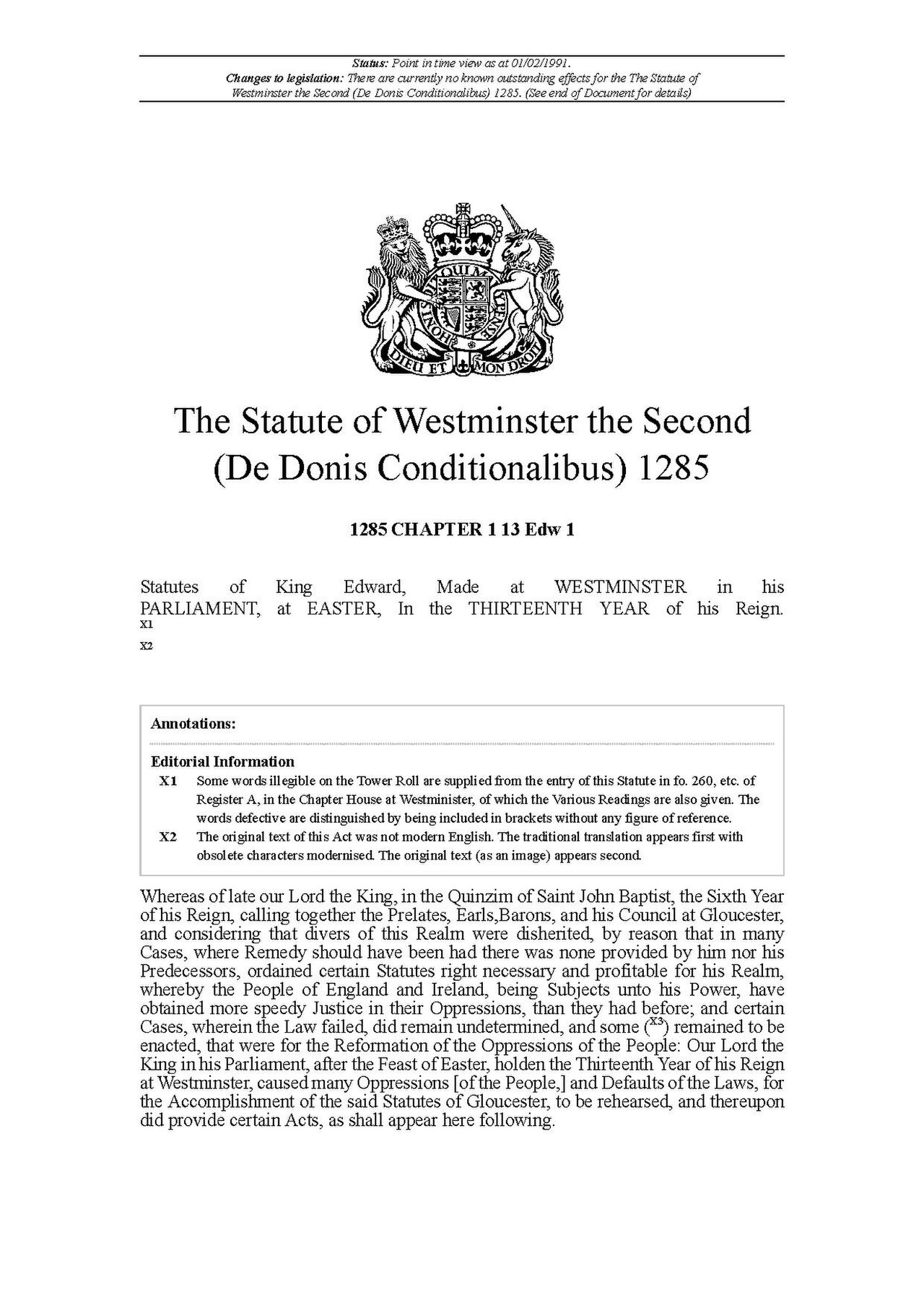
Statute of Westminster 1285
Edward I of England · 1285
Edward I's 1285 law reforming property law, including the famous clause creating the entailed estate.
One of Edward I's most lasting legislative reforms, shaping English property law for centuries.
About this source
What it is
The Statute of Westminster of 1285, also called Westminster II, is a 50-chapter code of law passed during the reign of Edward I. Its best-known clause, De donis conditionalibus, created the entailed estate in English land law.
Why it matters
The statute amended laws on dower, inheritance, and manorial jurisdiction, and remodelled the system of justices of assize. It shows Edward I as a reforming lawmaker whose legal changes shaped how land was inherited in England for centuries afterward, with the entail clause remaining in force long after his death. It is considered one of the most lasting of his legislative achievements.
Look closer
- What does the clause De donis conditionalibus do to how land could be passed down?
- Why might a king want to control how noble families inherit land?
- What does the survival of parts of this law into modern times tell you about its importance?
This document is part of the curated material that grounds the AI version of Edward I on Humy.ai — when students ask about related events, the AI can quote it and cite it.
More Edward I sources
Browse all 97 →





Ready when you are
Start chatting with Edward I now.
20 messages free · No credit card · Available in 50+ languages.