


Primary sourceArtifactseized 1296
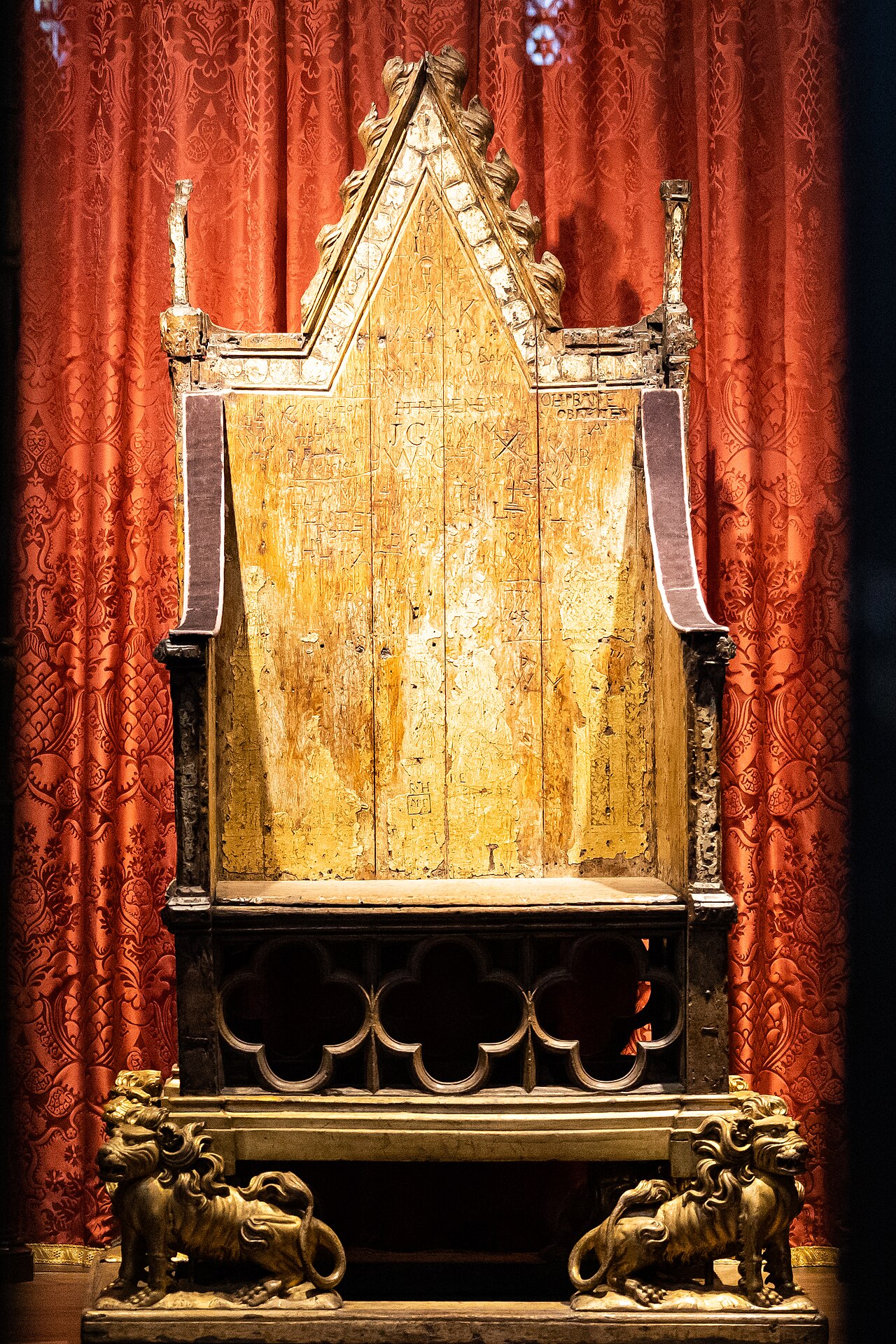
Stone of Scone
seized 1296
The Scottish coronation stone seized by Edward I in 1296 and taken to Westminster as a symbol of conquest over Scotland.
Edward I seized this stone in 1296 and took it to Westminster as a trophy of his conquest of Scotland.
Free Humy account · No credit card · 120,912 sources to read

About this source
What it is
The Stone of Scone is a block of red sandstone used for centuries in the coronation of Scottish monarchs, first recorded in use in 1249. In 1296 it was captured by the forces of Edward I of England during his invasion of Scotland and carried south to Westminster.
Why it matters
For over 500 years the stone was used in English and later British coronations, making it a powerful symbol of conquest as well as monarchy. Its seizure by Edward I shows how he used symbolic objects, not just armies, to assert control over Scotland. The stone was returned to Scotland in 1996 and is now displayed in Perth Museum.
Look closer
- Why might a king want to take a rival nation's coronation stone rather than destroy it?
- What does the stone's long journey between Scotland and England tell you about shifting power between the two kingdoms?
- Why do people still debate whether the stone at Westminster was really the original?
This artifact is part of the curated material that grounds the AI version of Edward I and William Wallace on Humy.ai — when students ask about related events, the AI can quote it and cite it.
More Edward I sources
Browse all 97 →



Ready when you are
Start chatting with Edward I now.
20 messages free · No credit card · Available in 50+ languages.