


Primary sourceArtifact
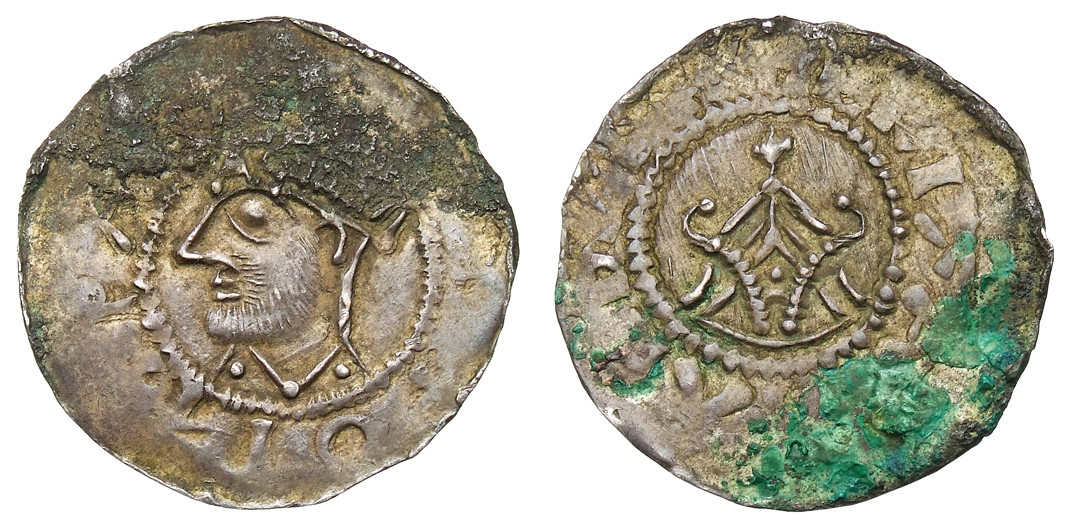
Strasbourg coin of Otto I and Bishop Erkanbald, third example
A small silver coin from Strasbourg issued under Otto I and Bishop Erkanbald. It shows that the two names appeared together on money.
A Strasbourg coin naming Otto I together with Bishop Erkanbald, showing the ruler's authority shared with local church leaders.
About this source
What it is
This is a small silver medieval coin from Strasbourg, shown in a photograph with green patina. One side shows a bearded profile head inside a beaded border. The other side shows a cross-like emblem with pellets inside a beaded circle. The coin carries the names of Otto I and Bishop Erkanbald. The record names Reinhard Saczewski as creator, but the facts do not say who struck it.
Why it matters
Coins issued under two names show how the emperor and a local bishop shared authority in a city like Strasbourg. Erkanbald was bishop there, and the coin links the royal and church powers that governed the region. Studying such coins helps students see how medieval rule was shared rather than held by one person alone.
Look closer
- How does the profile head on one side compare with the emblem on the other?
- Why might a coin name both a ruler and a bishop?
- What can a worn, small coin tell us that a written chronicle cannot?
This artifact is part of the curated material that grounds the AI version of Otto I the Great on Humy.ai — when students ask about related events, the AI can quote it and cite it.
More Otto I the Great sources
Browse all 95 →Primary source
Res gestae saxonicae sive annalium libri tres
Widukind of Corvey · c. 960-973
 Artifact
Primary source
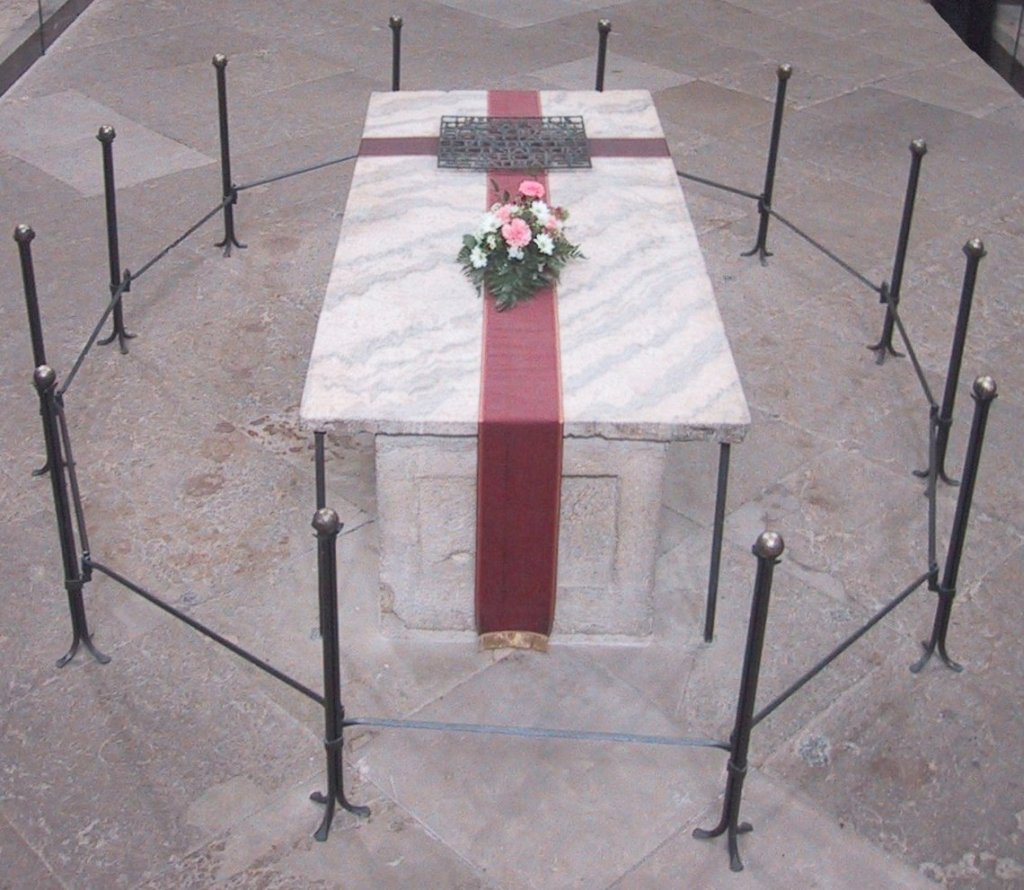
Tomb of Otto I, Holy Roman Emperor
973
 Letter
Primary source
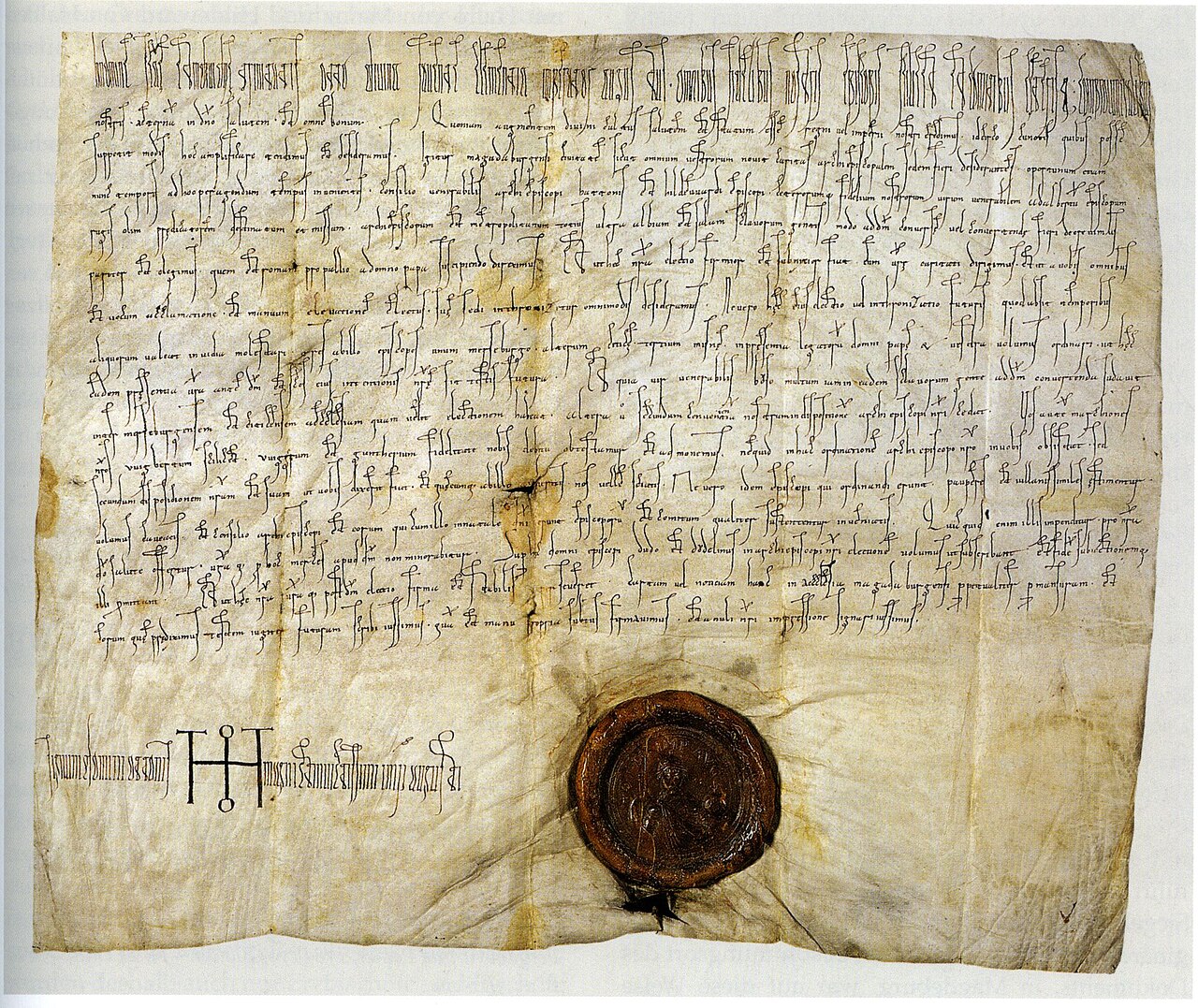
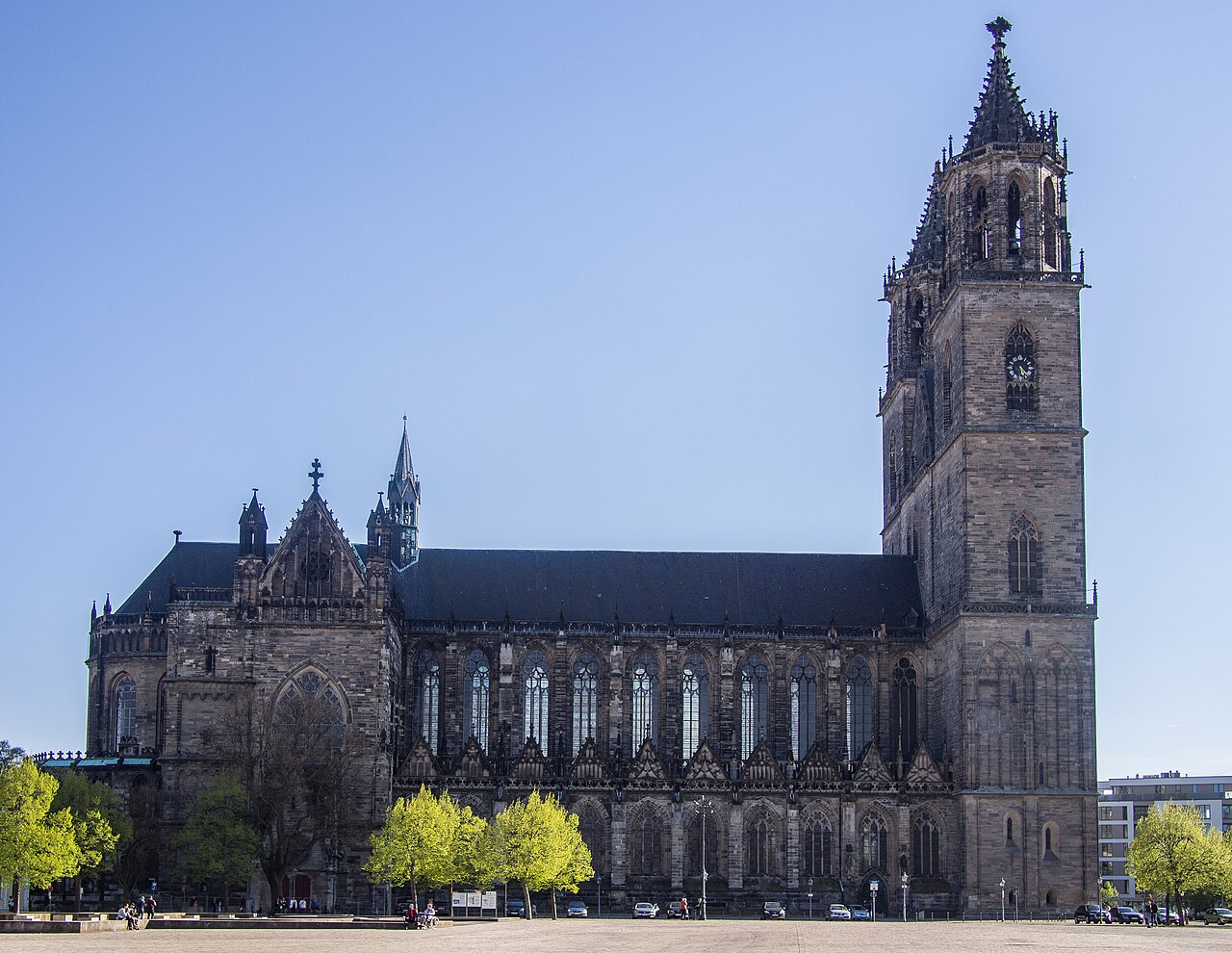
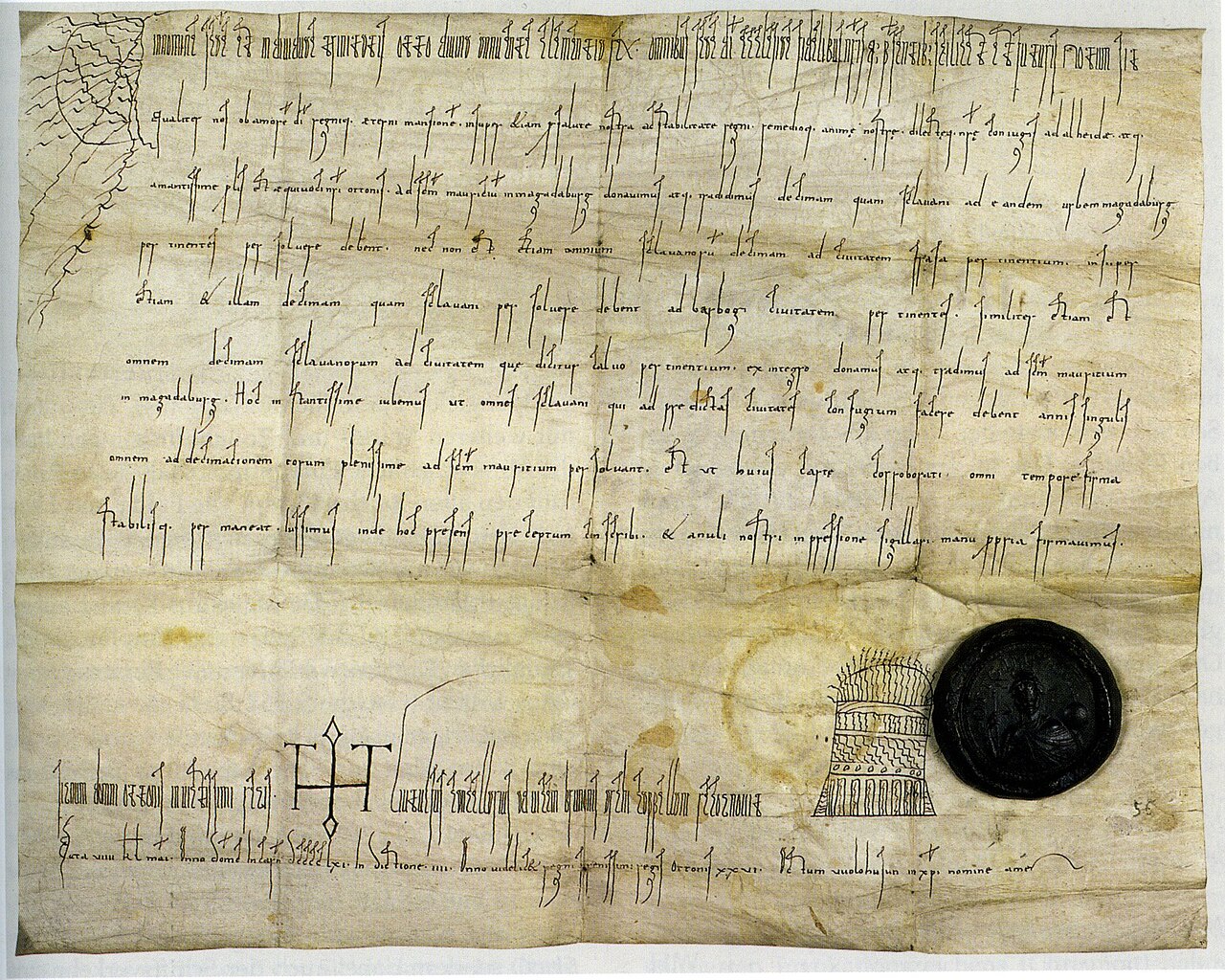
Letter announcing the Archbishopric of Magdeburg
Otto I the Great · 968
Primary source
Carmen de gestis Ottonis I. imperatoris
Hrotsvitha · c. 950
Free account
Read every Otto I the Great source
Sign up free →
Ready when you are
Start chatting with Otto I the Great now.
20 messages free · No credit card · Available in 50+ languages.