


Primary sourcePhotograph24 September 2013 (photograph)
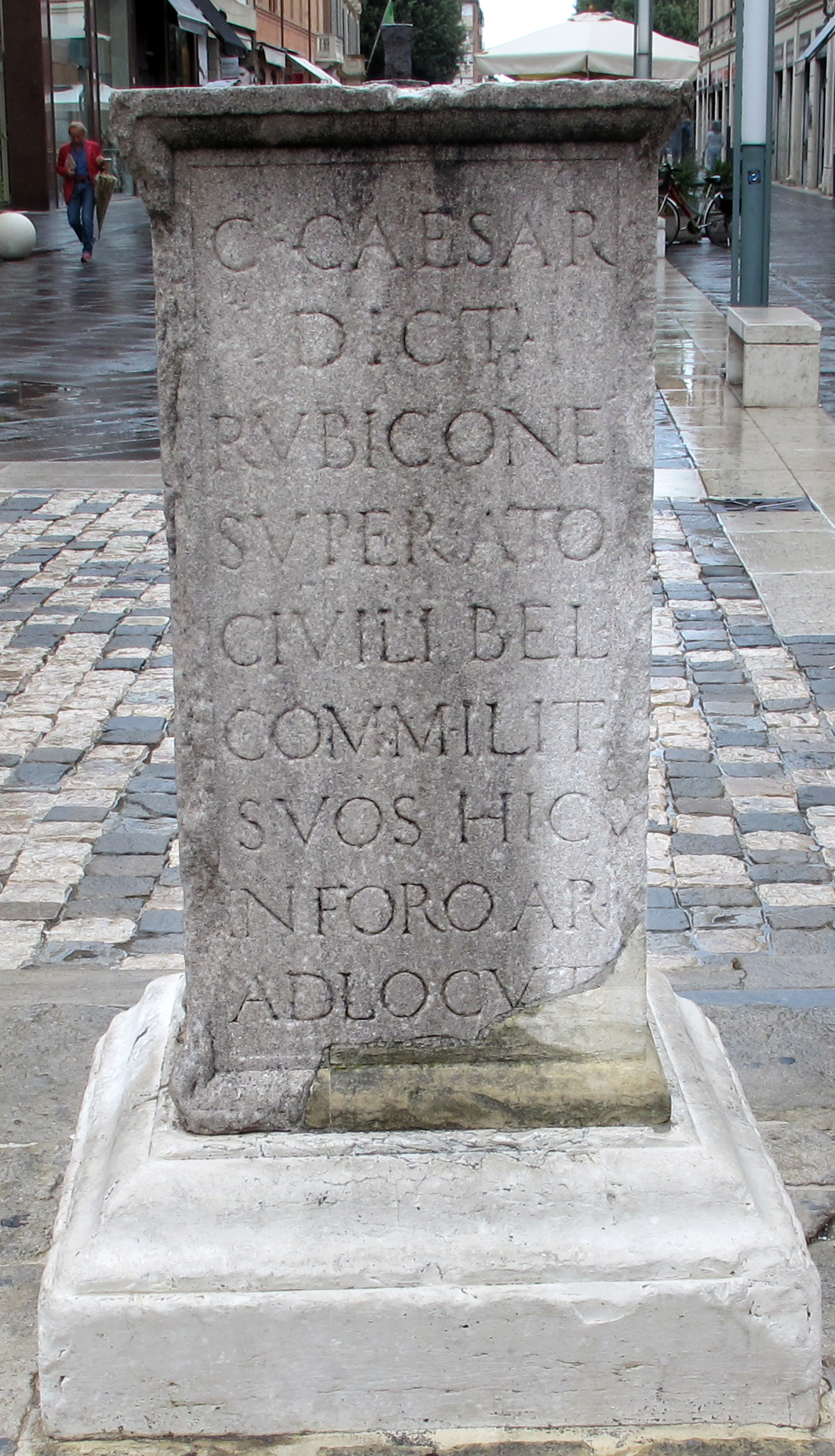
Suggestum of Caesar at Rimini
Sailko · 24 September 2013 (photograph)
A photograph of the stone platform in Rimini from which Caesar addressed his troops in 49 BC, the start of his civil war against Pompey.
Marks the place where Caesar addressed his troops in 49 BC, which began the civil war against Pompey.
About this source
What it is
This is a photograph by Sailko, taken on 24 September 2013, of a weathered stone pedestal in Rimini, Italy. The block has carved Latin inscription lines on its front face and stands on a white stone base in a city street. The stone is known as the Suggestum of Caesar, a platform from which he spoke. The photograph was uploaded to Wikimedia Commons and carries the title Suggestum Cesaris – MIBAC.
Why it matters
In 49 BC, Caesar addressed his troops at Rimini. That speech marked the start of his civil war against Pompey, who had been his political rival and ally. Places connected to such decisions help students see that major events happened in real towns and were spoken aloud to real soldiers. The photograph shows the stone as it stands today, not as it looked in Caesar's time.
Look closer
- What can you read or see on the inscription, and what is still unclear?
- How does the modern street around the stone change the way you think about the event?
- What does a photograph of a place leave out that a written account would include?
This photograph is part of the curated material that grounds the AI version of Pompey on Humy.ai — when students ask about related events, the AI can quote it and cite it.
More Pompey sources
Browse all 82 →

Ready when you are
Start chatting with Pompey now.
20 messages free · No credit card · Available in 50+ languages.