


Primary sourcePaintingbetween 1687 and 1689
Sultan Mehmet IV Deposed and Taken Prisoner
Caspar Luyken · between 1687 and 1689
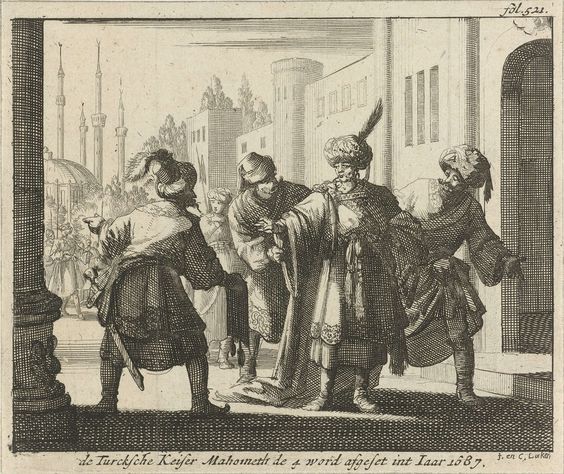
A Dutch print from the late 1680s depicting the capture of Mehmed IV after his deposition in 1687.
This print depicts Mehmed IV being deposed and taken prisoner in 1687, the end of his reign.
About this source
What it is
This engraving by Dutch artist Caspar Luyken, made between 1687 and 1689, shows a street scene with turbaned men, one grasping another's arm, set against a backdrop of minarets and domes. The Dutch caption explains that it depicts the Turkish emperor Mahomet being deposed in 1687.
Why it matters
This print records how news of Mehmed IV's downfall was illustrated for Dutch audiences soon after it happened, part of a wider European interest in Ottoman political upheaval. It shows the sultan not as a glorified ruler but as a captured figure, marking the end of his long reign.
Look closer
- What gestures and actions in the scene suggest conflict or arrest?
- Why might the artist choose a street setting rather than a palace?
- How does this image's tone differ from earlier formal portraits of Mehmed IV?
This painting is part of the curated material that grounds the AI version of Mehmed IV on Humy.ai — when students ask about related events, the AI can quote it and cite it.
More Mehmed IV sources
Browse all 65 →
Ready when you are
Start chatting with Mehmed IV now.
20 messages free · No credit card · Available in 50+ languages.