


Primary sourceArtifact18 March 1937
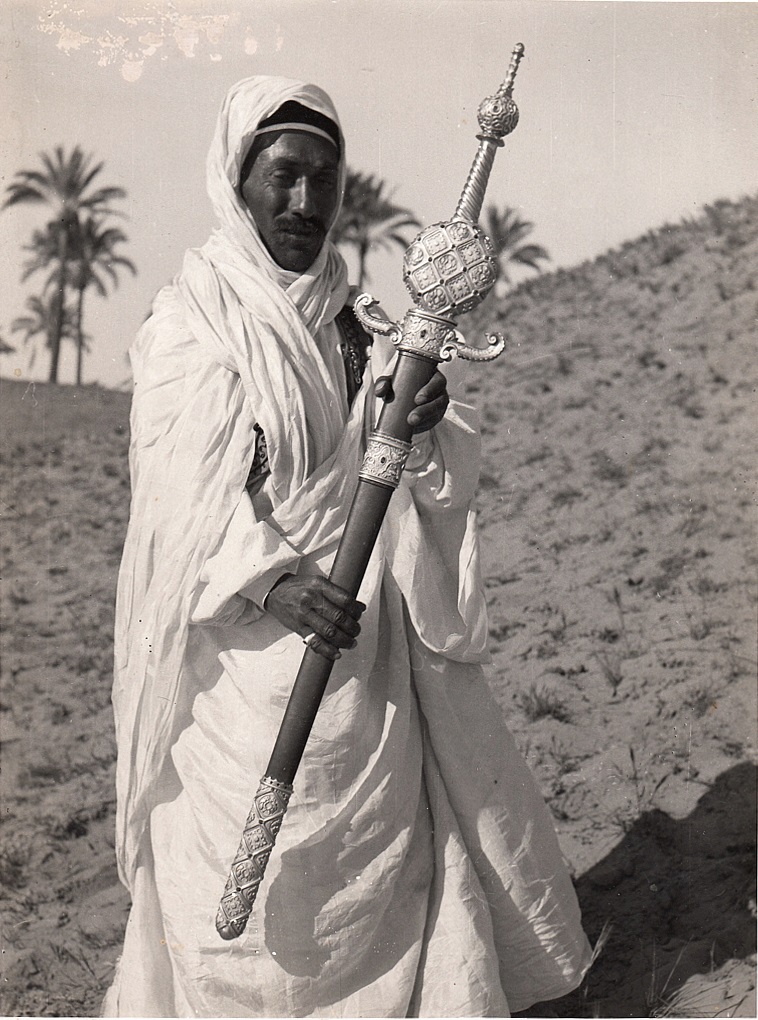
Sword of Islam
18 March 1937
A ceremonial sword presented to Mussolini in Libya in 1937 to stage his claim to be 'Protector of Islam' as part of colonial propaganda.
This sword, presented to Mussolini, was central to his staged claim to be 'Protector of Islam' in colonial Libya.
About this source
What it is
The Sword of Islam was a ceremonial weapon, decorated with arabesque patterns and gold friezes, made by the Florentine firm Picchiani e Barlacchi on Mussolini's own order. It was presented to him on 18 March 1937 near Tripoli by Iusuf Kerisc, a Berber supporter of Italian rule, during a staged ceremony in which Mussolini was proclaimed 'Protector of Islam'. The sword was later kept at Mussolini's residence, Rocca delle Caminate, and disappeared after it was plundered in 1943.
Why it matters
The ceremony was part of Mussolini's campaign to win favor among Libyan and Arab populations following Italy's colonization of Libya, framing his rule as benevolent toward Muslims. The effort was widely mocked, both by the Italian public and by Arab commentators, who rejected the idea that a European colonial ruler could claim such a title. One photograph of the event was even retouched by the regime to remove a groom holding Mussolini's horse, revealing the regime's willingness to falsify images for propaganda.
Look closer
- Why might Mussolini have wanted to be seen as a protector of Islam despite ruling as a colonial power?
- What does the retouched photograph of this event tell you about how dictatorships use images?
- How did people in the Arab world respond to this claim, and why might they have reacted that way?
This artifact is part of the curated material that grounds the AI version of Benito Mussolini on Humy.ai — when students ask about related events, the AI can quote it and cite it.
More Benito Mussolini sources
Browse all 87 →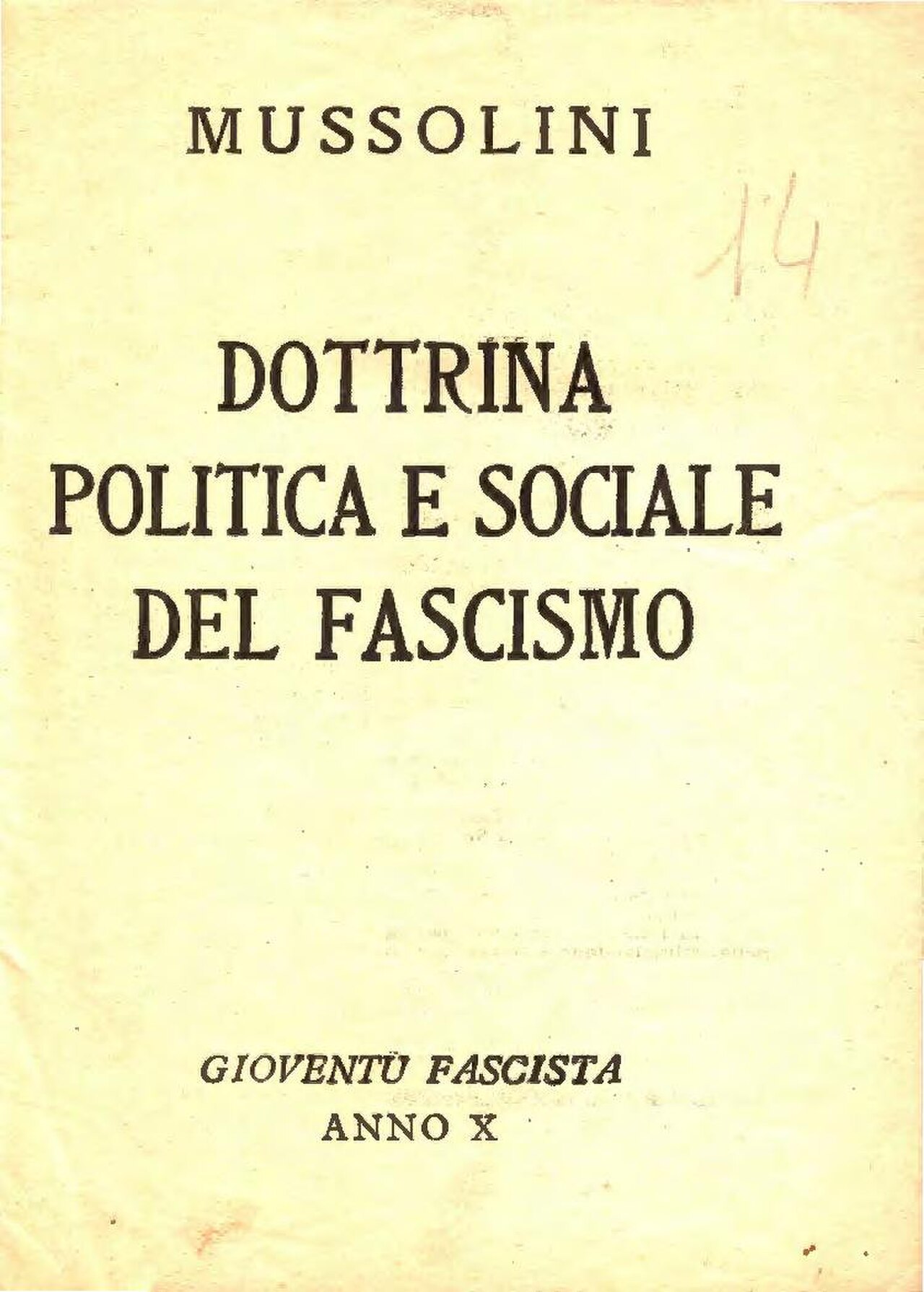 Book
Primary source
The Doctrine of Fascism
Benito Mussolini and Giovanni Gentile · 1927 (written); 1932 (published)
Primary source
Speech of 3 January 1925
Benito Mussolini · 3 January 1925
Primary source
Fascist Manifesto
Alceste de Ambris and Filippo Tommaso Marinetti · 23 March 1919 (published 6 June 1919)
 Newspaper article
Primary source
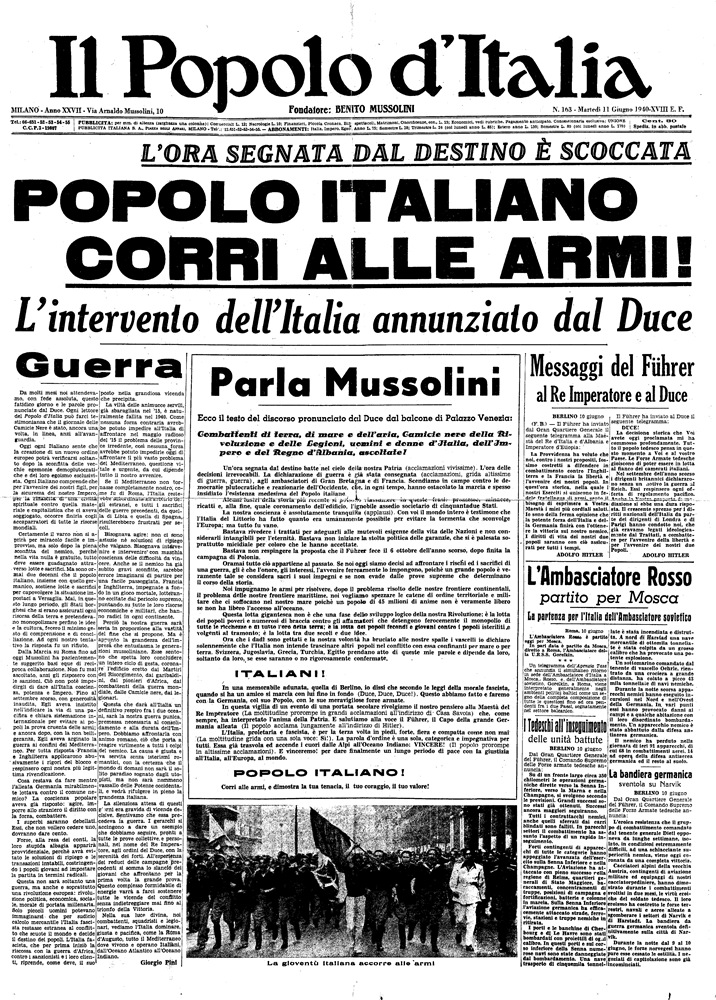
Il Popolo d'Italia
Benito Mussolini (founder) · 11 June 1940 (front page shown); founded 1914
Free account
Read every Benito Mussolini source
Sign up free →
Ready when you are
Start chatting with Benito Mussolini now.
20 messages free · No credit card · Available in 50+ languages.