


Secondary sourceBooktext c. 457 (according to Ludwig Bieler); manuscript 9th century
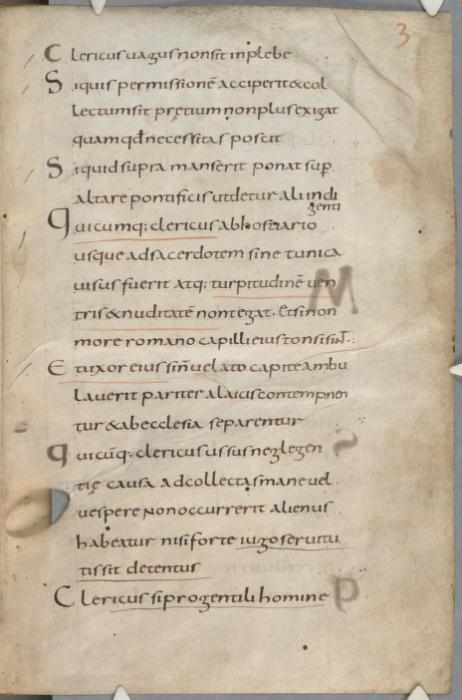
Synodus I Sancti Patricii, Parker Library MS 279, page 3
attributed to Saint Patrick · text c. 457 (according to Ludwig Bieler); manuscript 9th century
A page from a ninth-century manuscript carrying a synod text attributed to Saint Patrick. It is a later copy, not in Patrick's own hand.
Shows the church rules attributed to Patrick, the text on which his reputation as an organiser of Irish church life rests.
About this source
What it is
This is page 3 of a ninth-century manuscript held at the Parker Library, Corpus Christi College, Cambridge. It carries the text of the Synodus I Sancti Patricii, a set of church rules attributed to Patrick. The page begins with the third canon, Clericus uagus non sit in plebe. The scholar Ludwig Bieler dates the text to about 457, but this page is a later copy, not written in Patrick's own hand.
Why it matters
The synod text is linked to Patrick's work of organising the church in Ireland. Its rules, such as the one on wandering clergy, show concerns about how priests and bishops should behave in the communities they served. Because the surviving copy was made centuries later, it reveals as much about the scribes who preserved it as about Patrick himself.
Look closer
- What do the decorated first letter and the red page number suggest about who this book was made for?
- The rule starts with a wandering cleric; what problem might that rule be answering?
- Since this is a copy made centuries later, what might have been changed or left out?
This book is part of the curated material that grounds the AI version of Saint Patrick on Humy.ai — when students ask about related events, the AI can quote it and cite it.
More Saint Patrick sources
Browse all 94 →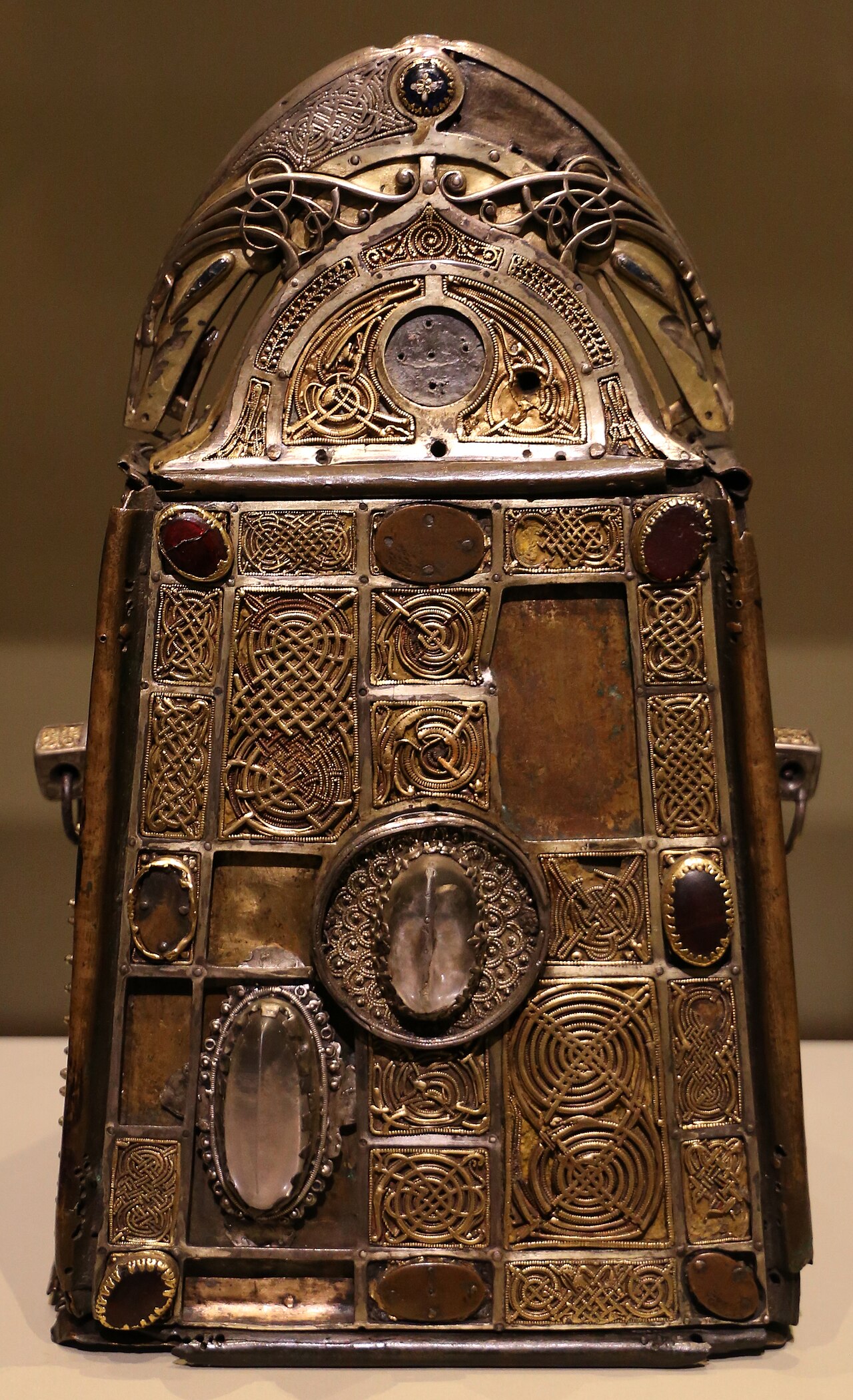 Artifact
Secondary source
Shrine of St. Patrick's Bell
Cú Dúilig · bell c. 500 AD; shrine c. 1094-1105
 Document
Secondary source
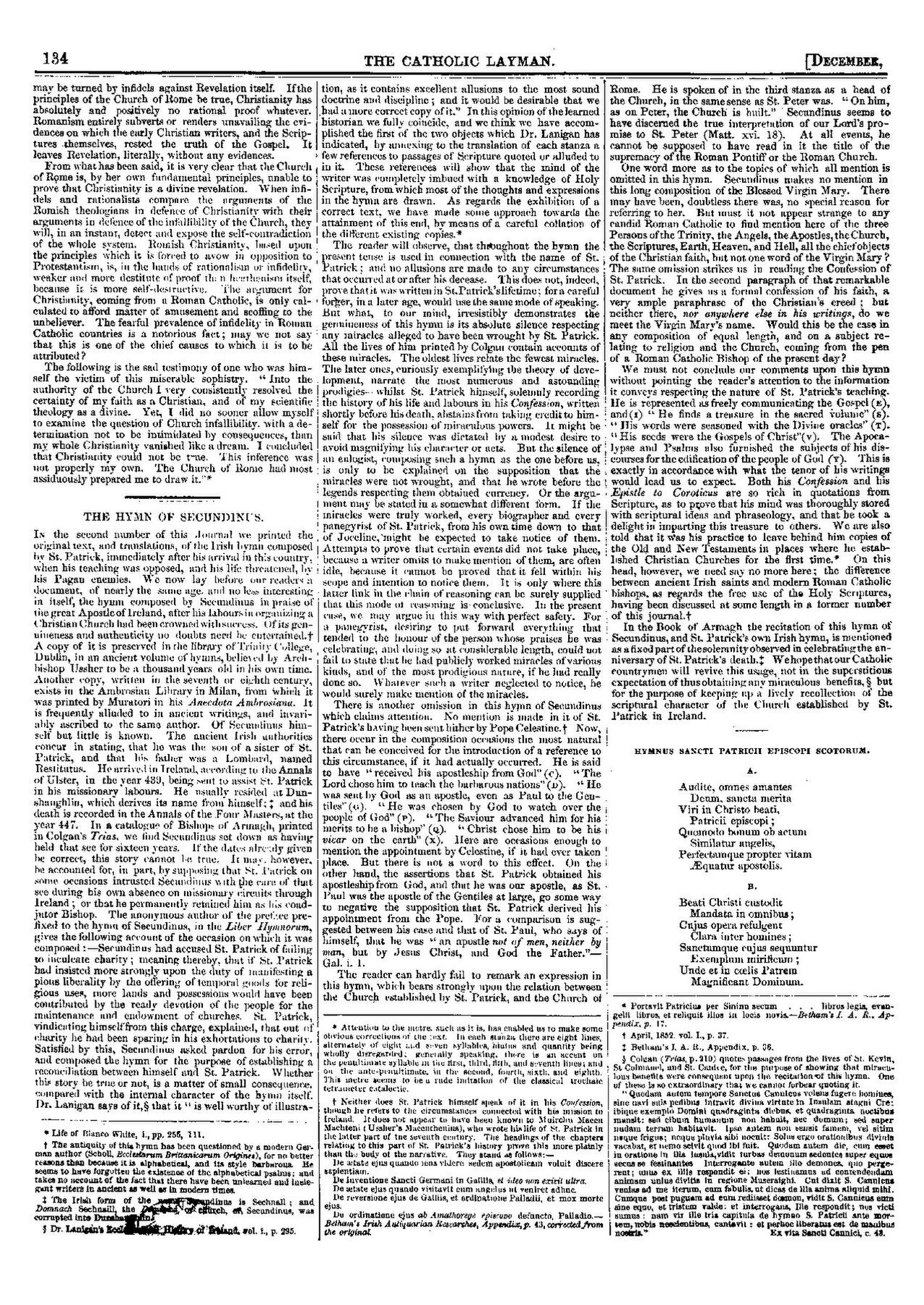
Hymn of Secundinus (Audite omnes amantes)
Secundinus (attributed) · 6th-7th century
Secondary source
Historia Brittonum
Nennius · c. 829-830
 Artifact
Secondary source
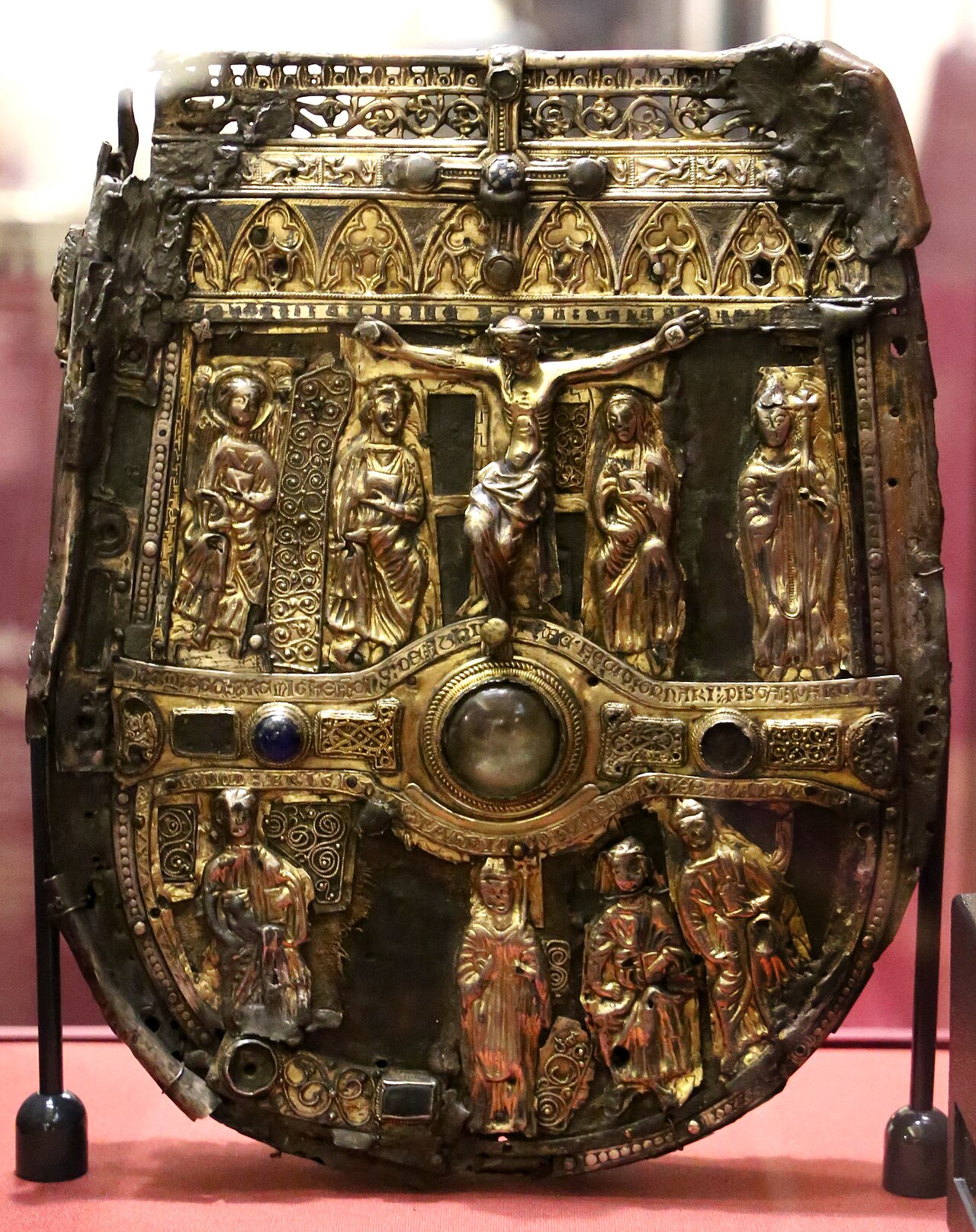
Shrine of St Patrick's Tooth
12th century, refurbished 1370s
Free account
Read every Saint Patrick source
Sign up free →
Ready when you are
Start chatting with Saint Patrick now.
20 messages free · No credit card · Available in 50+ languages.