


Primary sourcePainting1926
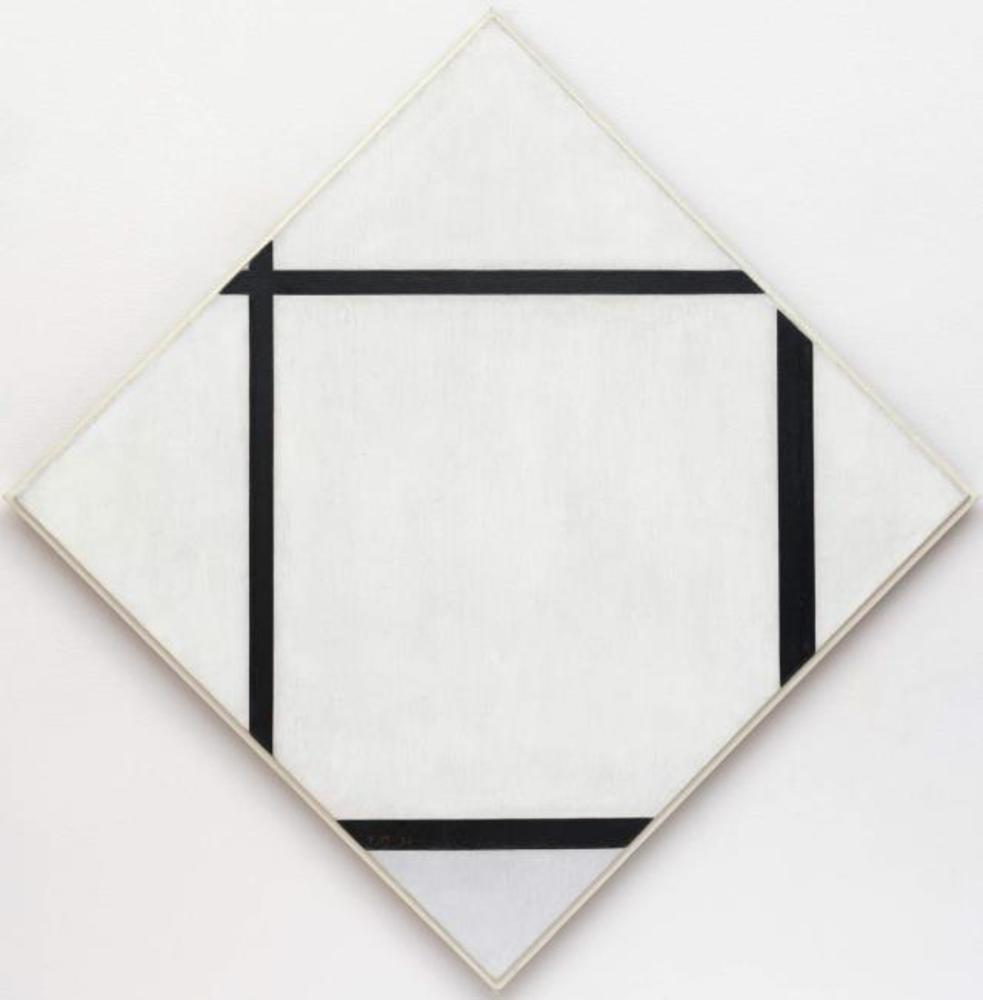
Tableau I: Lozenge with Four Lines and Gray
Piet Mondrian · 1926
A diamond-shaped abstract painting by Piet Mondrian reduced to four lines, showing his mature geometric style.
A mature abstract work by Mondrian, demonstrating his reduction of painting to pure geometric elements.
About this source
What it is
This painting was made by Piet Mondrian in 1926. It is a white canvas turned to stand on a point like a diamond, with black lines forming a cross-like grid and a light gray triangle at the bottom. It is held at the Museum of Modern Art.
Why it matters
This work shows Mondrian's mature abstract style, where he reduced painting to its most basic elements: lines, shapes and limited colour. Tilting the canvas into a lozenge format makes the composition appear to extend beyond the edges of the canvas, challenging how a painting's boundaries are understood.
Look closer
- Why might Mondrian have turned the canvas into a diamond shape instead of a square?
- What effect does this create at the edges of the painting?
- How far has this painting moved from recognisable objects compared to Mondrian's earlier work?
This painting is part of the curated material that grounds the AI version of Piet Mondrian on Humy.ai — when students ask about related events, the AI can quote it and cite it.
More Piet Mondrian sources
Browse all 93 →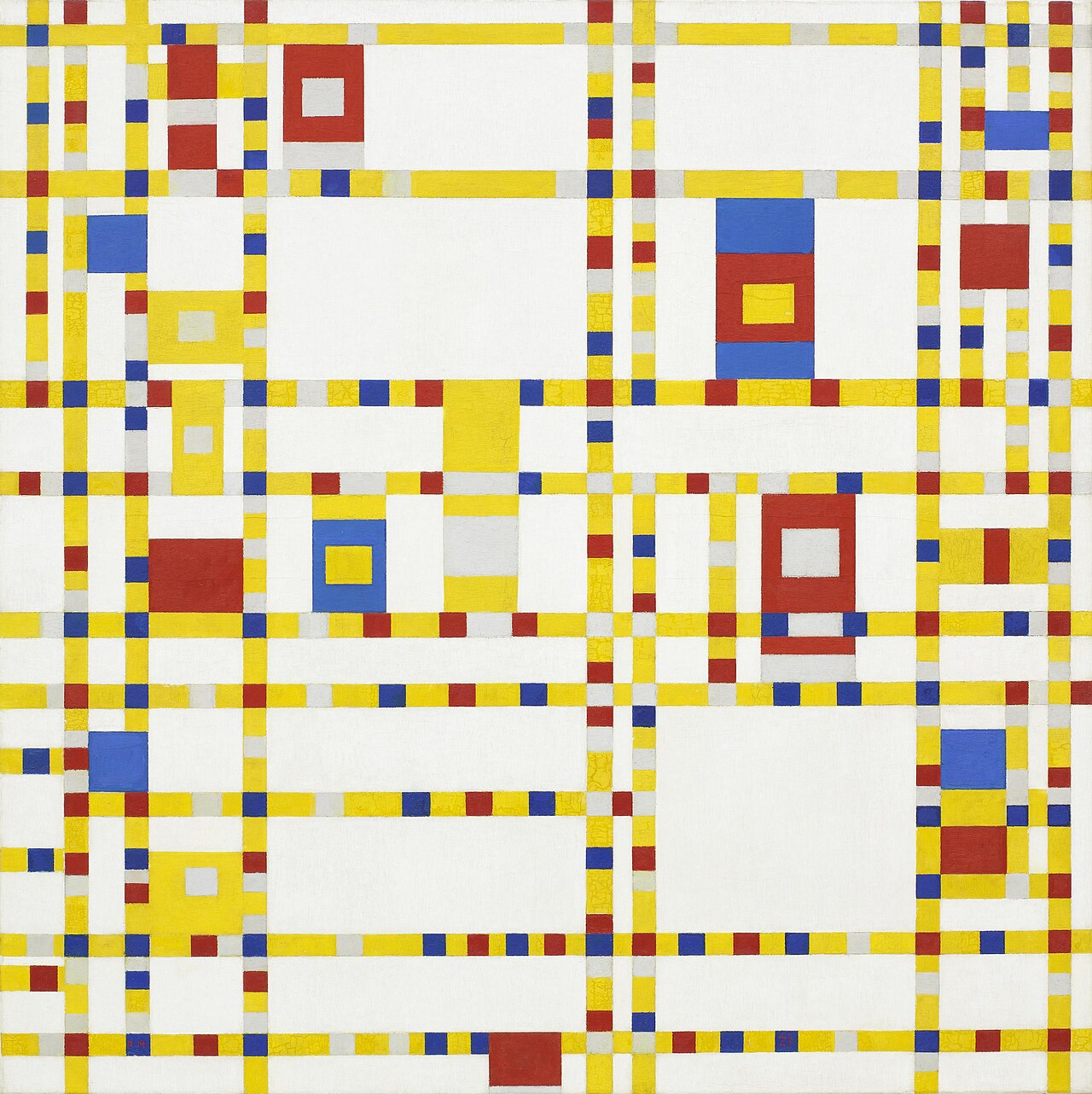 Painting
Primary source
Broadway Boogie Woogie
Piet Mondrian · 1942-1943
 Painting
Primary source
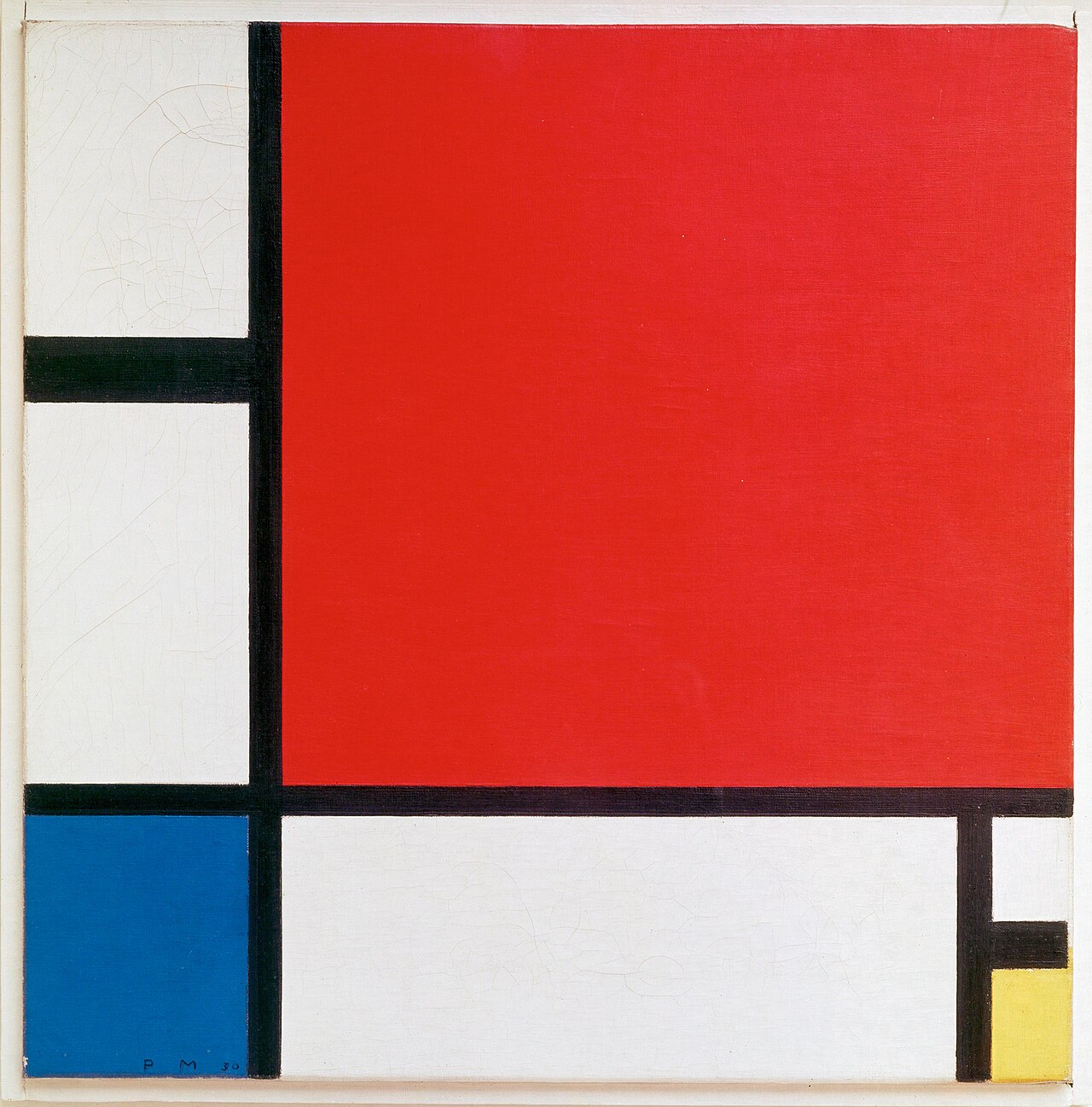
Composition with Red, Blue and Yellow
Piet Mondrian · 1930
 Painting
Primary source
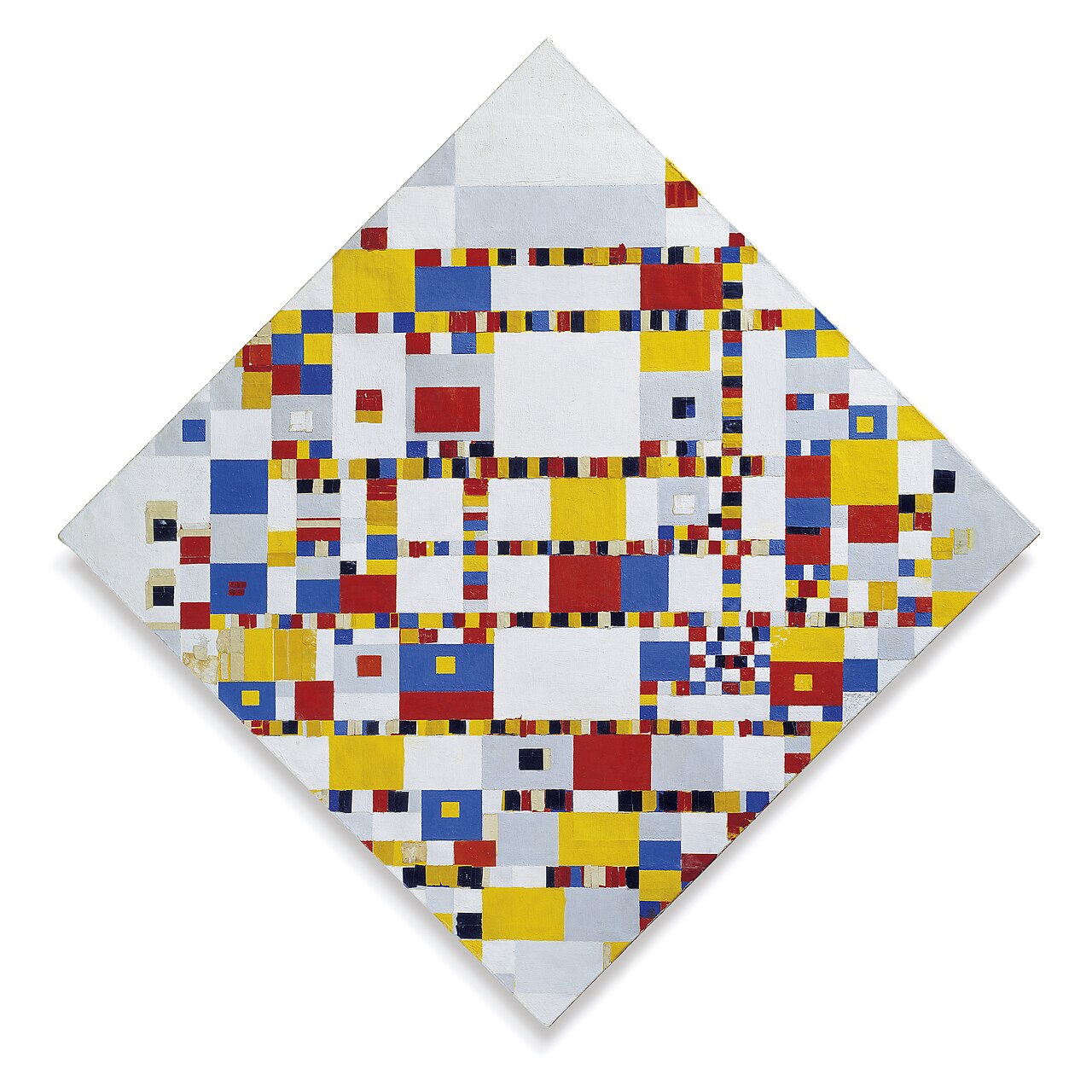
Victory Boogie Woogie
Piet Mondrian · 1942-1944
 Painting
Primary source
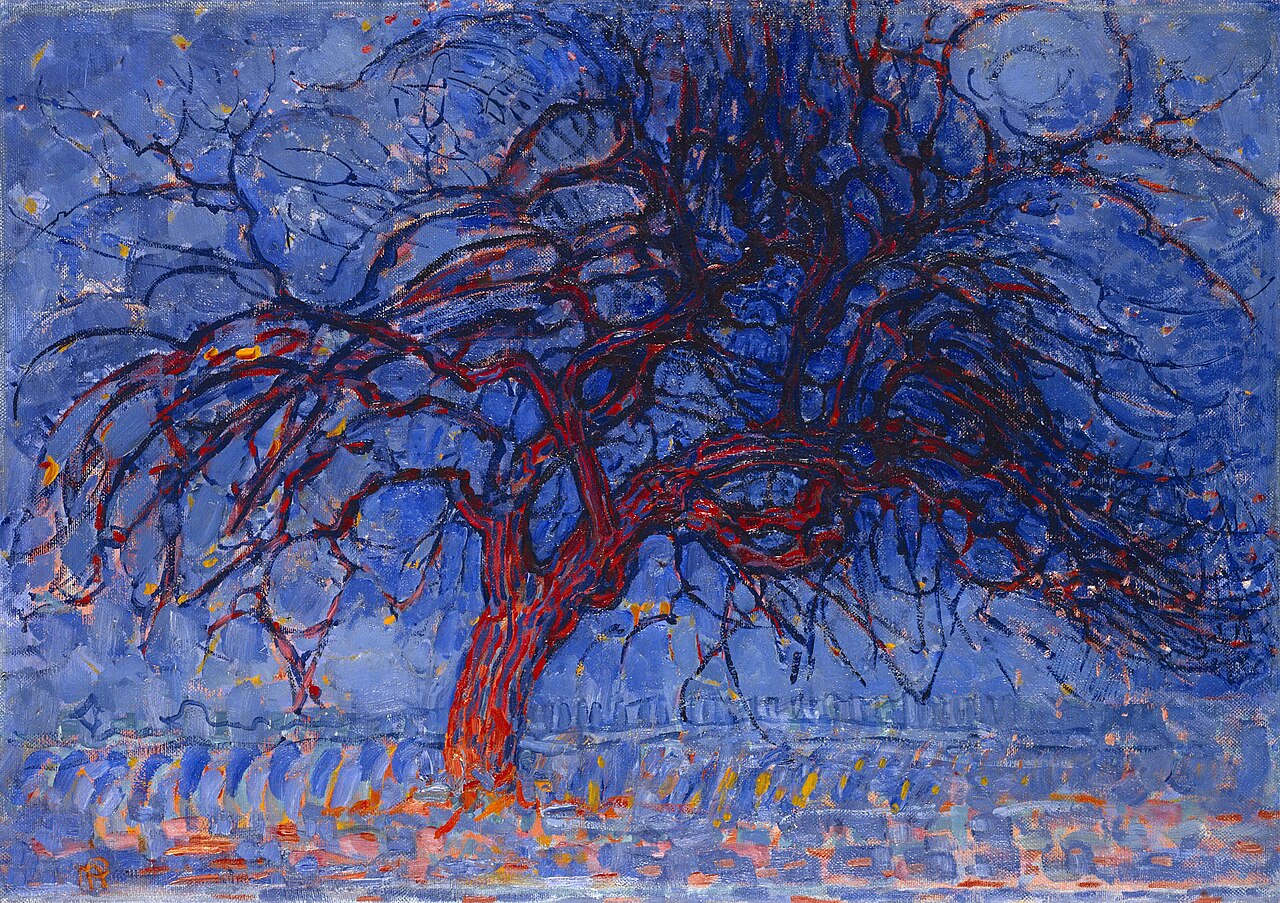
The Red Tree
Piet Mondrian · 1908
Free account
Read every Piet Mondrian source
Sign up free →
Ready when you are
Start chatting with Piet Mondrian now.
20 messages free · No credit card · Available in 50+ languages.