


Primary sourceDocument16th century
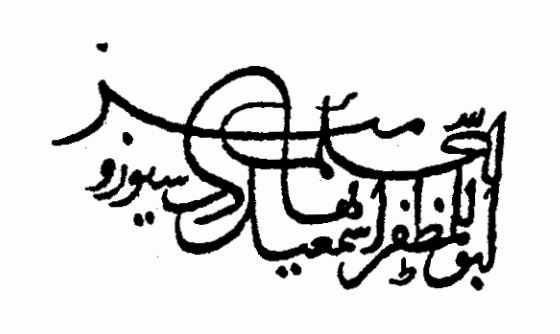
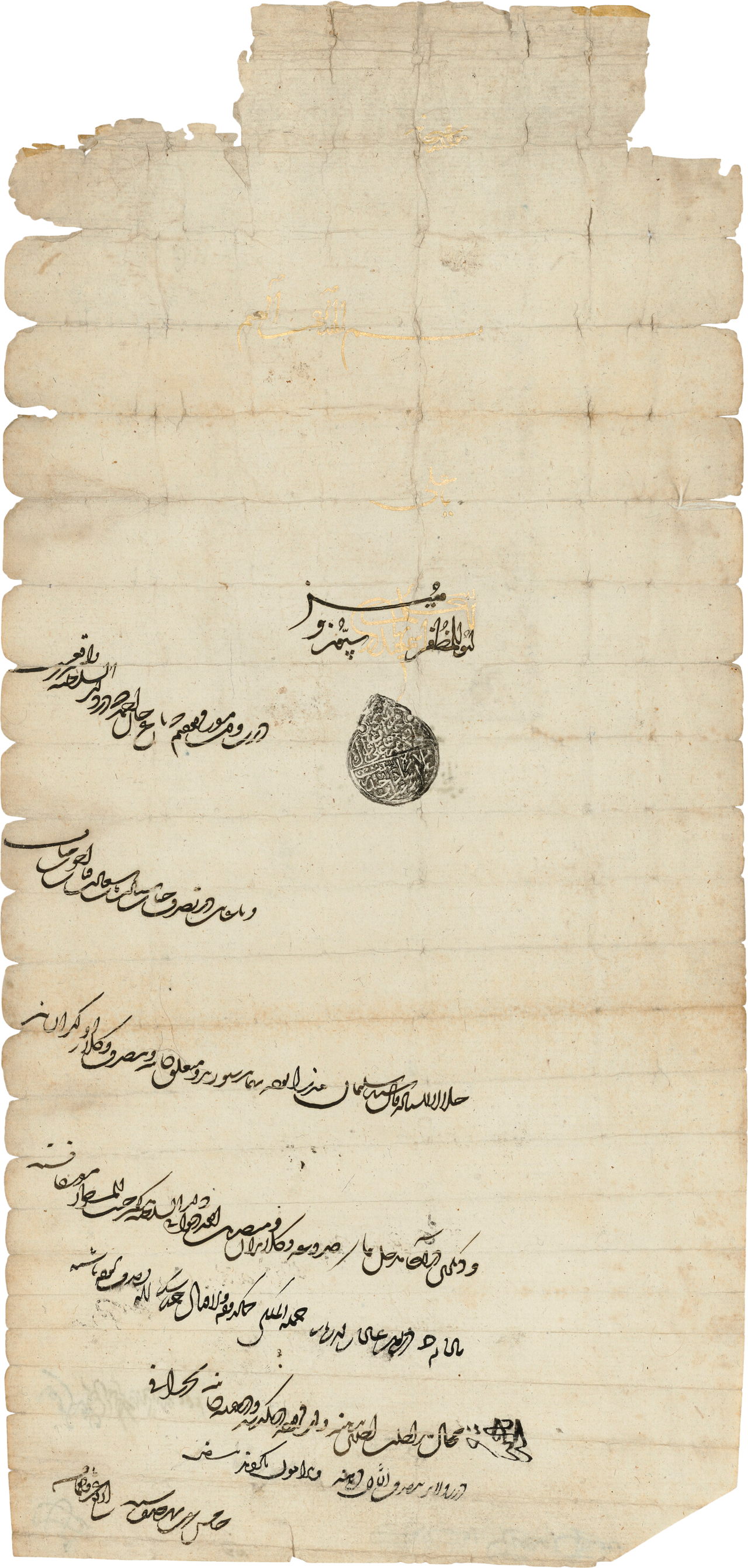
Tamgha of Shah Isma'il
Shah Ismail · 16th century
The royal seal-mark used by Shah Ismail I to validate his decrees, written in flowing calligraphy.
This is Ismail's own royal seal-mark, used to validate his official decrees as shah.
About this source
What it is
This is the tamgha, or royal seal-mark, of Shah Ismail, used in the 16th century to authenticate his official documents. It shows a large looping flourish above bold Arabic-script lettering, including his title beginning 'Abu al-Muzaffar'.
Why it matters
A tamgha was more than decoration—it was the mark that made a decree official and binding. Ismail's use of this device shows how the Safavid state inherited the chancery traditions of earlier Turko-Mongol empires, blending older bureaucratic customs with the new Safavid dynasty he founded.
Look closer
- What does the flourish at the top suggest about the importance of this mark?
- Why would a ruler need a unique, recognizable seal on official papers?
- What does borrowing an older tradition tell us about how new empires build legitimacy?
This document is part of the curated material that grounds the AI version of Ismail I on Humy.ai — when students ask about related events, the AI can quote it and cite it.
More Ismail I sources
Browse all 92 →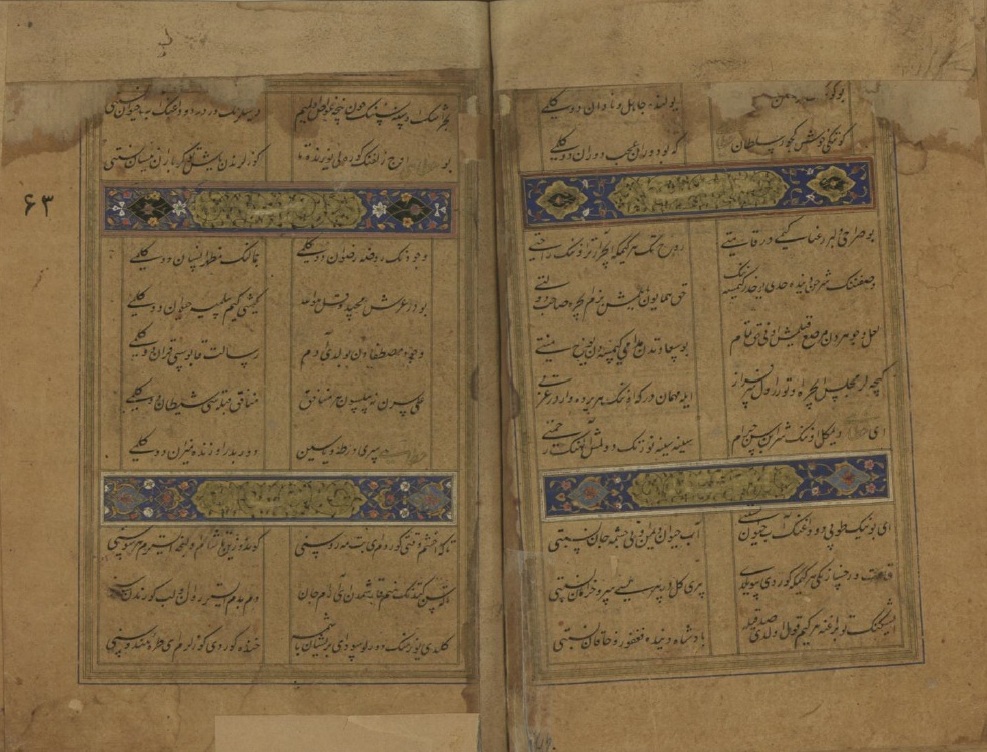 Book
Primary source
Diwan of Shah Ismail Khatai
Ismail I (as Khata'i)
 Painting
Secondary source
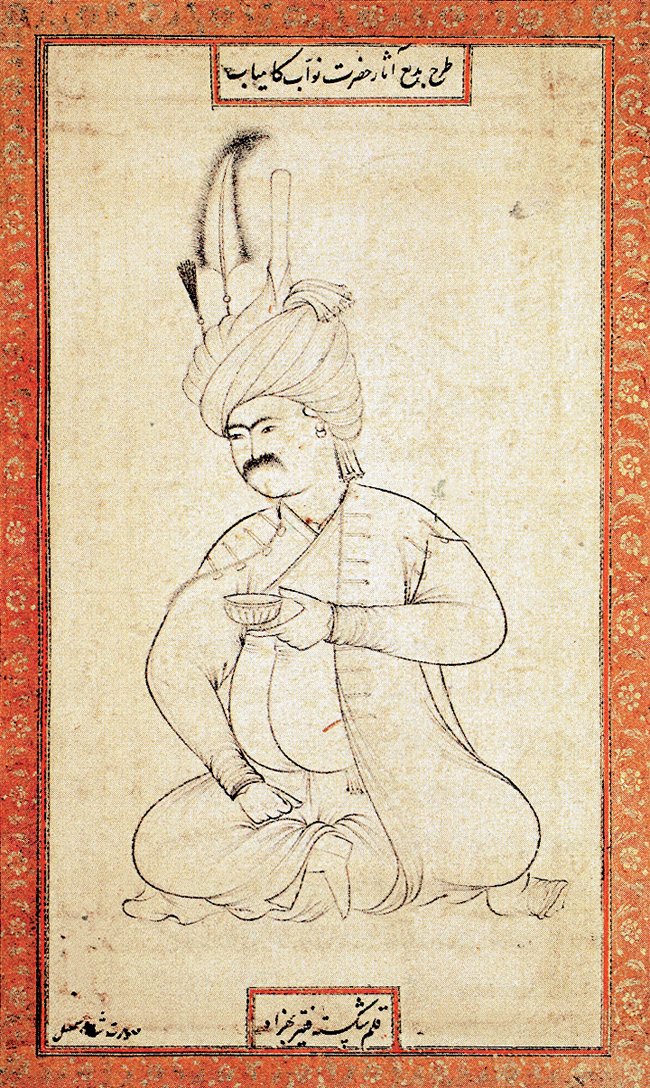
Portrait of Ismail I
Attributed to Kamal al-din Behzad (posthumous copy)
 Painting
Secondary source
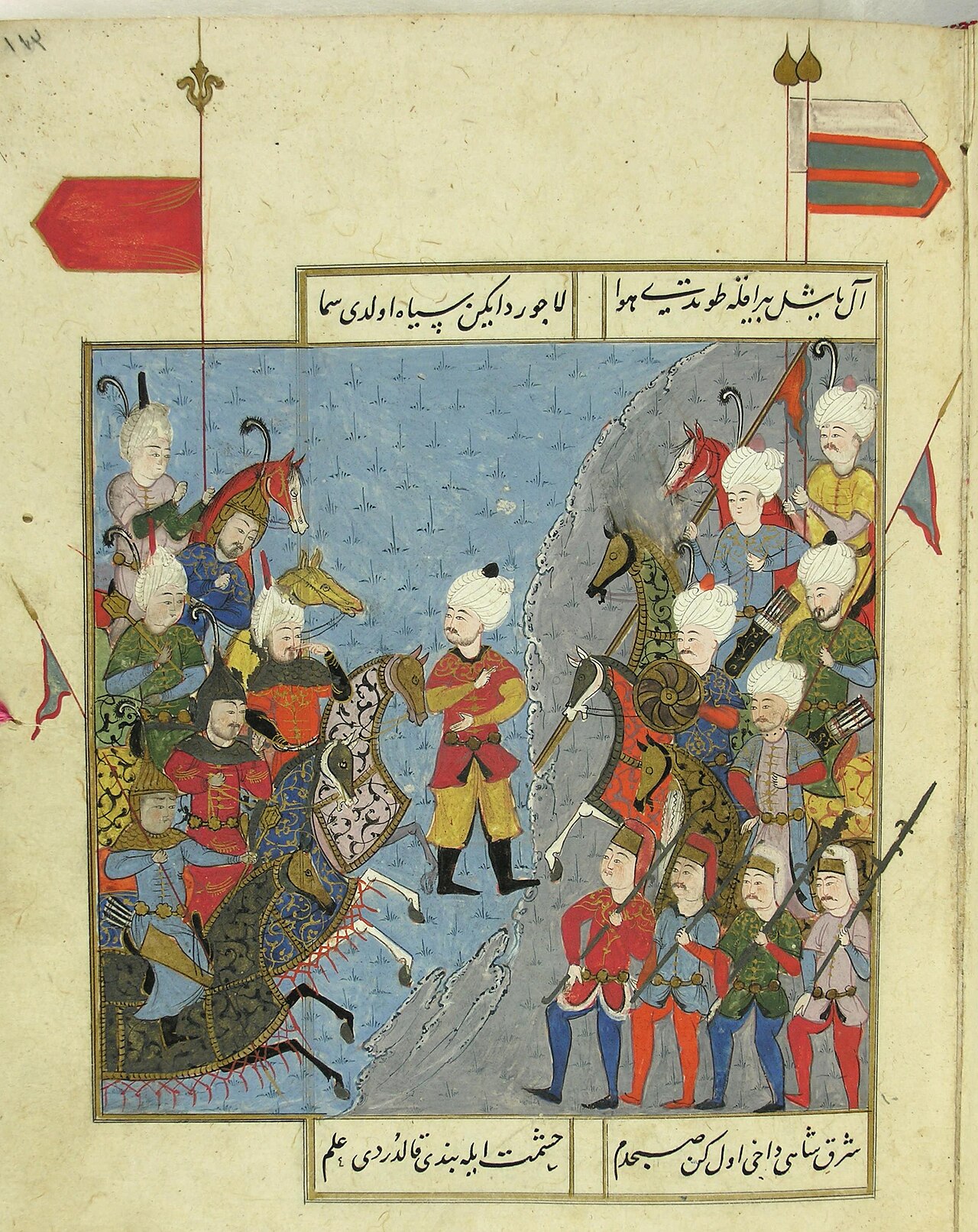
Shah Ismail at the Battle of Chaldiran
Unknown Ottoman court artist · c. 1525-1530
 Letter
Secondary source
Letter from Şah İsmail to Sultan Bayezid II
Feridun Ahmed Bey · c. 1508
Free account
Read every Ismail I source
Sign up free →
Ready when you are
Start chatting with Ismail I now.
20 messages free · No credit card · Available in 50+ languages.