


Primary sourceDocument31 May 1933
Tanggu Truce
31 May 1933
A 1933 ceasefire between China and Japan that formalised Japan's gains in Manchuria and Rehe, leading to Zhang Xueliang's resignation and exile.
The truce formalised the defeat that forced Zhang Xueliang's resignation and exile from military command.
About this source
What it is
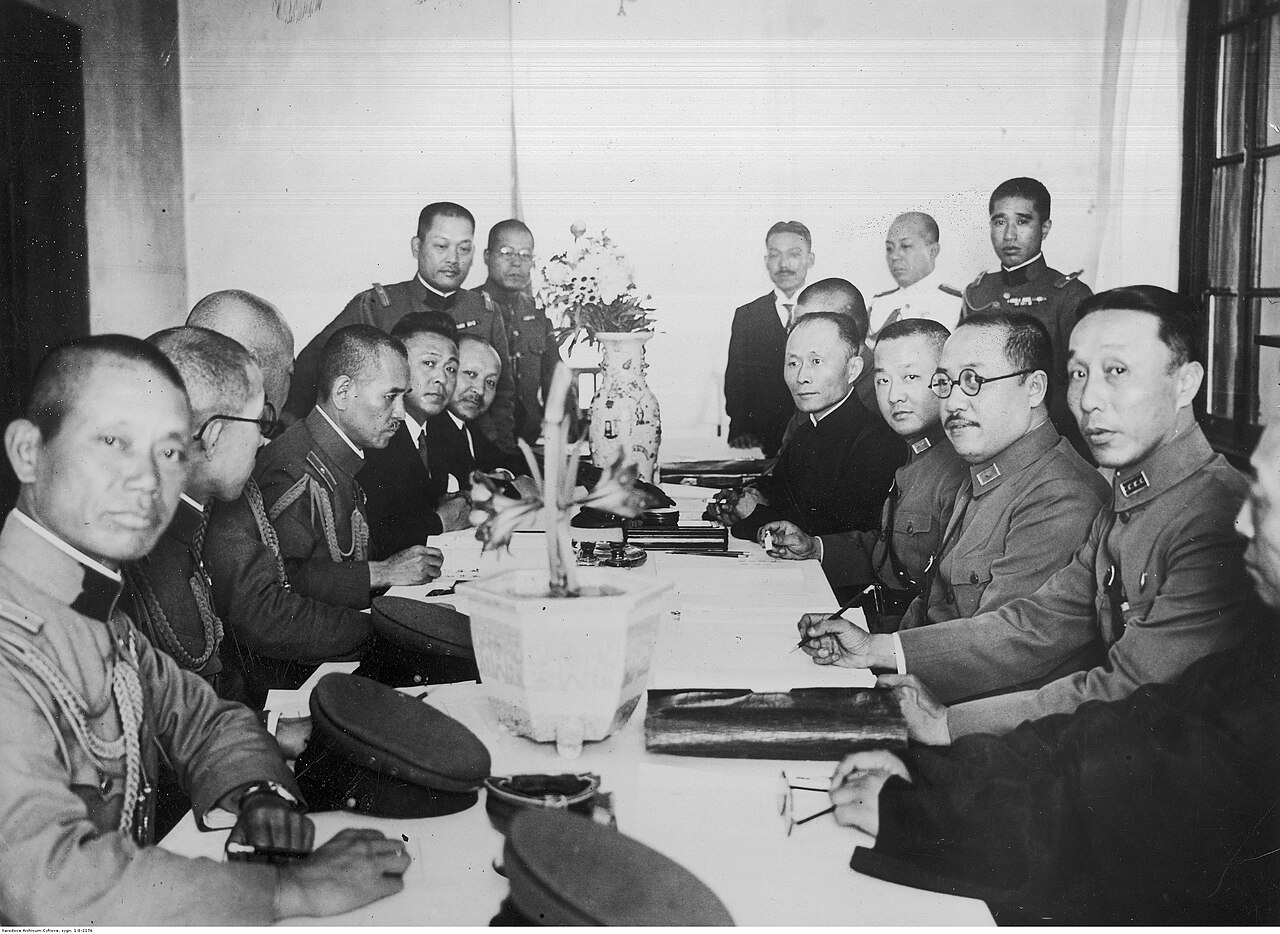
The Tanggu Truce was a ceasefire signed between Chinese and Japanese military representatives in Tanggu, Tianjin, on May 31, 1933. It ended fighting that began with Japan's invasion of Manchuria in 1931. A photograph of the signing shows officers seated around a table with papers.
Why it matters
The truce created a demilitarized zone in north China and amounted to de facto recognition of the Japanese-controlled state of Manchukuo. Most of the new zone lay in territory that had belonged to the warlord Zhang Xueliang, whose forces had already lost Rehe province to Japan. The defeat and the humiliating truce that followed forced Zhang to resign his command and go into exile, while giving Chiang Kai-shek time to regroup against the Communists.
Look closer
- Why might the Chinese government have insisted the truce did not affect China's sovereignty?
- What does the photograph of the signing tell you about how formal, official events were recorded?
- Why would Chinese public opinion see this agreement as humiliating?
This document is part of the curated material that grounds the AI version of Zhang Xueliang on Humy.ai — when students ask about related events, the AI can quote it and cite it.
More Zhang Xueliang sources
Browse all 98 → Photograph
Primary source
Zhang Xueliang and Yang Hucheng
Unknown photographer
 Photograph
Primary source
Portrait of Zhang Xueliang
Unknown photographer
 Diary entry
Primary source
Zhang Xueliang and Edith Chao Chang Papers
Zhang Xueliang · 1930s–1990s
 Document
Secondary source
Lytton Report
Lytton Commission · 1932



Free account
Read every Zhang Xueliang source
Sign up free →
Ready when you are
Start chatting with Zhang Xueliang now.
20 messages free · No credit card · Available in 50+ languages.