


Secondary sourcePaintingc. 1550
Tantalus
Giulio Sanuto · c. 1550
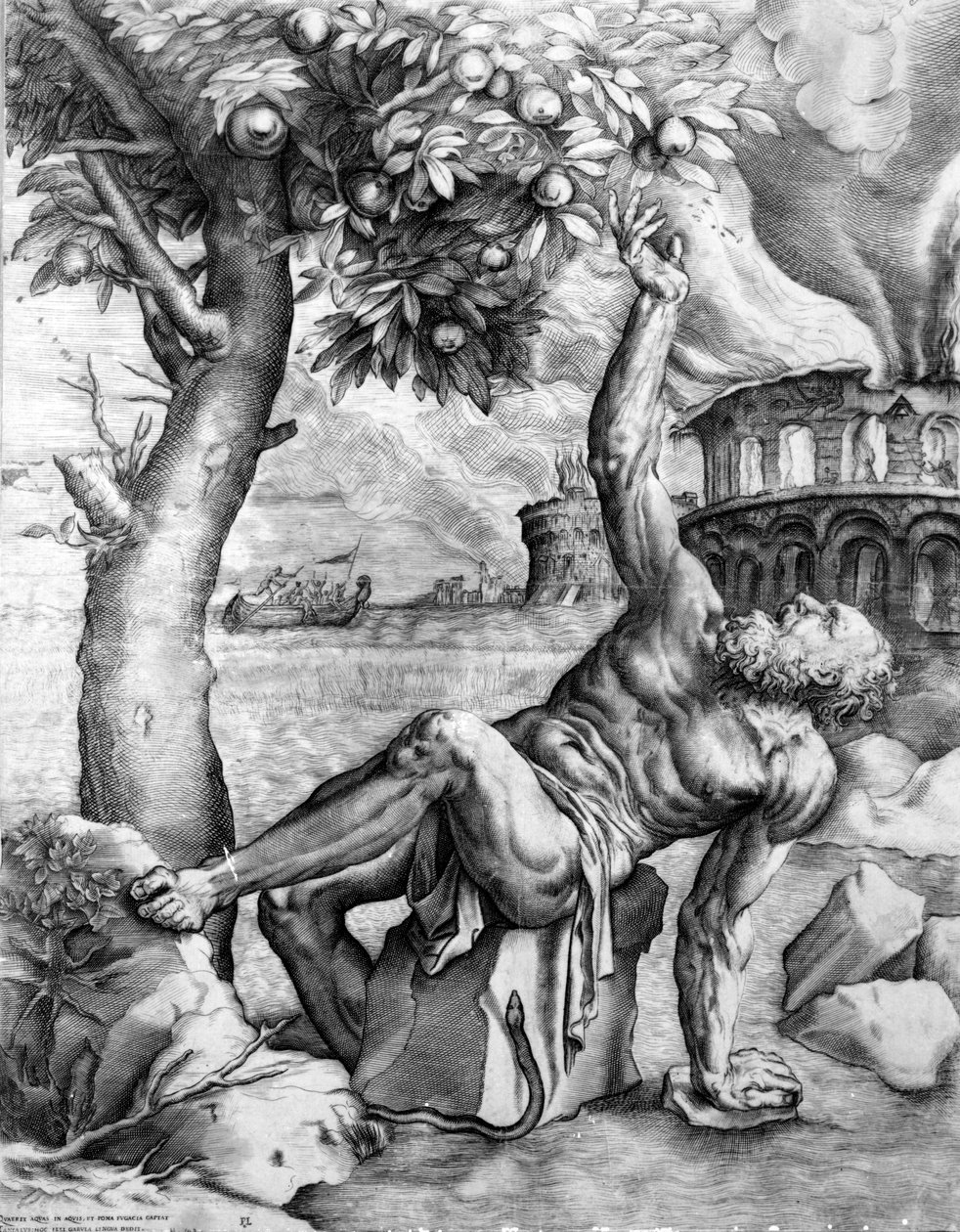
A black and white engraving by Giulio Sanuto, made around 1550 after a painting by Titian. It shows the mythological figure Tantalus reaching toward fruit.
This engraving reproduces a lost Titian composition, showing how his designs were spread through prints.
About this source
What it is
This is an engraving made by Giulio Sanuto around 1550, based on a design by Titian. It shows Tantalus, a bearded, muscular nude man half-seated on a rock and straining toward a fruit-laden tree. A snake coils near his feet, and behind him a burning round building and a boat with rowers appear on the water. The engraving is a reproduction, so it shows Sanuto's version of Titian's composition rather than the painting itself.
Why it matters
The engraving belongs to a series of Titian's Furies, painted for Mary of Hungary, which is now partly lost. Prints like this one carried a painter's compositions to people who would never see the original. They show how Titian's work circulated in the sixteenth century through other artists' hands.
Look closer
- What details tell you this is a myth rather than a scene from everyday life?
- How does an engraving differ from a painting in what it can show?
- What do we lose when we only have a copy of a lost series?
This painting is part of the curated material that grounds the AI version of Titian on Humy.ai — when students ask about related events, the AI can quote it and cite it.
More Titian sources
Browse all 98 →
Ready when you are
Start chatting with Titian now.
20 messages free · No credit card · Available in 50+ languages.