


Primary sourceArtifact1737
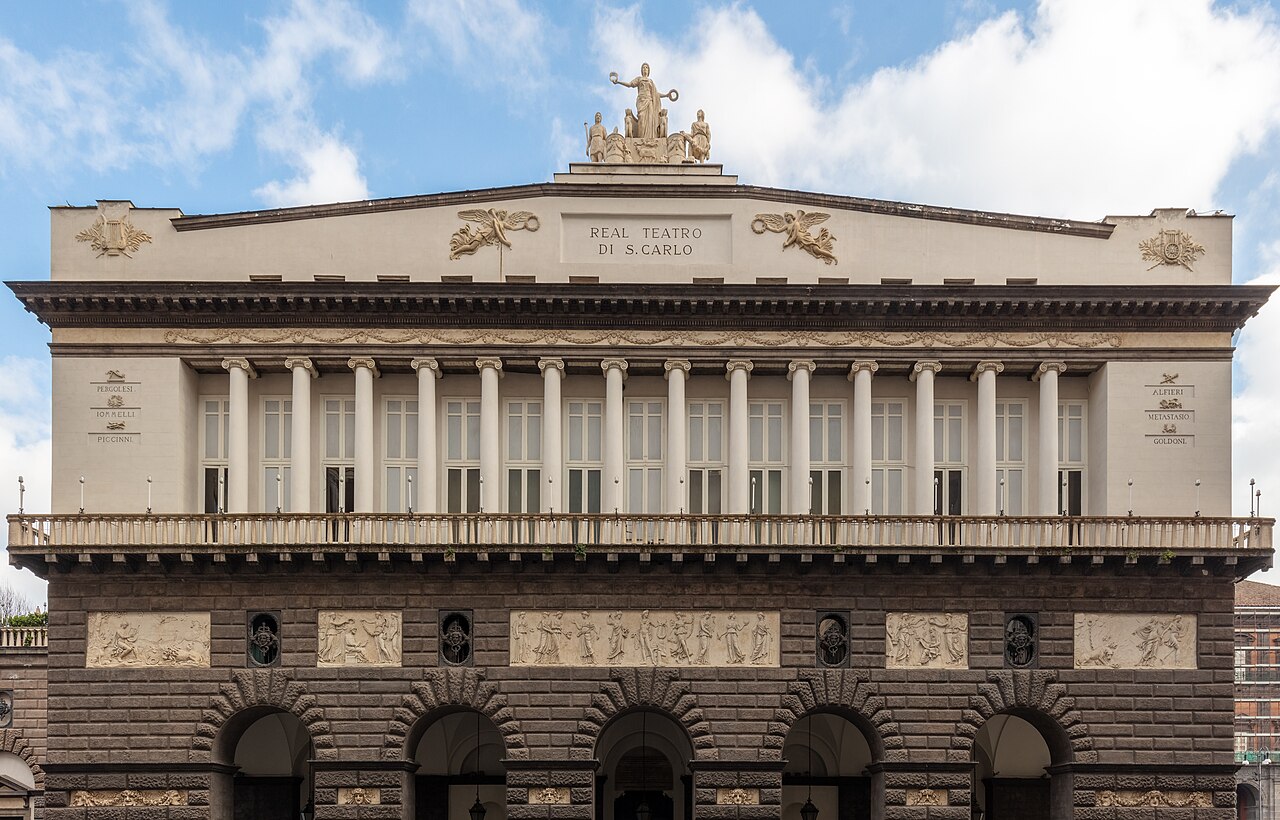
Teatro di San Carlo
Giovanni Antonio de Medrano · 1737
An opera house in Naples built in 1737 by Charles III, then King of Naples, and named after him.
Charles III commissioned this opera house during his reign as King of Naples, and it was named in his honor.
About this source
What it is
The Teatro di San Carlo is an opera house in Naples, commissioned by Charles III of Spain while he ruled Naples as King Charles VII. It opened in 1737, designed by the royal architect Giovanni Antonio de Medrano, and is connected to the Royal Palace. It is the oldest continuously active opera house in the world.
Why it matters
Charles built the theatre to replace an older, smaller venue, giving Naples a grand new cultural space that became a model for opera houses across Europe. Its design, including a royal box with private access from the palace, let the king watch over the audience as much as the stage, showing how art and royal power were linked.
Look closer
- Why might a king want to build a theatre connected directly to his own palace?
- What does the design of the boxes, with no curtains for privacy, suggest about who was really being watched in the theatre?
- How does building something this grand serve as a symbol of a ruler's power, not just as entertainment?
This artifact is part of the curated material that grounds the AI version of Charles III of Spain on Humy.ai — when students ask about related events, the AI can quote it and cite it.
More Charles III of Spain sources
Browse all 94 →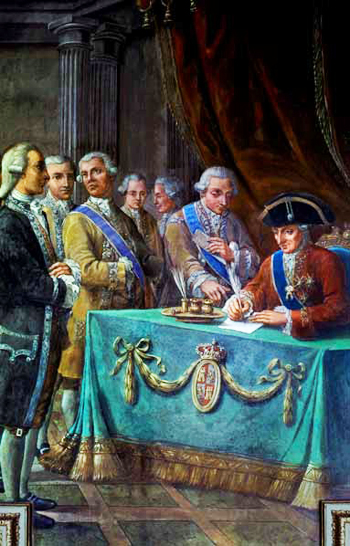 Document
Secondary source
Free Trade Regulations
Pere Pau Muntanya · 1778
 Painting
Primary source
Charles III
Anton Raphael Mengs · 1767
 Painting
Primary source
Charles III in Hunting Dress
Francisco Goya · 1786
 Painting
Primary source
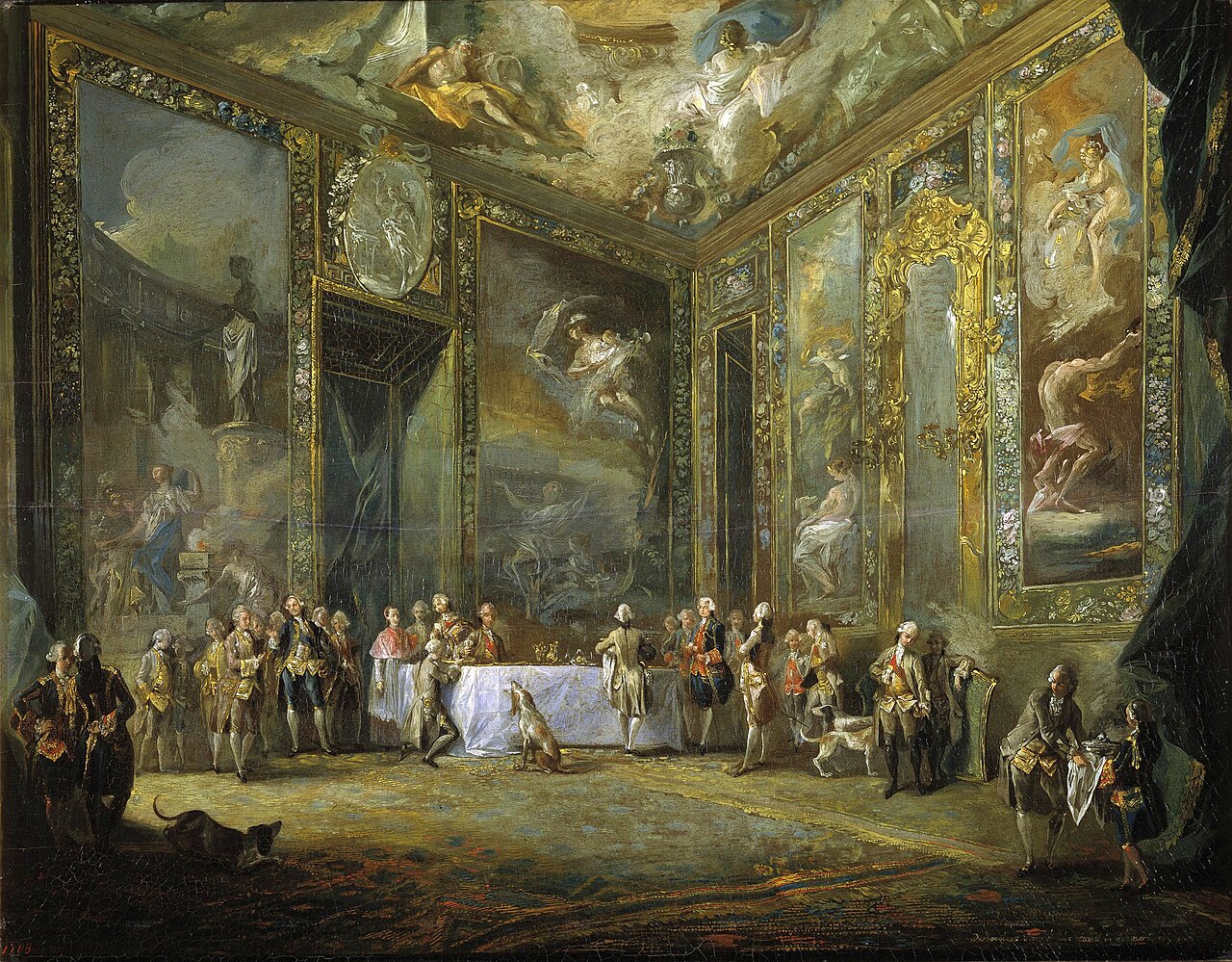
Charles III dining before the Court
Luis Paret y Alcázar · 1775
Free account
Read every Charles III of Spain source
Sign up free →
Ready when you are
Start chatting with Charles III of Spain now.
20 messages free · No credit card · Available in 50+ languages.