


Primary sourceArtifact9th century BCE
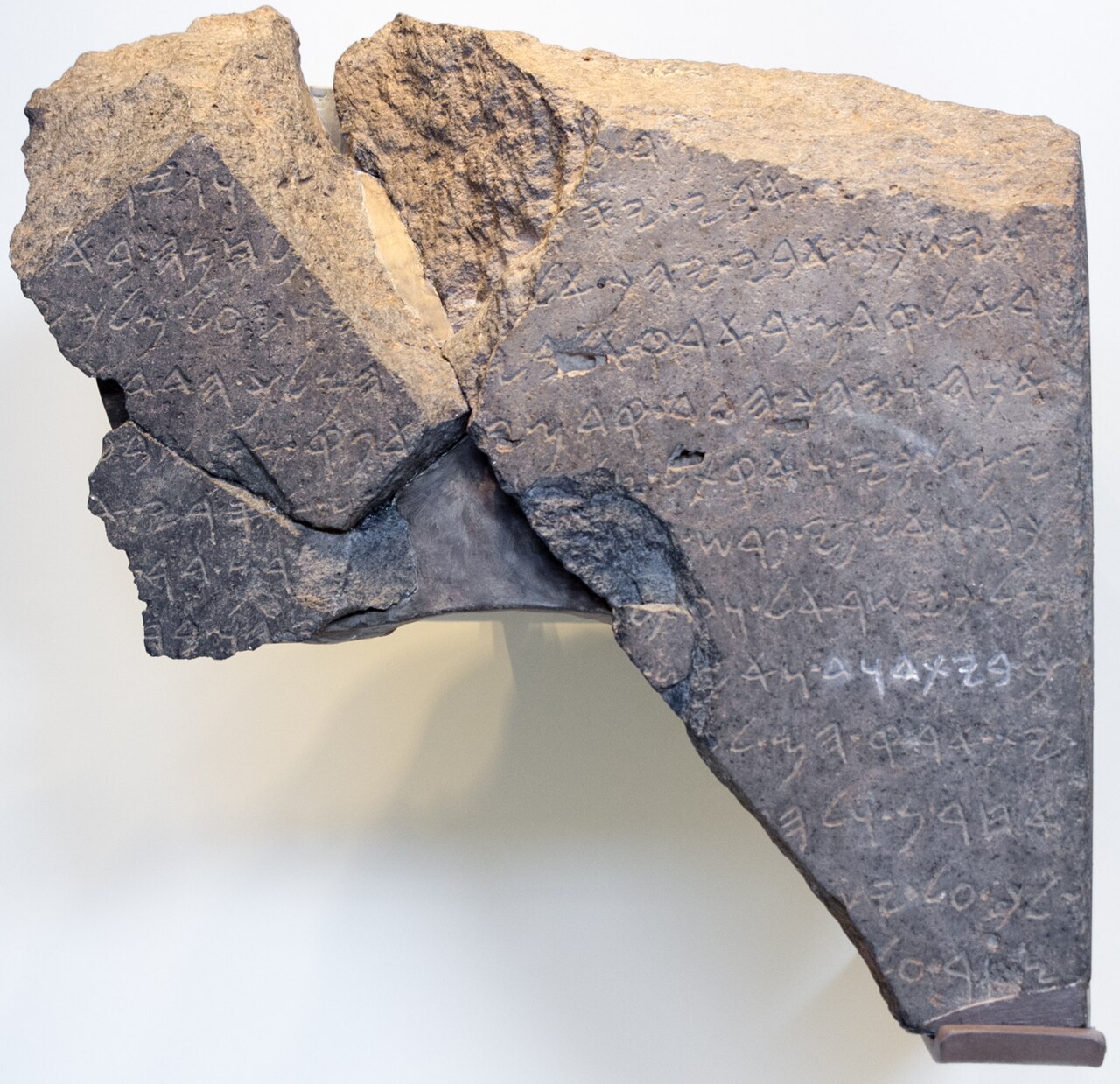
Tel Dan Stele
9th century BCE
A broken 9th-century BCE stone inscription mentioning the 'House of David', the earliest widely accepted evidence outside the Bible for a Davidic dynasty.
This inscription by a rival king names the 'House of David', the earliest outside evidence that David's dynasty really existed.
Free Humy account · No credit card · 65,431 sources to read
About this source
What it is
The Tel Dan Stele is a fragmentary stone inscription written in Old Aramaic using Phoenician script, dated to the 9th century BCE. It was discovered in pieces in 1993 and 1994 during excavations at Tel Dan in northern Israel, led by Avraham Biran, and is now held by the Israel Museum.
Why it matters
The inscription was most likely set up by Hazael, king of Aram-Damascus, boasting of victories over the kings of Israel and of the 'House of David' (bytdwd). It is considered the earliest widely accepted mention of a dynasty tracing itself to David outside the Bible, making it central evidence that David was a real historical figure and founder of a ruling house, not purely a literary invention. A minority of scholars dispute the reading.
Look closer
- Why would a rival king boast about defeating the 'House of David' on a public monument?
- What does it mean that only part of the stone survives, and that scholars disagree on parts of the translation?
- How is evidence from an enemy's monument different from evidence written by David's own supporters?
This artifact is part of the curated material that grounds the AI version of David on Humy.ai — when students ask about related events, the AI can quote it and cite it.




Ready when you are
Start chatting with David now.
20 messages free · No credit card · Available in 50+ languages.