


Primary sourceArtifact11th–12th century
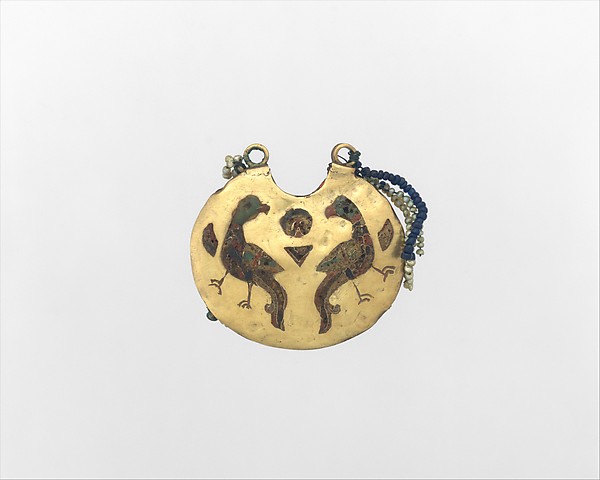
Temple pendant with confronted birds
11th–12th century
A gold temple pendant from Kyivan Rus', made in the 11th to 12th century, decorated with two confronted birds. It is a context object for the world Olga of Kiev lived in, not an object she owned.
A jewelry object from the Kyivan Rus' realm of Olga's era; it shows the wider world she belonged to rather than her own belongings.
About this source
What it is
This is a gold temple pendant from Kyivan Rus', dated to the 11th to 12th century. It is held by The Metropolitan Museum of Art, which received it as a gift of J. Pierpont Morgan in 1917. The museum record lists cloisonné enamel, electrum and pearls. The front shows two confronted birds in dark red and green stones or enamel, with a small central motif and diamond shapes.
Why it matters
Temple pendants like this were worn as jewelry in the lands of Kyivan Rus'. Olga ruled as princess of Kiev in the 10th century, so this object was made after her lifetime. It is included to show the material world of the realm she was part of, not anything she possessed.
Look closer
- How do the birds and colored stones fit into the crescent shape of the pendant?
- Who might have worn a pendant like this, and what could it say about the wearer?
- What does this single object leave out about the everyday lives of ordinary people?
This artifact is part of the curated material that grounds the AI version of Olga of Kiev on Humy.ai — when students ask about related events, the AI can quote it and cite it.
More Olga of Kiev sources
Browse all 93 →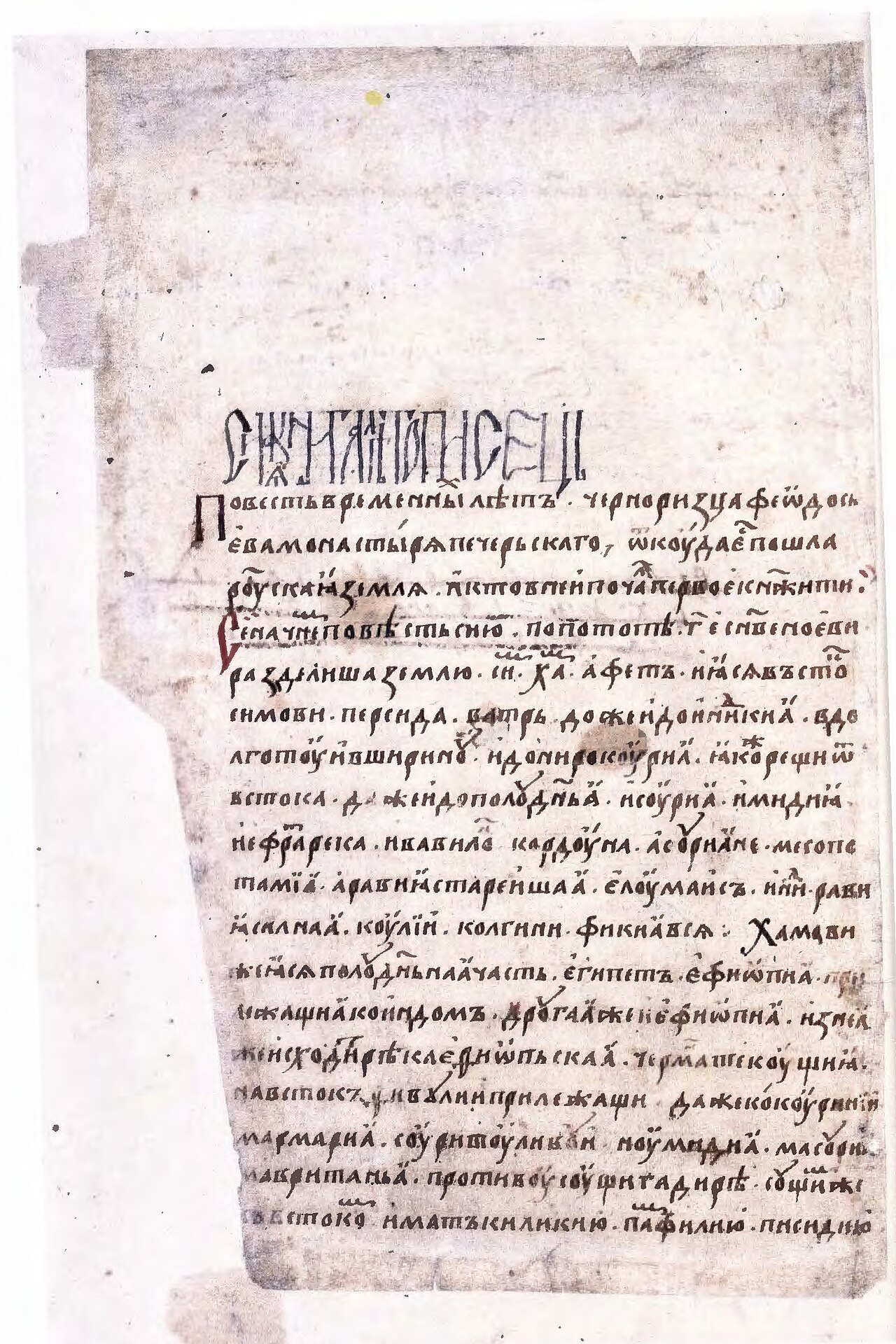 Painting
Secondary source
Radziwiłł Chronicle
c. 1500 (copy of a 13th-century original)
 Document
Primary source
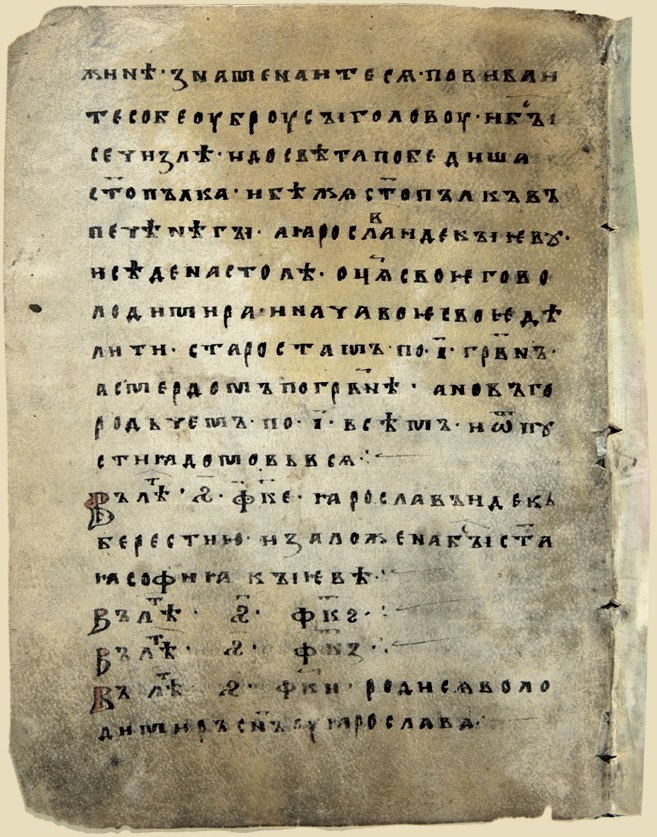
Novgorod First Chronicle
13th century (covering events from 1016)
 Document
Secondary source
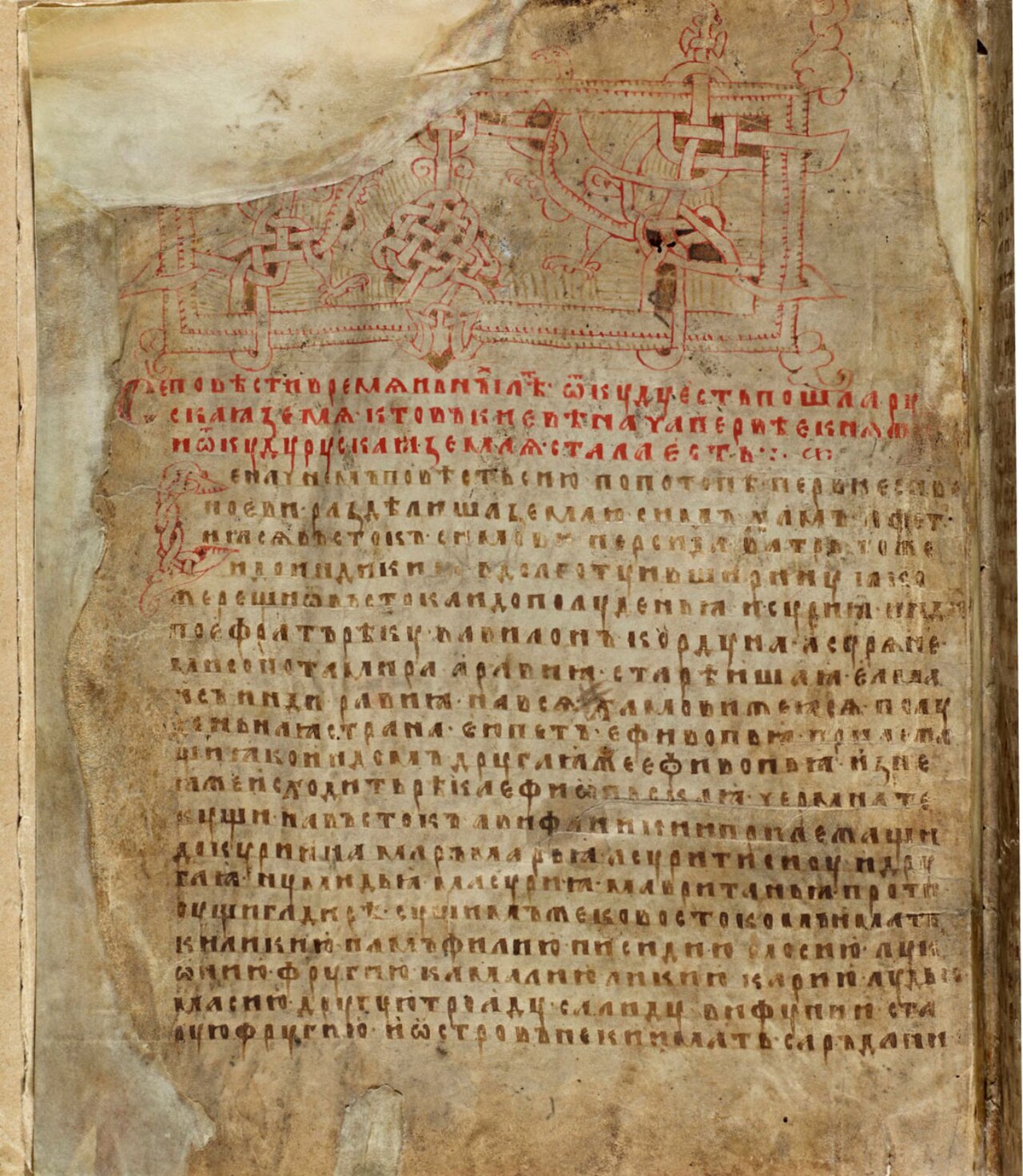
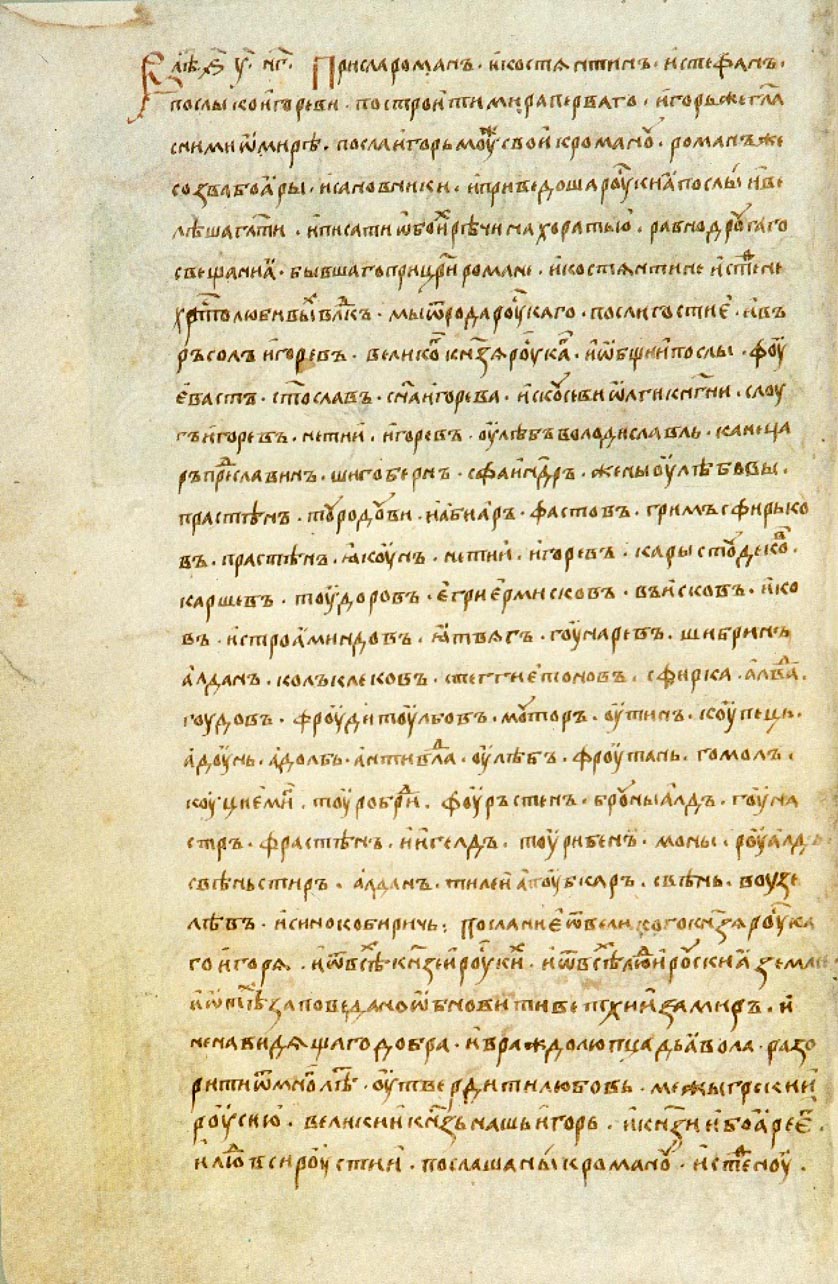
Laurentian Codex
Laurentius · 1377
 Document
Primary source
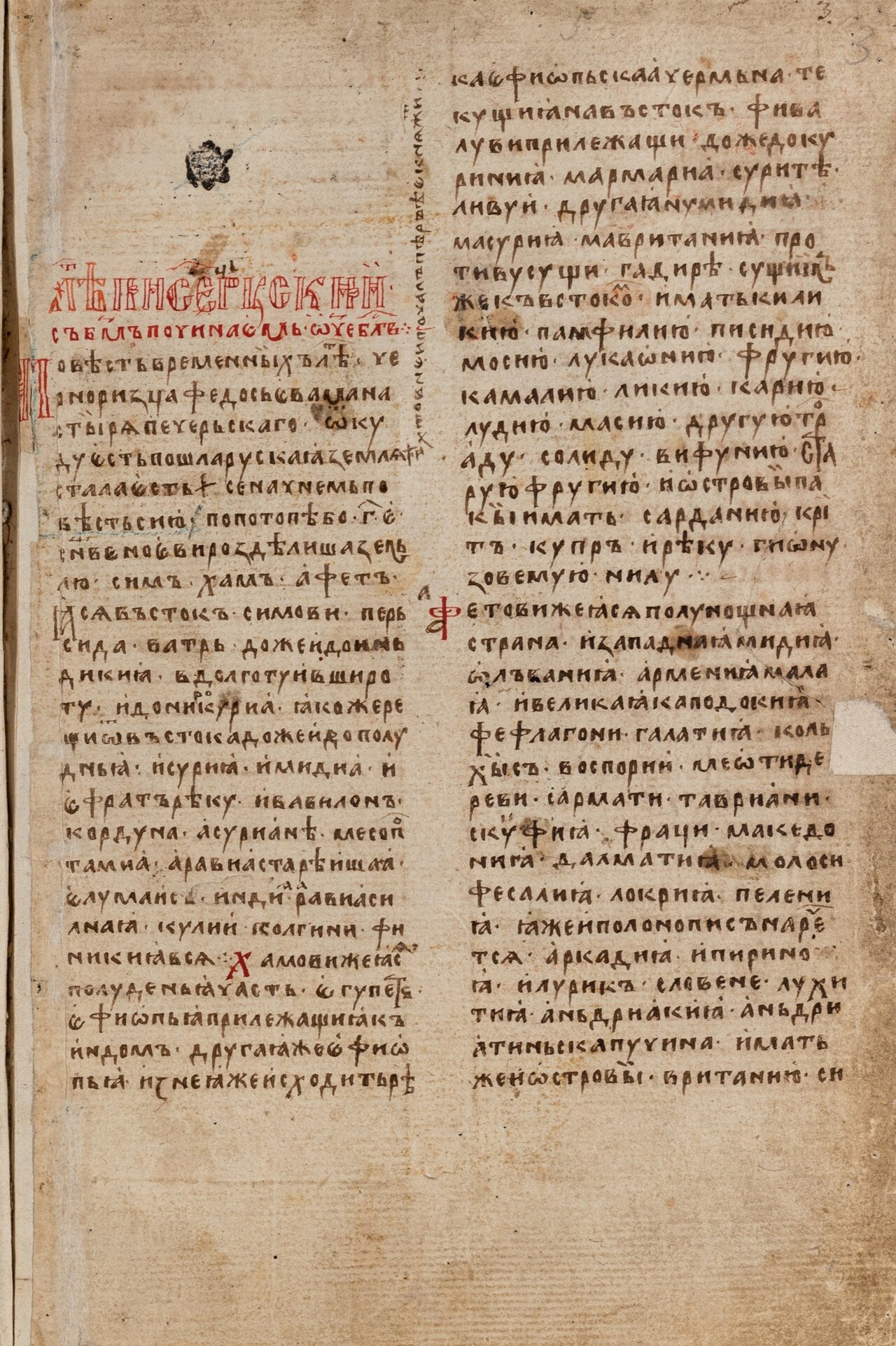
Rus'–Byzantine Treaty
944 or 945
Free account
Read every Olga of Kiev source
Sign up free →
Ready when you are
Start chatting with Olga of Kiev now.
20 messages free · No credit card · Available in 50+ languages.