


Secondary sourcePainting1719
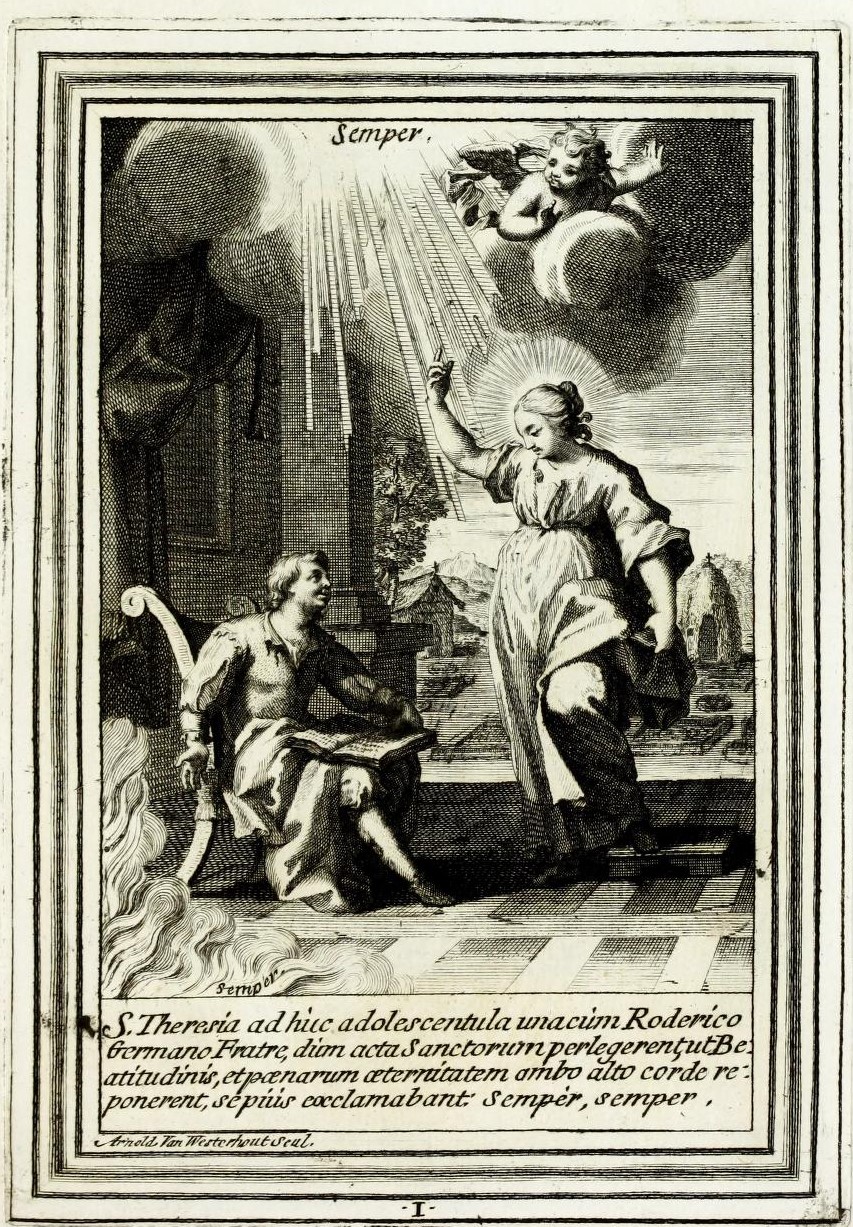
Teresa of Ávila and her father exclaiming Semper Semper
Arnold van Westerhout · 1719
Plate 5 from a 1719 Roman life of Teresa shows a childhood episode with her father. The engraving was made more than a century after her death.
Shows how a 1719 Roman book presented a childhood episode from Teresa's life, which places her story in later devotional writing.
About this source
What it is
This is Plate 5 from Vita effigiata della serafica vergine S. Teresa di Gesu, fondatrice dell'Ordine Carmelitano Scalzo. Arnold van Westerhout made and engraved the illustrations, and the book was published in Rome in 1719. The plate is titled Teresa of Avila and her father exclaiming Semper Semper, and it shows an episode from her childhood. The series of plates depicts events in her life.
Why it matters
Teresa died in 1582, and this book was made more than a century later. It shows how the Carmelite order, which she founded or reformed, presented her life to readers in the early 1700s. Stories from childhood helped create a memorable image of her as a devoted and zealous person. The book reflects the Roman Catholic world that promoted her as a saint.
Look closer
- What does the phrase Semper Semper suggest about the child's character?
- Why might the artist have chosen to show a childhood story in a book about a saint?
- What parts of Teresa's adult life does this plate leave out?
This painting is part of the curated material that grounds the AI version of Teresa of Ávila on Humy.ai — when students ask about related events, the AI can quote it and cite it.
More Teresa of Ávila sources
Browse all 93 →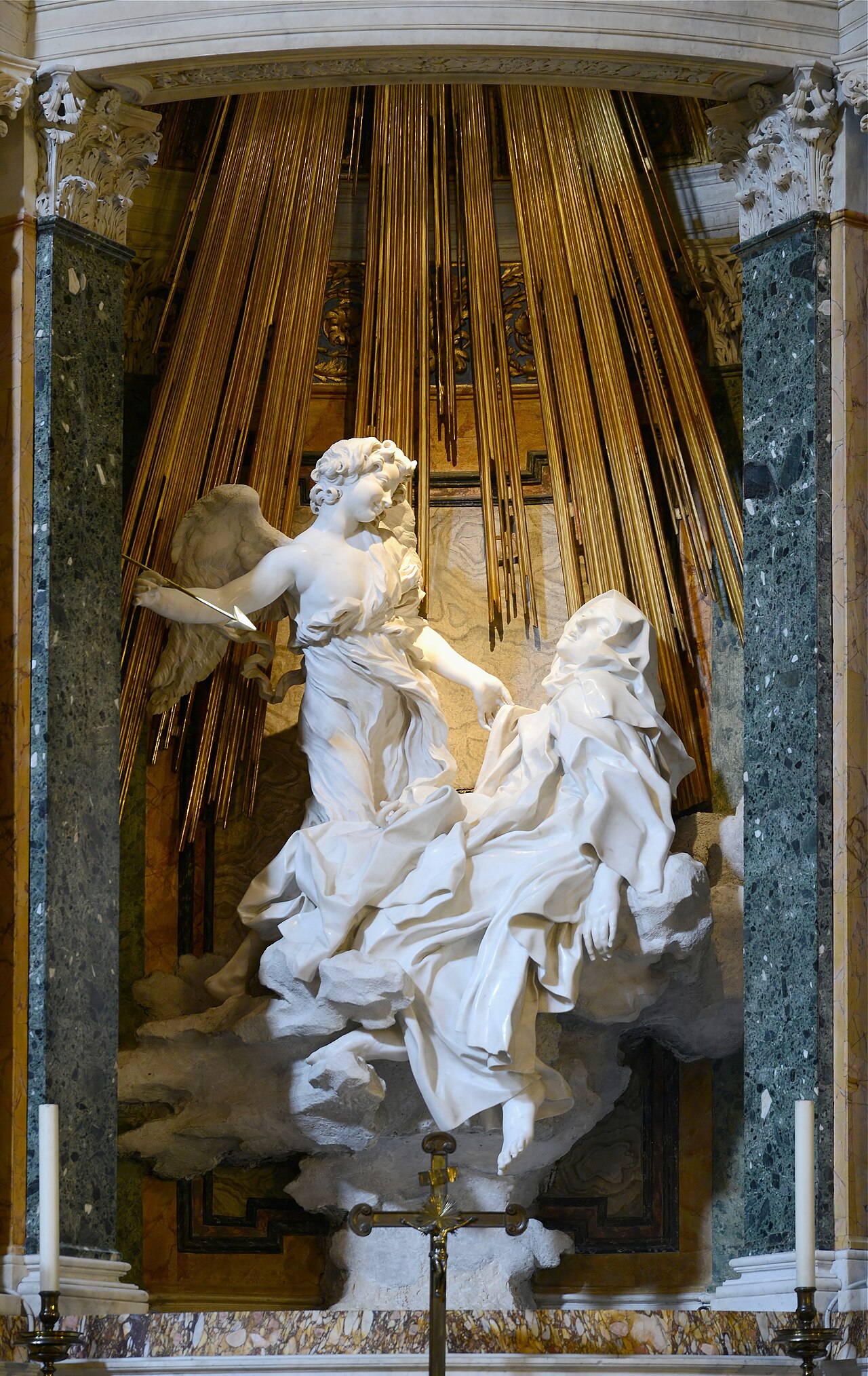 Sculpture
Secondary source
Ecstasy of Saint Teresa
Gian Lorenzo Bernini · 1647-1652
Primary source
The Interior Castle
Teresa of Ávila · written 1577, printed 1588
 Painting
Primary source
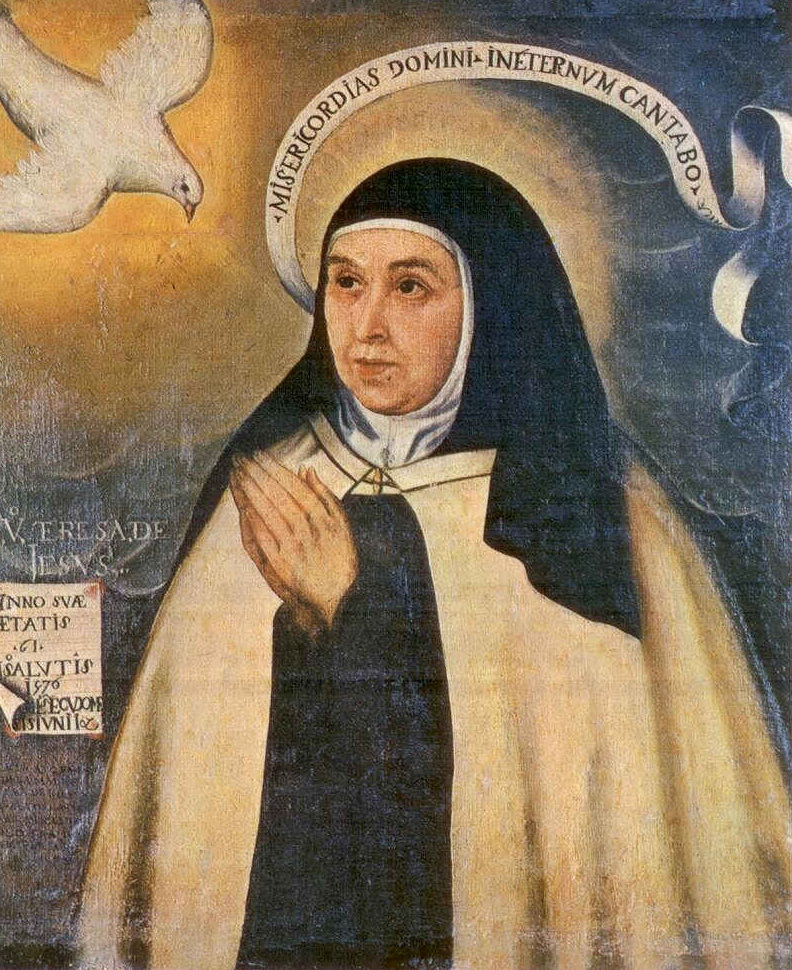
Portrait of Saint Teresa of Ávila
Juan de la Miseria · 1576
 Document
Primary source
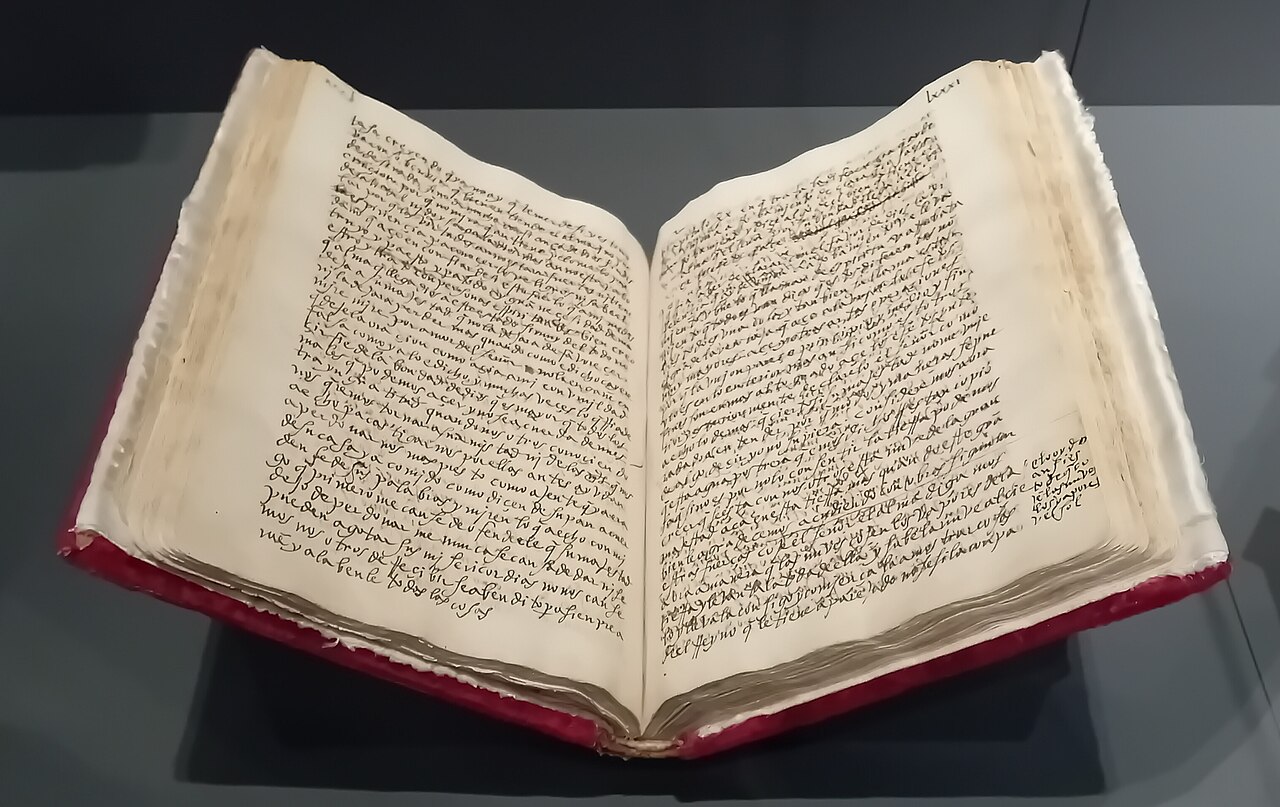
Manuscrito de la Vida de Santa Teresa de Jesús
Teresa of Ávila · 1562
Free account
Read every Teresa of Ávila source
Sign up free →
Ready when you are
Start chatting with Teresa of Ávila now.
20 messages free · No credit card · Available in 50+ languages.