


Secondary sourcePainting1714
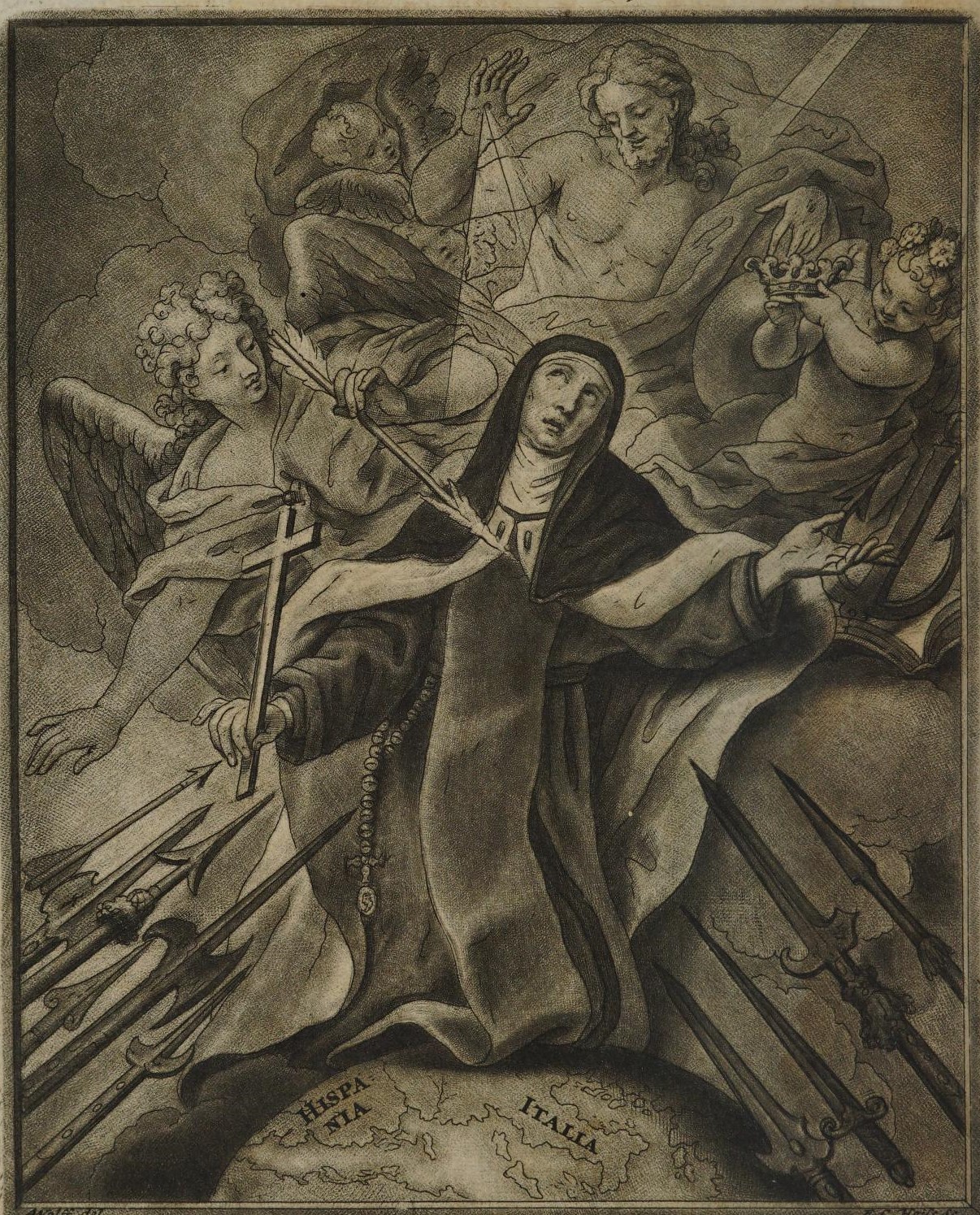
Teresa of Ávila engraving, frontispiece of Quirinus a Sanctissima Trinitate
Johann Andreas Wolff · 1714
A 1714 engraving by Johann Andreas Wolff and Elias Christoph Heiss, made after Teresa's death, shows her as a Spanish heroine in allegorical scenes. It was the frontispiece of a German book about her.
Shows how later Catholic artists pictured Teresa of Avila as a saint and heroine, which is why it sits in her archive.
About this source
What it is
This is an engraving designed by Johann Andreas Wolff and engraved by Elias Christoph Heiss. It serves as the frontispiece of a book titled Quirinus a Sanctissima Trinitate, [Teutsch vorgestelte] Spanische Heldin, published in Munich in 1714. The image shows Teresa of Avila standing on a globe. An angel's arrow pierces her heart, another angel offers her a crown, and a ray of light from one of Jesus's stigmata falls on her. Nine spears point toward her, and she holds a crucifix and wears a rosary. The caption reads Dise Cron sollest dir erobern. The print is held by the Women of the Book collection at Johns Hopkins University.
Why it matters
Teresa died in 1582, and this engraving was made more than a century later. It shows how her image was shaped by the baroque Catholic world of the early 1700s. The artists chose symbols of love, suffering and heavenly reward rather than a record of her life. The book it introduces presents her as a heroine in the German language, which shows how her reputation had spread beyond Spain.
Look closer
- What does the angel's arrow and the crown tell you about how Teresa is meant to be understood?
- Why do you think the artists put nine spears around her, and what might they stand for?
- What does this image leave out about Teresa's own writing and daily life?
This painting is part of the curated material that grounds the AI version of Teresa of Ávila on Humy.ai — when students ask about related events, the AI can quote it and cite it.
More Teresa of Ávila sources
Browse all 93 →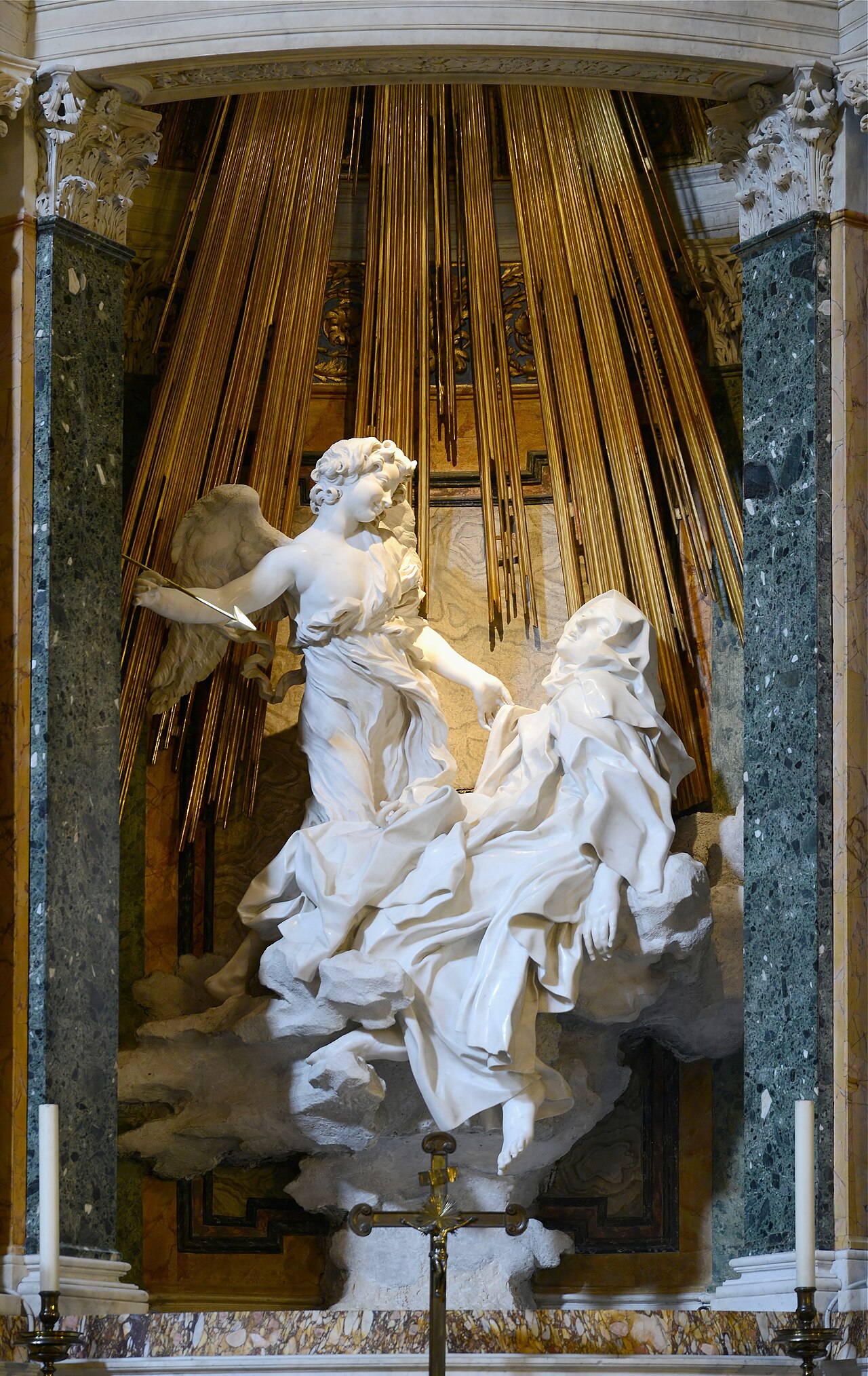 Sculpture
Secondary source
Ecstasy of Saint Teresa
Gian Lorenzo Bernini · 1647-1652
Primary source
The Interior Castle
Teresa of Ávila · written 1577, printed 1588
 Painting
Primary source
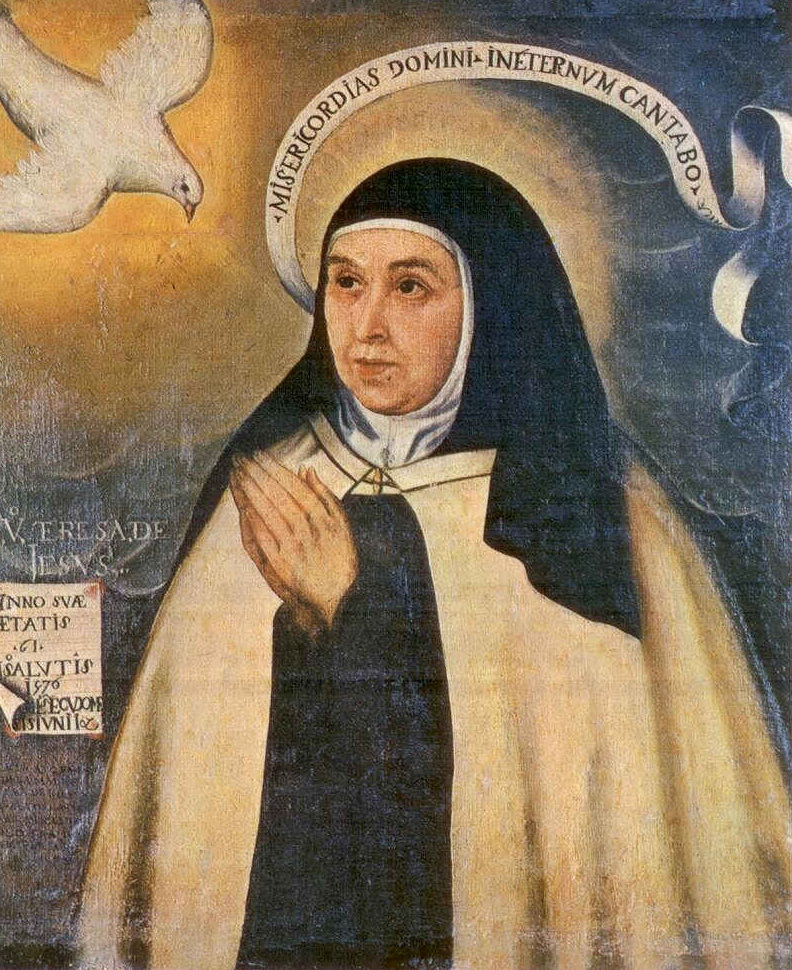
Portrait of Saint Teresa of Ávila
Juan de la Miseria · 1576
 Document
Primary source
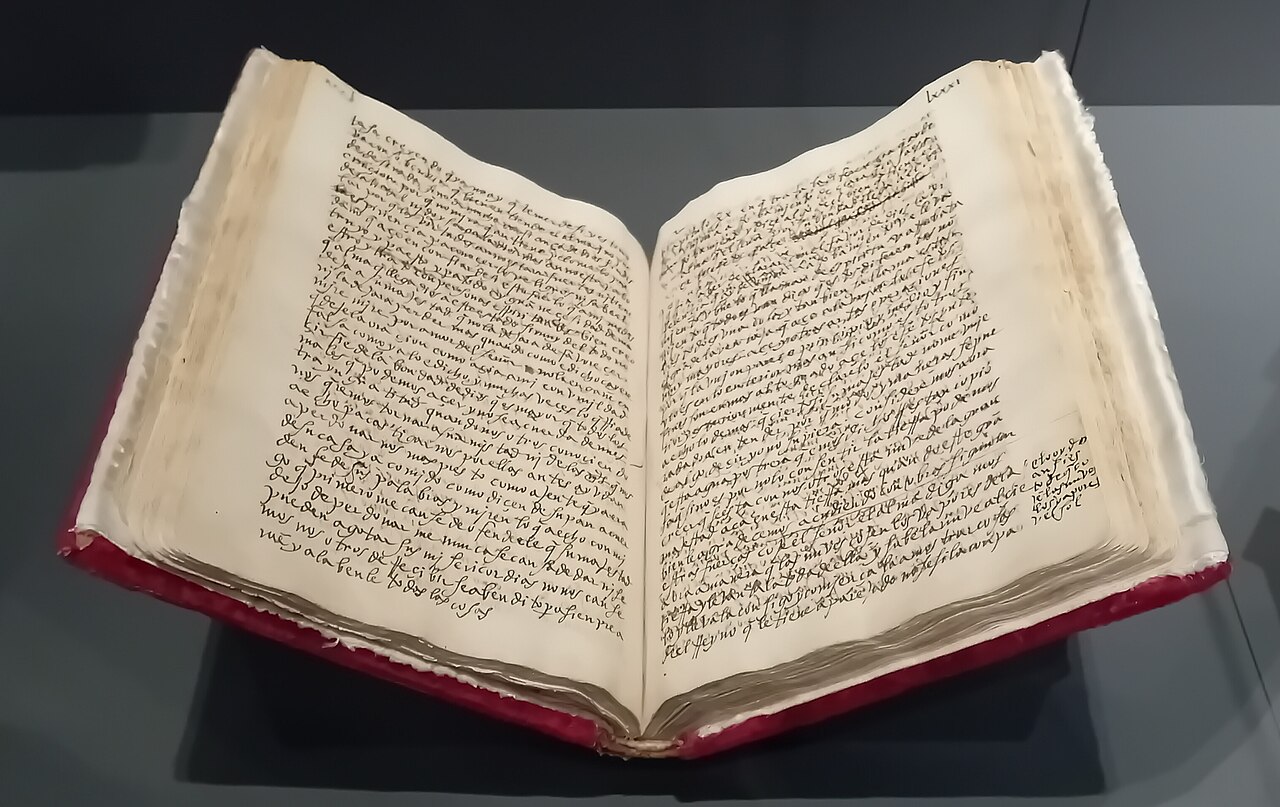
Manuscrito de la Vida de Santa Teresa de Jesús
Teresa of Ávila · 1562

Free account
Read every Teresa of Ávila source
Sign up free →
Ready when you are
Start chatting with Teresa of Ávila now.
20 messages free · No credit card · Available in 50+ languages.