


Secondary sourcePainting1647
Teresa of Ávila
Francisco de Zurbarán · 1647
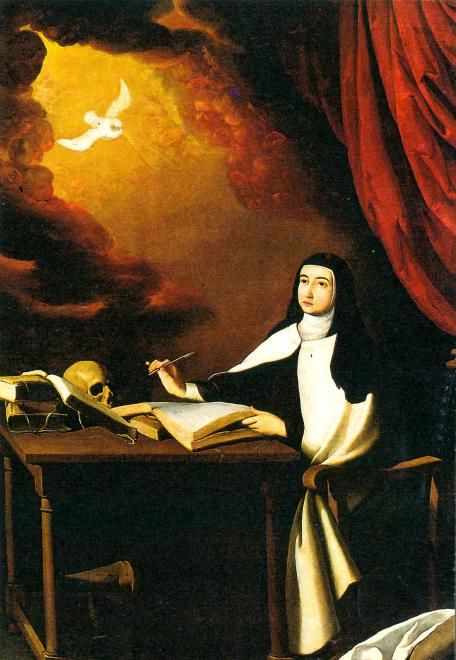
A painting by Francisco de Zurbarán showing Teresa writing at a table with a skull, book, and a dove above her, made in the Spanish Golden Age.
This painting depicts Teresa as a writing saint, shaping her later image as a Doctor of the Church.
About this source
What it is
This painting, held in Seville Cathedral, was made by the Spanish painter Francisco de Zurbarán around the mid-17th century. It shows a nun in a black veil and white habit seated at a table, writing with a quill in an open book, with a skull and a closed book nearby and a glowing dove in the clouds above.
Why it matters
The painting presents Teresa as both a holy woman and a writer, echoing the way the Catholic Church honoured her as a Doctor of the Church who produced important spiritual texts. It reflects how Spanish Golden Age artists depicted saints as models of devotion and intellect during the Counter-Reformation.
Look closer
- Why might the artist show her writing rather than praying or in ecstasy?
- What do the skull and the dove suggest about the painting's message?
- How does this image shape the way people imagine Teresa today?
This painting is part of the curated material that grounds the AI version of Teresa of Ávila on Humy.ai — when students ask about related events, the AI can quote it and cite it.
More Teresa of Ávila sources
Browse all 93 →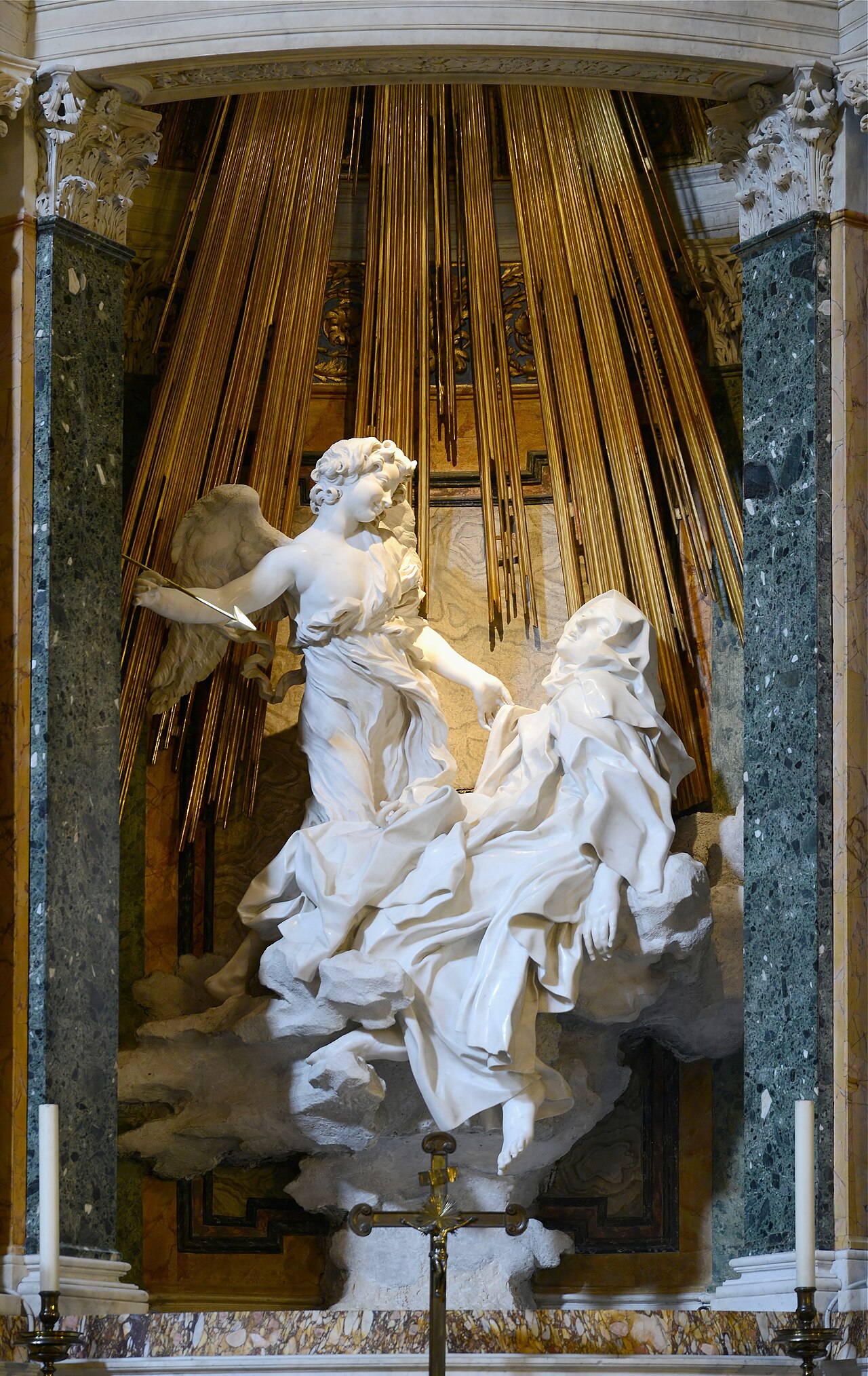 Sculpture
Secondary source
Ecstasy of Saint Teresa
Gian Lorenzo Bernini · 1647-1652
Primary source
The Interior Castle
Teresa of Ávila · written 1577, printed 1588
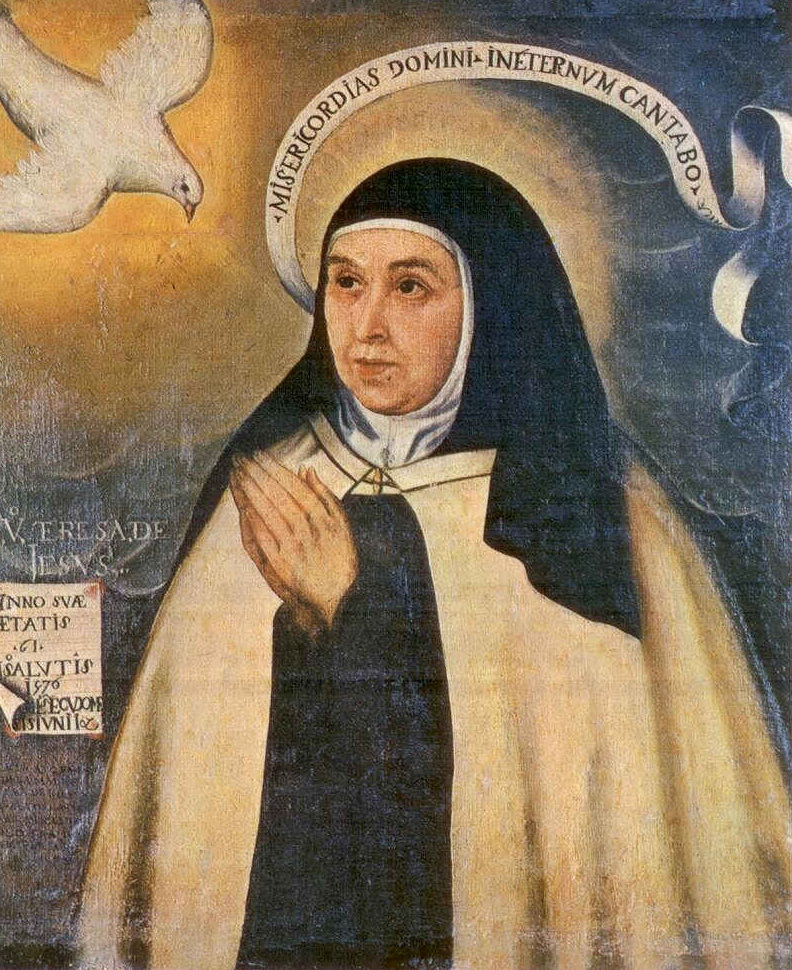 Painting
Primary source
Portrait of Saint Teresa of Ávila
Juan de la Miseria · 1576
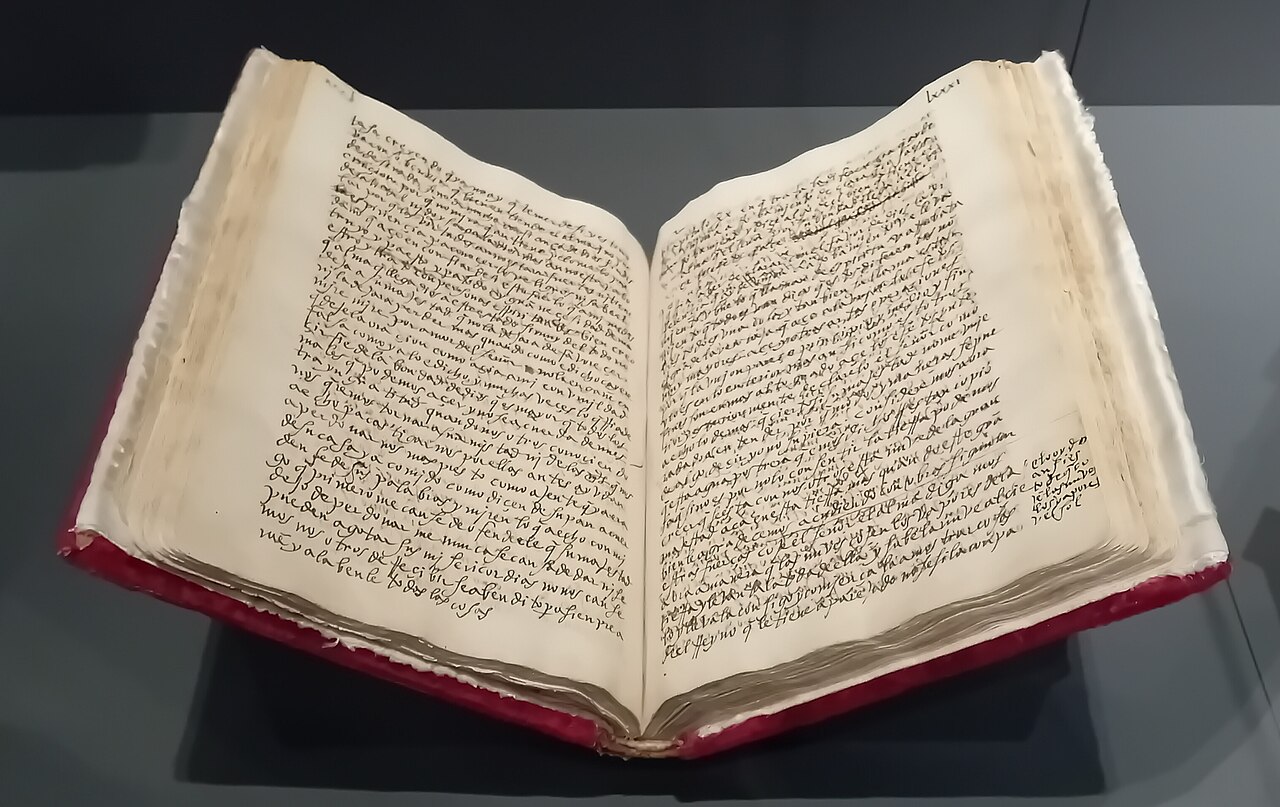 Document
Primary source
Manuscrito de la Vida de Santa Teresa de Jesús
Teresa of Ávila · 1562
Free account
Read every Teresa of Ávila source
Sign up free →
Ready when you are
Start chatting with Teresa of Ávila now.
20 messages free · No credit card · Available in 50+ languages.