


Primary sourcePainting1914
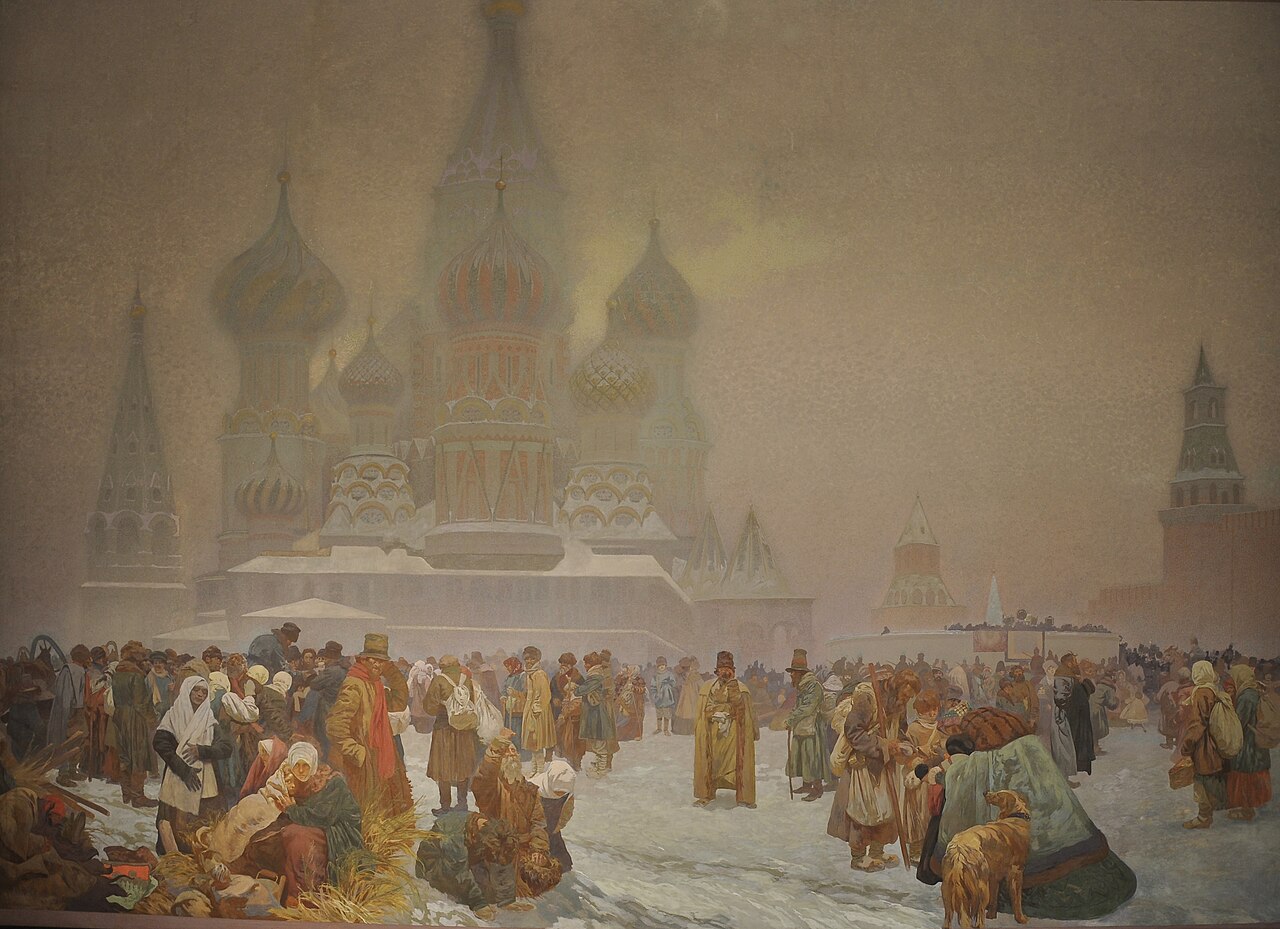
The Abolition of Serfdom in Russia
Alphonse Mucha · 1914
A 1914 Slav Epic painting by Alphonse Mucha showing a crowd in a snowy Russian square, based on his 1913 trip to Russia.
Mucha painted this Slav Epic canvas himself, drawing on research from his own 1913 journey to Russia.
About this source
What it is
This 1914 painting by Alphonse Mucha is part of his Slav Epic cycle. It shows a snowy square with onion-domed cathedral towers and a crowd of people in winter clothing. It is held in the collection of the Prague City Gallery.
Why it matters
Mucha based this scene on research from a trip he made to Russia in 1913. The painting reflects his interest in Slavic history and his mixed feelings about how much progress Slavic peoples had actually made, even after serfdom ended. It shows Mucha not just as a decorative artist but as someone trying to document and judge history.
Look closer
- What mood do the people's postures and clothing create?
- Why might Mucha have chosen a crowd scene rather than a single heroic figure?
- What might the painting leave out about the real experience of serfdom and its end?
This painting is part of the curated material that grounds the AI version of Alphonse Mucha on Humy.ai — when students ask about related events, the AI can quote it and cite it.
More Alphonse Mucha sources
Browse all 86 →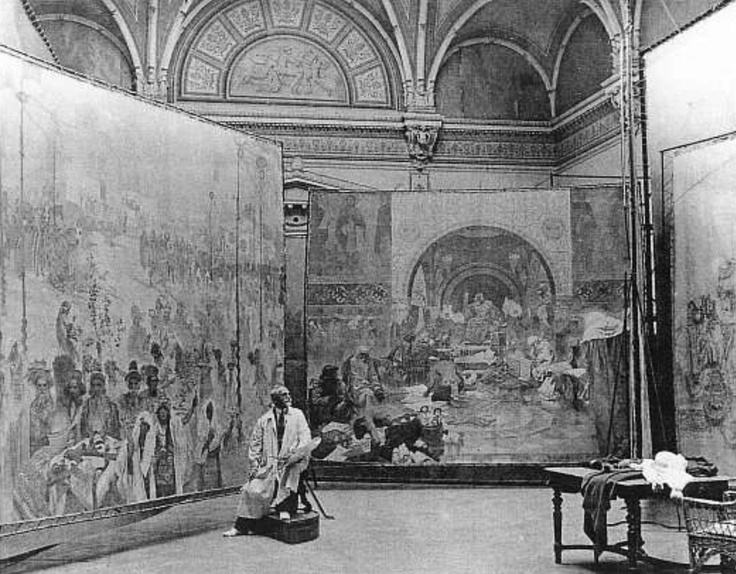 Painting
Primary source
The Slav Epic
Alphonse Mucha · 1910–1928
 Painting
Primary source
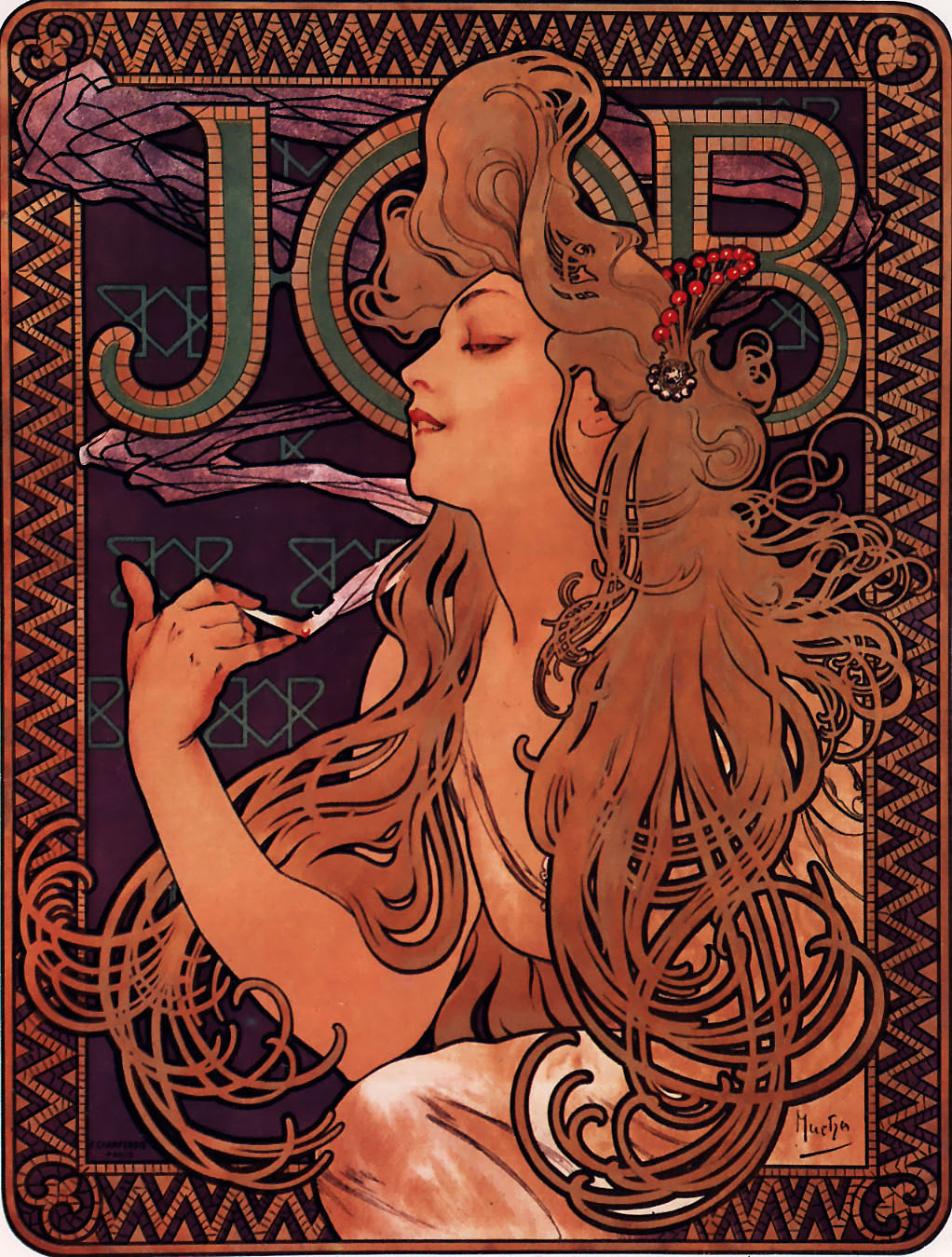
JOB
Alphonse Mucha · 1896
 Painting
Primary source
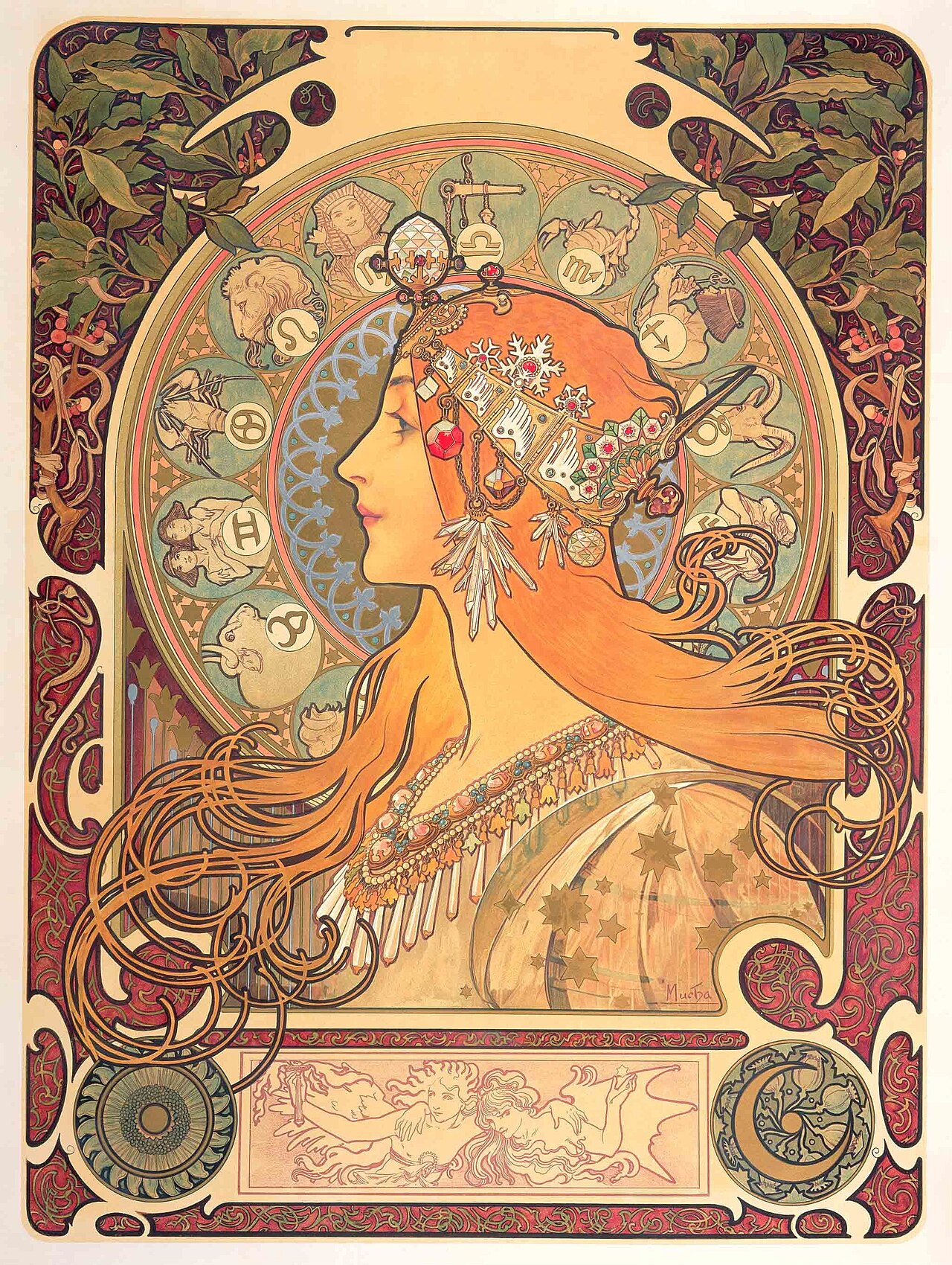
Zodiac
Alphonse Mucha · 1896
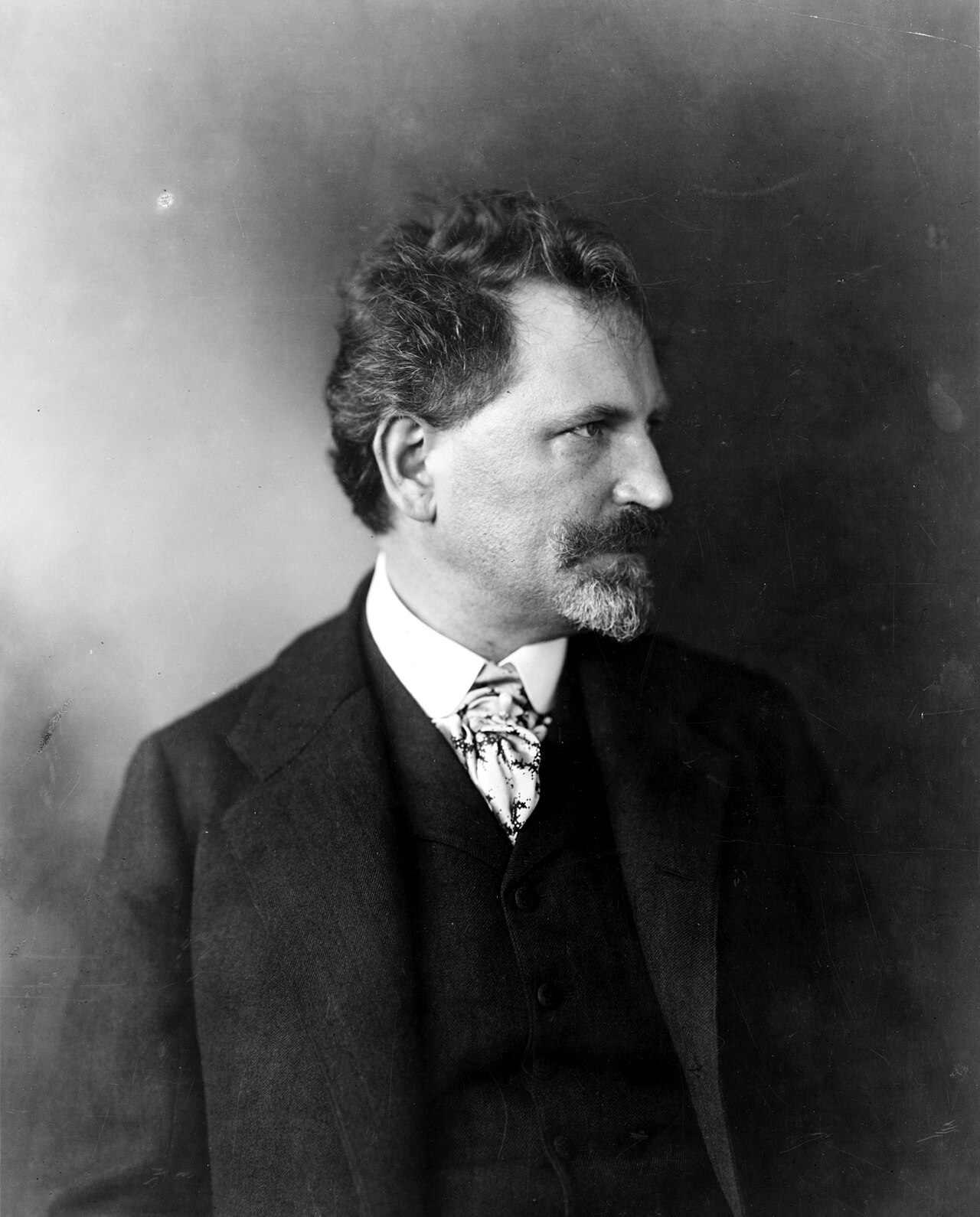 Photograph
Primary source
Alfons Mucha, half-length portrait, facing right
George R. Lawrence Co.
Free account
Read every Alphonse Mucha source
Sign up free →
Ready when you are
Start chatting with Alphonse Mucha now.
20 messages free · No credit card · Available in 50+ languages.