


Primary sourceBook1913
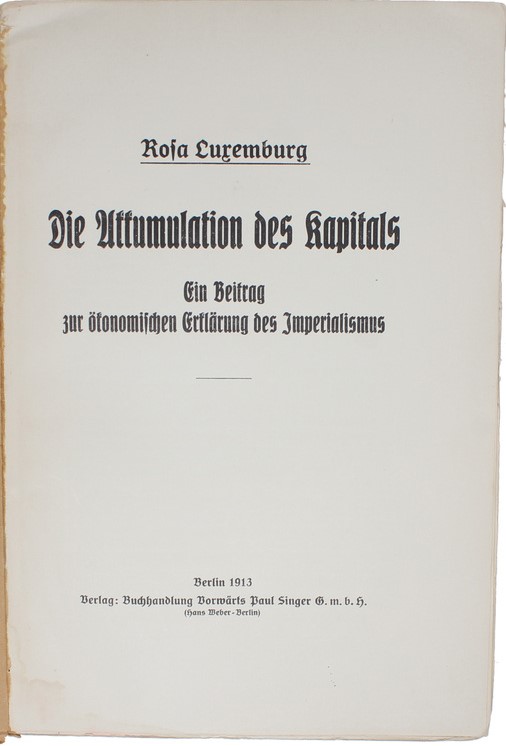
The Accumulation of Capital
Rosa Luxemburg · 1913
Luxemburg's 1913 economic treatise arguing that capitalism's expansion drives imperialism and will eventually collapse.
Luxemburg wrote this major economic treatise explaining imperialism, revealing her depth as a Marxist theorist beyond activism.
About this source
What it is
This is a book written by Rosa Luxemburg in 1913, developed from material she taught at the SPD's party school between 1907 and 1914. It was published in Berlin in 1913 and later translated into English in 1951 with an introduction by economist Joan Robinson.
Why it matters
Luxemburg argued that capitalism cannot grow using only capitalists and workers; it must expand into non-capitalist societies, which she said explained imperialism's violence. The book provoked fierce criticism from Marxists like Nikolai Bukharin and Otto Bauer but praise from others like Franz Mehring, and it later influenced economists such as David Harvey. It shows Luxemburg as a serious theorist, not only an activist.
Look closer
- Why might an economic theory about imperialism also be a political argument against war?
- What does the strong disagreement it caused among fellow Marxists tell you about the socialist movement at the time?
- Why do you think this theory still interests economists today?
This book is part of the curated material that grounds the AI version of Rosa Luxemburg on Humy.ai — when students ask about related events, the AI can quote it and cite it.
More Rosa Luxemburg sources
Meet the AI Rosa Luxemburg →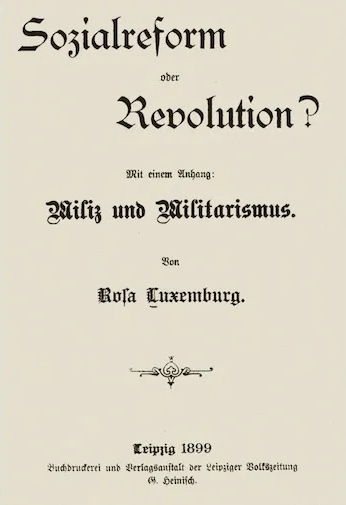 Book
Primary source
Social Reform or Revolution
Rosa Luxemburg · 1898-1899 (published 1899)
 Book
Primary source
The Russian Revolution: A Critical Appreciation
Rosa Luxemburg · 1918 (published 1922)
 Book
Primary source
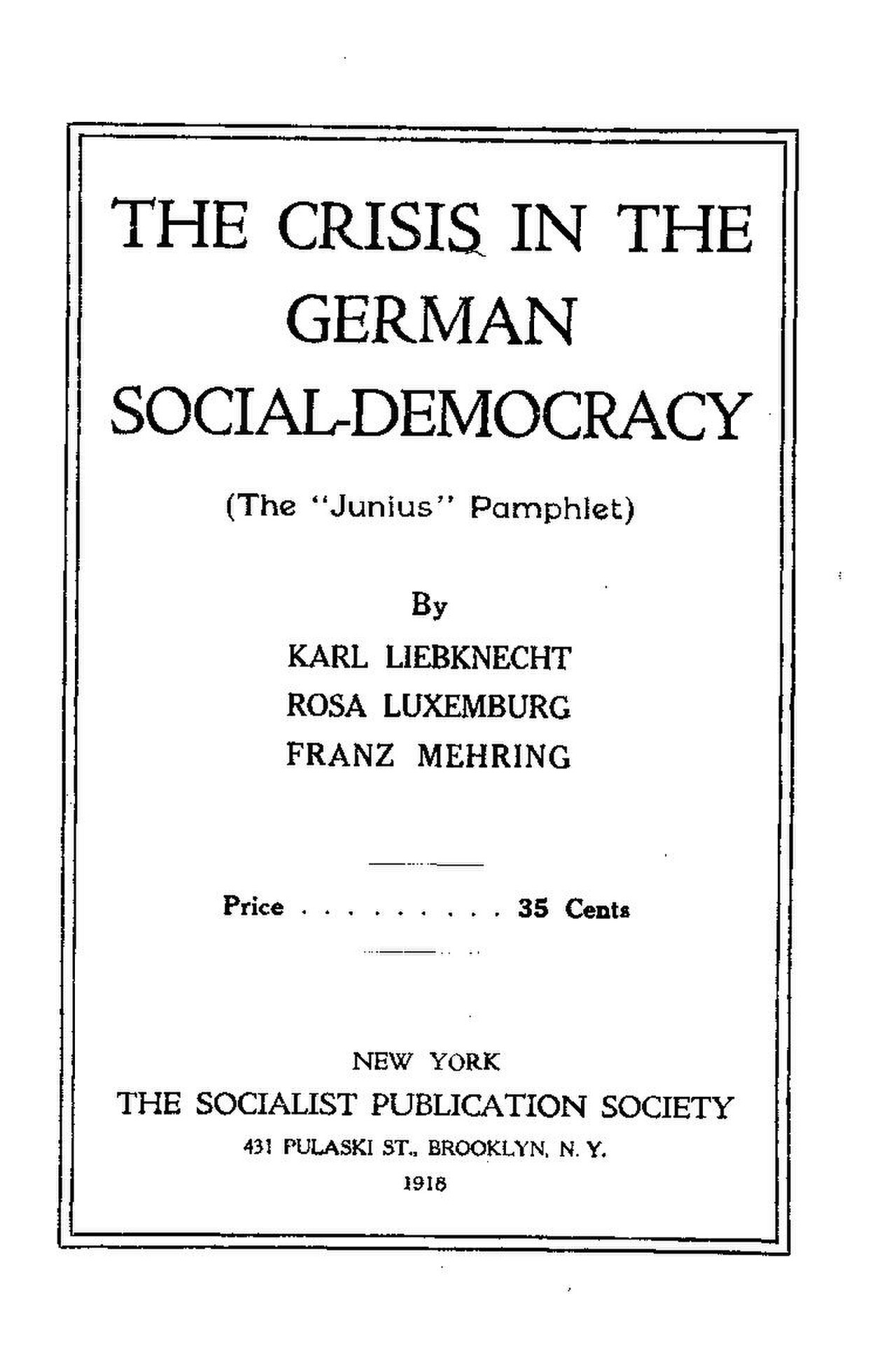
The Junius Pamphlet
Rosa Luxemburg · 1915 (published 1916)
Primary source
Was will der Spartakusbund?
Rosa Luxemburg · December 1918
 Photograph
Primary source
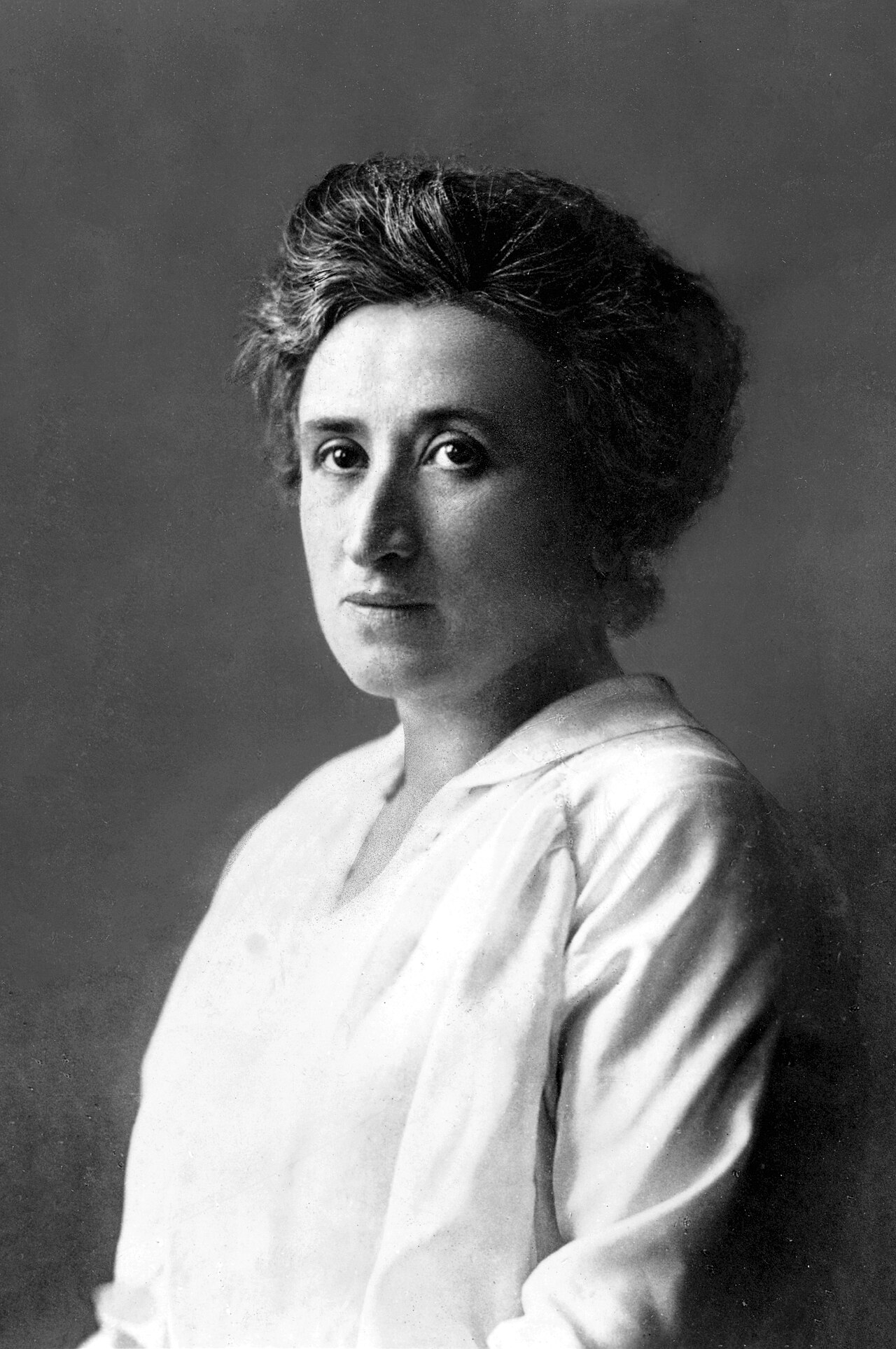
Portrait of Rosa Luxemburg
Ready when you are
Start chatting with Rosa Luxemburg now.
20 messages free · No credit card · Available in 50+ languages.