


Primary sourcePainting30 September 1871
The American River Ganges
Thomas Nast · 30 September 1871
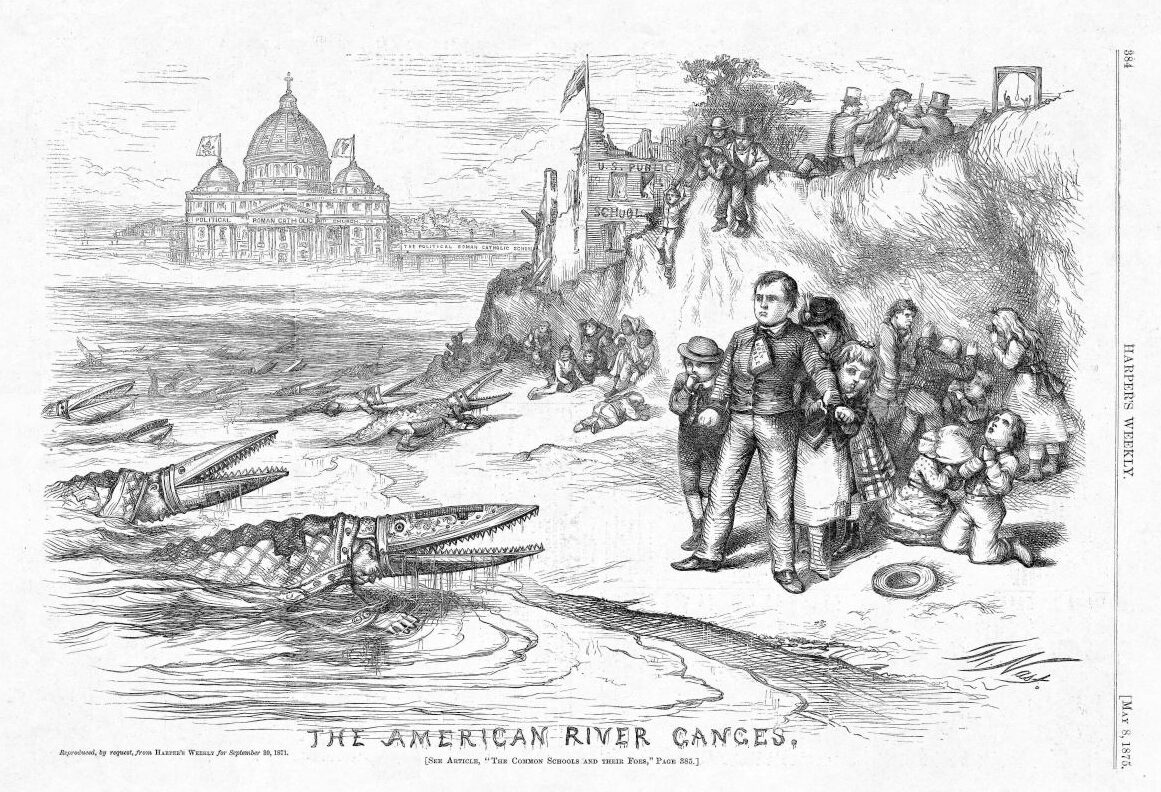
A Thomas Nast cartoon showing Catholic bishops as crocodiles attacking American schoolchildren, reflecting his strong anti-Catholic views.
Drawn by Nast, this cartoon shows his fierce anti-Catholic nativism expressed through political caricature.
About this source
What it is
This engraving by Thomas Nast appeared in Harper's Weekly on 30 September 1871 and is held by the Library of Congress. It shows clergy depicted as crocodiles approaching children on a shore, while a public school building stands safely on a bluff.
Why it matters
According to his biographer Fiona Deans Halloran, Nast was strongly opposed to Catholic influence in public education, especially after Tammany Hall proposed tax support for Catholic schools. This cartoon reveals the intense anti-Catholic and anti-Irish nativism present in American politics and in Nast's own work, even as he championed nonsectarian public schooling.
Look closer
- Why might Nast have chosen crocodiles to represent bishops?
- What does the image suggest about who Nast believed threatened American democracy?
- How might this cartoon have affected Catholic and Irish Americans who saw it?
This painting is part of the curated material that grounds the AI version of Thomas Nast on Humy.ai — when students ask about related events, the AI can quote it and cite it.
More Thomas Nast sources
Meet the AI Thomas Nast →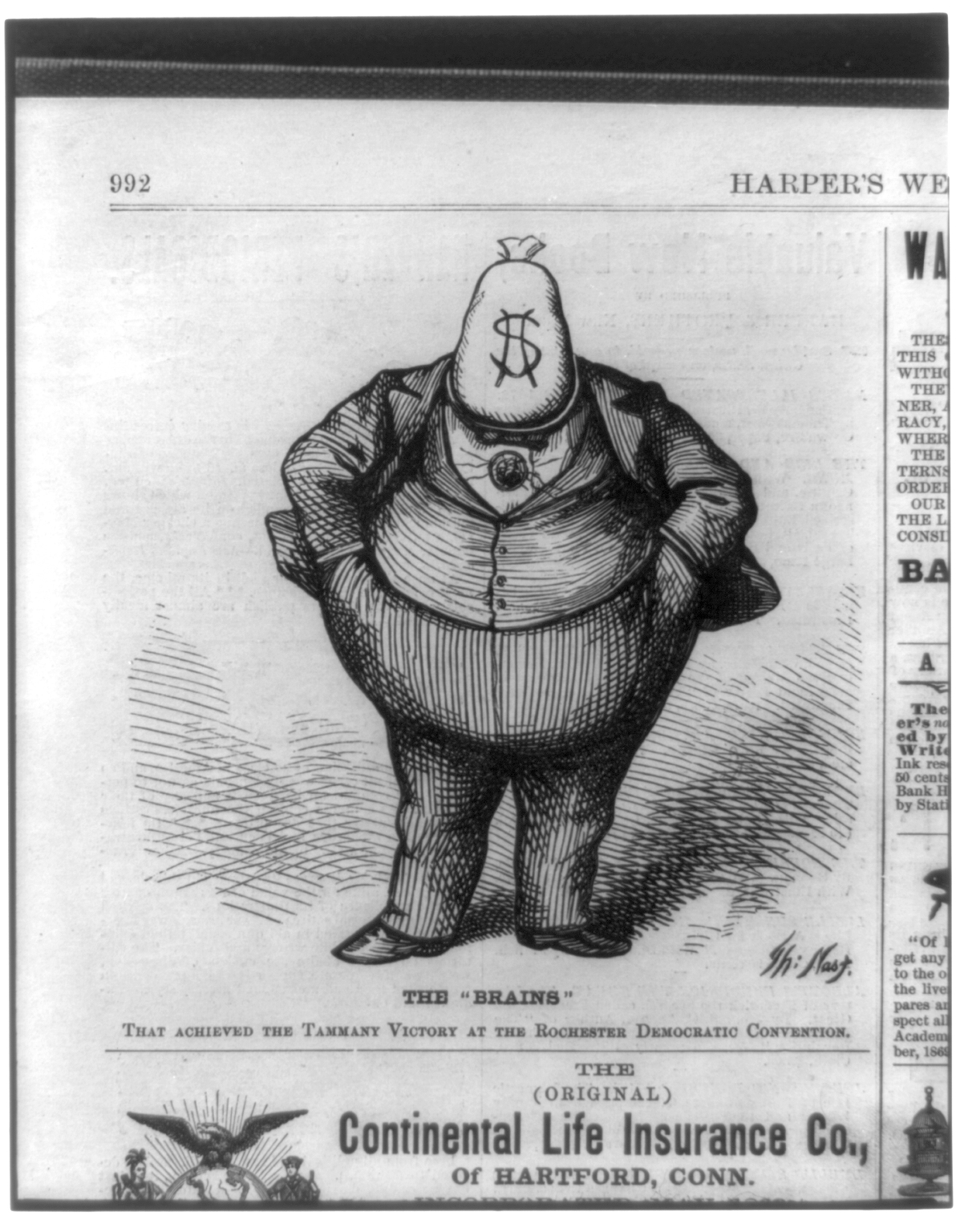 Painting
Primary source
The Brains
Thomas Nast · 21 October 1871
 Painting
Primary source
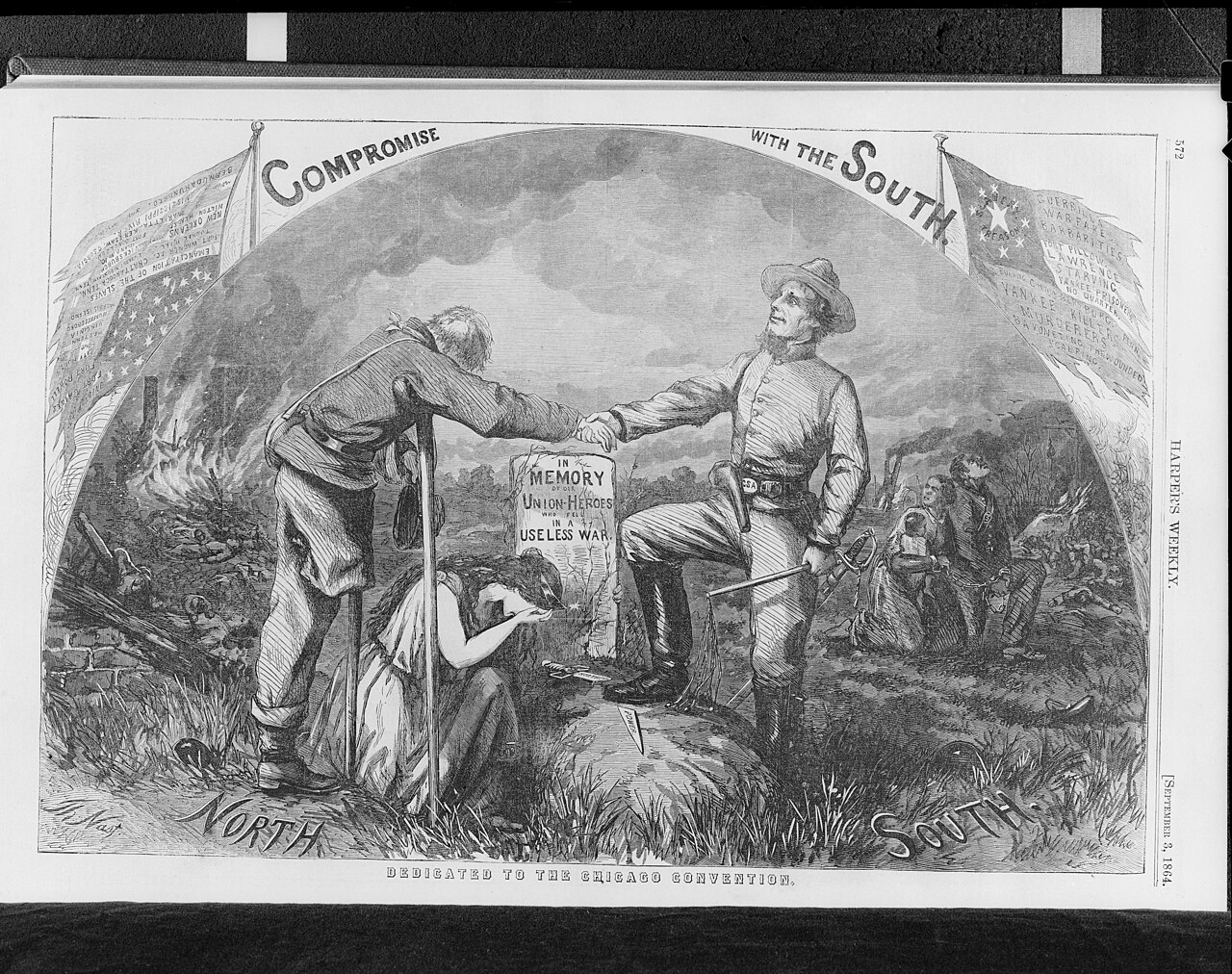
Compromise with the South—Dedicated to the Chicago Convention
Thomas Nast · 3 September 1864
 Painting
Primary source
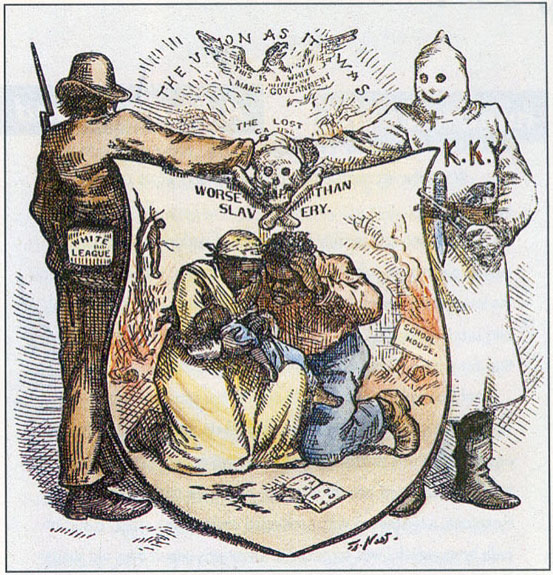
Worse than Slavery
Thomas Nast · 1874
 Painting
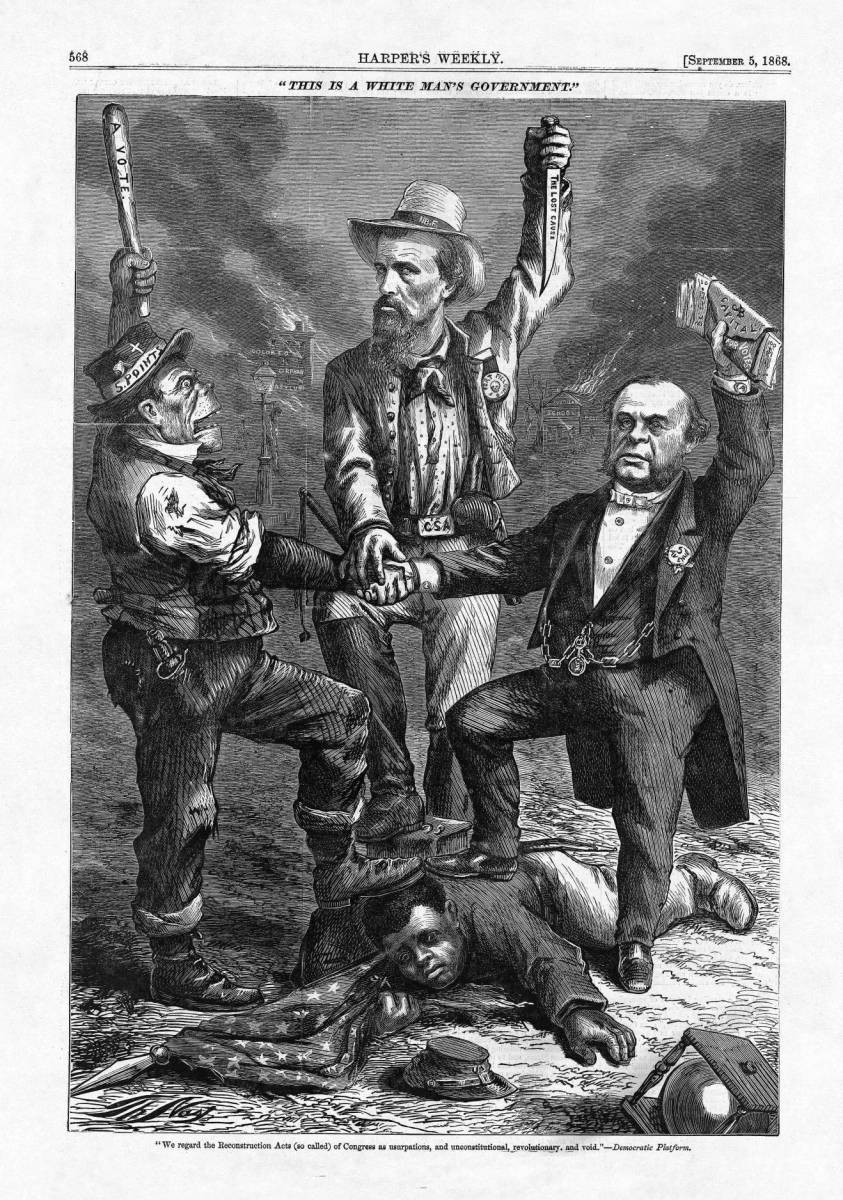
Primary source
This Is a White Man's Government
Thomas Nast · 5 September 1868
 Painting
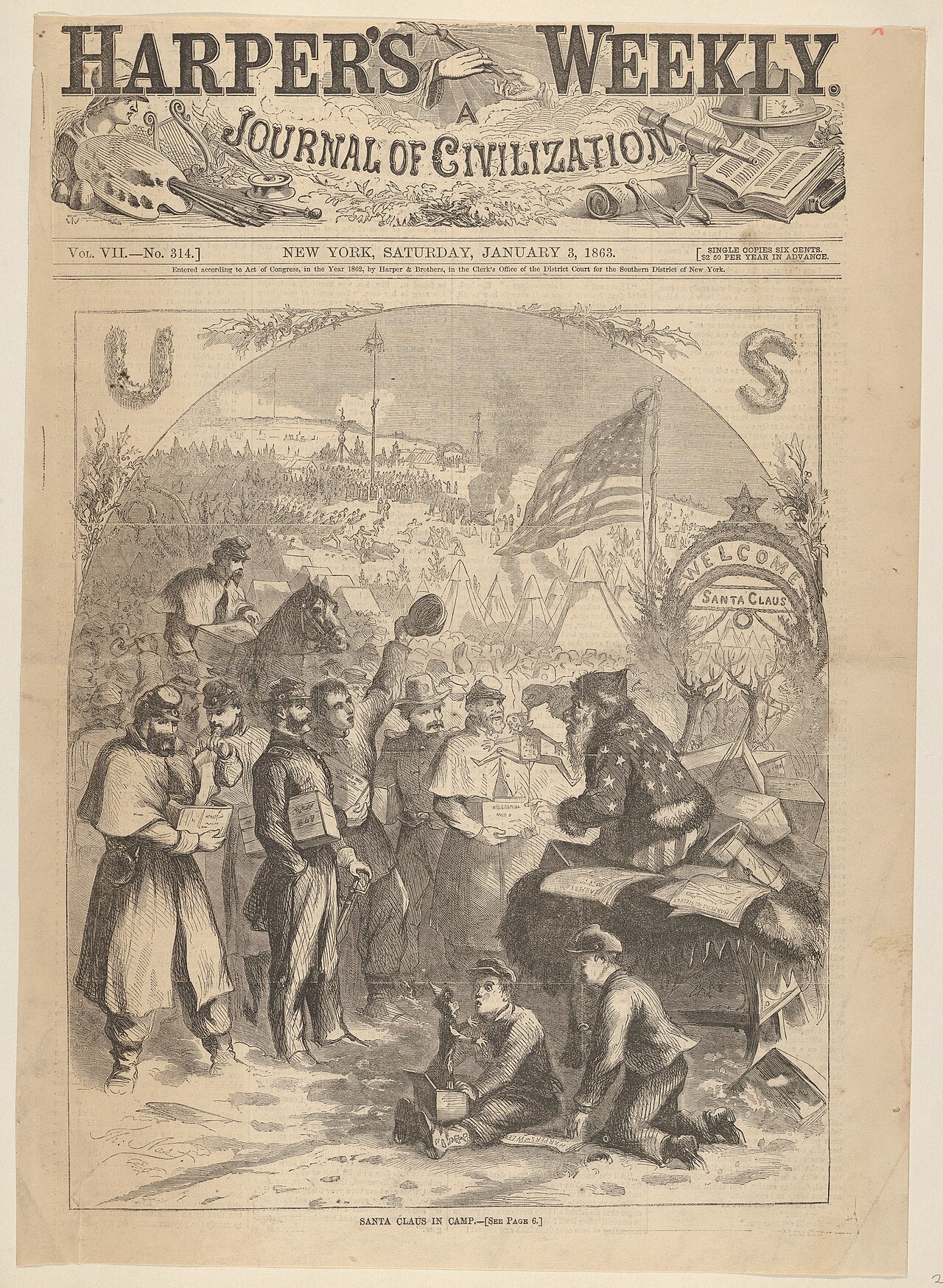
Primary source
Santa Claus in Camp
Thomas Nast · 3 January 1863
Ready when you are
Start chatting with Thomas Nast now.
20 messages free · No credit card · Available in 50+ languages.