


Secondary sourcePhotograph1855
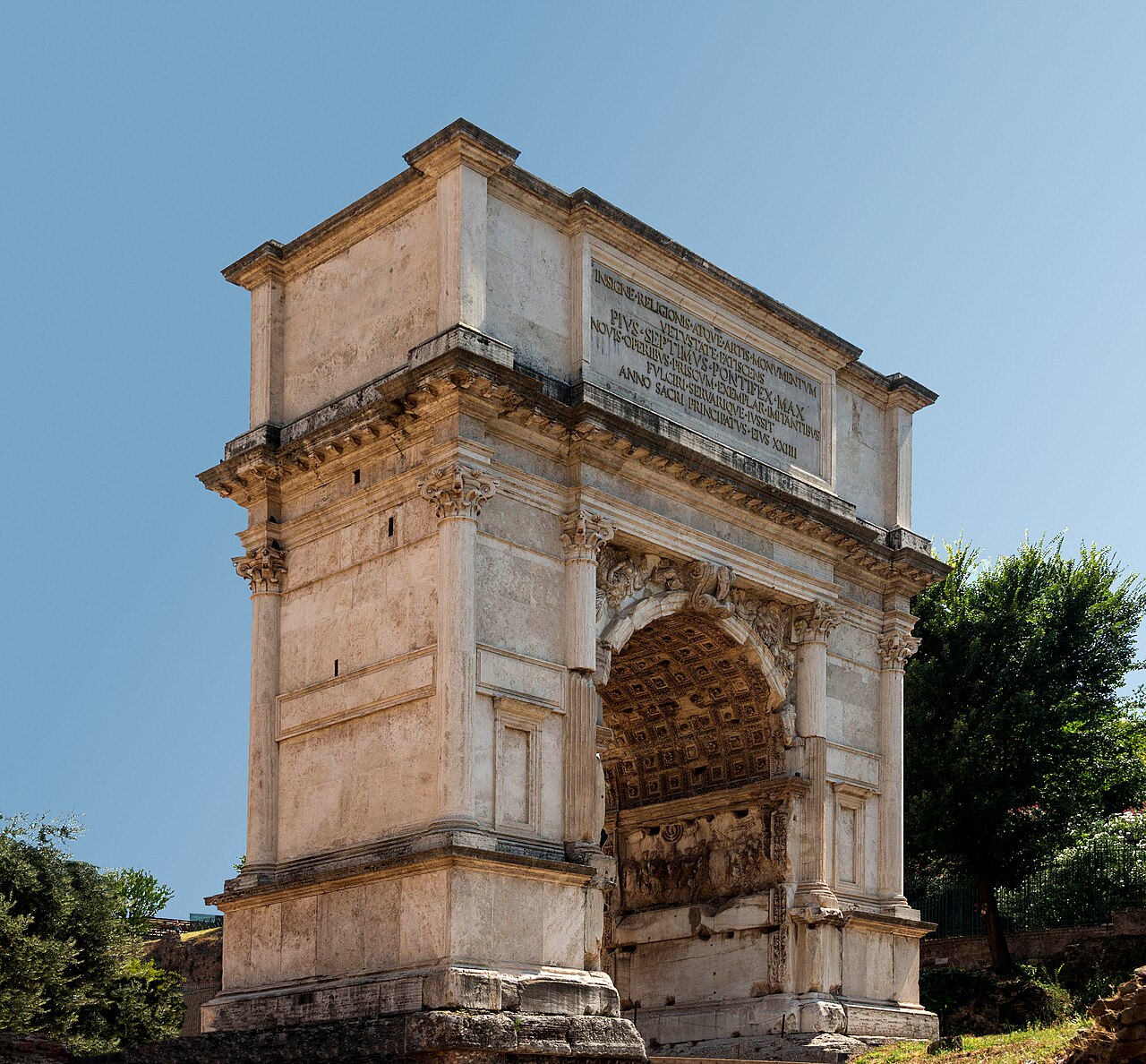
The Arch of Titus (1855 photograph)
Robert MacPherson · 1855
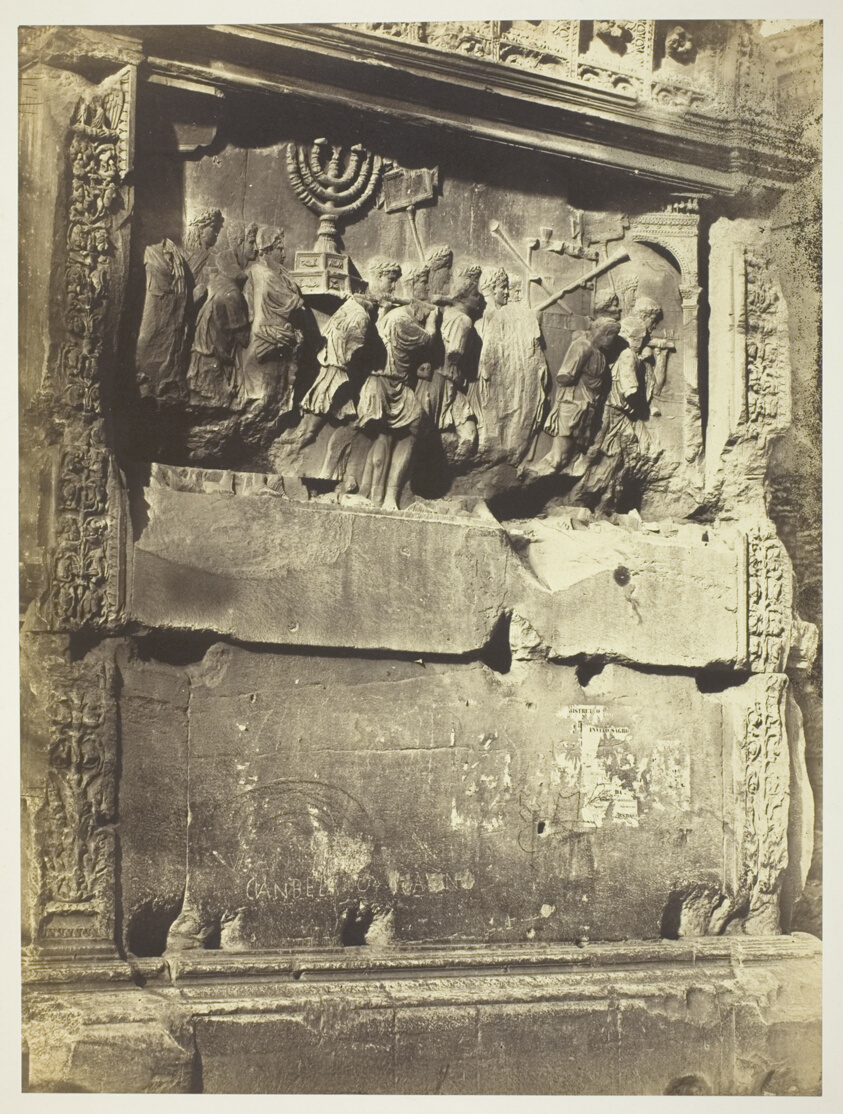
An 1855 albumen photograph by Robert MacPherson of a relief on the Arch of Titus in Rome, showing a procession with a seven-branched menorah. The arch commemorates Titus's triumph over Jerusalem.
Records the relief of Temple spoils on the Arch of Titus, the triumph Josephus described, which links it to his archive.
About this source
What it is
This is an albumen silver print from 1855, made by the Scottish photographer Robert MacPherson, who lived from 1811 to 1872. It shows a stone relief on the Arch of Titus in Rome. The relief shows figures in a procession carrying a seven-branched menorah, trumpets and other objects. The print is held by the Art Institute of Chicago.
Why it matters
The arch was built after the Roman conquest of Jerusalem in 70 CE to celebrate the triumph of the emperor Titus. The relief shows the Temple treasures carried in that triumph. Josephus, a Jewish historian who lived in Rome, described these same spoils in his writings. This photograph records a 19th-century view of the carving, made about 1800 years after the events.
Look closer
- Which objects in the procession can you identify, and how would you know what they are?
- Why might a 19th-century photographer choose to record this relief?
- What does the photograph leave out of the story of the people who carried these objects?
This photograph is part of the curated material that grounds the AI version of Josephus on Humy.ai — when students ask about related events, the AI can quote it and cite it.
More Josephus sources
Browse all 88 → Book
Secondary source
The Jewish War
Josephus · c. AD 75
 Book
Secondary source
Antiquities of the Jews
Josephus · 94 CE
 Book
Primary source
The Life of Flavius Josephus
Josephus · c. AD 94-99
Secondary source
Against Apion
Josephus · after 94 CE
Free account
Read every Josephus source
Sign up free →
Ready when you are
Start chatting with Josephus now.
20 messages free · No credit card · Available in 50+ languages.