


Secondary sourcePainting1912
The Birth of the Monroe Doctrine
After Clyde O. DeLand · 1912
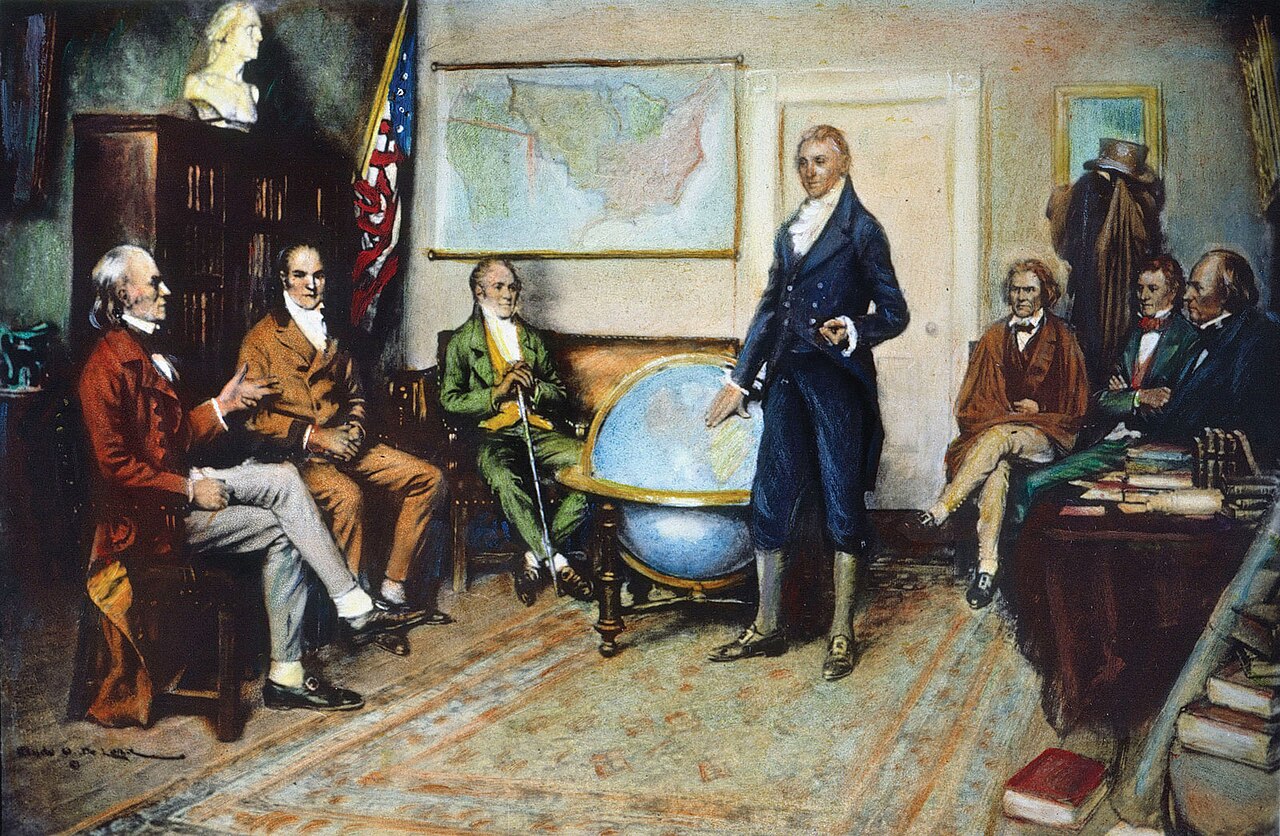
A 1912 painting imagining President Monroe presiding over the 1823 cabinet meeting that led to the Monroe Doctrine.
This later painting imagines Monroe presiding over the 1823 cabinet meeting behind the Monroe Doctrine named for him.
About this source
What it is
This painting, made after Clyde O. DeLand in 1912, imagines a scene from 1823 showing President James Monroe standing beside a globe in a cabinet meeting, surrounded by five seated men in period dress. It depicts the discussion that led to the Monroe Doctrine, a key foreign policy statement of his presidency.
Why it matters
Because it was painted nearly a century after the event, this is not a firsthand image but a later artist's imagined reconstruction. It reflects how later generations wanted to remember Monroe and his cabinet as the architects of an important moment in American foreign policy.
Look closer
- How can you tell this painting was made long after the event it shows?
- What details—like the globe and map—did the artist use to suggest the subject of the meeting?
- Why might later artists want to create dramatic images of historical events they never witnessed?
This painting is part of the curated material that grounds the AI version of James Monroe on Humy.ai — when students ask about related events, the AI can quote it and cite it.
More James Monroe sources
Meet the AI James Monroe →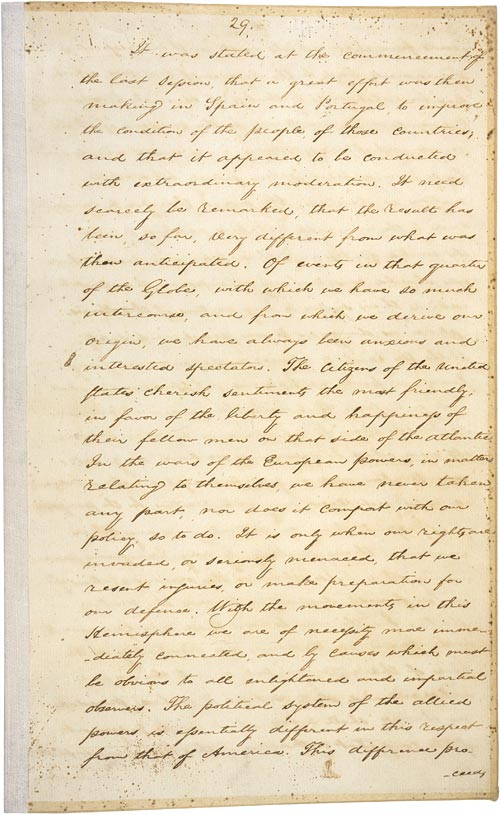 Speech
Primary source
Monroe Doctrine
James Monroe · 2 December 1823
Primary source
Louisiana Purchase Treaty
30 April 1803
 Document
Primary source
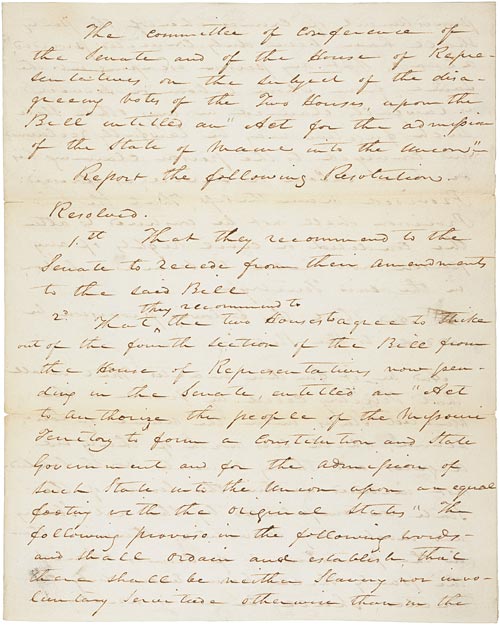
Missouri Compromise Conference Committee Report
1 March 1820
 Document
Primary source
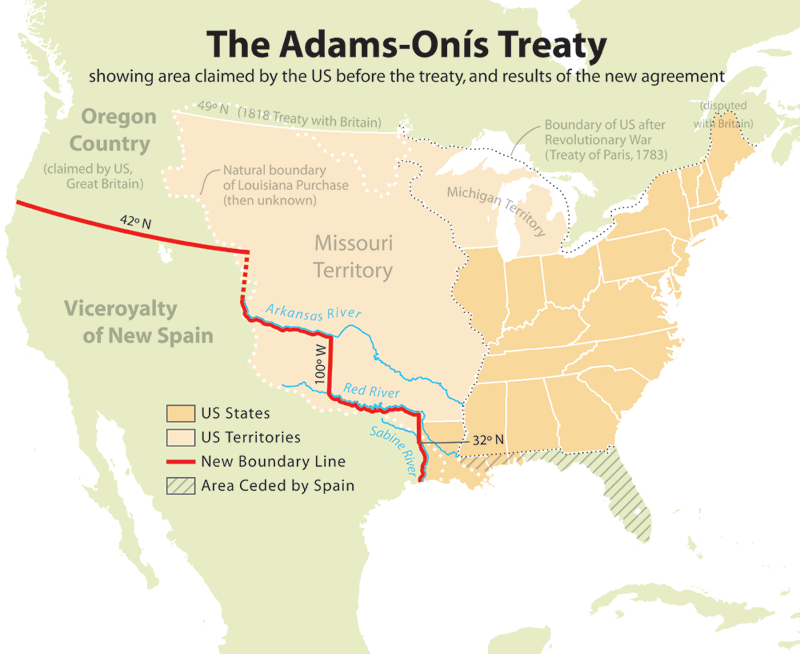
Adams–Onís Treaty
1819 (effective 1821)
 Painting
Primary source
James Monroe
John Vanderlyn · 1816
Ready when you are
Start chatting with James Monroe now.
20 messages free · No credit card · Available in 50+ languages.