


Primary sourcePainting1852, printed c. 1880
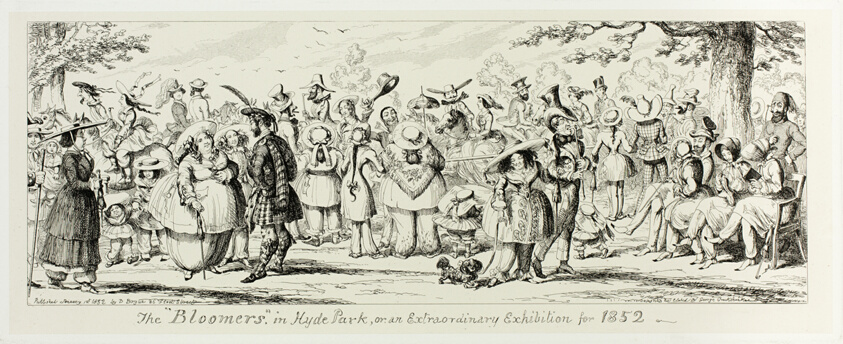
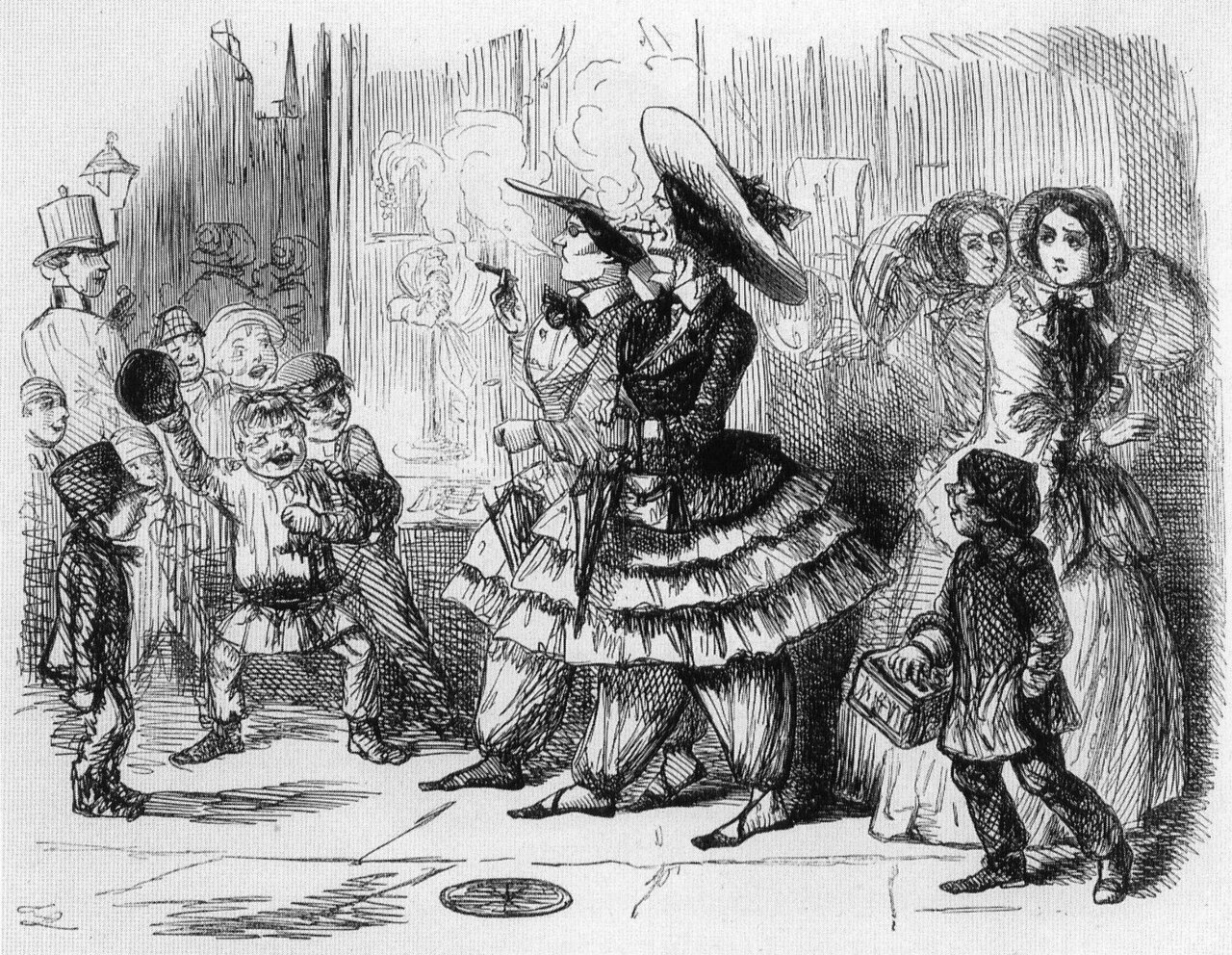
The Bloomers in Hyde Park
George Cruikshank · 1852, printed c. 1880
A satirical etching by George Cruikshank mocking the 'bloomer' dress reform style that became linked to Amelia Bloomer's name.
This satirical print mocks the 'bloomer' dress style that the public linked to Amelia Bloomer's name and advocacy.
About this source
What it is
This is a steel etching made by the English artist George Cruikshank in 1852, printed around 1880, and now held by the Art Institute of Chicago. It shows a crowded scene in Hyde Park full of Victorian figures, including several women wearing the loose tunic-and-trousers 'bloomer' costume.
Why it matters
Although Amelia Bloomer did not invent the style, her newspaper promoted it so widely that it became known by her name. This print shows how the public and satirists reacted to dress reform at the time, treating it as a spectacle worthy of mockery rather than a serious movement for women's comfort and freedom of movement.
Look closer
- What does the crowded, exaggerated scene suggest about the artist's attitude toward the women shown?
- Why might cartoonists have focused on clothing rather than the arguments behind dress reform?
- What does this print leave out about why women wanted to change how they dressed?
This painting is part of the curated material that grounds the AI version of Amelia Bloomer on Humy.ai — when students ask about related events, the AI can quote it and cite it.
More Amelia Bloomer sources
Meet the AI Amelia Bloomer →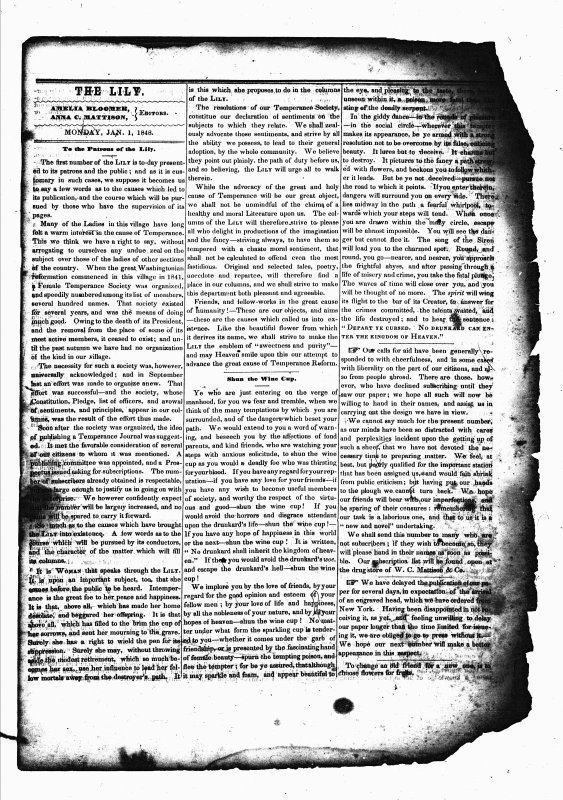 Newspaper article
Primary source
The Lily
Amelia Bloomer · 1848
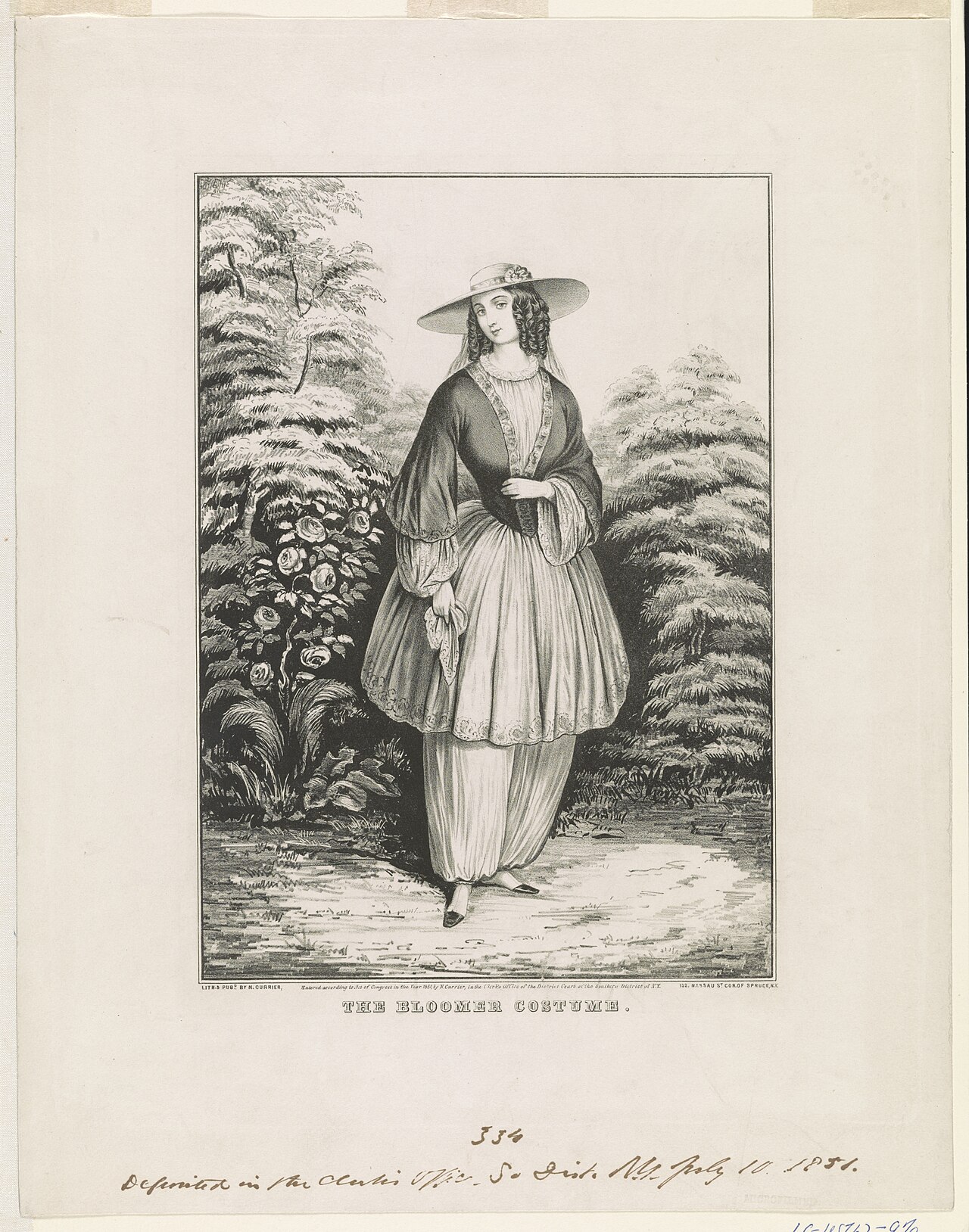 Painting
Primary source
The Bloomer Costume
Nathaniel Currier · 1851
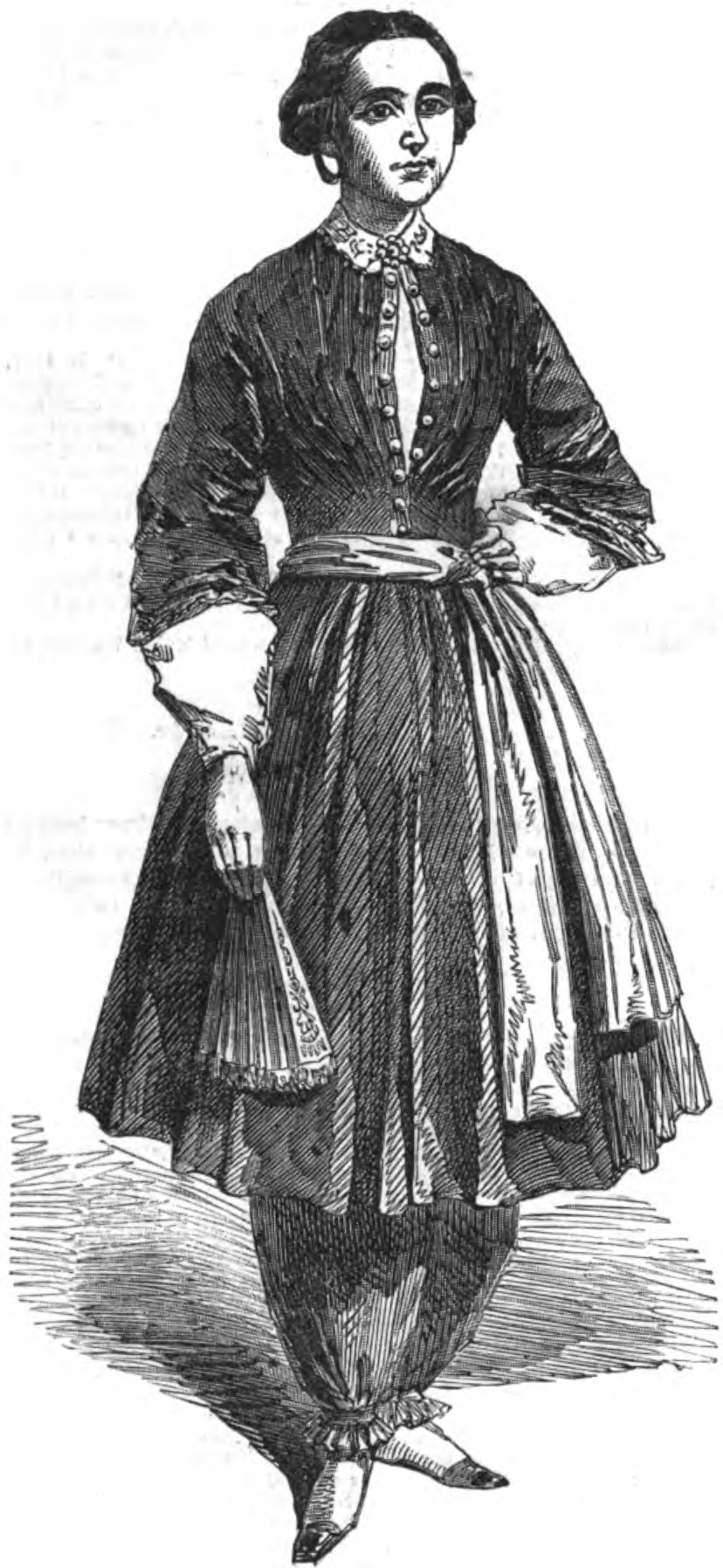 Painting
Primary source
Amelia Bloomer from Illustrated London News
T. W. Brown · 1851
 Painting
Primary source
Bloomerism – An American Custom
John Leech · 1851
Secondary source
Eighty Years and More
Elizabeth Cady Stanton · 1898
Ready when you are
Start chatting with Amelia Bloomer now.
20 messages free · No credit card · Available in 50+ languages.