


Primary sourceBook1903
The Cherry Orchard
Anton Chekhov · 1903
Chekhov's last play, written while he was dying of tuberculosis, depicts the decline of the Russian landed gentry.
Chekhov wrote this, his final play, while terminally ill, making it a key record of his last creative period.
Free Humy account · No credit card · 120,912 sources to read
About this source
What it is
The Cherry Orchard is a play by Anton Chekhov, written in 1903. It premiered at the Moscow Art Theatre in 1904, directed by Konstantin Stanislavski.
Why it matters
The play tells the story of an aristocratic family forced to sell its estate, including its famous cherry orchard, to pay off debts. It captures the shifting social order in Russia at the turn of the century — the fading power of the aristocracy and the rise of the middle class. Chekhov called it a comedy, but Stanislavski staged it as a tragedy, showing how differently people can read the same work. It is considered one of Chekhov's four greatest plays.
Look closer
- Why might Chekhov have called a play about loss and decline a 'comedy'?
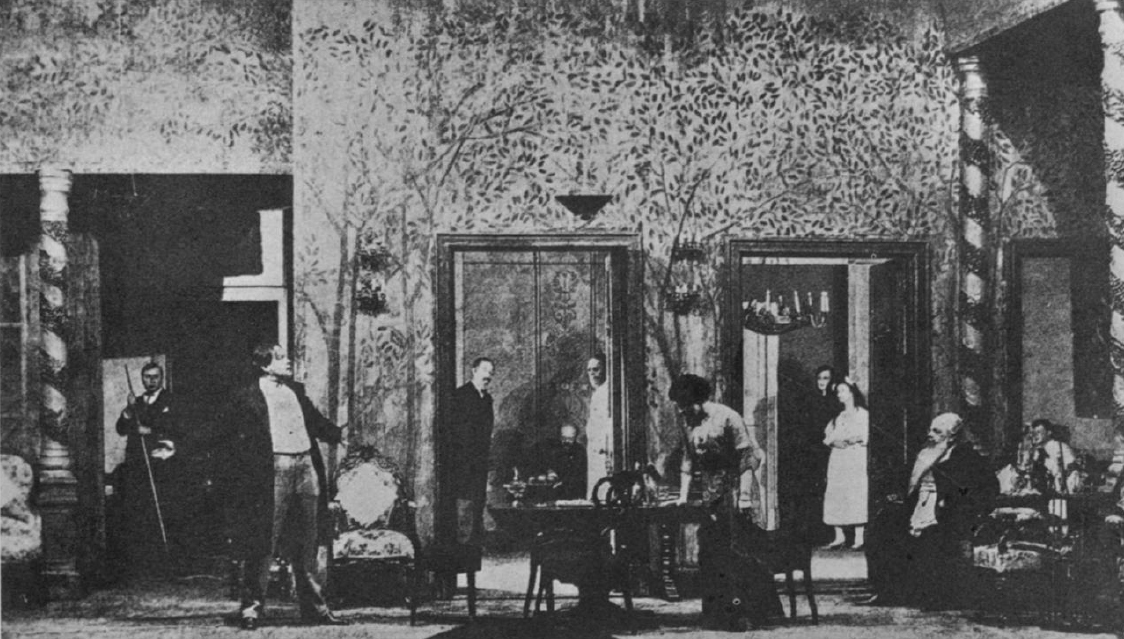
- What does the set photograph suggest about how the Moscow Art Theatre tried to make the stage feel real?
- What does the orchard itself seem to represent for the different characters?
This book is part of the curated material that grounds the AI version of Anton Chekhov on Humy.ai — when students ask about related events, the AI can quote it and cite it.
More Anton Chekhov sources
Browse all 93 →
Ready when you are
Start chatting with Anton Chekhov now.
20 messages free · No credit card · Available in 50+ languages.