


Secondary sourcePaintingc. 1825-27
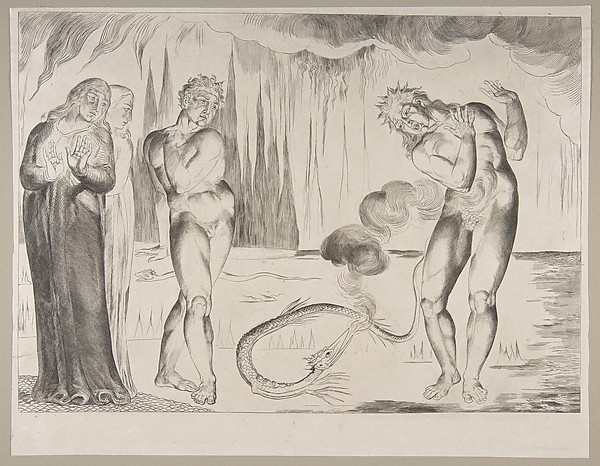
The Circle of the Thieves: Buoso Donati Attacked by the Serpent
William Blake · c. 1825-27
An engraving by William Blake illustrating the punishment of thieves in Dante's Inferno, the poem John Ciardi later translated into English.
This Blake engraving illustrates the Inferno, the Dante poem that Ciardi famously translated, though Ciardi is not depicted.
About this source
What it is
This engraving by the English artist William Blake was made around 1825-27 as part of his illustrations to Dante's Divine Comedy. It shows a scene from the circle of the thieves in the Inferno, where a figure is attacked by a serpent. The print is held by the Metropolitan Museum of Art.
Why it matters
Blake's illustrations are among the most famous visual interpretations of Dante's poem. They help readers imagine the strange, punishing world of the Inferno that writers and translators, including John Ciardi, have worked to bring to new audiences. Ciardi's translation of the Inferno became widely used in American classrooms, and images like this one are often studied alongside his words.
Look closer
- What details make this scene feel frightening or strange?
- Why might an artist choose to illustrate a poem written centuries earlier?
- What does the image leave out that a reader might imagine differently?
This painting is part of the curated material that grounds the AI version of John Ciardi on Humy.ai — when students ask about related events, the AI can quote it and cite it.
More John Ciardi sources
Browse all 15 →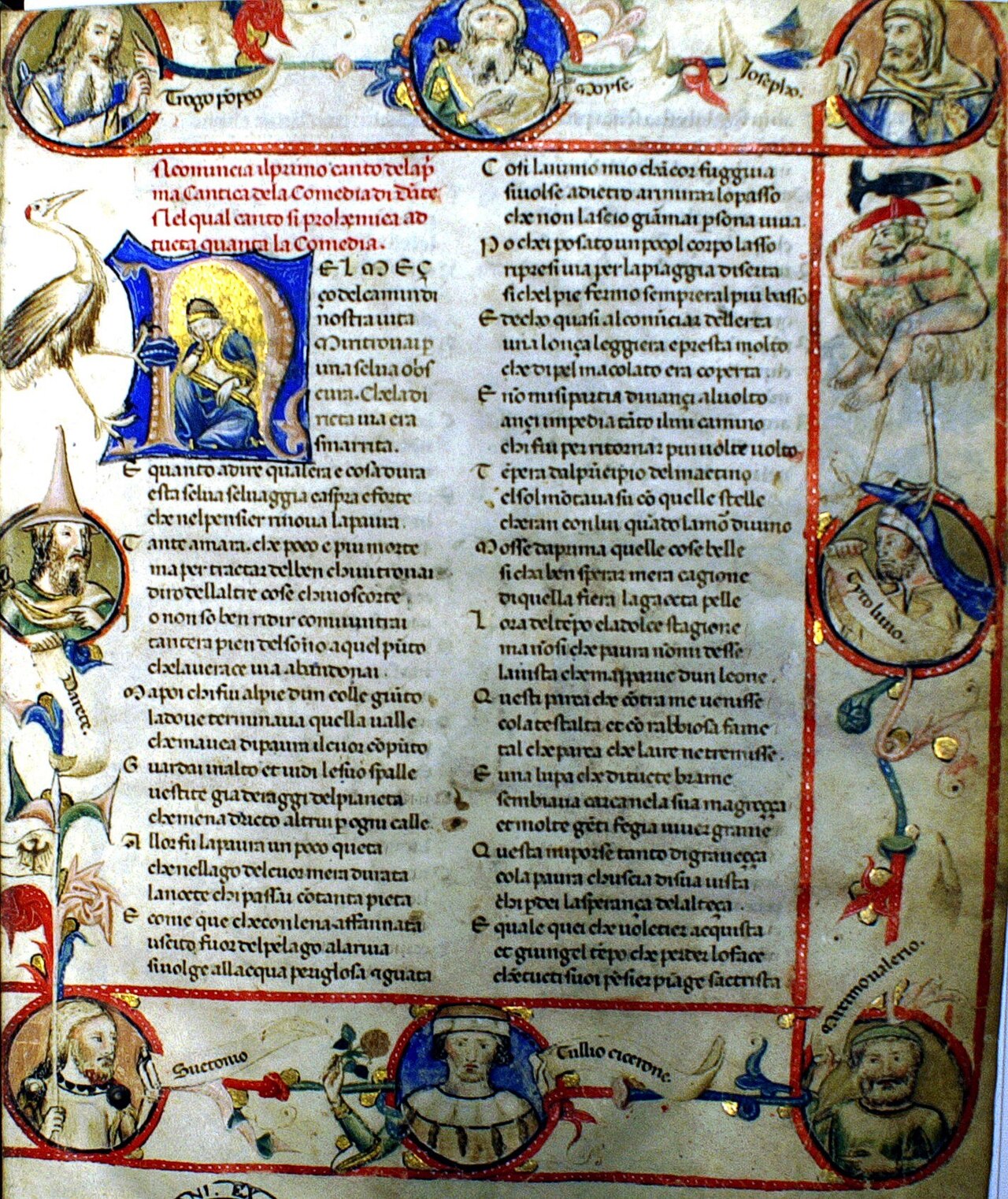 Book
Primary source
Inferno
Dante Alighieri · c. 1306–1310
 Photograph
Primary source
Portrait of John Ciardi
1961
 Document
Primary source
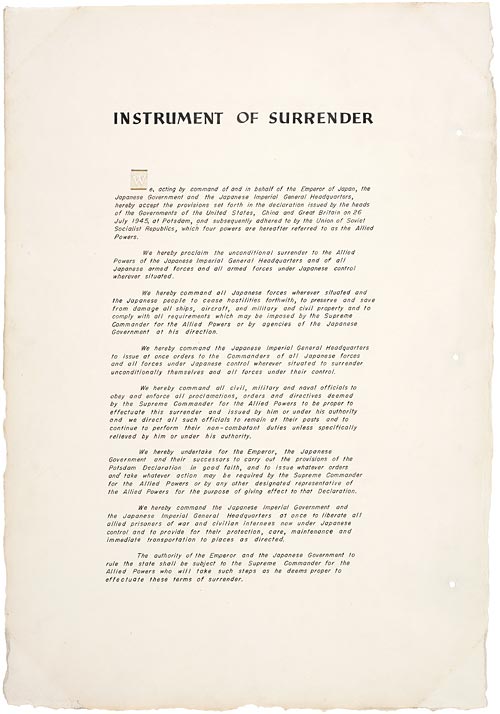
Instrument of Surrender of Japan
2 September 1945
 Photograph
Primary source
Bread Loaf Writers' Conference, August 1946 photograph
August 1946


Free account
Read every John Ciardi source
Sign up free →
Ready when you are
Start chatting with John Ciardi now.
20 messages free · No credit card · Available in 50+ languages.